

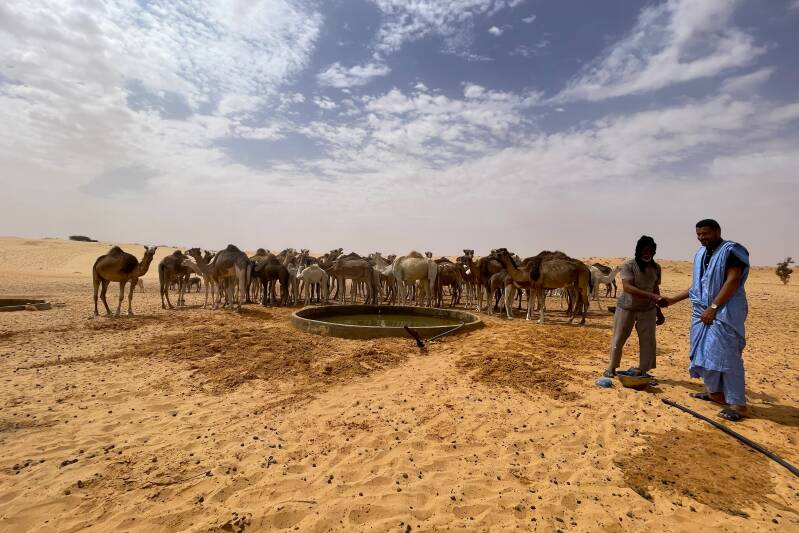
My guide Issa greets a shepherd as we visit his camels who return to the water hole every evening.
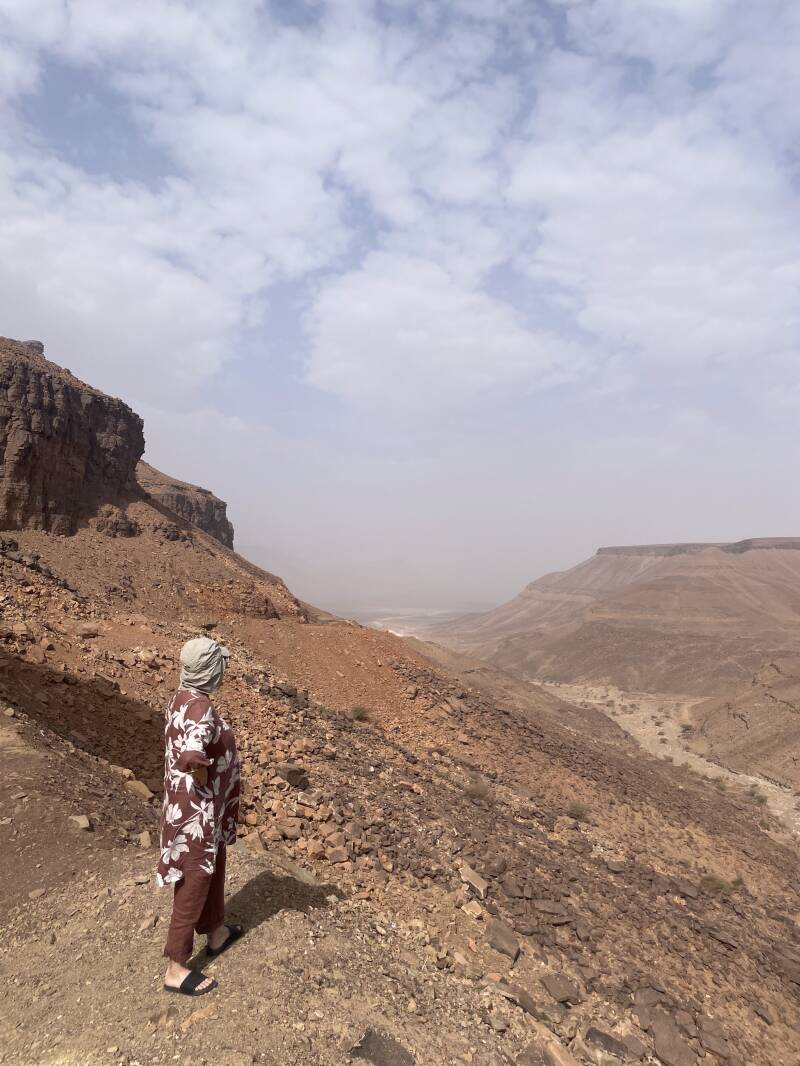
Pondering the beauty of the Amogjar Canyon.
Mauritania was one of those destinations that sat in my mind for years as somewhere “too difficult”, “too hot”, or simply too remote to fit neatly into a wider Africa itinerary. Yet after visiting Guinea-Bissau, I found myself boarding a Royal Air Maroc flight from Casablanca to Nouakchott and finally arriving in a country that felt both mysterious and surprisingly welcoming.
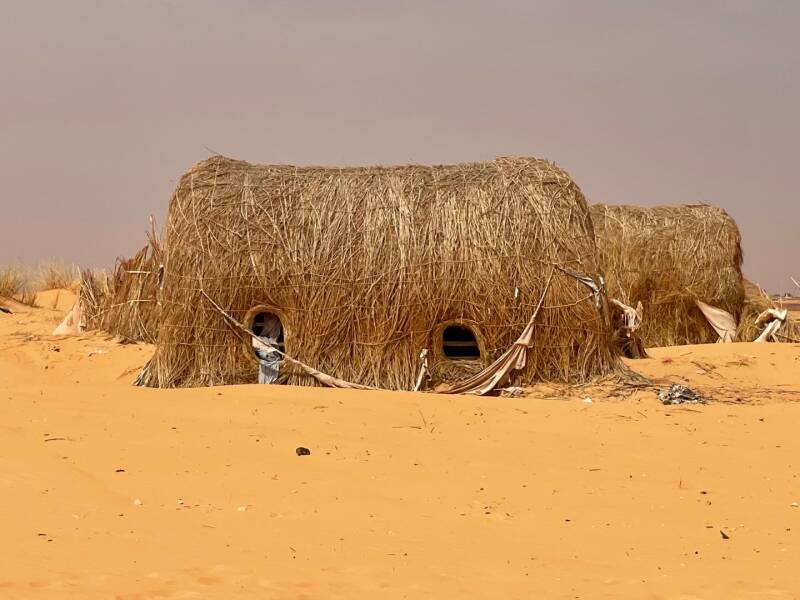
A grass dwelling in the Adrar region.
Arrival in Nouakchott
I landed in Nouakchott in the early evening on a RAM flight arriving around 6:55pm. My first night was spent in a reasonably decent hotel before heading off early the next morning on a four-day tour into the Adrar region with Mauritania Best Tours.
One of the first things I learned in muslim majority countries I have visited is the prevalence of the name Mohamed. In many countries is customary for the first-born son to take the name, which meant my guide quickly simplified things by introducing himself as 'Issa' instead.
Before arriving, I had worried that April might already be unbearably hot. Looking back, the timing was actually manageable, especially because the itinerary was cleverly paced around the desert climate. I had originally considered trying to route overland or via multiple North African cities, perhaps Nouakchott to Casablanca, then Tunis or Algiers, but politics and regional tensions mean neighbouring countries in this part of the world do not always have direct connections. In the end, the simpler routing made much more sense.
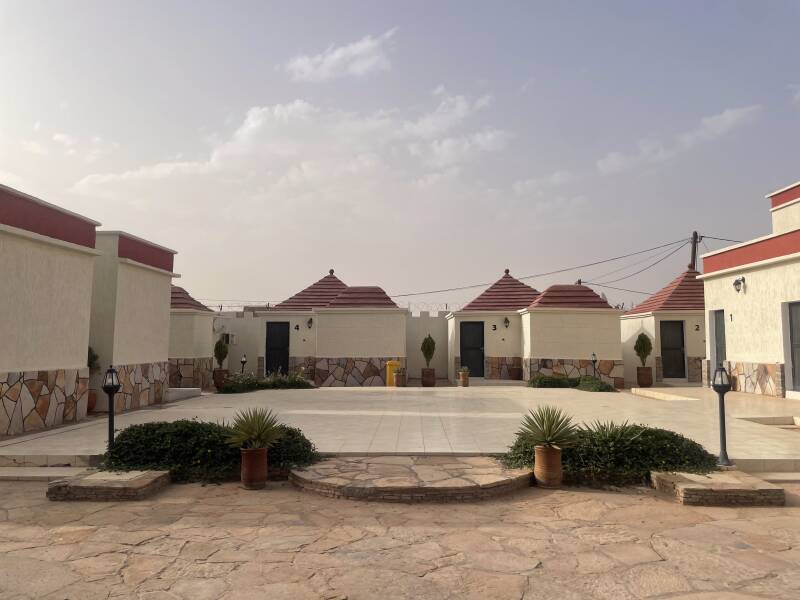
Outside at my hotel Hôtel Et Auberge Étoile Du Nord north of Azougi in Atar.
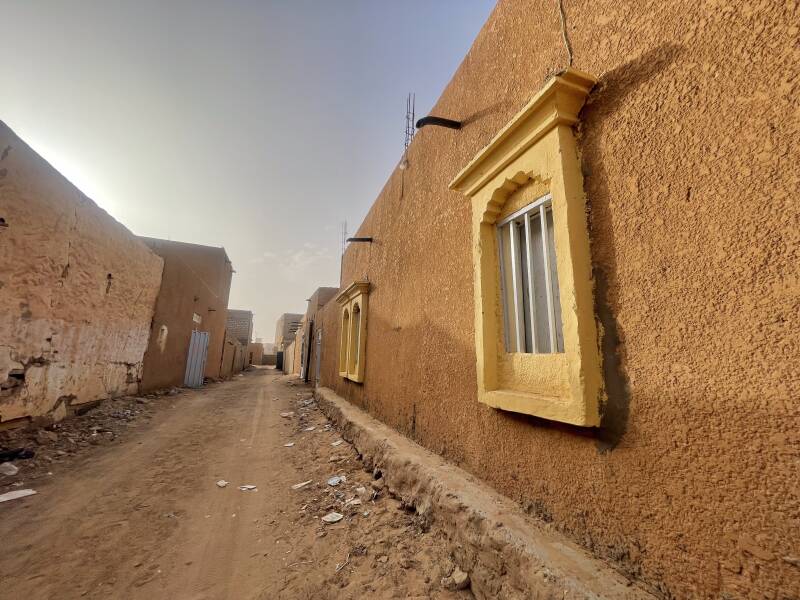
A street in Atar.
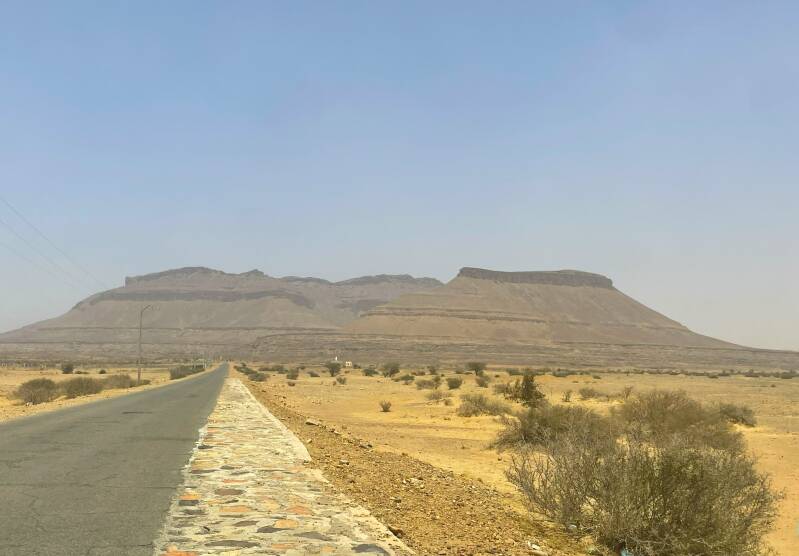
Akjoujt region with copper mountain in the distance.
Into the Adrar Region
The classic four-day Adrar circuit is one of Mauritania’s great journeys. It combines ancient caravan cities, Sahara landscapes, desert oases and long stretches of open road.
The drive from Nouakchott to Atar was my first real glimpse of the vastness of Mauritania. On our first day, we spent around five hours driving along Mauritania’s wide-open desert roads, with long stretches of emptiness broken only occasionally by small settlements or industrial sites. Partway through the journey, Issa pointed out the copper mines near Akjoujt, which immediately caught my attention because I studied Chemistry and Geology during my first year of Ceramics at university.
The region around Akjoujt has been mined since around 1000 BC and is still one of Mauritania’s most important mining areas today. The nearby Guelb Moghrein mine contains rich copper and gold deposits and is also a source of magnetite. Seeing the mines in the middle of such a stark desert landscape was a reminder that this seemingly empty region has been economically important for thousands of years.
By mid-afternoon we arrived in Atar, the main town of the Adrar region. After lunch, we explored the local markets and the central mosque before heading out to Azougi, a short drive from the city.
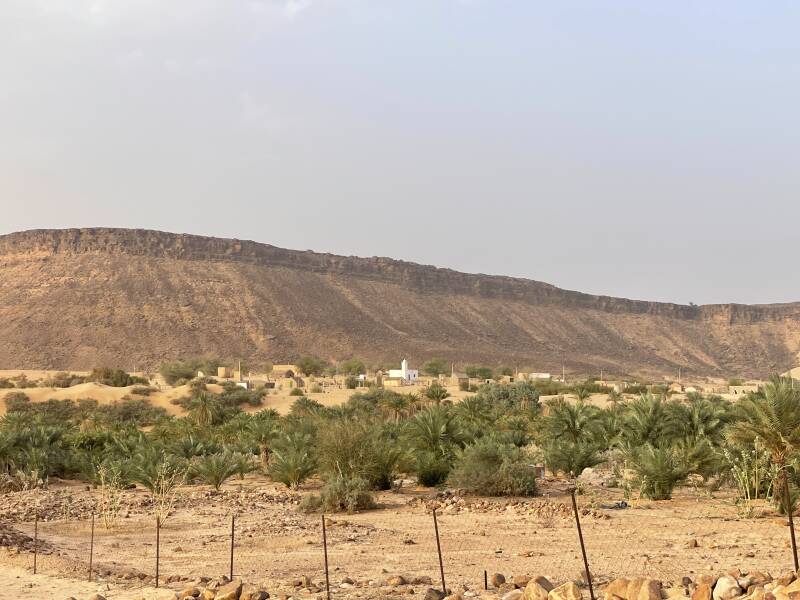
Oasis dwellings in Azougi.
Today Azougi is little more than scattered ruins in the desert, but it was once an important settlement and an early capital of the Almoravid dynasty in the 11th century. It later became a key stop along the trans-Saharan trade routes linking North and West Africa.
Standing in what was described by the 12th-century chronicler Al-Zuhri as the 'capital of the Almoravids,' it’s hard to imagine that this quiet, sandy landscape was once part of a powerful movement that helped shape a vast empire stretching from the Ghana Empire across North Africa and into Iberia.
We took off our shoes and walked barefoot across completely clean, rubbish-free sand as the sun set, with the ruins and palm grove stretching out around us. In the distance, an oasis shimmered, a reminder of Azougui’s role on the trans-Saharan trade routes linking Morocco and West Africa, and of the living palm grove that still defines the site today.
As the sun began to set over the Adrar landscape, it felt like the perfect introduction to Mauritania, remote, historic and deeply connected to the desert.
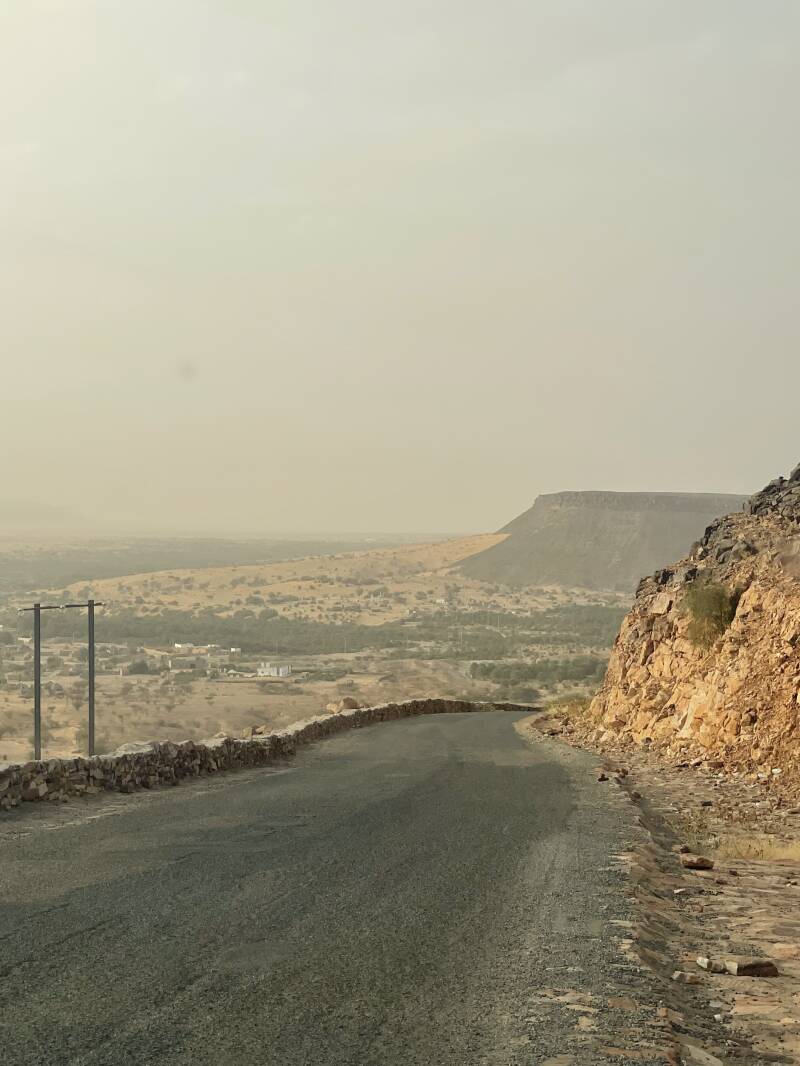
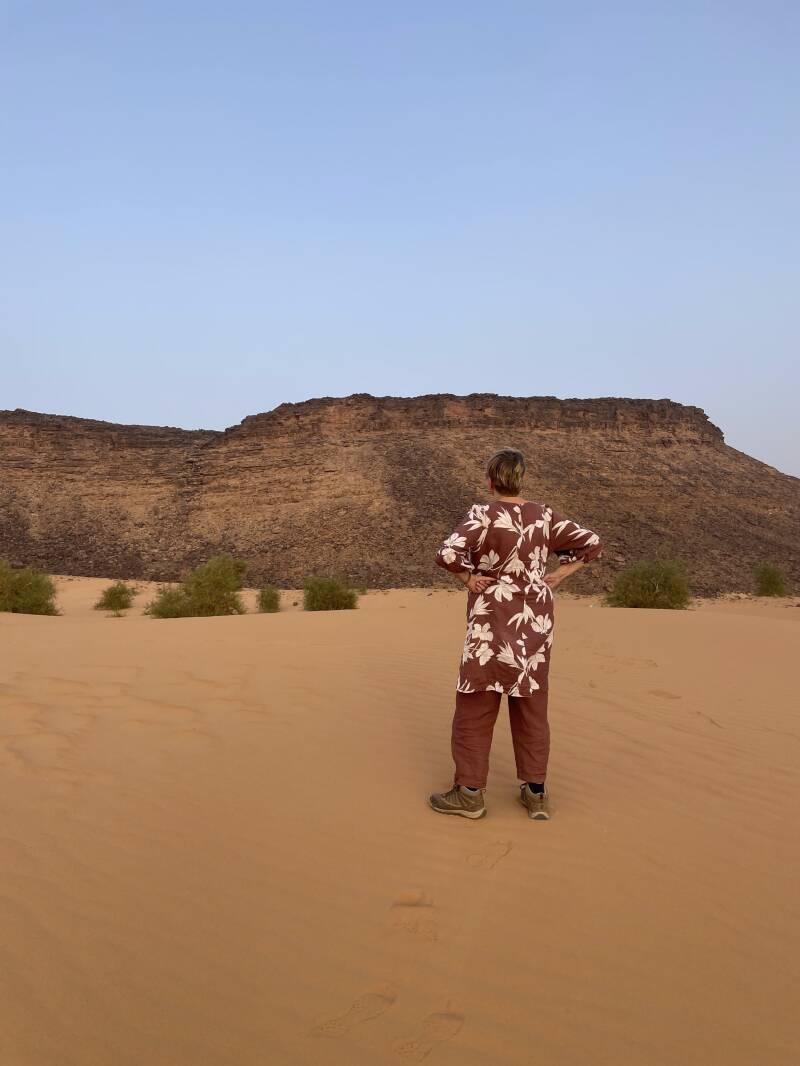
Heading out to the mountains in Azougi.
Ouadane and the Eye of the Sahara
The journey to Ouadane was one of the highlights of the trip. We passed through the striking landscapes of the Amogjar Canyon before arriving at the Richat Structure, better known as the 'Eye of Africa'. Rising out of the Sahara near Ouadane, this enormous circular geological formation stretches around 40 kilometres across and is so vast that it was first made famous by astronauts viewing it from space. Formed by the erosion of an ancient geological dome, its concentric rings expose layers of rock millions of years old, with volcanic rocks and evidence of hydrothermal activity at its centre. The area is also rich in Paleolithic stone tools, showing that people lived and travelled here long before recorded history.
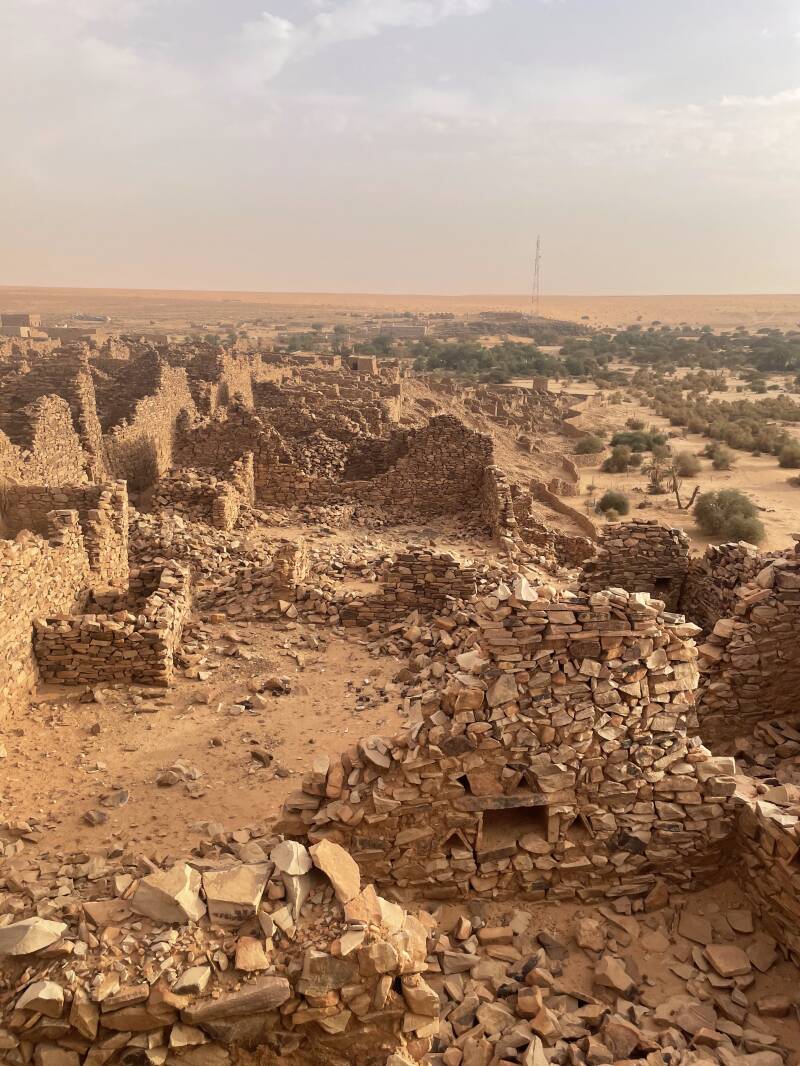
That evening, Issa took me on a walking tour of the old ksar of Ouadane. Ouadane is a UNESCO-listed ksar, one of the ancient trading settlements that once connected sub-Saharan Africa to North Africa. Many of the stone buildings are now crumbling back into the desert, but the old 15th-century mosque still stands remarkably intact. Its rows of uncovered horseshoe arches and squat, fortress-like minaret give it a very different appearance from most mosques, almost blending into the surrounding rock. Built from local stone and later reinforced with clay plaster, it felt less like a monument and more like part of the landscape itself.
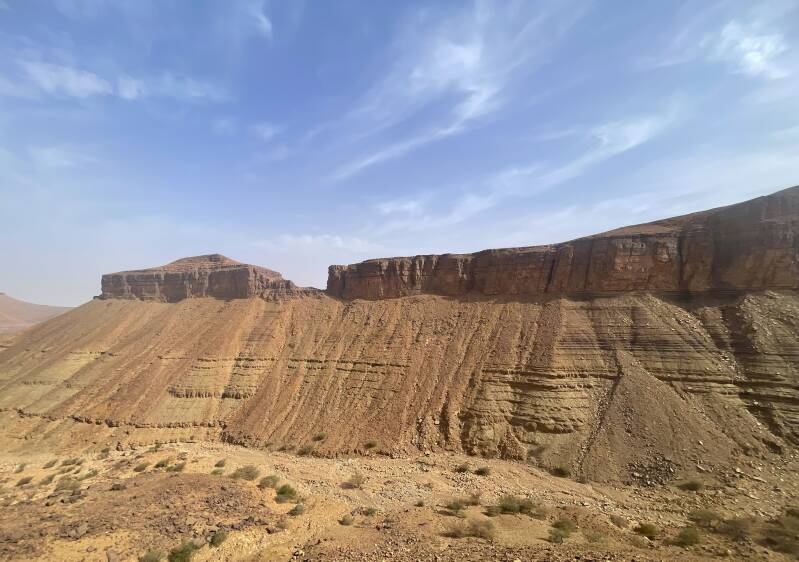
Amogjar Canyon
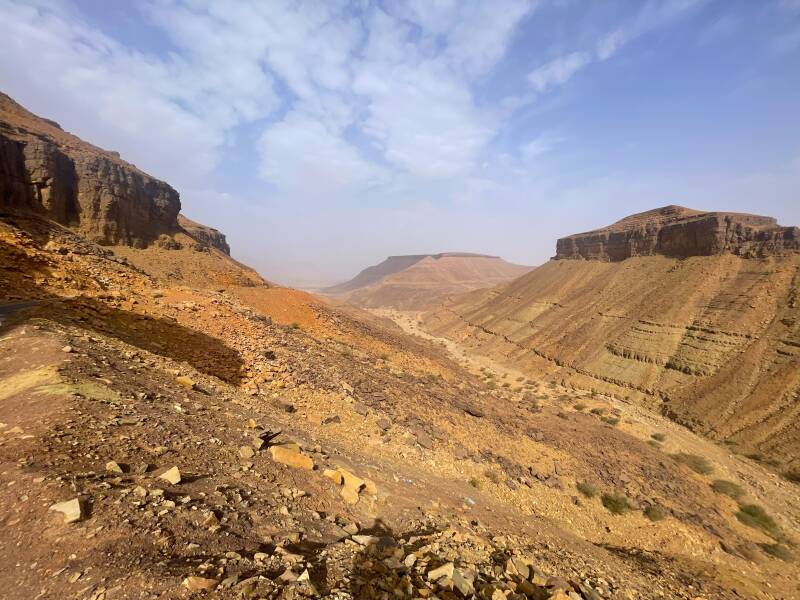
Amogjar Canyon.
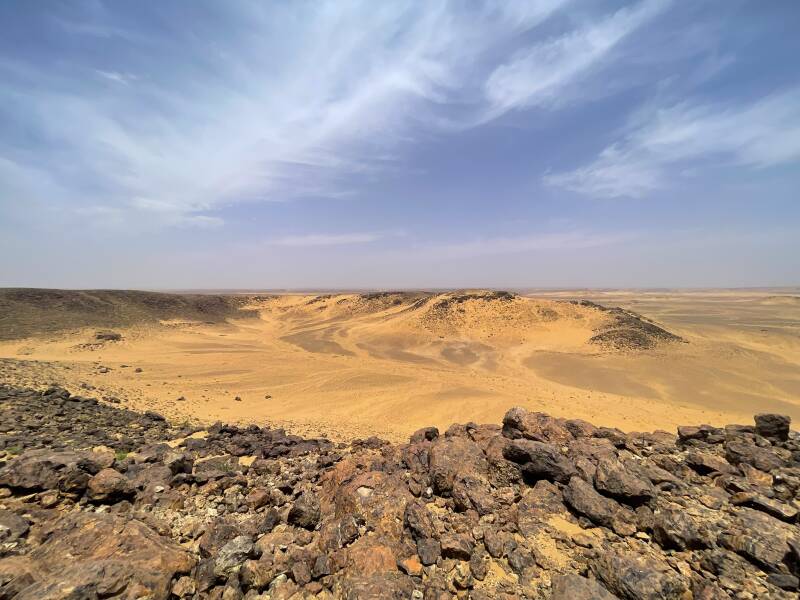
The Richat Structure.
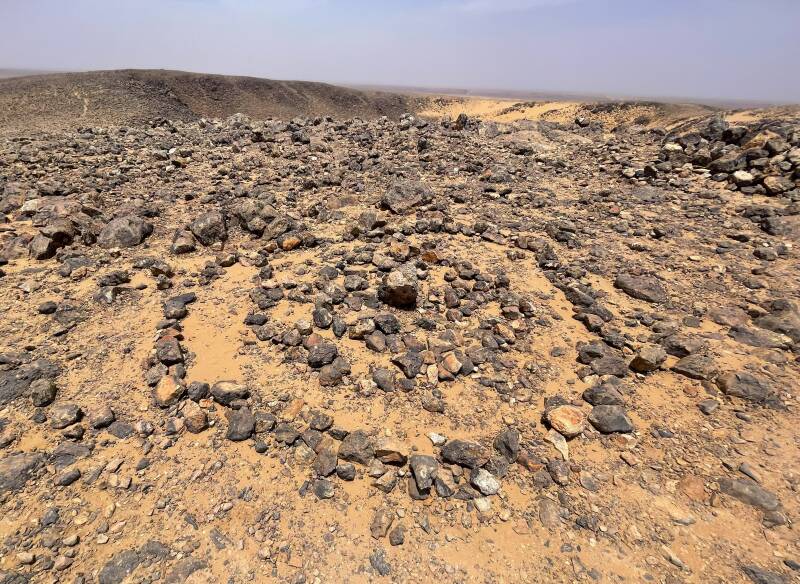
A rock arrangement showing what the Richat Structure looks like from above.
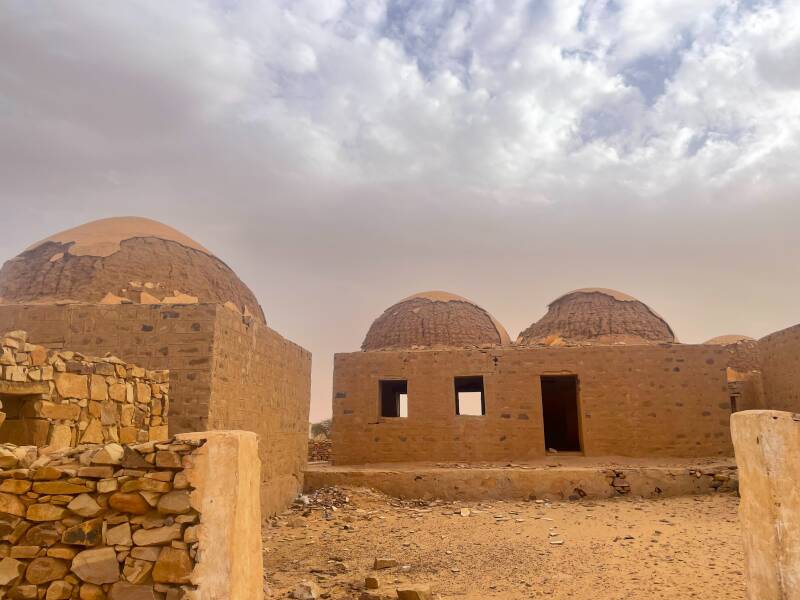
Remains of Hotel Palace.
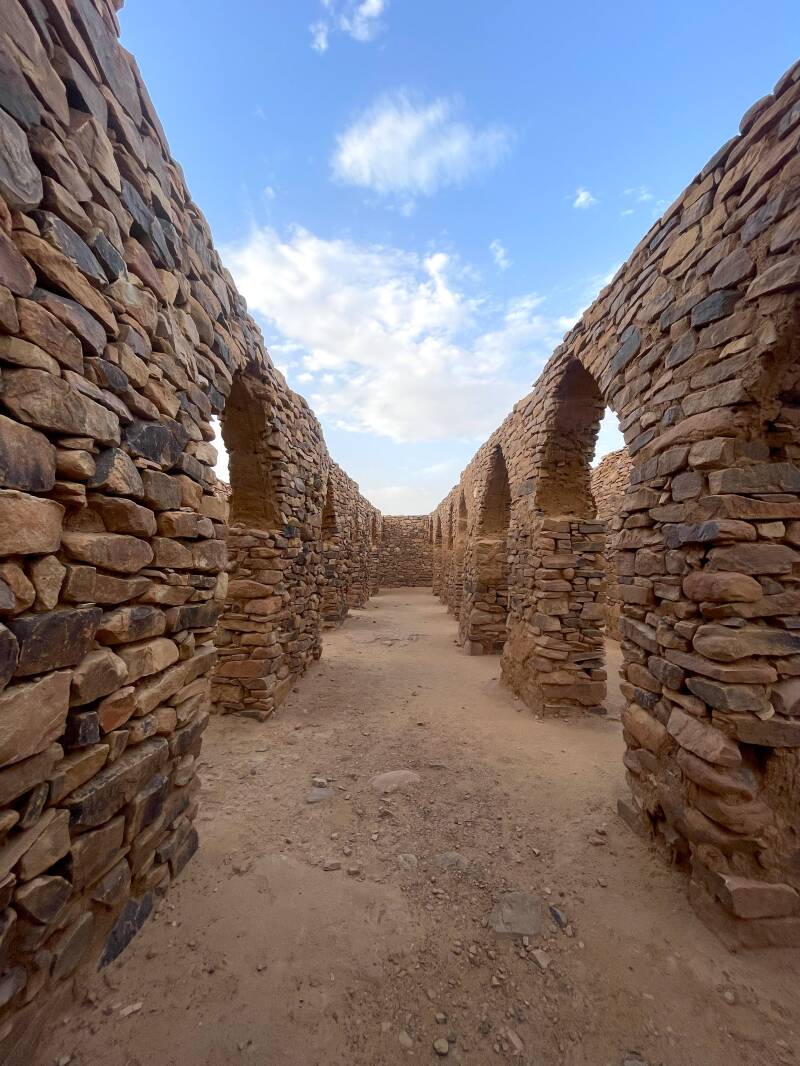
Remains of the Ouadane Mosque.
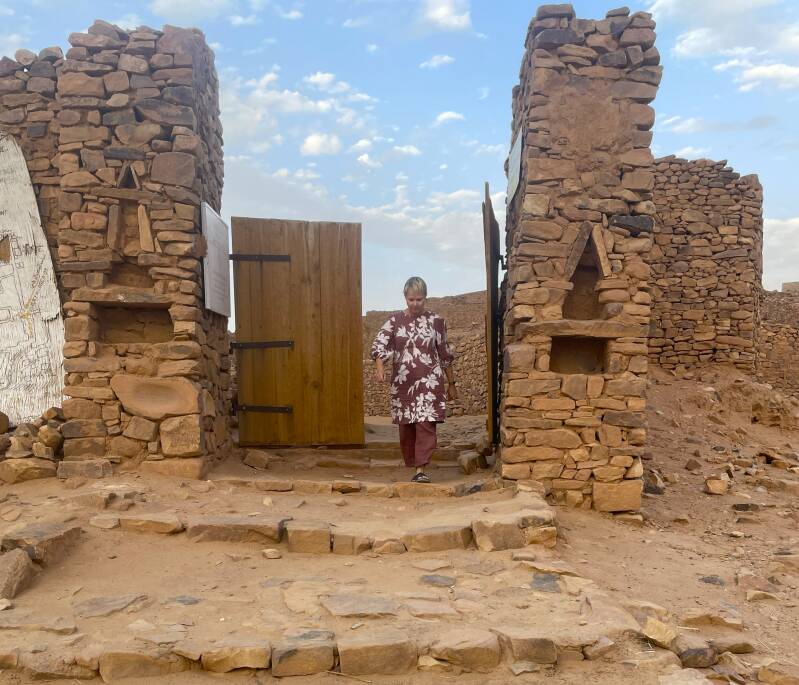
Me emerging from the Ouadane tour; photo by Issa.
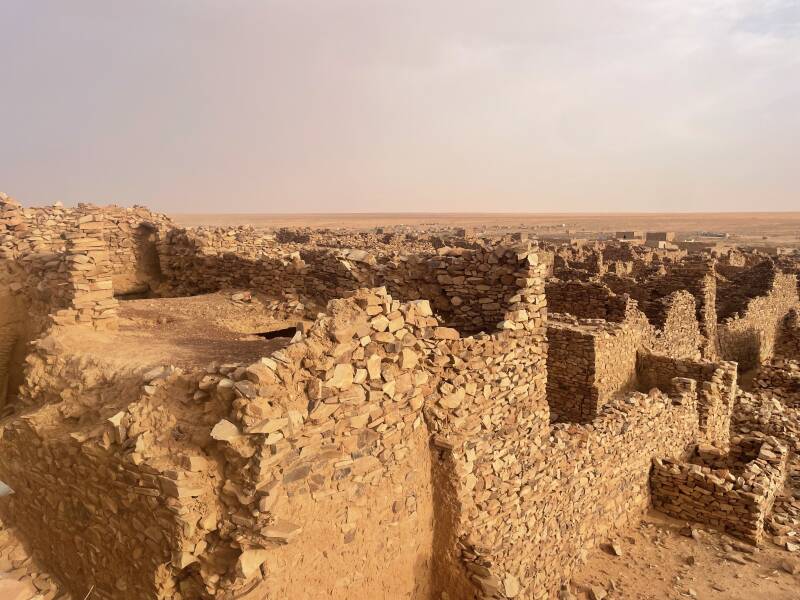
Views of Ouadane.
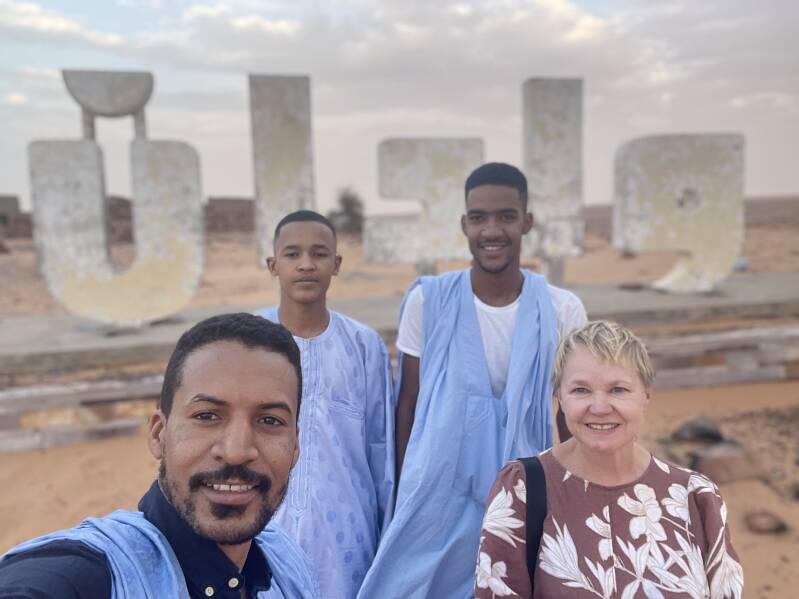
Guide Issa, a friend, Yahya the driver and I; photo by Issa.
Chinguetti and Desert Evenings
The next day we headed towards Chinguetti, although by this stage the road had effectively disappeared and driving off-road through the desert became essential. Our driver Yahya sped confidently across the open sand, navigating terrain that looked completely featureless to me. At one point we got bogged down in soft sand, but neither Yahya nor Issa seemed remotely worried. Within minutes they were out with the tyre gauge, lowering the pressure before calmly driving us straight back out again. Despite his young age, Yahya was clearly hugely experienced at desert driving.
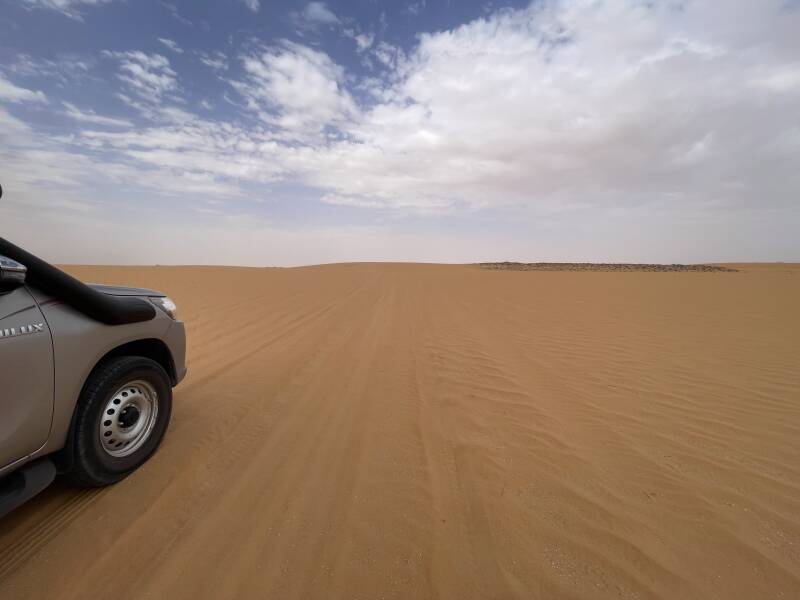
Our desert drive.
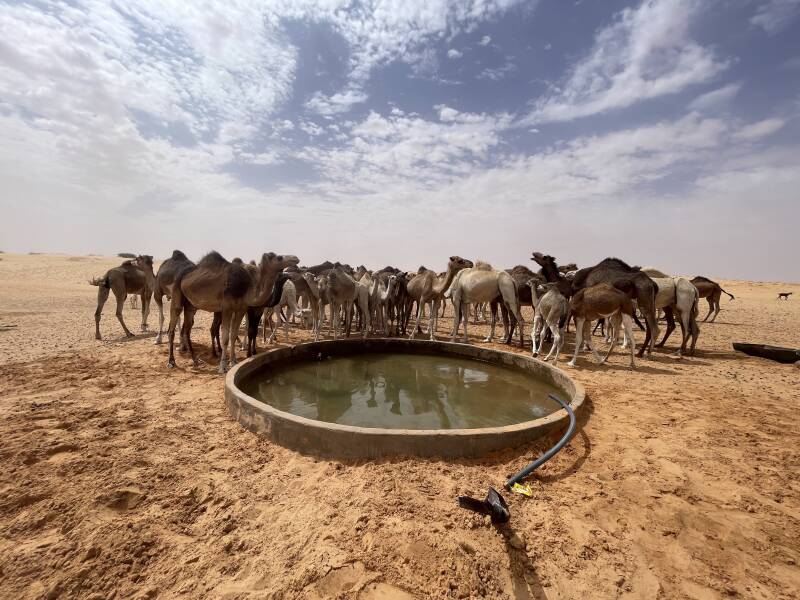
Camels at a well.
Along the way we stopped at a desert well where camels were gathering for the evening. Issa greeted the shepherd and explained that the camels instinctively return to the same spot each day to drink. The air was filled with grunts and strange camel noises, while the younger camels wandered around curiously; cute up close.
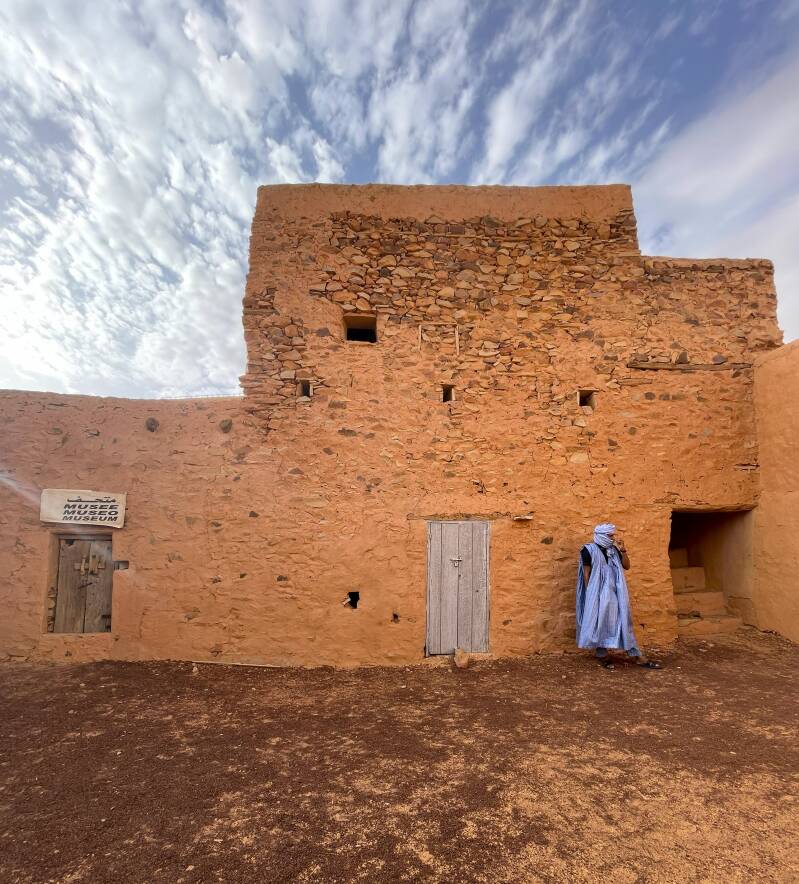
Issa waits outside one of the libraries.
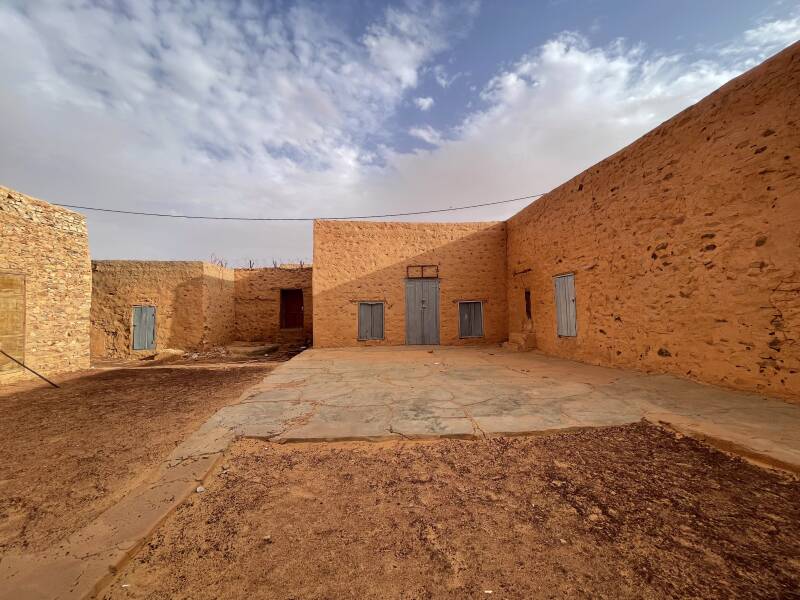
Inside the library courtyard.
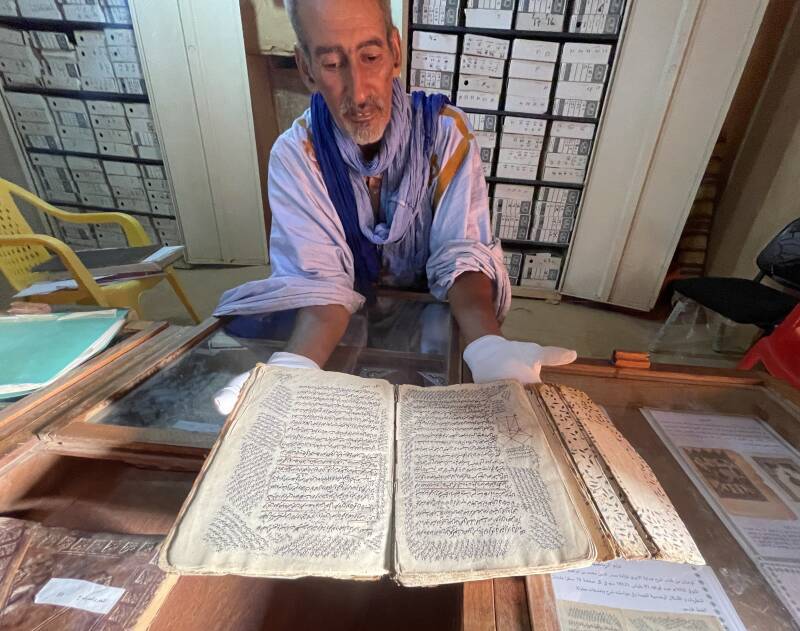
A librarian shows us ancient manuscripts in one of the five libraries in Chinguetti.
Chinguetti itself is one of Mauritania’s most historic towns, once an important centre of Islamic scholarship and trans-Saharan trade. Often described as one of Islam’s holy cities, it is famous for its ancient stone architecture, the iconic square minaret of the Friday Mosque, and its private libraries preserving medieval manuscripts passed down through generations. We were able to meet one of the librarians and see some of these centuries-old manuscripts ourselves, which made the town’s scholarly history feel very real rather than distant.
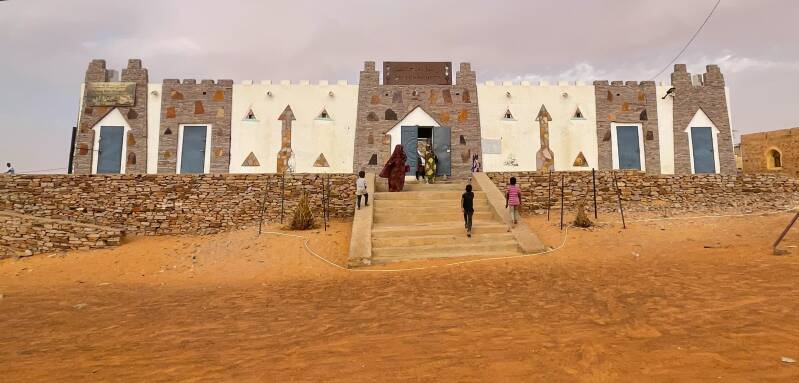
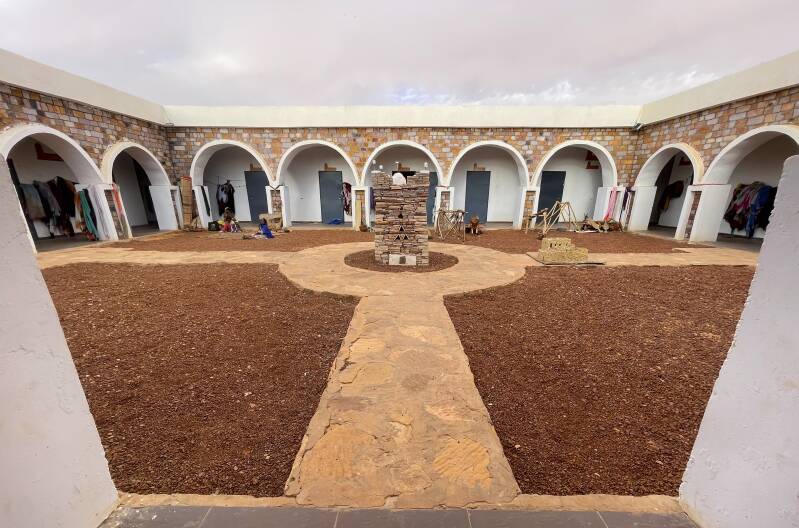
Inside a local craft market in Chinguetti.
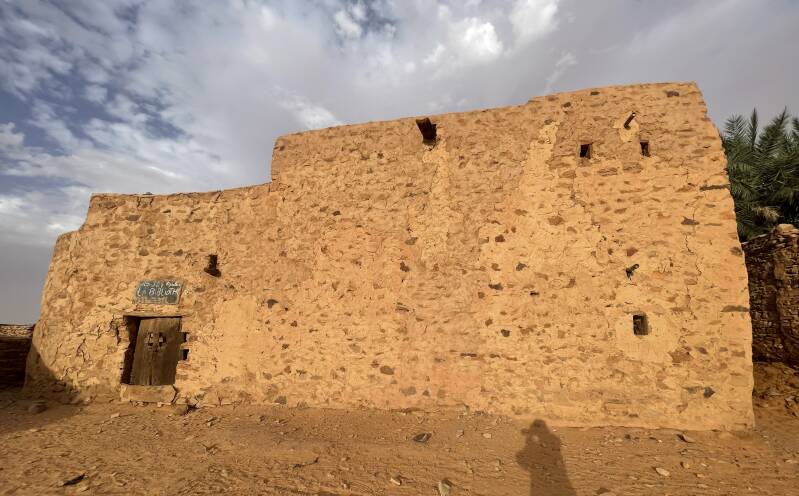
One of the five libraries in Chinguetti.
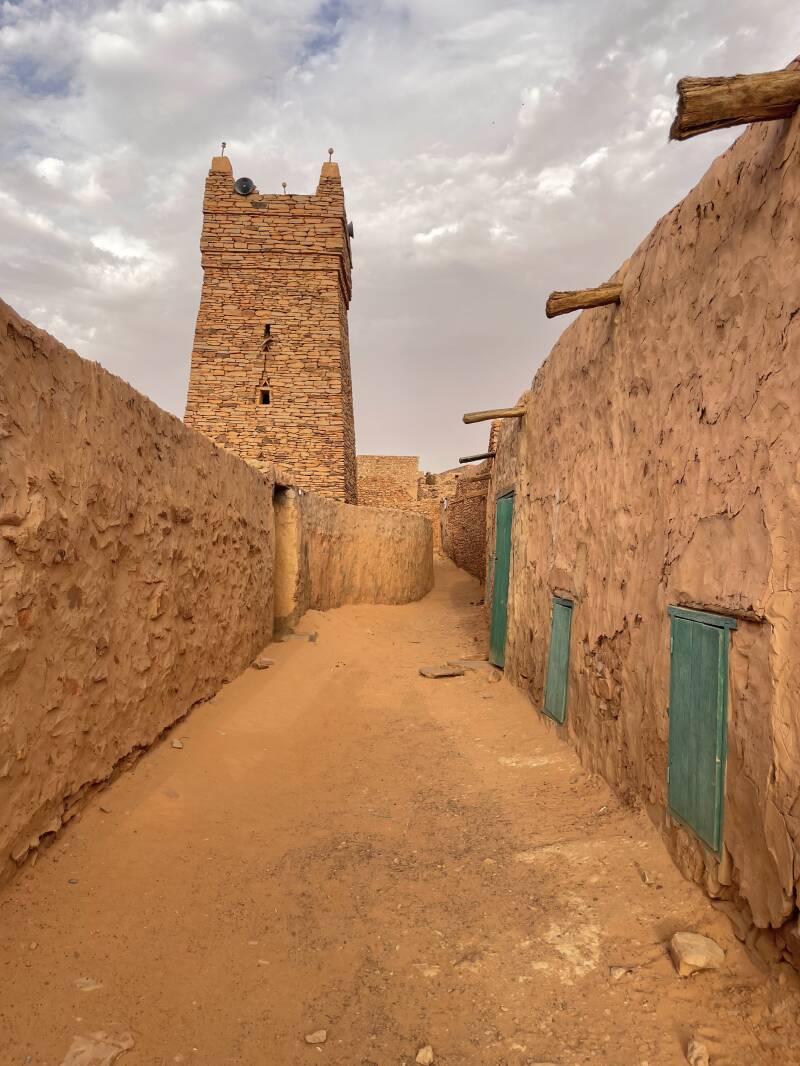
Mosque and pathway.
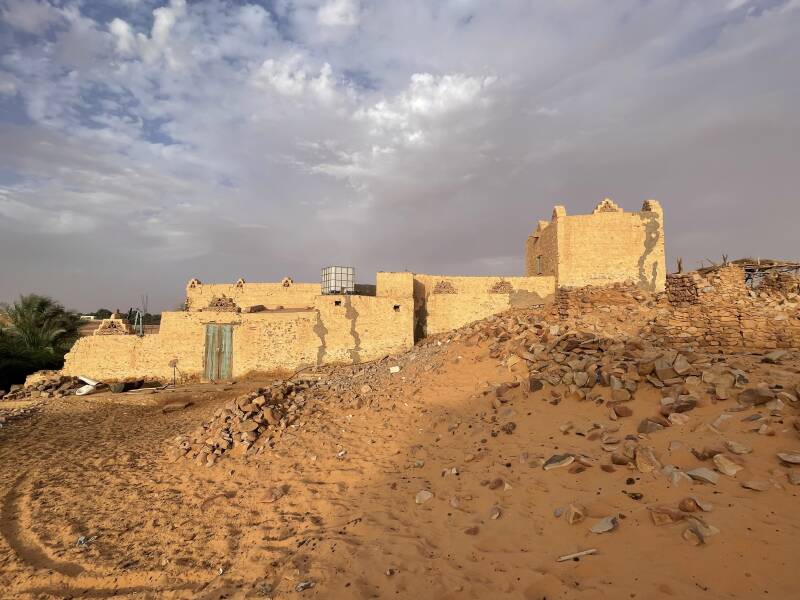
That evening, we climbed another sand dune to watch the sunset over the desert, with the old stone town slowly fading into the surrounding Sahara.
Terjit Oasis
On our final full day, we visited the rock art sites near Agrour Amogjar in the Adrar mountains. I especially enjoyed simply walking through the rocky landscape and taking in the mountain views, which felt completely different from the open desert we had been crossing earlier in the trip. Hidden among the rocks are ancient paintings created over thousands of years, ranging from geometric symbols and handprints to scenes of cattle herding, dancers, and wildlife including giraffes, lions, and even crocodiles — reminders that this now arid region was once far greener. Some of the paintings are badly weathered, but it was still fascinating to see traces of so many different periods layered onto the stone.
Later we drove to the beautiful Terjit Oasis, a lush oasis tucked between steep canyon walls and shaded by palm trees. After days of heat, dust, and sand, being able to swim there felt incredibly refreshing. We had lunch beside the water before relaxing in the shade, enjoying one final contrast between the harsh desert landscapes and the pockets of life sustained by these hidden oases.
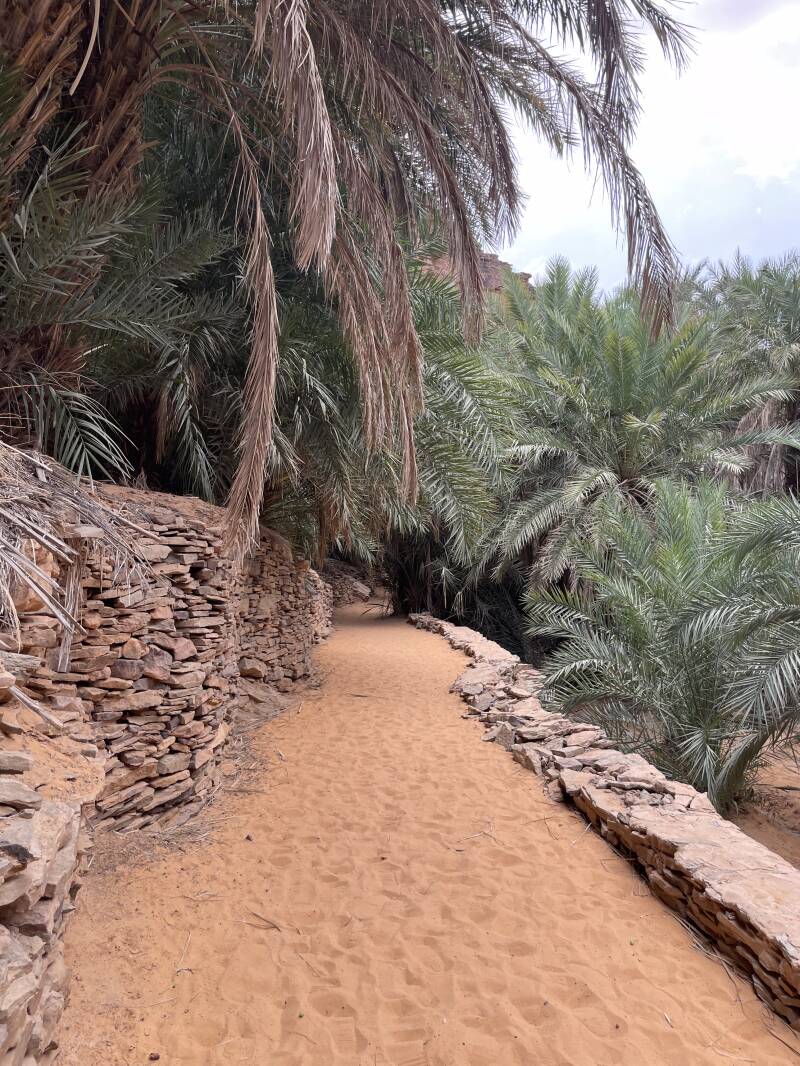
The sandy footpath to the oasis.
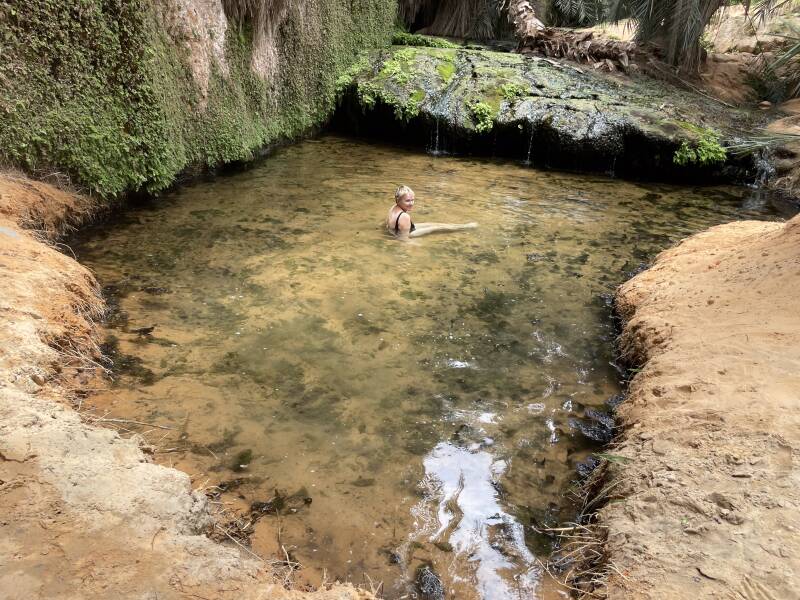
No fear of drowning; I am actually sitting on the floor.
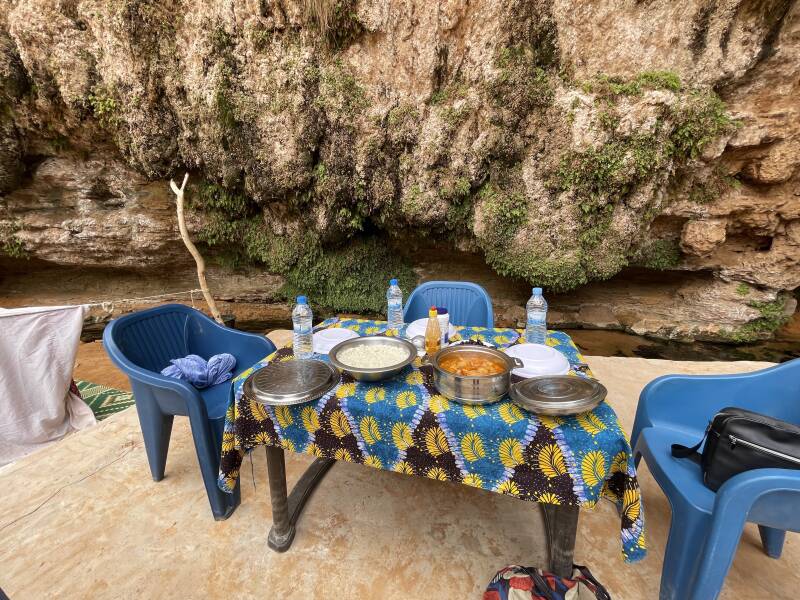
Lunch with an oasis backdrop.
After lunch near the water, we began the long drive back to Nouakchott.
I had also asked my guide whether it might be possible to see a few additional places in the capital before the tour ended.
On the final day of the tour, Issa took me to Nouakchott’s so-called 'Divorced Women’s Market,' known locally in French as the Marché des femmes divorcées. At first, I felt slightly saddened by the amount of rubbish pressed into the sandy ground around the stalls, especially after days spent in the remarkably clean desert landscapes of Adrar. But the atmosphere itself felt very different from what I expected. The women running the stalls seemed relaxed, confident, and genuinely happy in each other’s company, chatting and laughing between customers.
The market is closely tied to Mauritania’s unusual cultural attitude towards divorce. Unlike in many societies where divorce carries stigma, in Mauritanian Moorish culture it is often treated as a normal part of life and even the beginning of a new chapter. Divorced women frequently remarry and are often viewed as experienced and independent rather than socially marginalised. The Marché des femmes divorcées has become a symbol of that independence, where women sell clothes, furniture, and food while building financial autonomy and strong social networks.
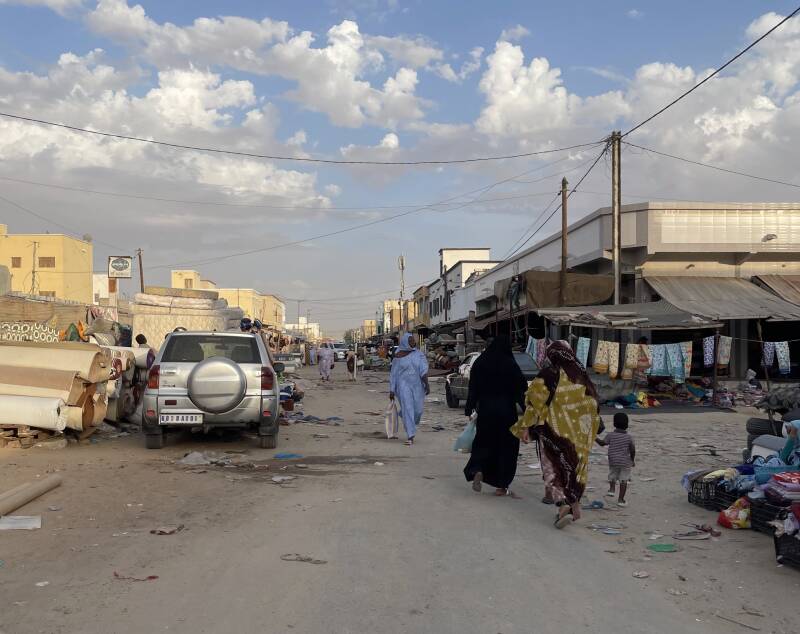
Marché des femmes divorcées (Divorced women's market).
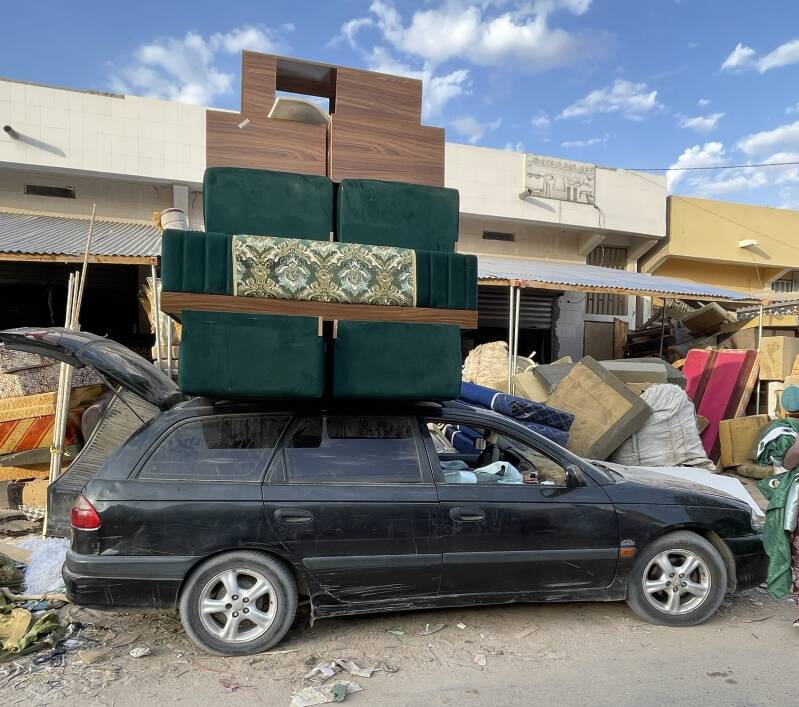
Marché des femmes divorcées (Divorced women's market).
The following day, I visited Nouakchott’s fish market at the Port de Pêche with the main guide from the company, Mohamed (yes, another Mohamed). It was an entirely different atmosphere , loud, energetic, and constantly in motion , with fishermen hauling in catches directly onto the sand. The colourful wooden pirogues lined the shore, immediately reminding me of Senegal and the wider West African Atlantic coast. Mohamed even bought fish there to take home for his wife to cook. The market itself is a vital economic hub, with daily catches of sardines, mackerel, and octopus feeding both local communities and export networks.
Taken together, these two visits offered strikingly different windows into life in Nouakchott, one focused on female independence and social reinvention, the other on the raw, fast-moving rhythm of the Atlantic coast economy.
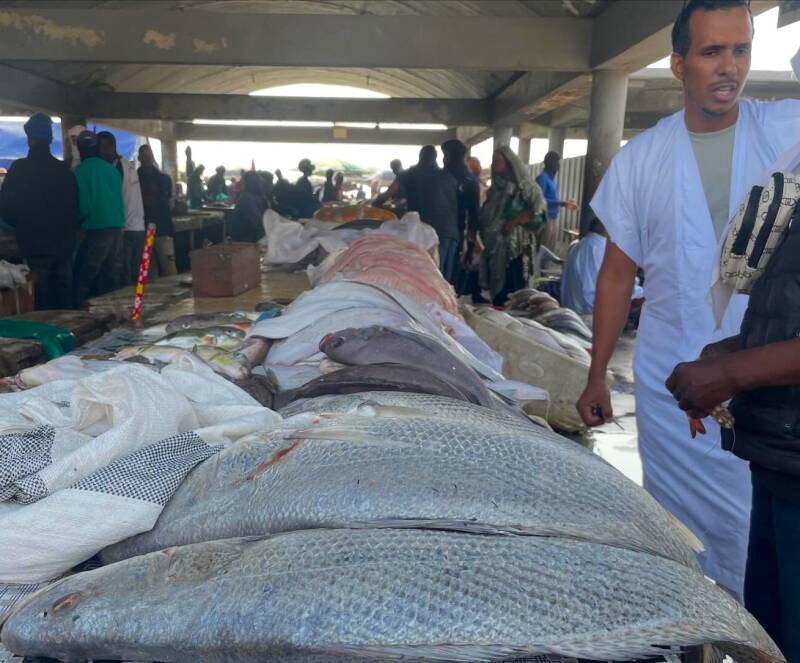
My guide Mohamed purchasing a large fish at Port de Pêche.
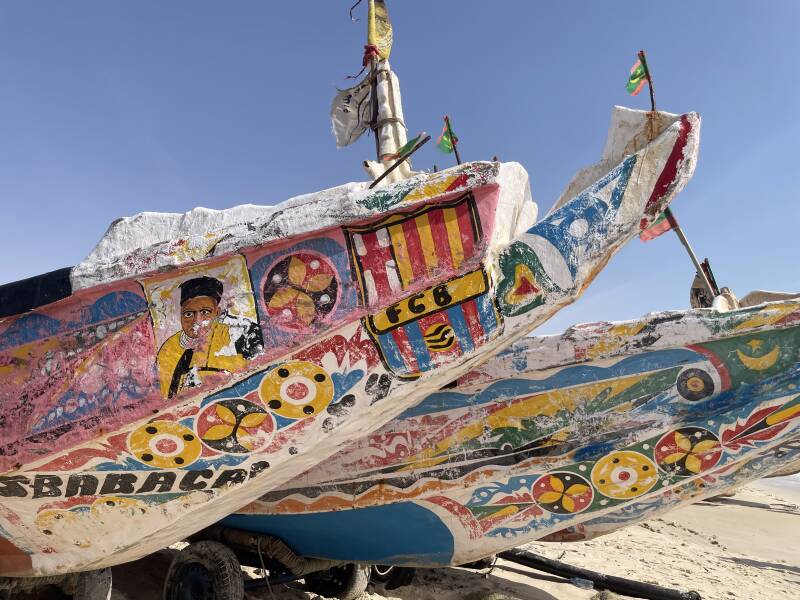
Senegalese fishing boats at Port de Pêche.
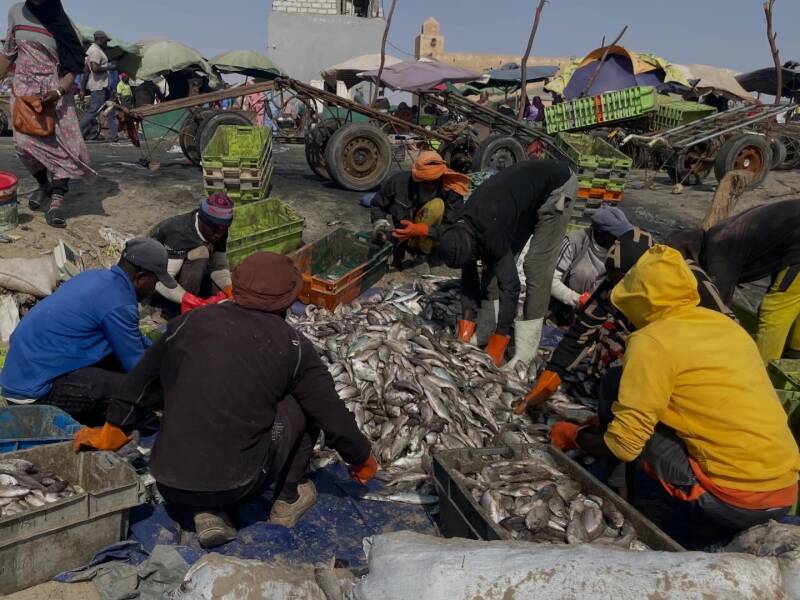
Fishermen inspecting their catch at Port de Pêche.
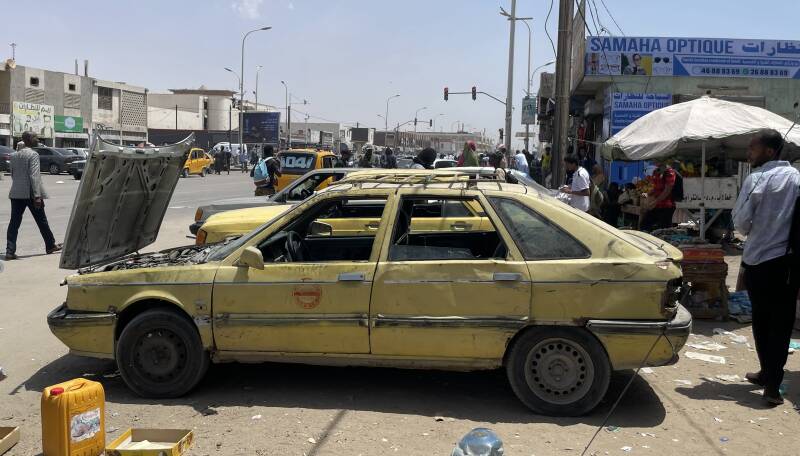
The typical state of most taxis in Nouakchott. You can ride in more expensive ones via apps however!
Staying with a Home Exchange Family
After the tour, I moved into a home exchange arrangement with an Italian-Spanish family living in Nouakchott.
They had a small separate apartment beside the main residence for guests, simple but comfortable, with a bed, bathroom and toilet, while I was welcome to use the kitchen in the main house. They also had cooks, housekeepers and a doorman, and before long I found myself regularly invited to lunch with the family and their three sons.
Those lunches became one of my favourite parts of Mauritania.
Simple meals of chicken and vegetables somehow tasted better because they were shared. It was also a completely different perspective on the country from the tourist route through the desert.
Contrasts in Nouakchott
Nouakchott itself surprised me constantly because of its contrasts.
The next day, I walked alone through central Nouakchott towards the National Museum. Passing the main market was a shock to the system, with layers upon layers of rubbish seemingly embedded into the streets and sand. I also saw several men urinating openly against large public rubbish bins which, given the apparent lack of public toilets, was perhaps unsurprising, but it certainly explained the strong smell hanging over parts of the area. The whole scene created a stark contrast with the surprisingly pristine desert landscapes I had experienced in Adrar.
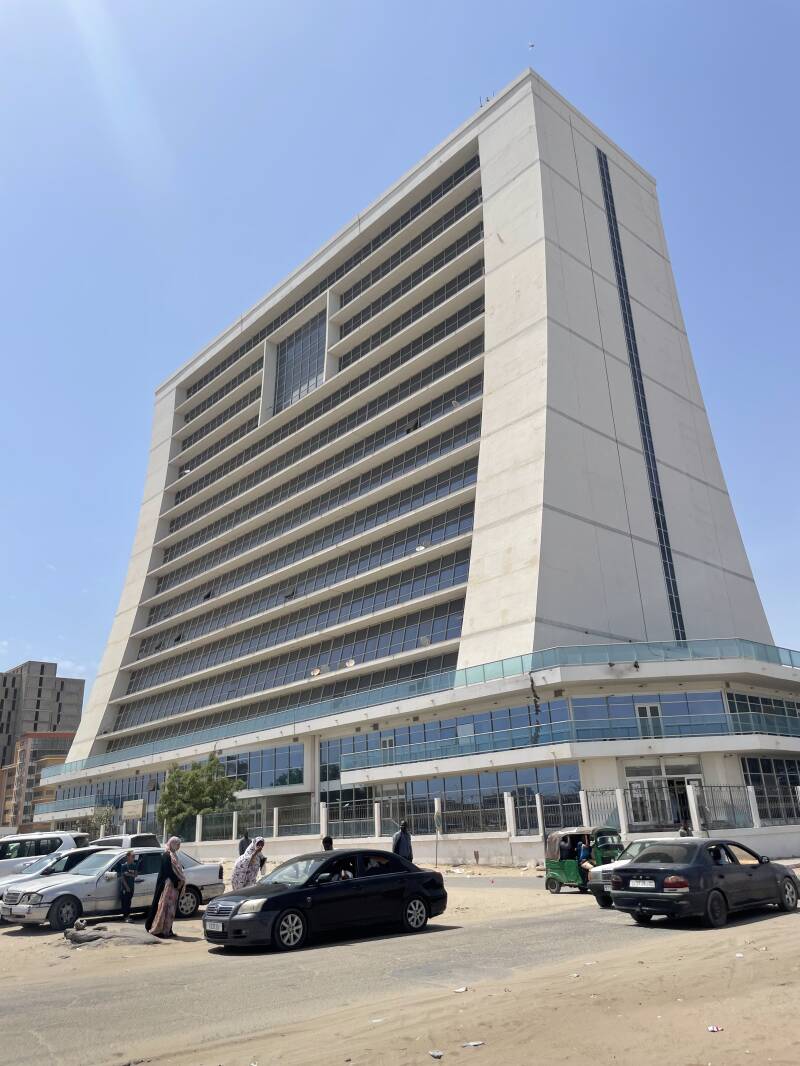
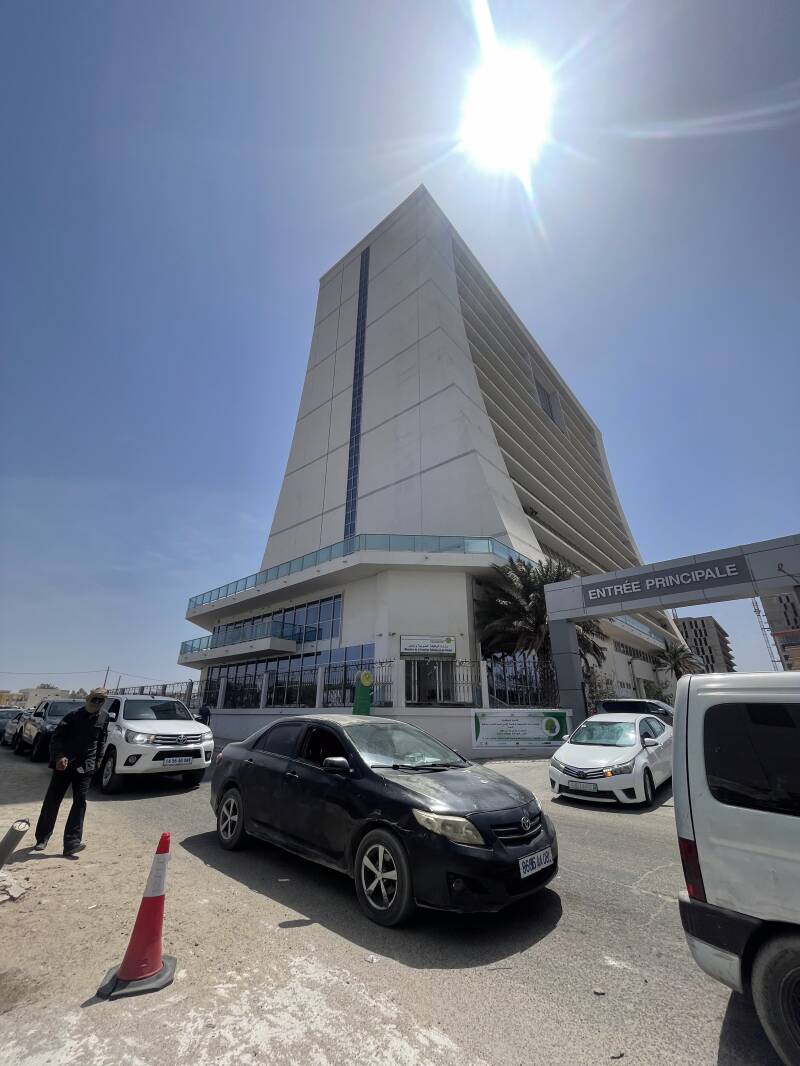
But on the way, I came across something completely different: the striking Immeuble SNIM, headquarters of Mauritania’s state mining company. Rising above the surrounding streets, its sand coloured geometric design felt almost futuristic compared with much of the city around it. Designed by architect Elie Mouyal, the 15 storey building blends modernist architecture with colours and shapes that echo the desert landscape itself.
Seeing the SNIM tower near the National Museum reinforced a feeling I had throughout my time in Nouakchott, a city caught between very different worlds. Alongside crowded markets and visible poverty were ambitious new buildings, modern hotels, and symbols of Mauritania’s mineral wealth and economic ambitions.
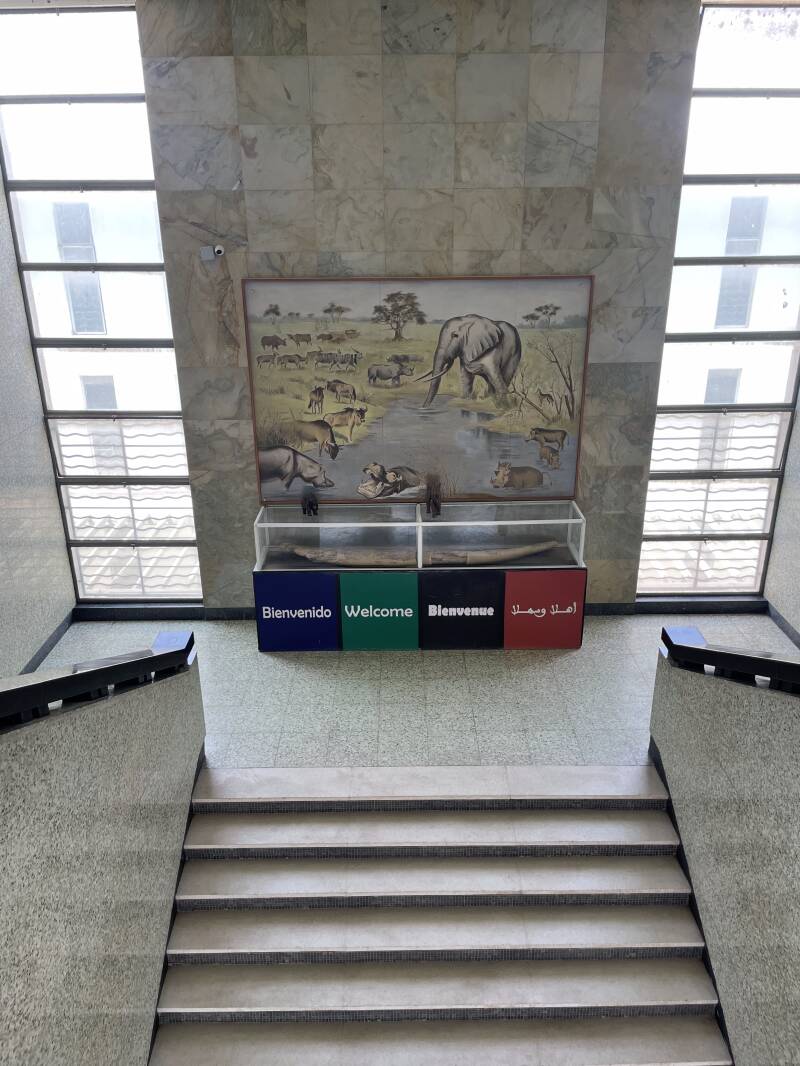
The National Museum entrance at Nouakchott.
At the National Museum, there was no one present to take payment, so I simply wandered through the exhibits alone. Yet the museum’s dioramas and displays gave valuable context to everything I had just seen in the Adrar region.
Later that same week, I met someone from a Facebook travel group for a (non-alcoholic) drink overlooking the enormous Sheraton Hotel, so large it practically blocked the sunset.
The embassy district where my host family lived was clean, quiet and secure, feeling worlds apart from the markets I had wandered through earlier.
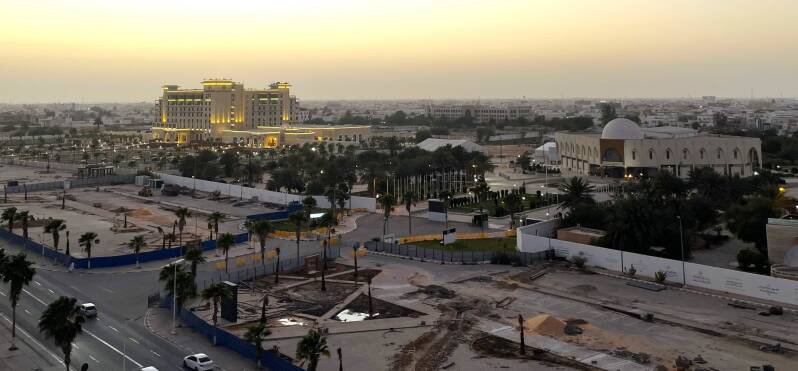
Dusk view of Nouakchott with the looming Sheraton hotel in the background.
And then there was the beach. Francesca and the boys took me to a local beach area with umbrellas, a genuinely good restaurant and remarkably clean sand. Honestly, parts of it were cleaner and better maintained than some beaches back home in Australia.
That was what stayed with me most about Mauritania: the constant contrast.
Ancient caravan cities versus modern luxury hotels. Harsh desert landscapes versus green oases. Chaotic streets versus immaculate beachfronts. Deep conservatism alongside extraordinary hospitality.
Mauritania was never the easiest destination I have visited, but it was certainly one of the most fascinating.
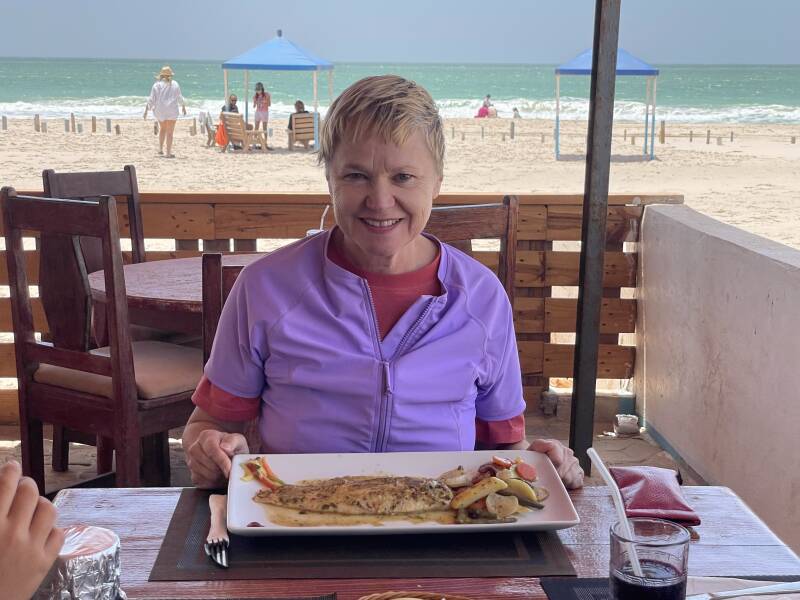
A whole fish for lunch on the beach just outside of Nouakchott.
Create Your Own Website With Webador