

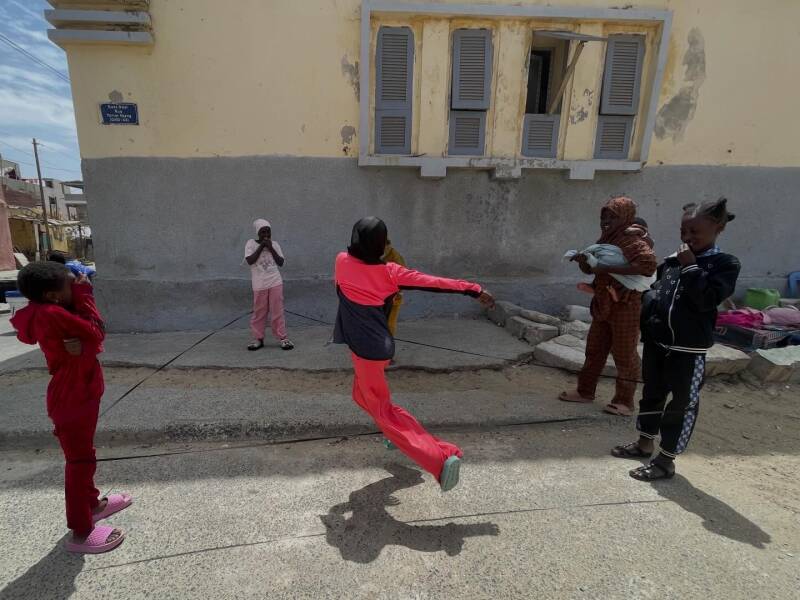
Girls playing elastics in St. Louis, Senegal.
For eight days in March 2026, I travelled through Senegal and The Gambia on a private tour with a guide and driver, crossing between Atlantic cities, deserts, mangrove deltas, wildlife reserves, and sites deeply tied to the history of the transatlantic slave trade. It became one of those journeys that constantly shifted between beauty, energy, discomfort, and reflection.
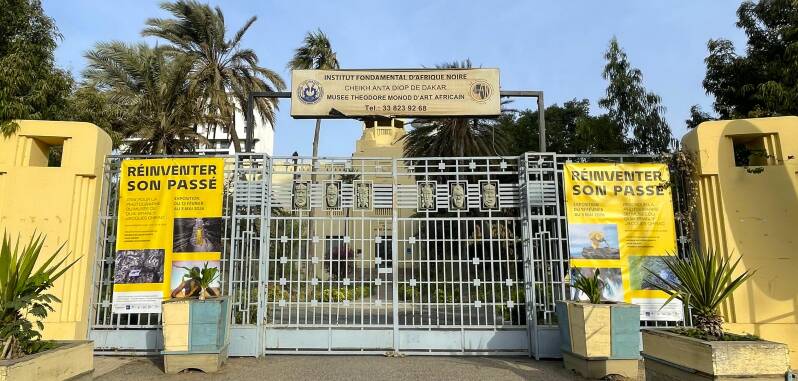
My first stop in Dakar was the Musée Théodore Monod, located within walking distance of my hotel in Dakar. The museum sits among several important civic and cultural buildings, making the area feel like one of the city’s historic and intellectual centers.
I arrived early in the morning before the museum had opened, which gave me time to study the entrance gate more closely. The metal gates were decorated with shapes that resembled faces or traditional masks, hinting at the collections inside. Behind them stood the museum itself, a cream-colored Neo-Sudanese building typical of the 1930s. The institution actually consists of two buildings designed in the same style, combining Sudanese architectural influences with colonial-era design.
Once inside, the museum revealed one of West Africa’s major collections of traditional African art and ethnographic objects. Dedicated to the arts and traditions of West Africa, the museum houses around 10,000 pieces from roughly twenty African countries, mainly from sub-Saharan Africa. More than 300 objects are permanently displayed to the public.
The galleries include funerary masks, terracotta statuettes, drums made from animal skins, carved wooden figures, textiles, and ceremonial objects spread across two thematic pavilions. Alongside its historical collections, the museum also hosts exhibitions of contemporary international art, helping connect traditional African craftsmanship with modern artistic expression.
The combination of the cream-colored exterior, the distinctive masked gate, and the museum’s extensive collection made it a memorable introduction to Dakar and to Senegalese cultural history.
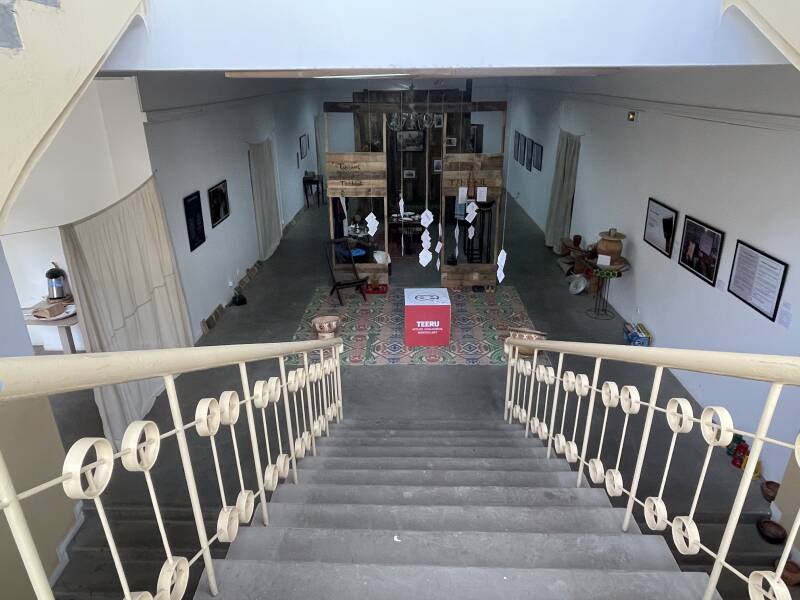
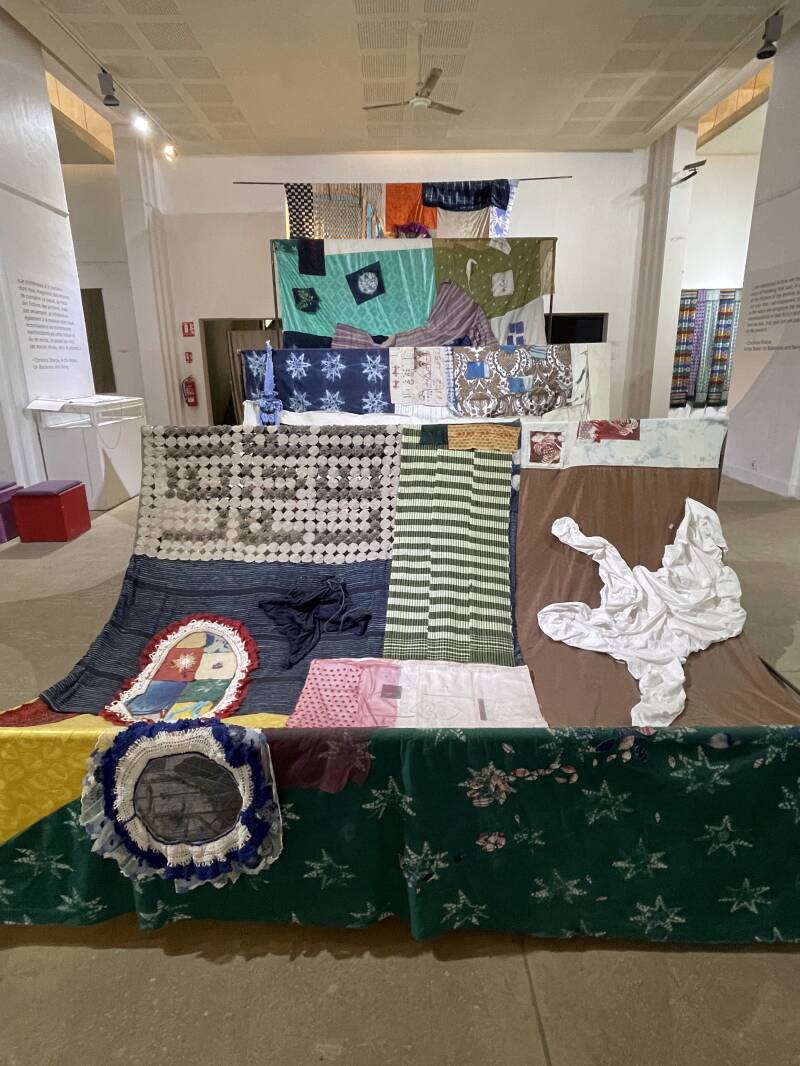
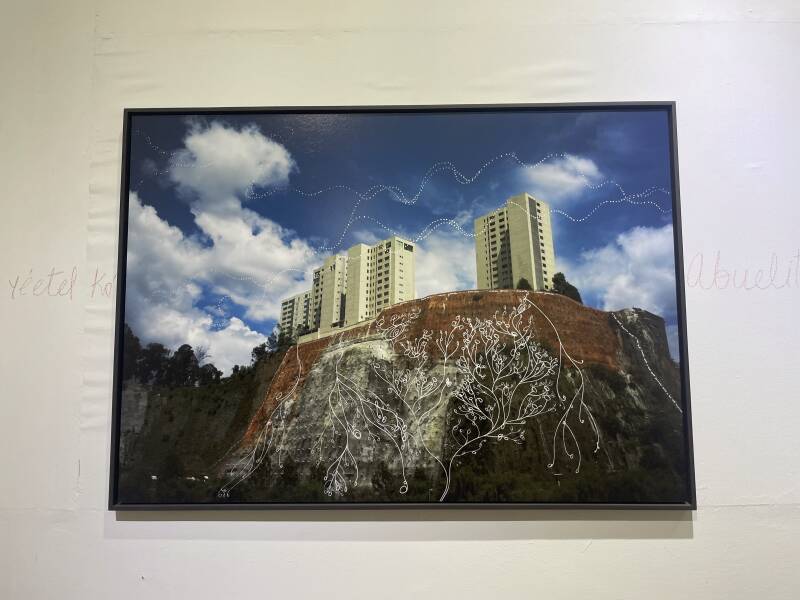
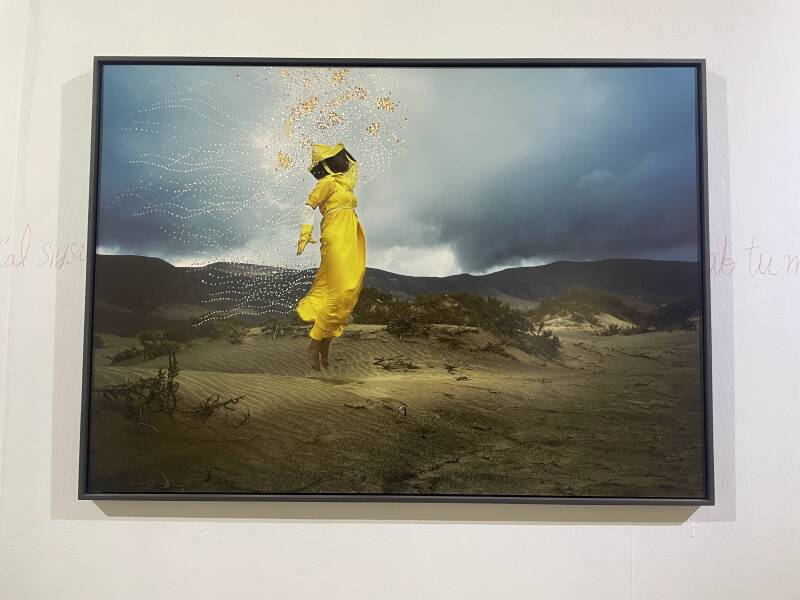
Contemporary art at Musée Théodore Monod; photography by Mónica Alcázar-Duarte, a Mexican-British multi-disciplinary visual artist
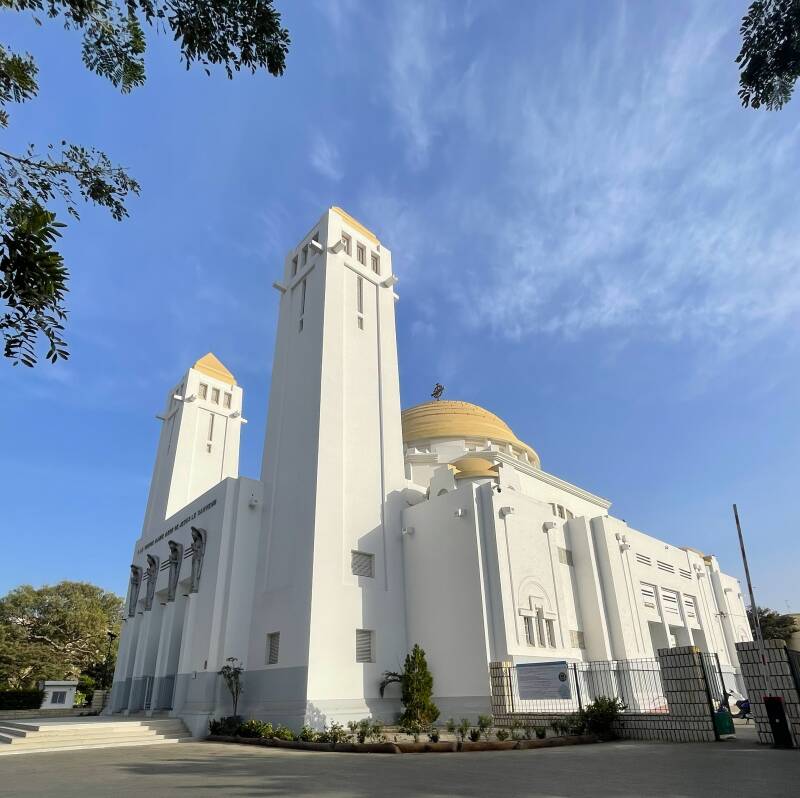
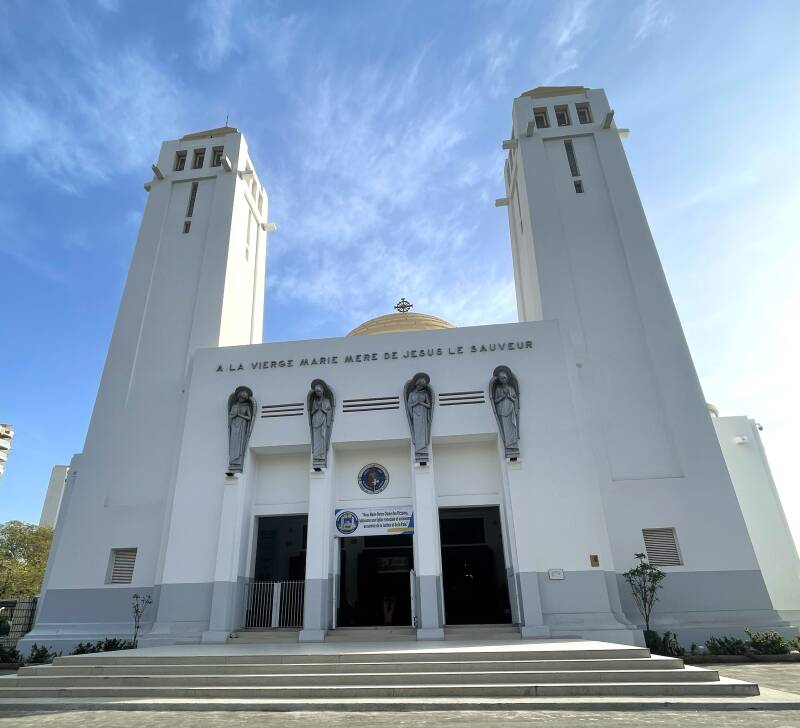
Just a short walk away stood Our Lady of Victories Cathedral, also known as the Cathedral of African Remembrance. Built in 1929 on the site of a former Muslim cemetery, the cathedral is one of Dakar’s major landmarks, and as an admirer of Art Deco architecture I was immediately drawn to its design and sense of grandeur. The vast Byzantine-style dome dominates the interior, pierced by tall Greek-style windows that flood the space with light. Looking upward, I found myself mesmerised by the mural painted across the ceiling, depicting the ascension of humanity to heaven. The fresco blends both white and Black figures in a strikingly multicultural interpretation of spiritual ascent, reflecting the meeting of European religious art and African identity within a predominantly Muslim country. The simplicity of the artwork somehow made it even more emotionally powerful. Originally conceived as a memorial to African soldiers who died during World War I, the cathedral itself combines European Catholic traditions with African influences, from Sudanese-inspired towers to the use of African materials such as Gabonese wood.
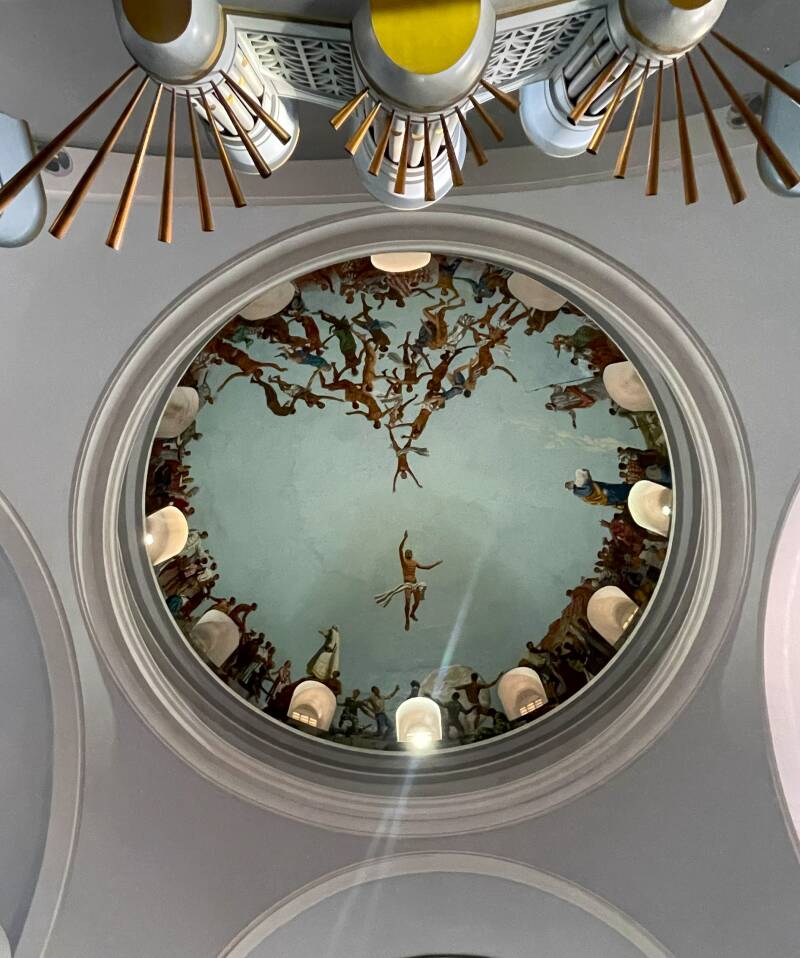
Later, I met up with my guide to explore more of Dakar’s cultural landmarks, beginning with the Museum of Black Civilisations. Opened in 2018, the museum celebrates the history, achievements and cultural contributions of Black civilisations across Africa and the diaspora. Its exhibitions ranged from ancient artefacts to contemporary works, all housed beneath a striking circular dome inspired by traditional African architecture.
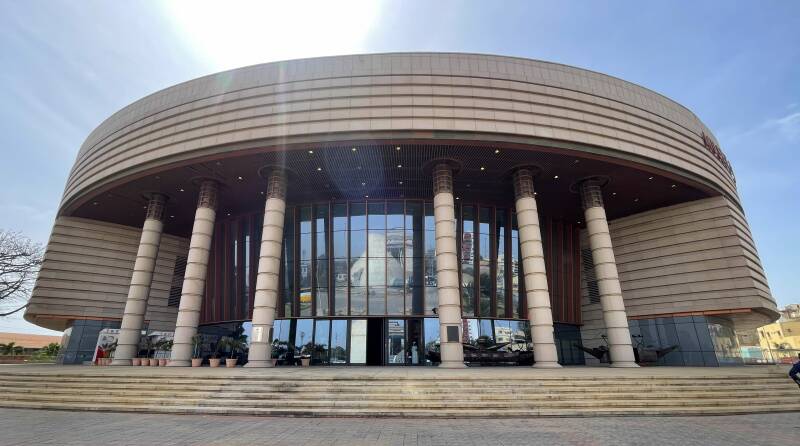
The distinctive facade of the Museum of Black Civilisations.
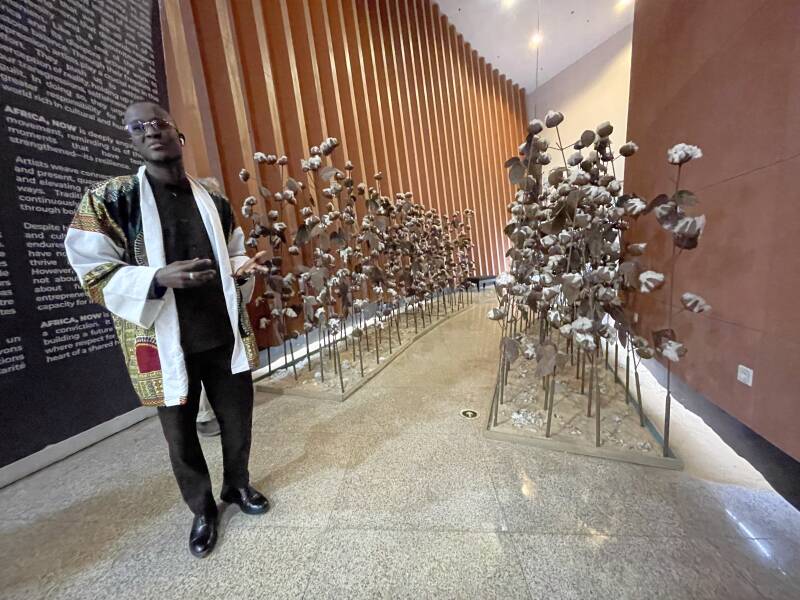
A guide at the Museum of Black Civilisations.
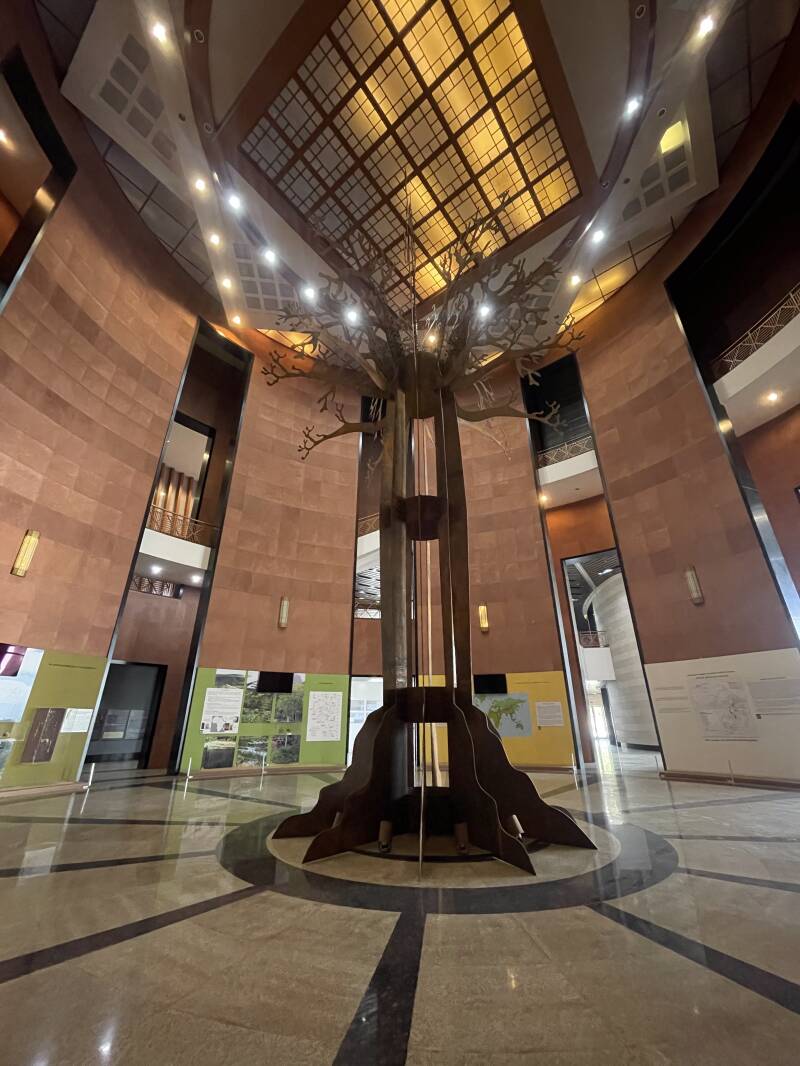
The first room at the Museum of Black Civilisations.
Next stop was at Marché Kermel, one of Dakar’s most distinctive markets. Although I didn’t buy anything there, I was fascinated by the building itself, especially its striking entrance and unusual architectural style. As someone drawn to historic architecture, I found it far more interesting than an ordinary market visit.
Originally inaugurated by the French in 1910 in the heart of Dakar’s colonial district, the market replaced a far more modest structure and was designed using neo-Moorish architectural elements more commonly associated with French North Africa. Architectural historians have described the facade as an example of an 'invented tradition,' blending imported North African colonial aesthetics into a West African setting for the first time. The horseshoe arches, decorative detailing and almost theatrical entrance give the building a distinctive identity that feels both North African and uniquely Senegalese at the same time.
The story of the market did not end there. After a devastating fire destroyed the building in 1993, independent Senegal chose to reconstruct it as a near replica of the colonial-era original, preserving not only the market itself but also the layered history and symbolism attached to its architecture. Knowing that history made wandering around the building even more fascinating, particularly in a city like Dakar where African identity, colonial legacy and modern cultural pride constantly intersect.
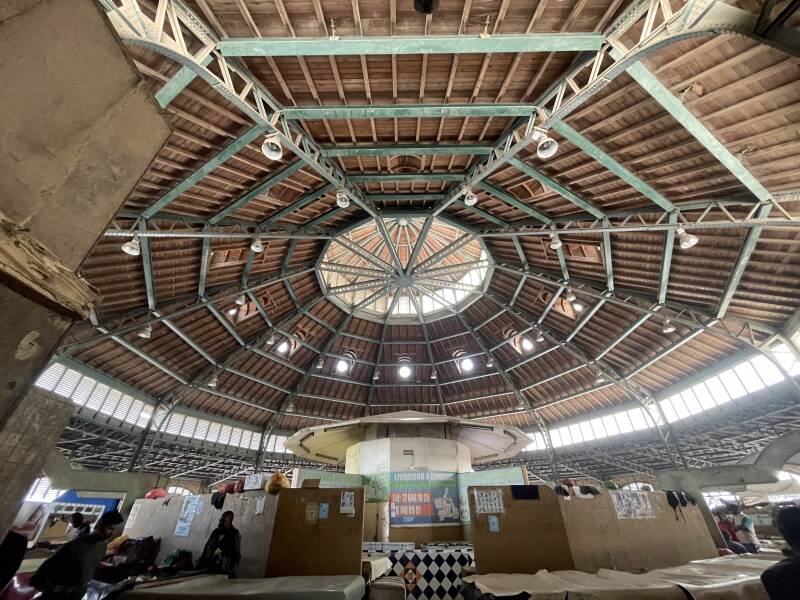
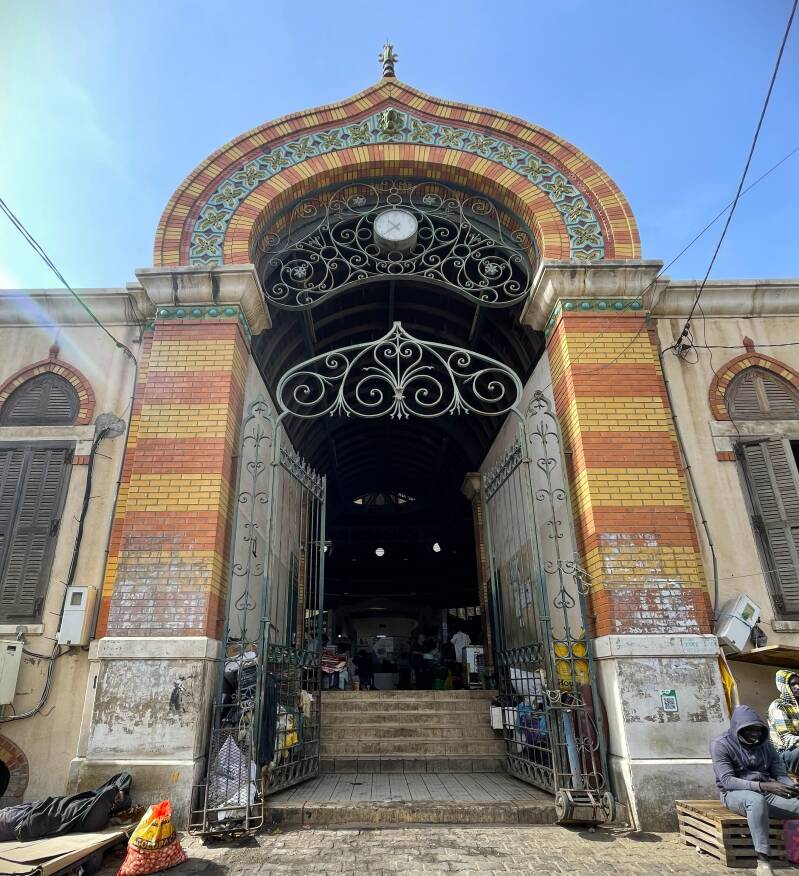
Views of Marché Kermel.
One place I had always wanted to visit was the African Renaissance Monument, the colossal 52 metre bronze statue overlooking the city. Completed in 2010 to mark the 50th anniversary of Senegal’s independence from France, it remains the tallest statue in Africa. Ironically, once I arrived I got swept into a nearby Holi festival and ended up taking only a few photos of the monument itself as coloured powder flew through the air around us.
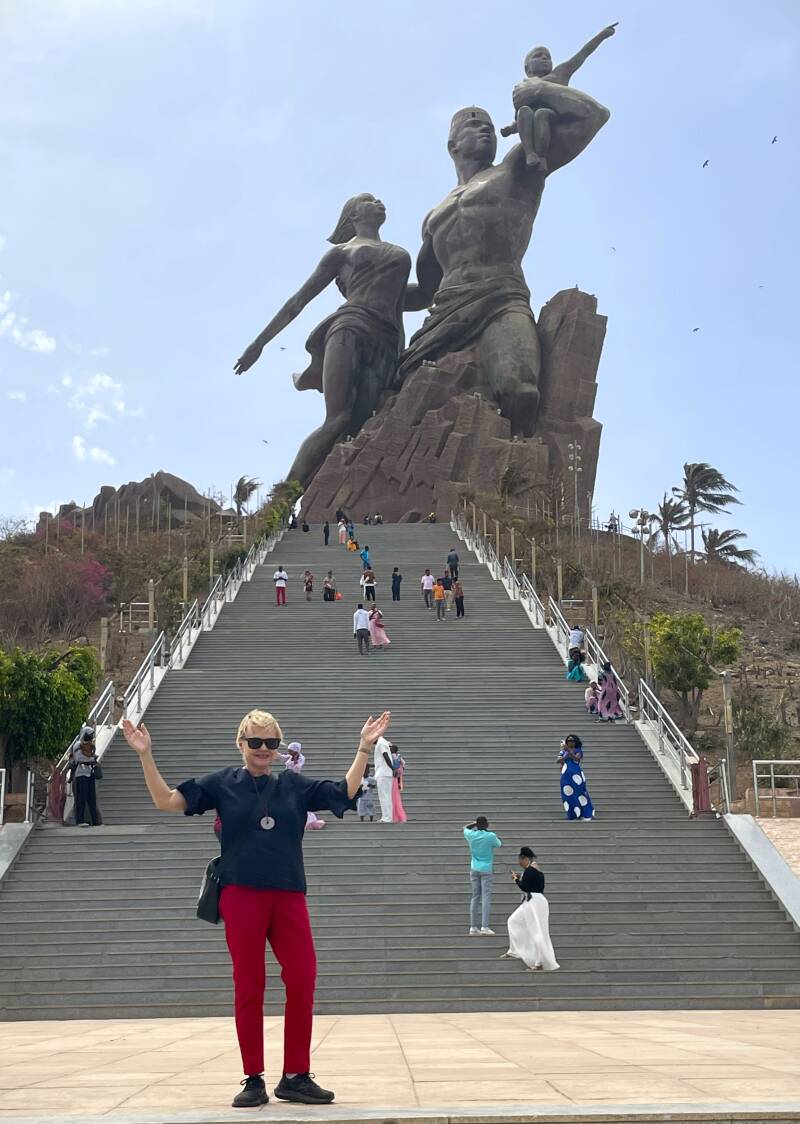
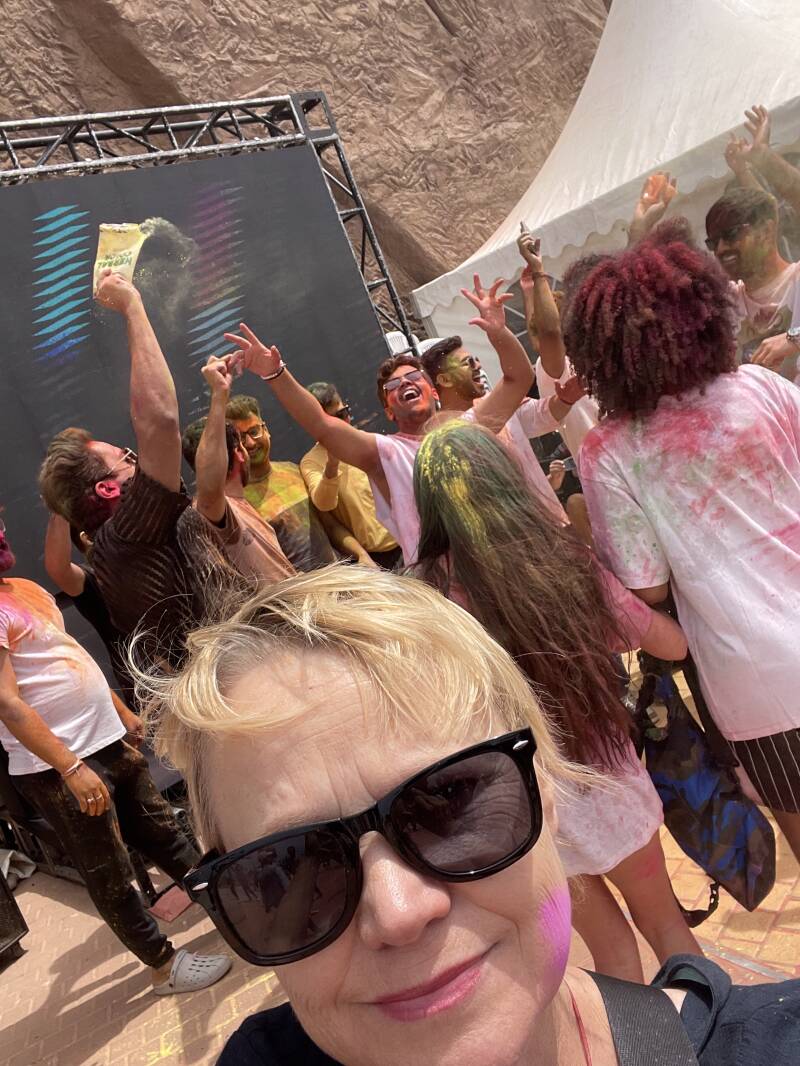
The African Renaissance Monument and the Holi Festival around the back of the statue.
We also visited Place du Souvenir Africain, the African Remembrance Square, created to honour the memory of Black peoples, martyrs and activists whose stories shaped the continent and the wider diaspora.
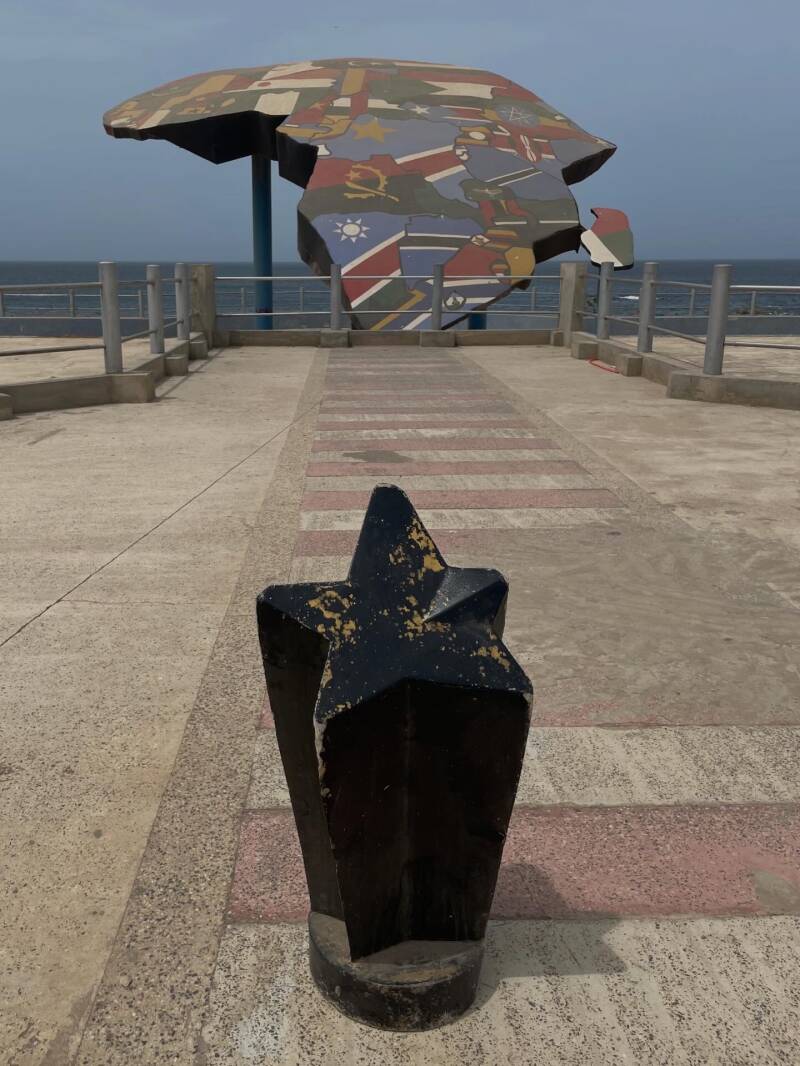
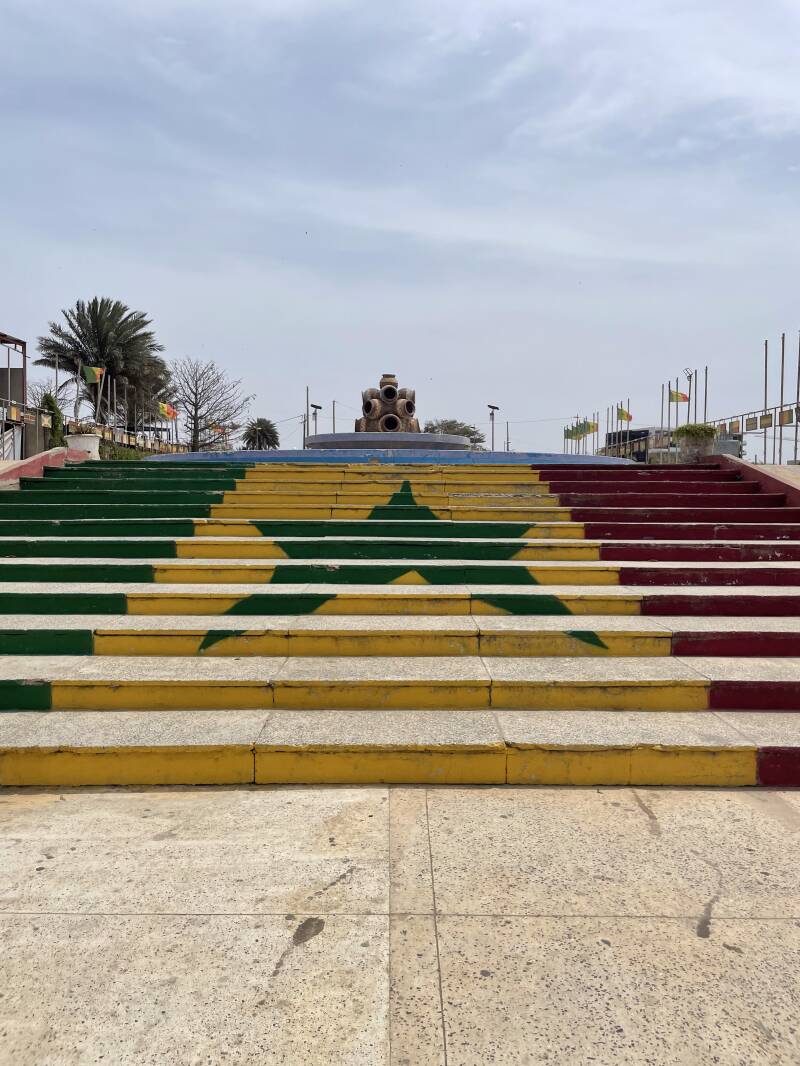

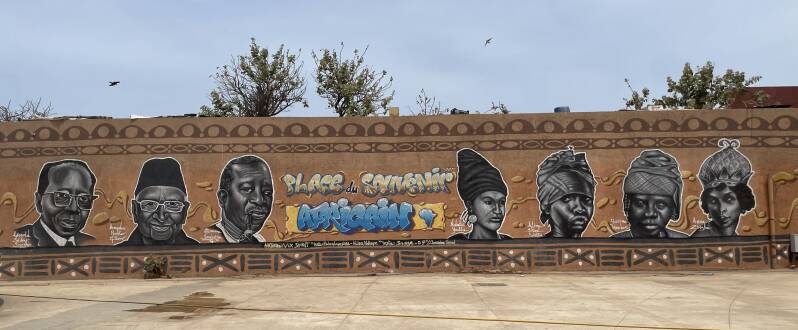
Views of Place du Souvenir Africain, the African Remembrance Square.
The most emotional part of Dakar for me was visiting Gorée Island, which we traveled to by ferry. It hasn’t been easy to comprehend the horrific reality of slavery while travelling through West Africa, and Gorée brought that history painfully close. At the island’s House of Slaves stands the infamous 'Door of No Return,' the narrow doorway facing the Atlantic Ocean through which enslaved Africans took their final steps before being forced onto ships bound for the Americas and Europe. Inside the House of Slaves, men, women and children were separated into cramped cells, while young women were selected and abused by slave owners.
"Human beings were chained and shackled. As many as 30 men would sit in an 8-square-foot cell with only a small slit of the window facing outward. Once a day, they were fed and allowed to attend to their needs, but still, the house was overrun with the disease. They were naked except for a piece of cloth around their waists. They were put in a long, narrow cell to lie on the floor, one against the other. The children were separated from their mothers. Their mothers were across the courtyard, likely unable to hear their children cry. The rebellious Africans were locked up in an oppressive, small cubicle under the stairs, while seawater was sipped through the holes to ease dehydration.
Above their heads, in the dealer's apartments, balls and festivities were going on. But even more poignant and heart-wrenching than the cells and the chains were the small "door of no return" through which every man, woman, and child walked to the slave boat, catching a last glimpse of their homeland." Africana The Encyclopedia of the African and African American Experience; Editors: Kwame Anthony Appiah and Henry Louis Gates Jr.
Although historians debate how many enslaved people passed specifically through this building compared with other ports along the West African coast, the site remains one of the world’s most powerful symbols of the transatlantic slave trade and its human cost.
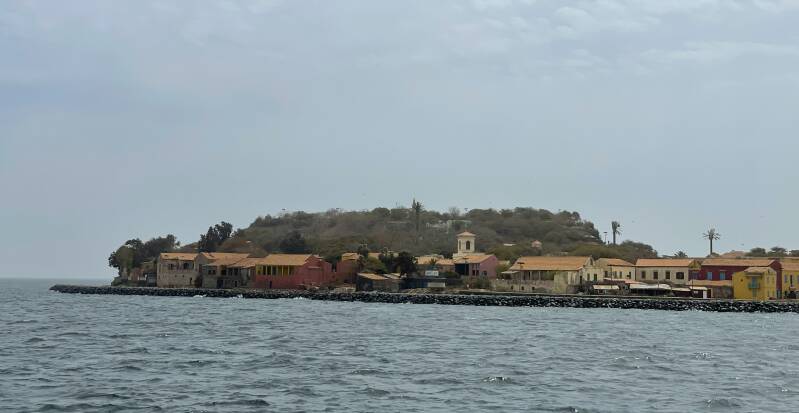
Arriving by ferry at Goree Island.
What makes Gorée even more haunting is that today it is paradoxically beautiful. The UNESCO World Heritage Site is filled with pastel coloured houses, flowering bougainvillea, quiet laneways, schools and a small hospital, all entirely free of cars. Residents travel back and forth to Dakar on the short ferry crossing, while visitors wander through streets that feel peaceful and picturesque despite the unimaginable suffering once tied to them. That contrast between beauty and horror stayed with me long after leaving the island.
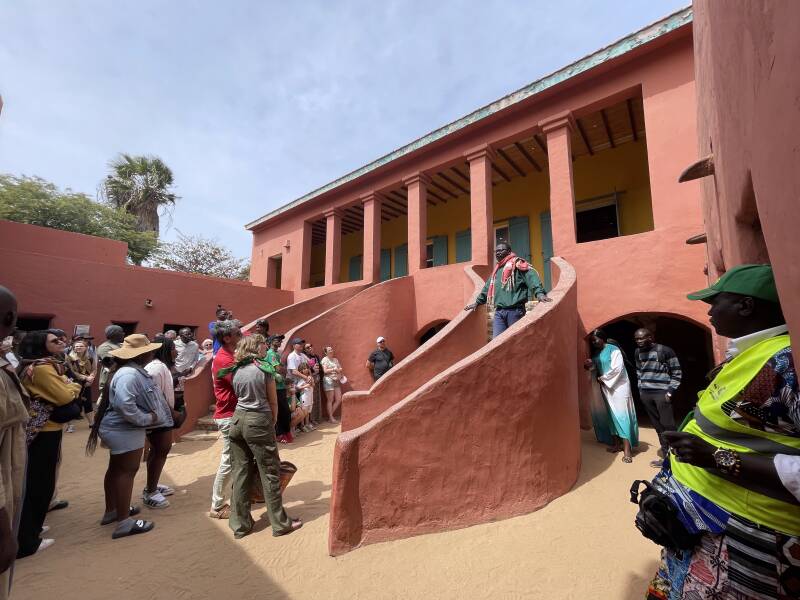
A guide with tourists at House of Slaves, Goree Island.
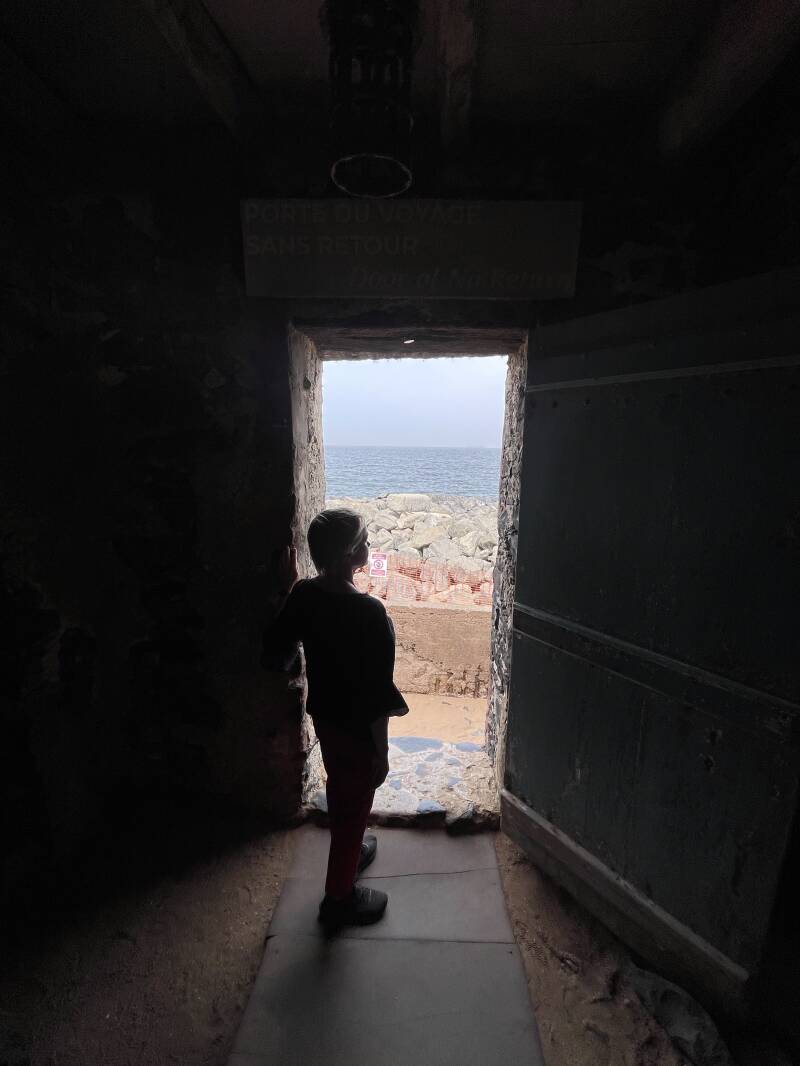
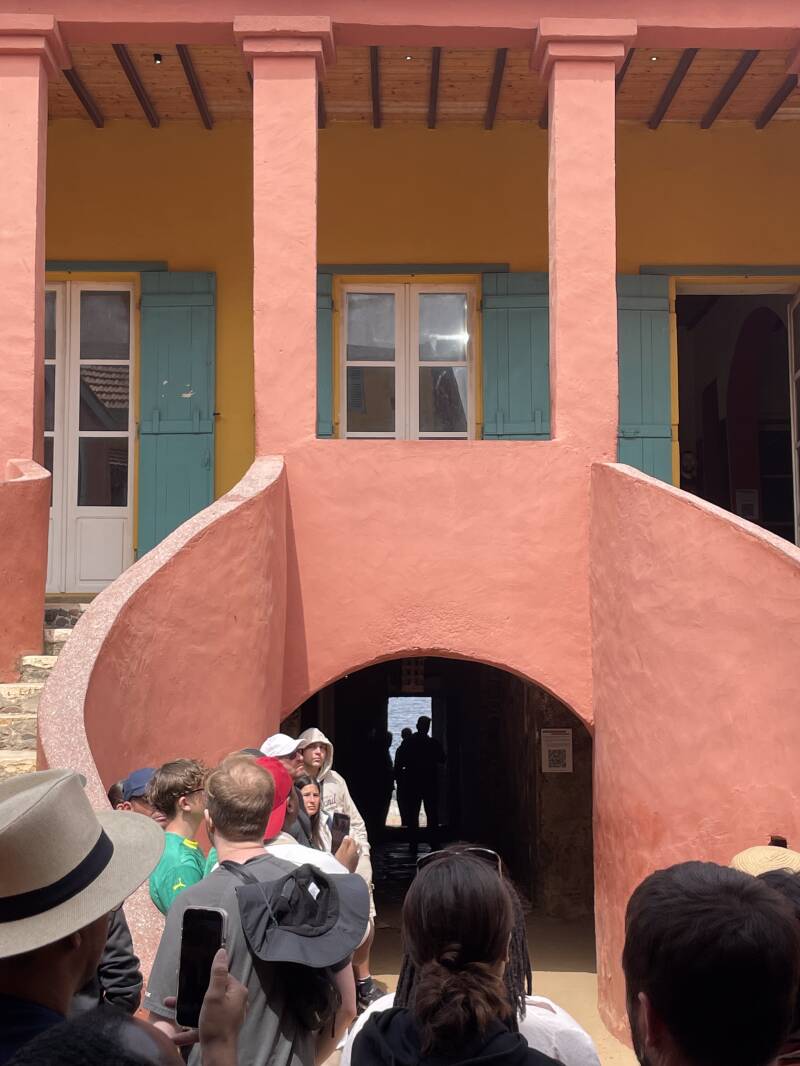
The Door of No Return at the House of Slaves, Goree Isand.
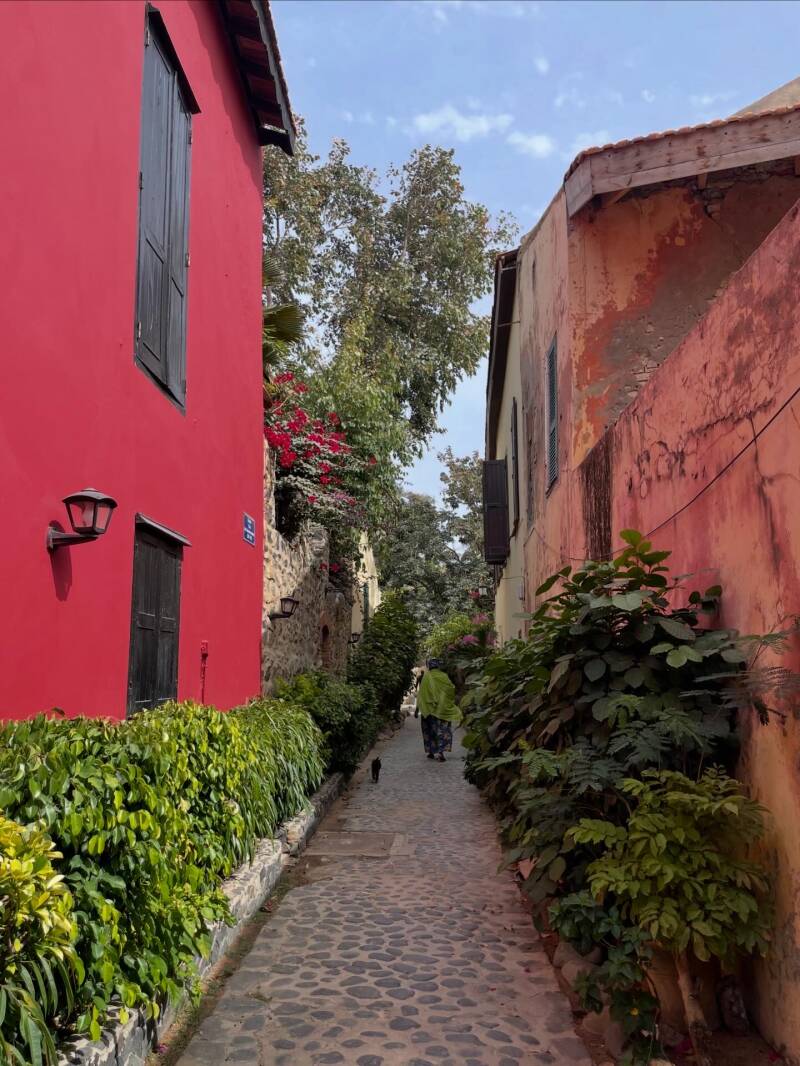
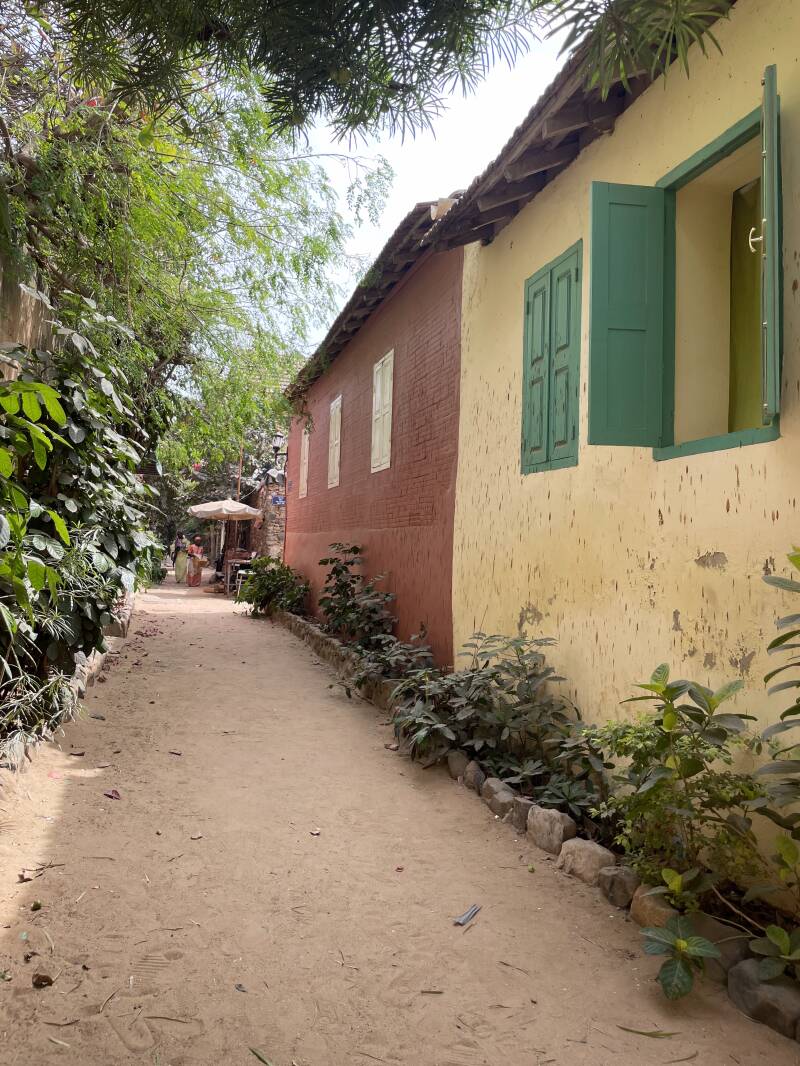
Some of the many charming laneways at Goree Island.
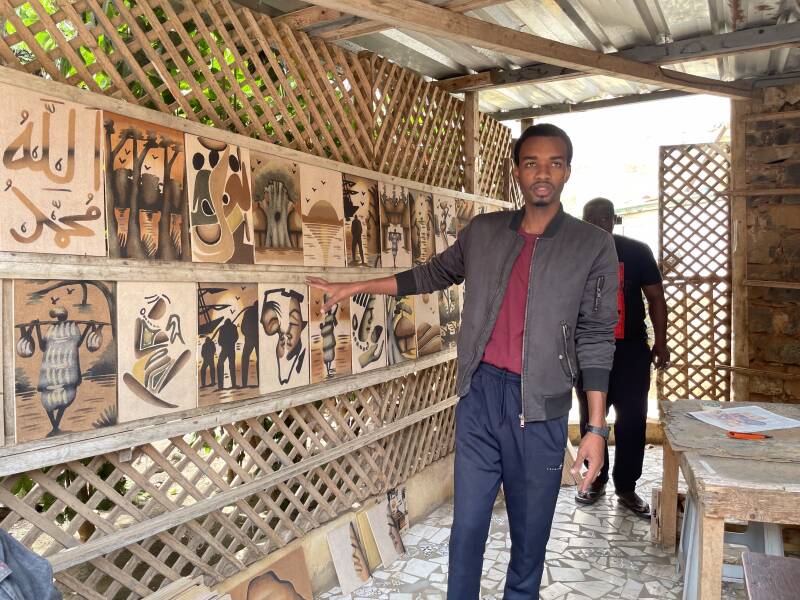
An artist discussing and demonstrating his sand drawings.
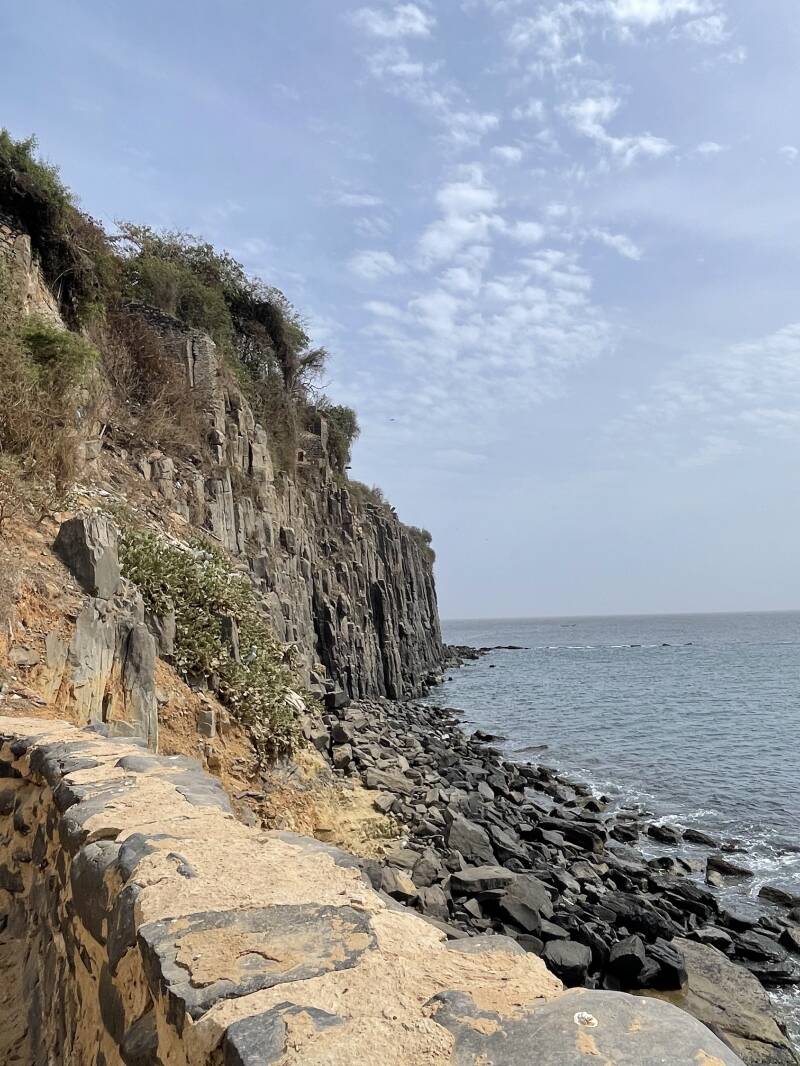
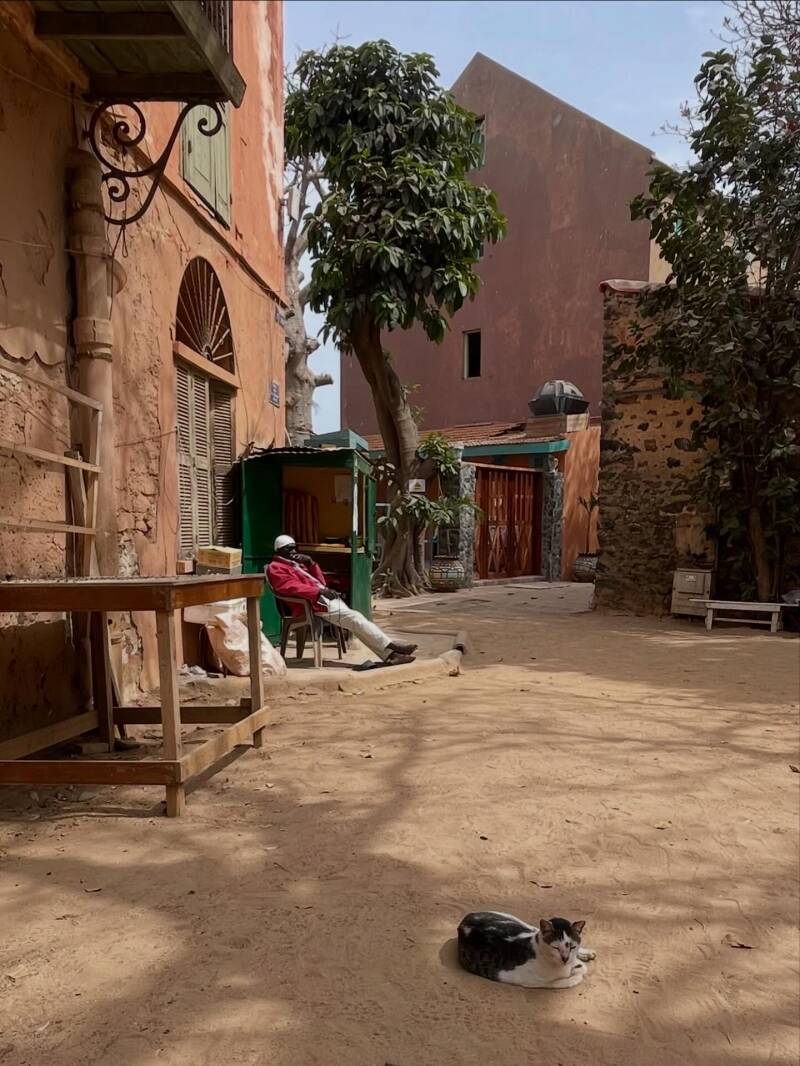
Various views of Goree Island.
The following day we left Dakar to explore the rest of Senegal. We drove north to Lake Retba, better known as Lac Rose or the Pink Lake. Although the lake was not as pink as the one I have visited in the Wimmera region of Victoria, Australia, the boat ride and the salt harvesting were worth experiencing. From there we continued for several hours towards Saint-Louis, the former colonial capital of French West Africa.
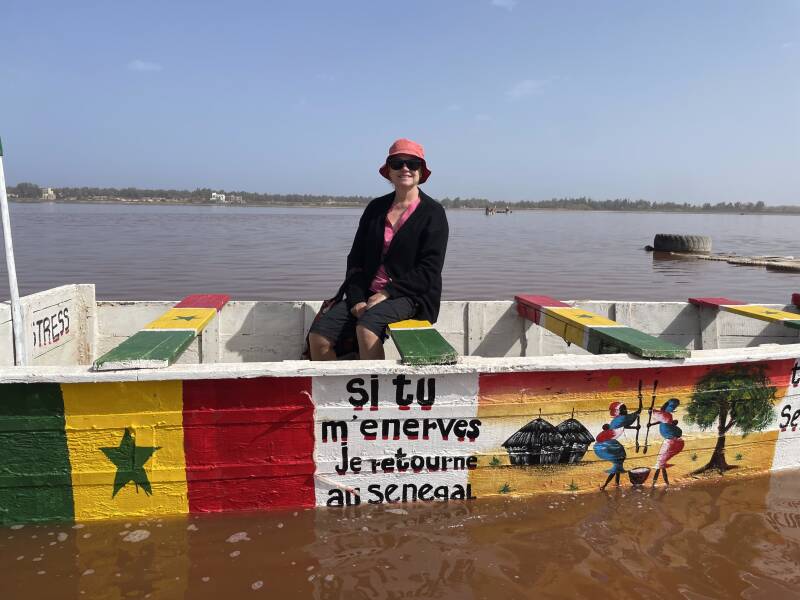
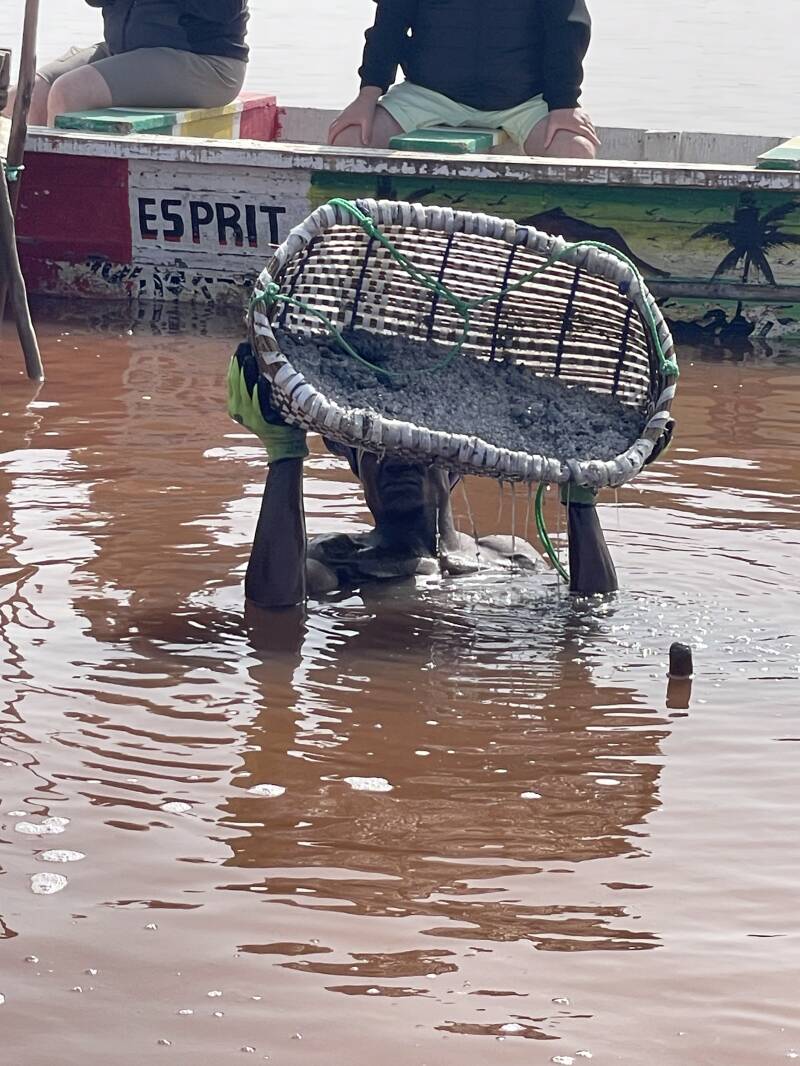
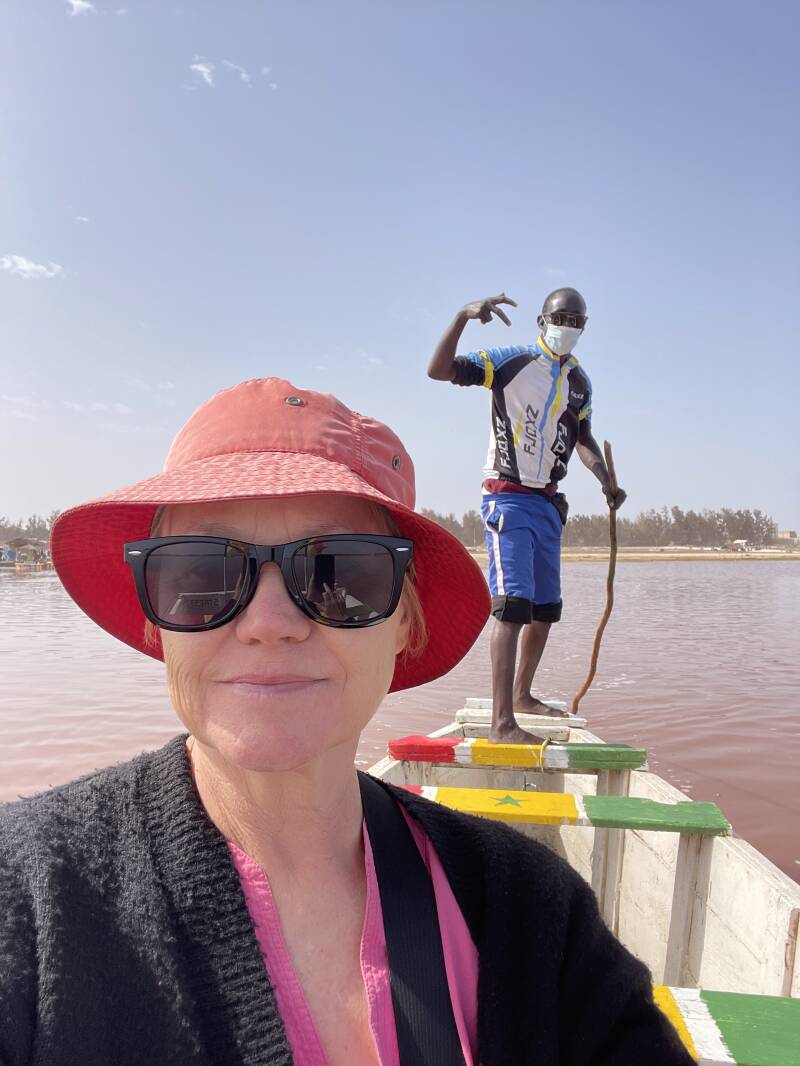
Views of Lac Rose.
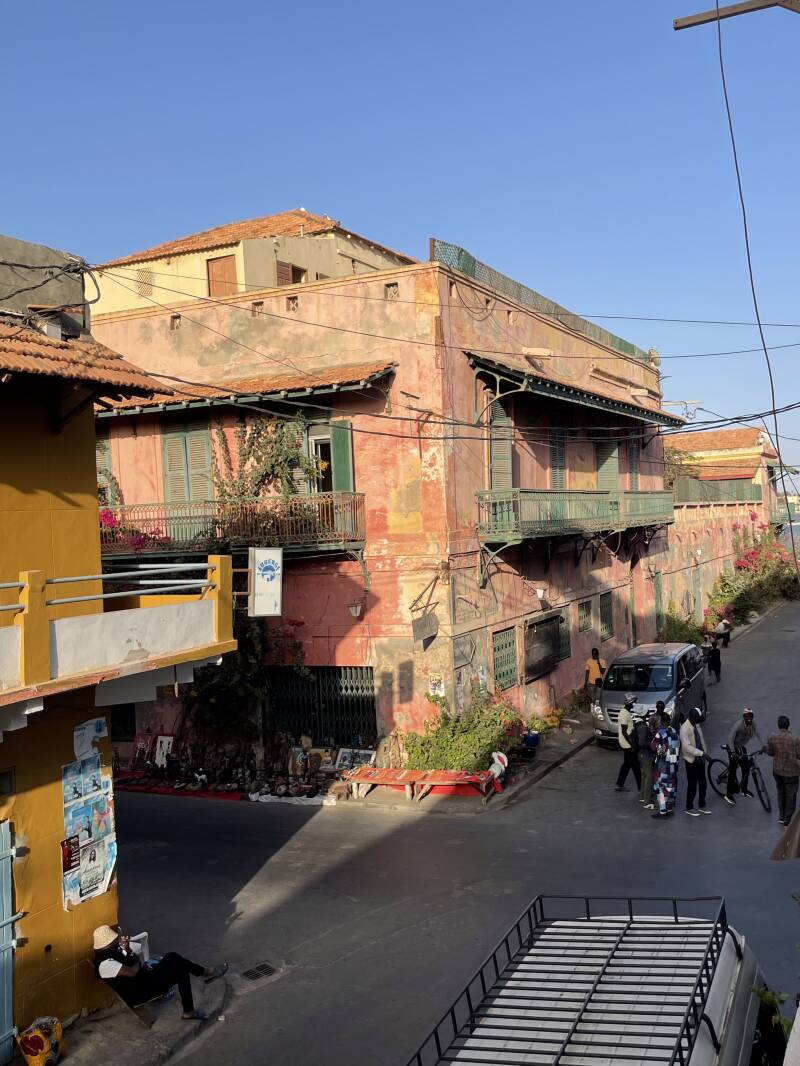
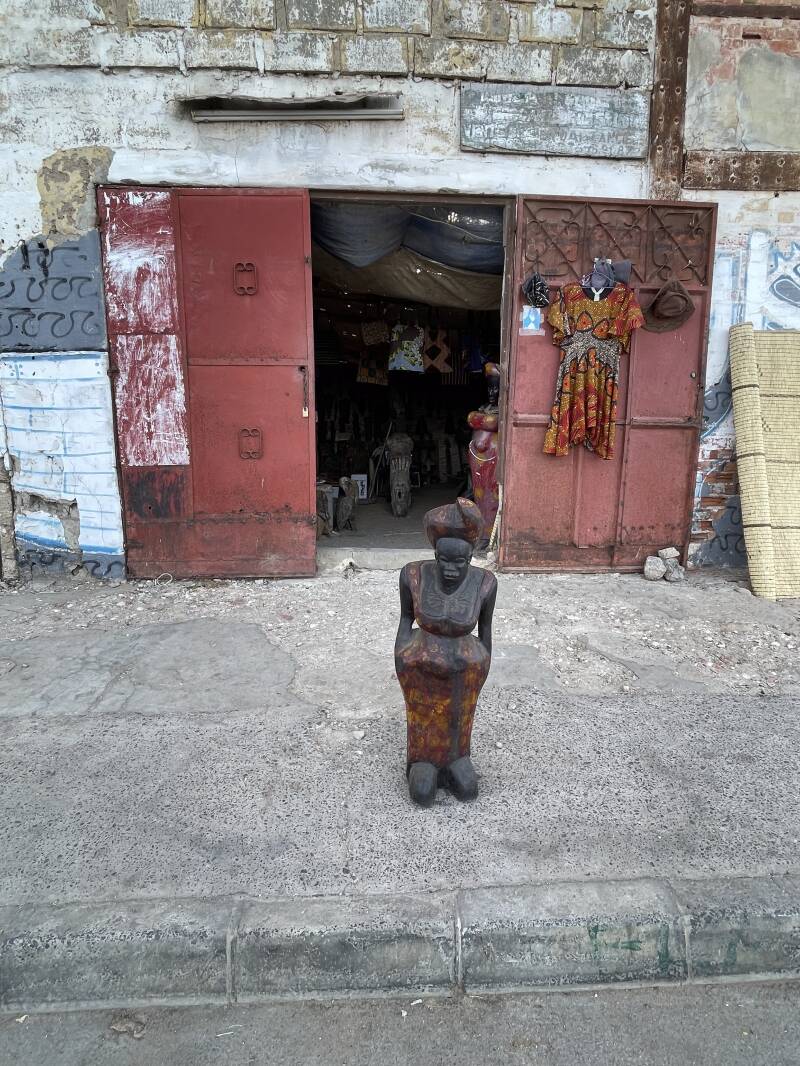
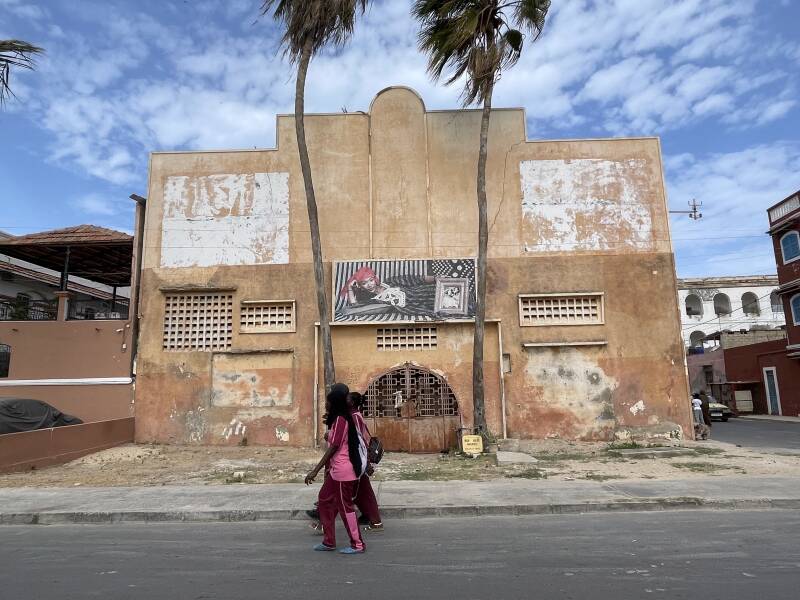
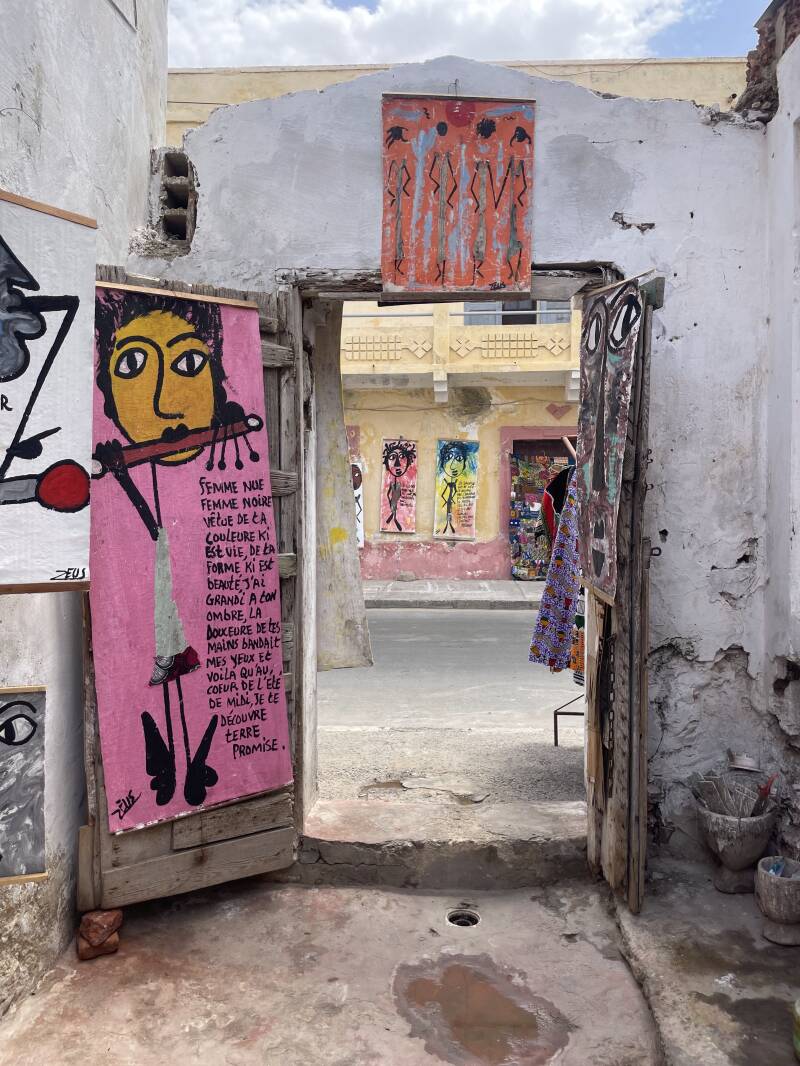
Saint Louis quickly became one of my favourite stops. On the first evening I ended up drinking wine in a bar with several travellers from an Intrepid tour, comparing similarities and differences with our itineraries. Solo travelling has distinct advantages but I was missing the change to chat with other travellers; my guide and driver were Muslim, observing Ramadan at the time which made me feel slightly guilty with every sip of water I took along the way. They both said that they were 'used to it', when I asked how they could go without water for so long in the hot climate. The following morning I wandered around the island’s galleries and colonial streets by myself, as the tour didn't start until later. The city has a faded elegance, with decaying French colonial architecture mixed with vibrant artistic life.
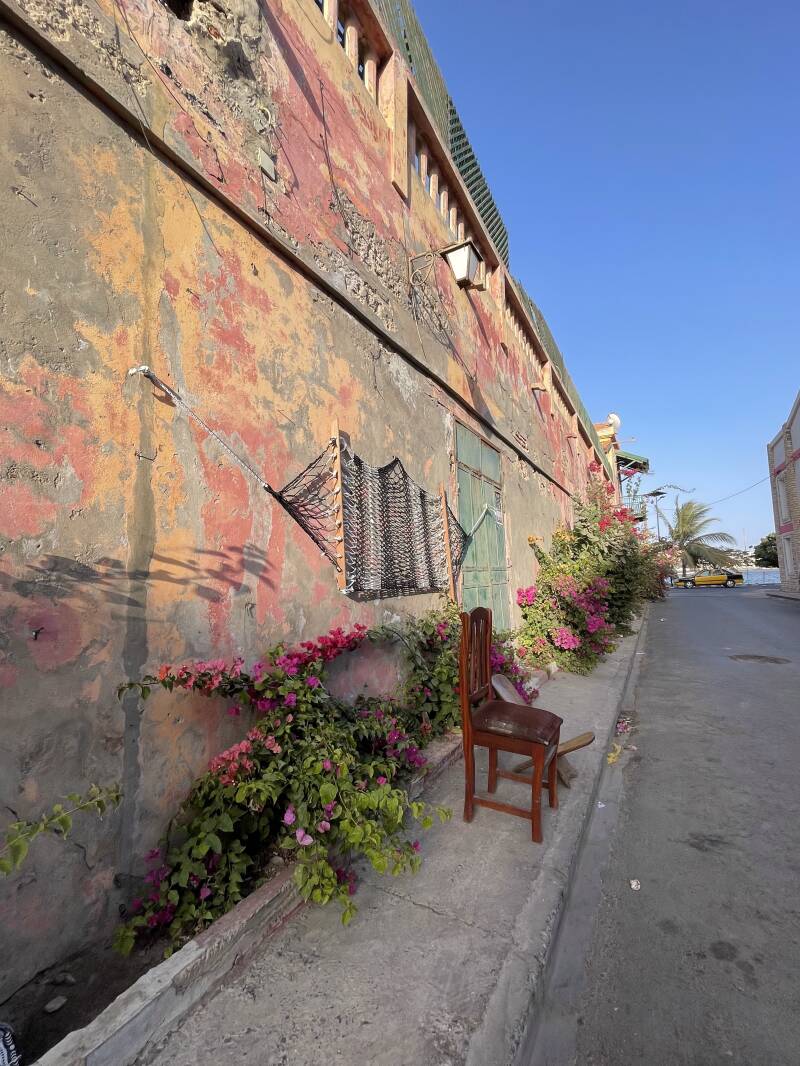
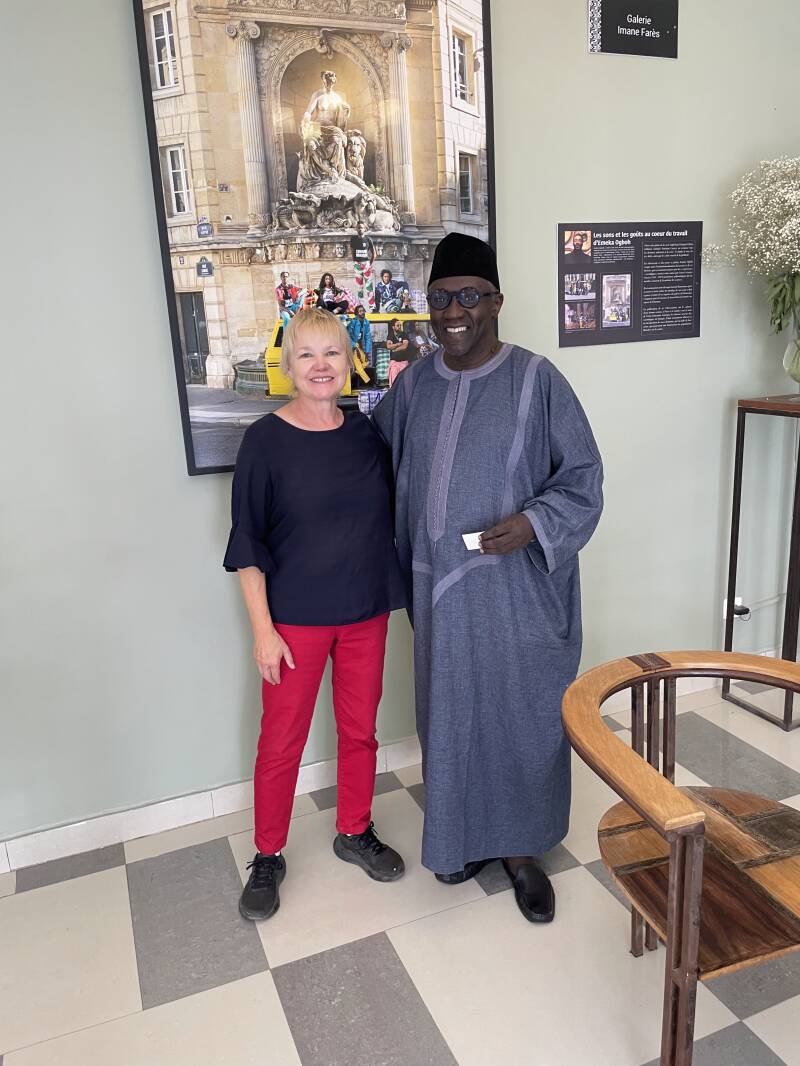
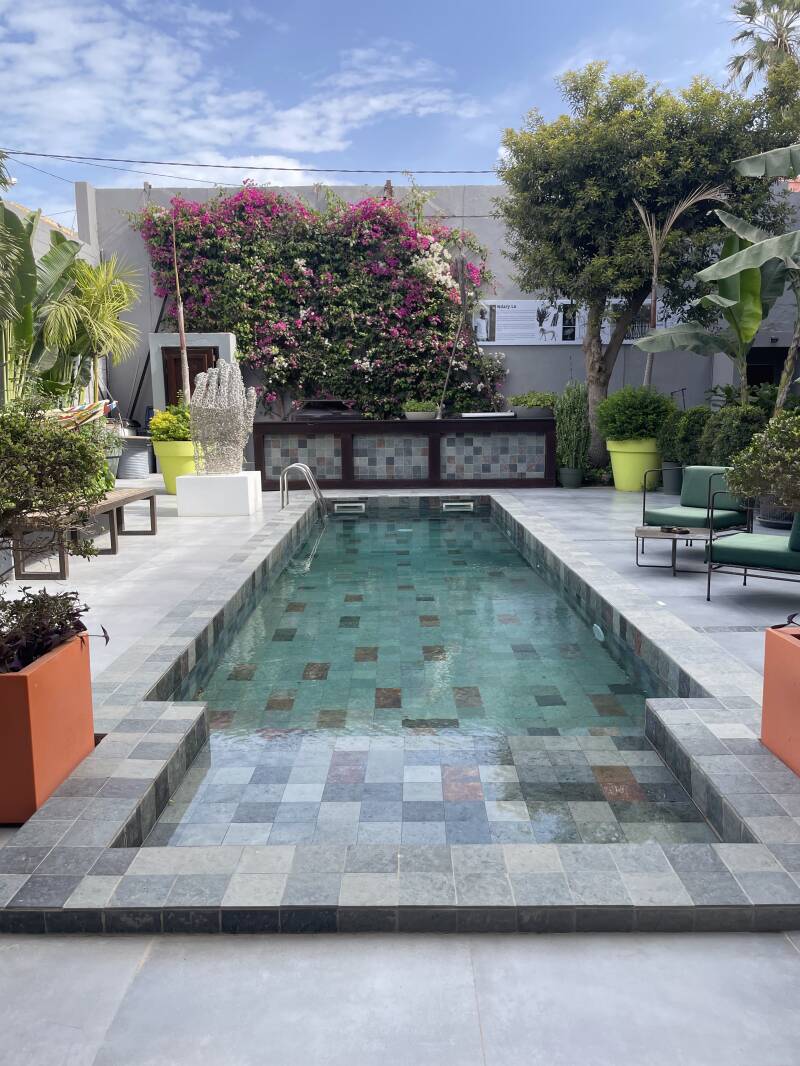
Meeting Amadou Diaw, founder of the Museum of Photography in Saint Louis. The pool at Museum of photography.
One of the highlights was meeting Amadou Diaw, founder of the Museum of Photography in Saint Louis and several other museums across the island. After founding Senegal’s first private business school, he turned towards arts philanthropy, and hearing him speak about preserving Senegalese culture was fascinating.
We also toured the fishermen’s district where colourful wooden pirogues lined the beach, another reminder of how central the Atlantic is to life along this coastline.
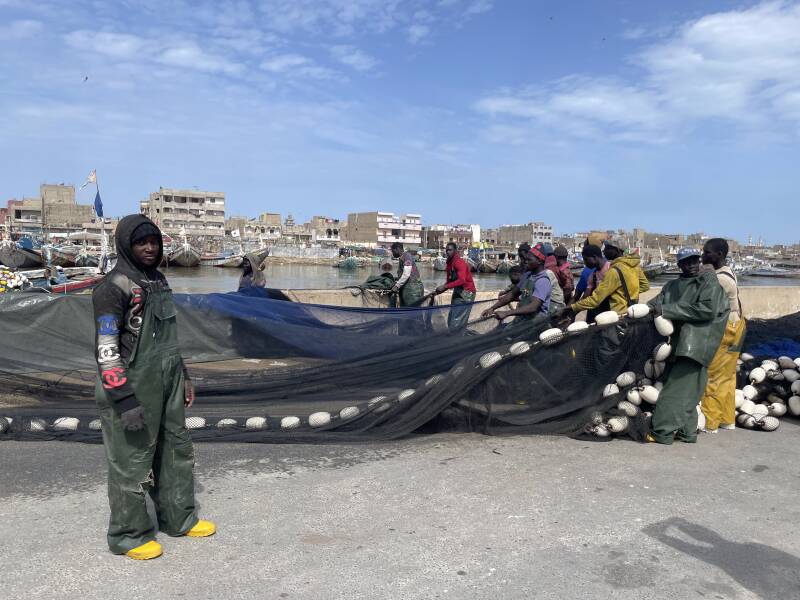
Fishermen bringing in their haul.
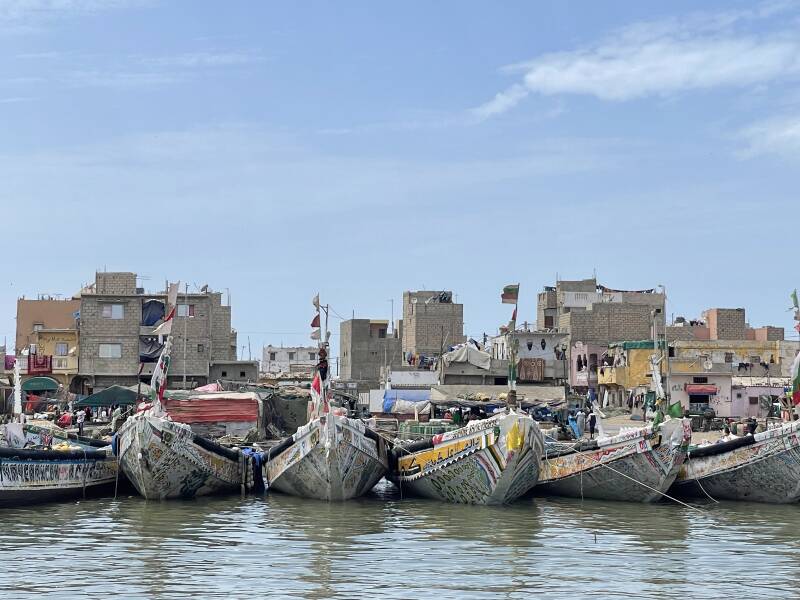
Colourfully painted pirogues.
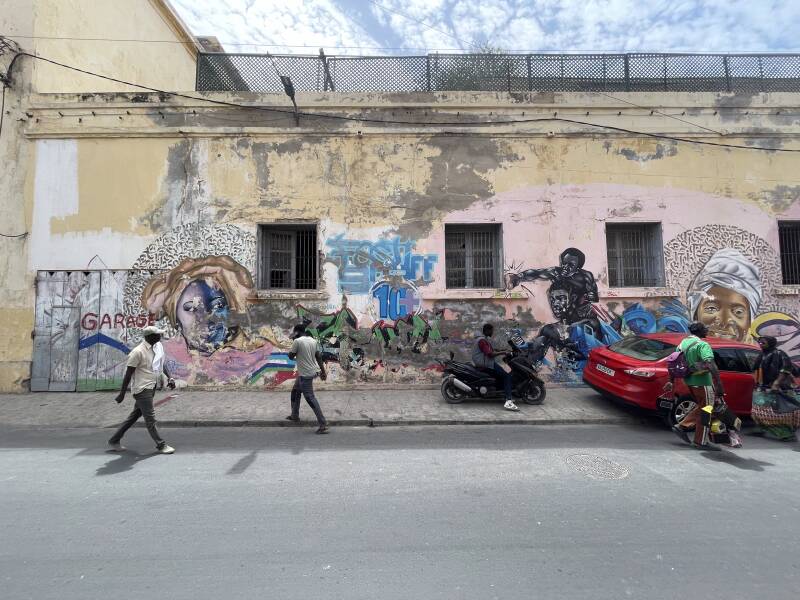
Street art and people in St. Louis.
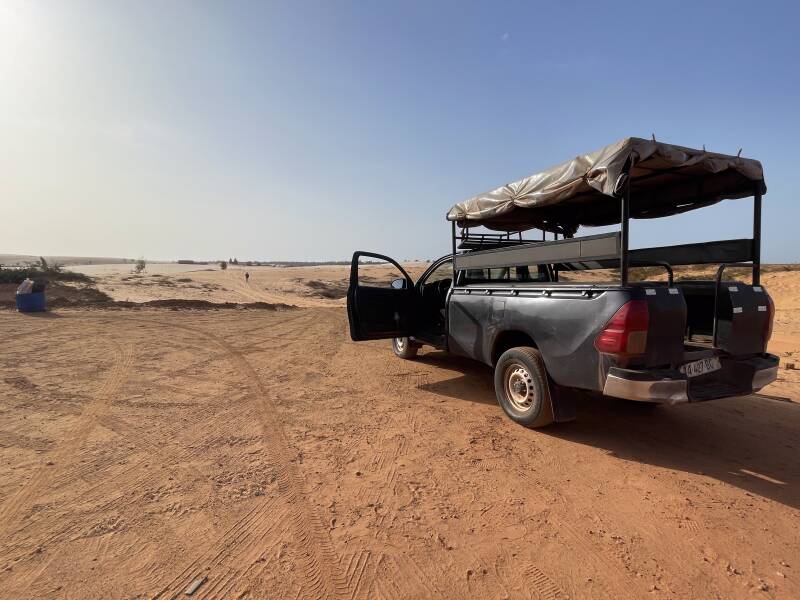
A 4-wheel drive was needed to drive us out to the desert camp.
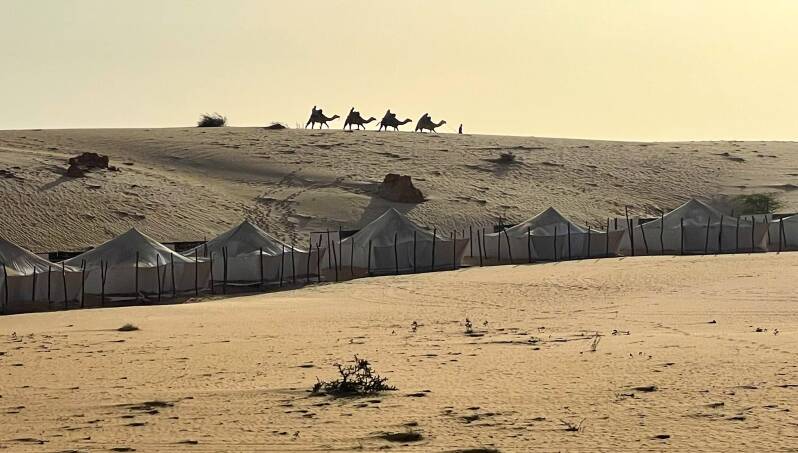
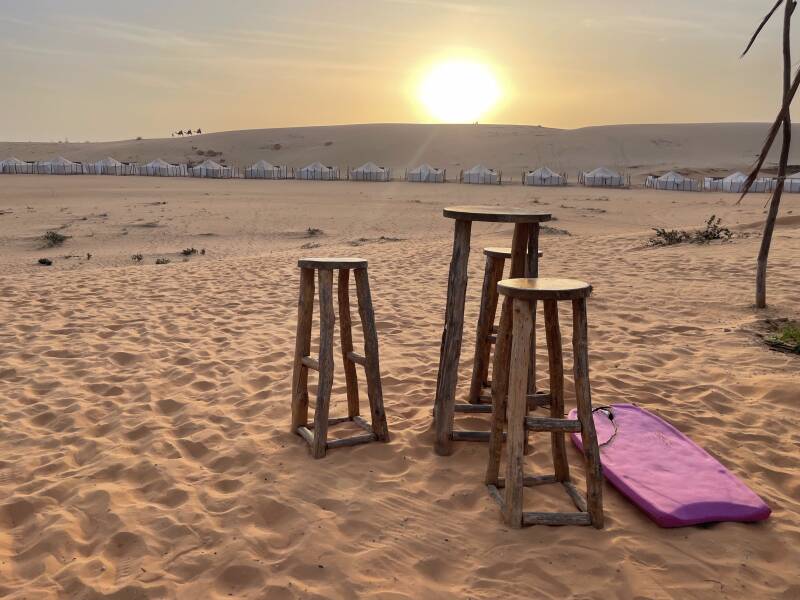
Lompoul desert vibes.
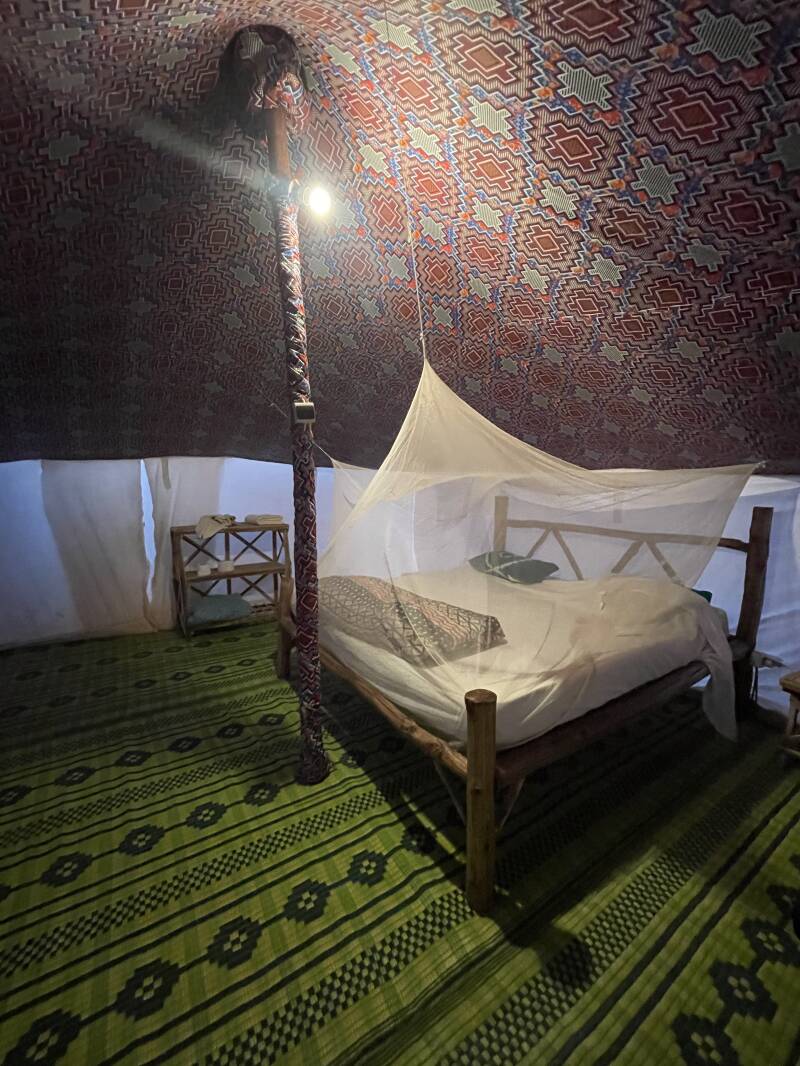
Inside my glamping tent.
That evening we travelled into the dunes of Lompoul Desert for a night of glamping beneath the stars. There were camel rides, drumming, dancing, and an atmosphere that felt both touristy and genuinely joyful. One of the best moments came when Mika unexpectedly joined the band on the drums. He is clearly a man of many talents and refuses to let the fact he had polio as a child hold him back.
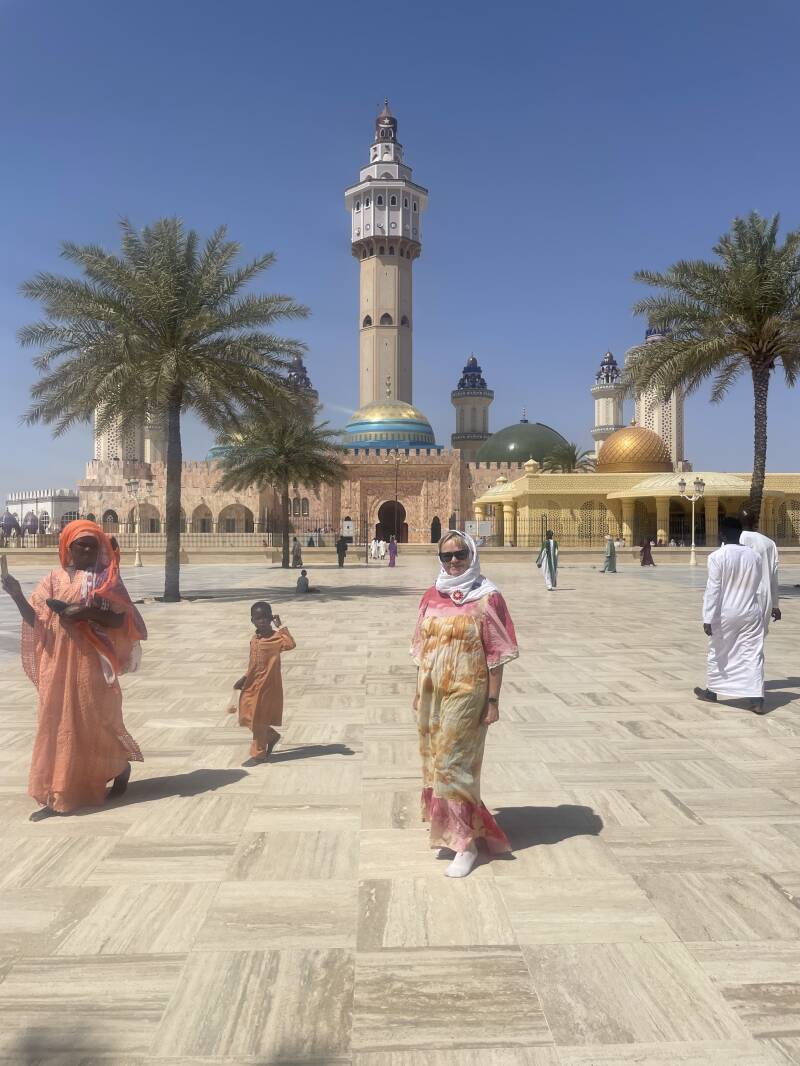
Striking a pose in a borrowed abaya at the Great Mosque of Touba.
After spending a night in the desert, we continued on to Great Mosque of Touba, one of the most important religious sites in Senegal. As we approached the holy city of Touba, the mosque’s towering minarets dominated the skyline long before we arrived. Rising from the flat African landscape with extraordinary confidence, the mosque can be seen from almost every vantage point in the city, a deliberate symbol of the spiritual importance of Touba and the Mouride brotherhood.
As a woman, I was required to wear an abaya to enter the mosque grounds, but fortunately Mika was able to borrow one for me. Dressed appropriately and respectfully, I entered what felt not only like a place of worship, but a place of pilgrimage. Touba holds a significance in Senegal similar to that of Mecca and Medina in the Islamic world. Every year, millions of Mouride followers travel here for the Grand Magal pilgrimage to honor Amadou Bamba, the founder of the Mouride Brotherhood, whose tomb lies within the mosque complex itself.
The Great Mosque of Touba is considered one of the largest mosques in Africa, with a capacity of around 7,000 worshippers. Completed in 1963, the mosque has continued to expand and evolve over the decades. Its architecture is both grand and deeply spiritual, with five elegant minarets, enormous domes, polished marble courtyards, and intricate detailing that reflects the importance of faith in everyday Senegalese life. The central minaret, known as Lamp Fall, rises 87 meters into the sky and has become one of Senegal’s most recognizable landmarks.
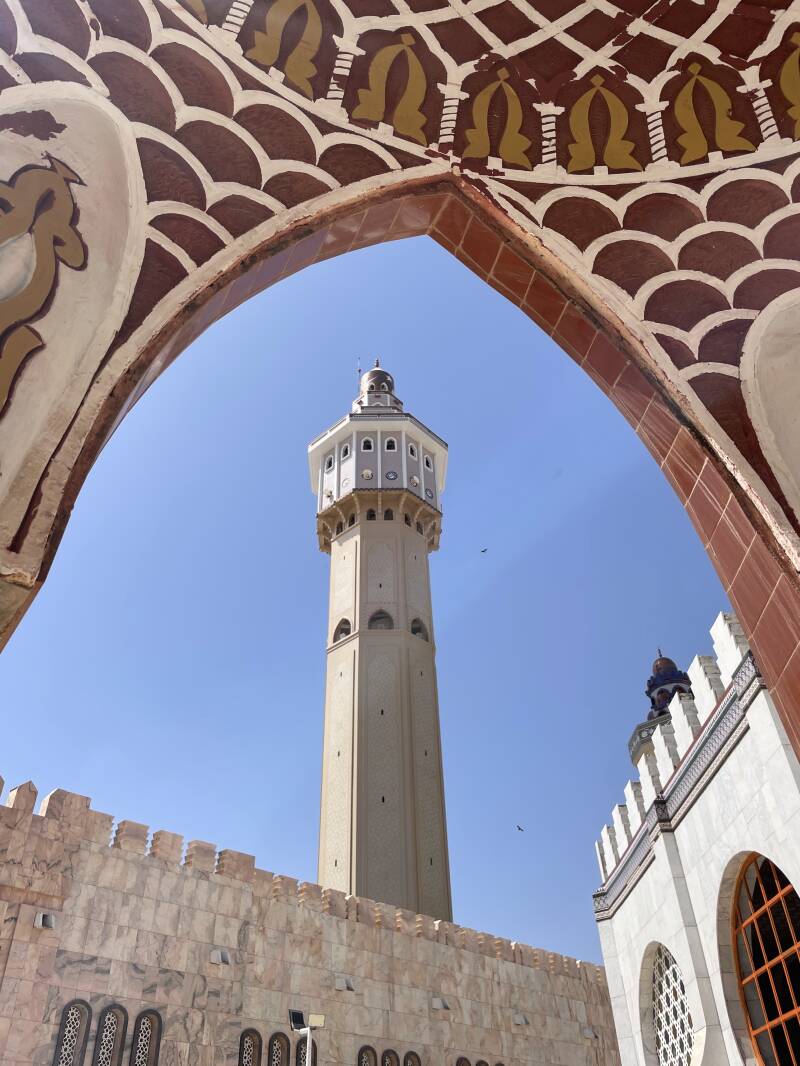
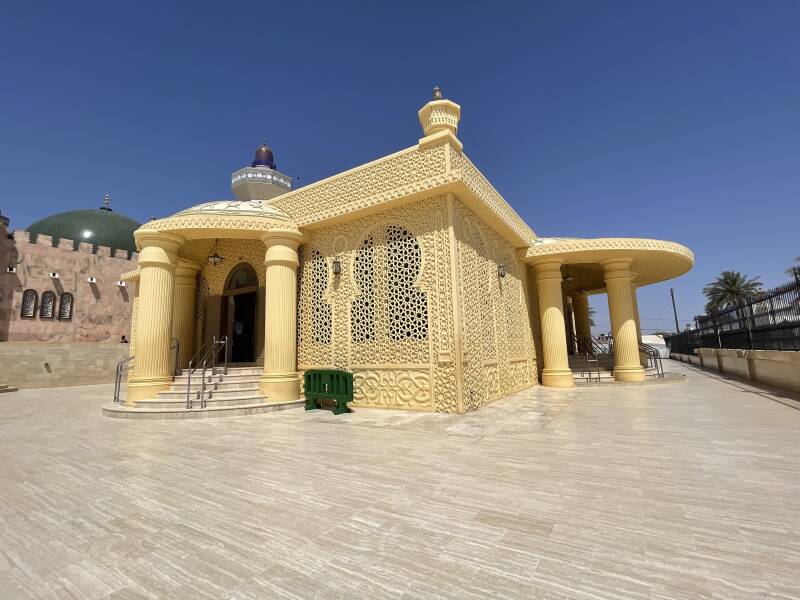
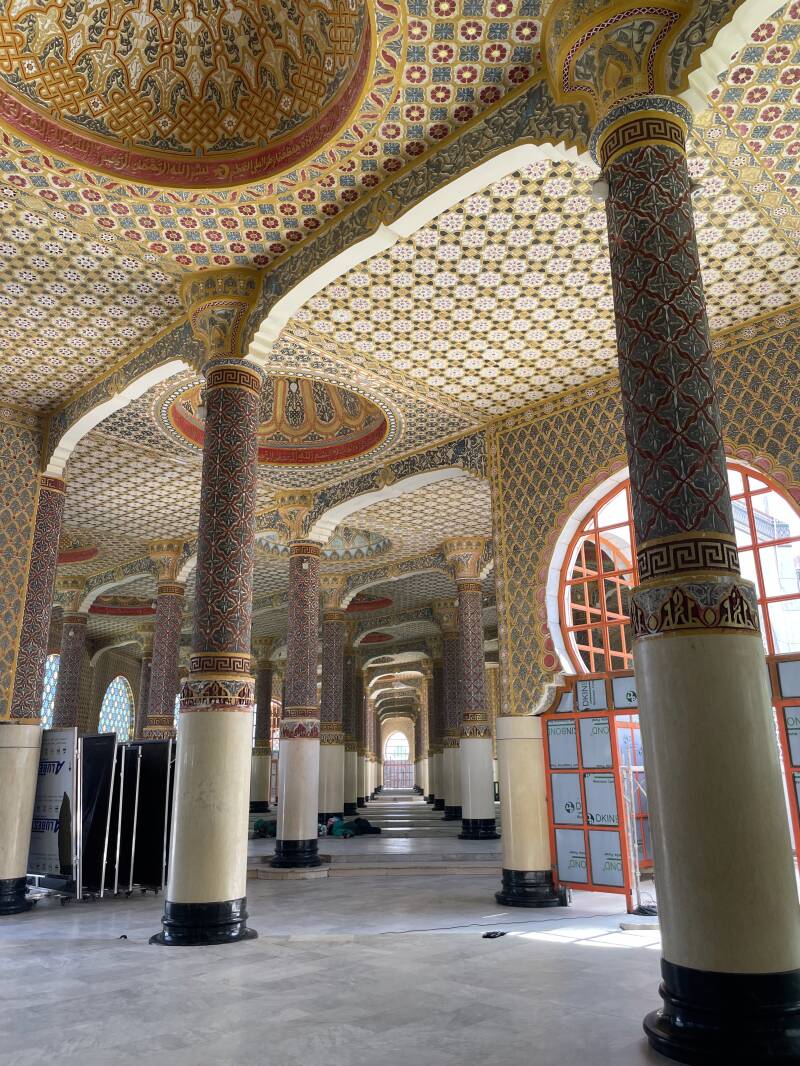
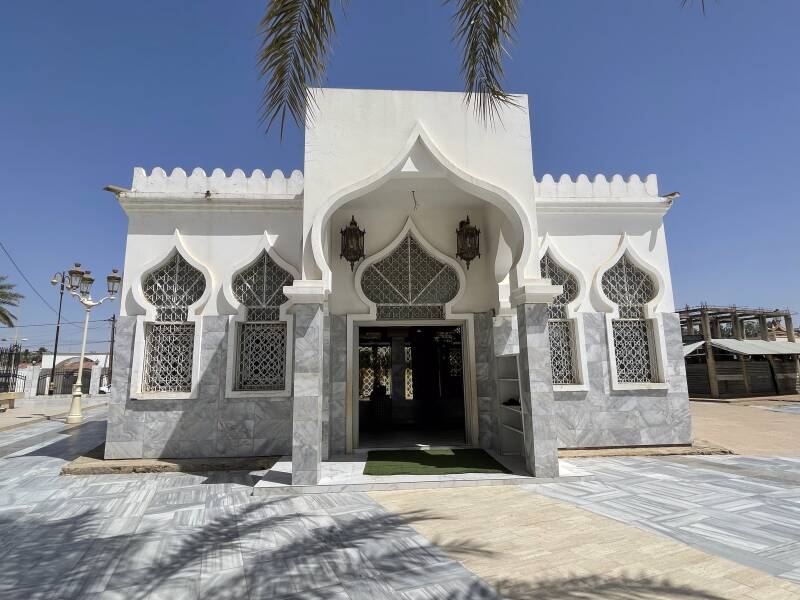
Different rooms of the Touba Mosque.
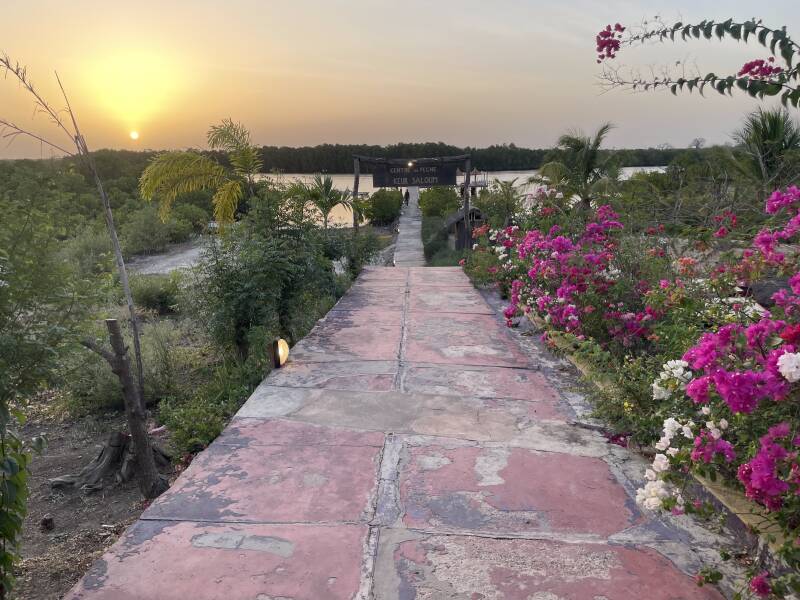
The pathway to the pier at Keur Saloum Resort.
After visiting the Great Mosque of Touba, we continued on to my accommodation at Keur Saloum Resort, set beside the beautiful Saloum Delta. The heat was intense, pushing close to 40 degrees, and I quickly developed a routine of drifting between the outdoor but undercover restaurant, where I could use the wifi, and my blissfully air conditioned room, which had no wifi at all. Honestly, in that kind of heat, air conditioning suddenly becomes less of a luxury and more of a survival tool.
Despite the temperature, the setting was stunning. From the restaurant terrace, I could look out over the delta, watching the still water shimmer beneath the late afternoon sun. There was something incredibly peaceful about it, even if I spent much of the time trying not to melt.
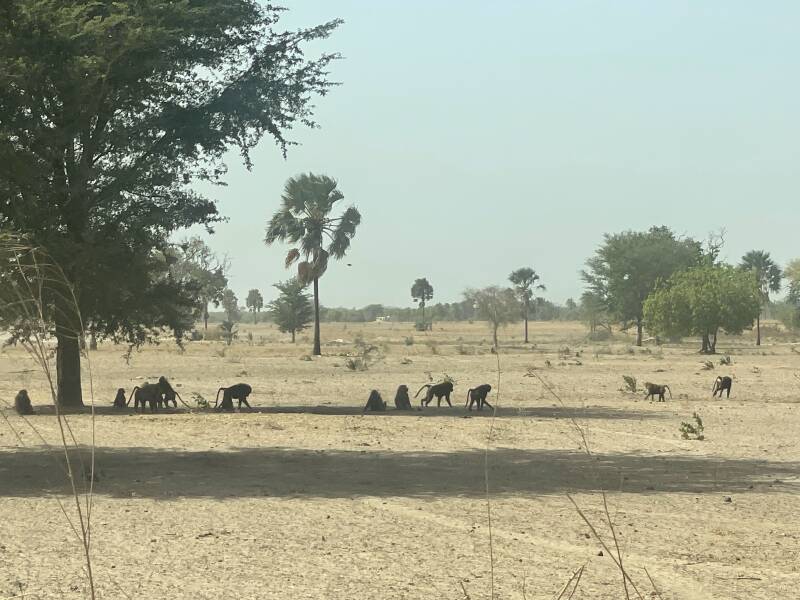
Monkeys viewed on our trip between Touba and Keur Saloum.
The following day we visited Fathala Wildlife Reserve, located near the Gambian border. The reserve is known for its guided 4x4 safaris, where visitors can spot giraffes, rhinos, antelope, and other wildlife, but also for its controversial “Lion Encounter” experiences. Mika had kindly booked the lion walk for me, imagining it would be a highlight of the trip. Initially, I was excited too. Walking alongside lions sounded extraordinary.
That excitement disappeared fairly quickly once I saw how the animals were being treated. The handlers repeatedly prodded the lions with sticks to force them to lift their heads for tourists’ photographs, creating the illusion of a majestic wilderness encounter while the animals themselves looked tired and irritated. It felt performative rather than respectful. When I was asked to pose and be filmed walking beside the lions, I refused, much to the dismay of some of the others in the group who were eagerly documenting the experience for social media. For me, seeing wildlife should never come at the expense of the animals’ dignity or wellbeing.
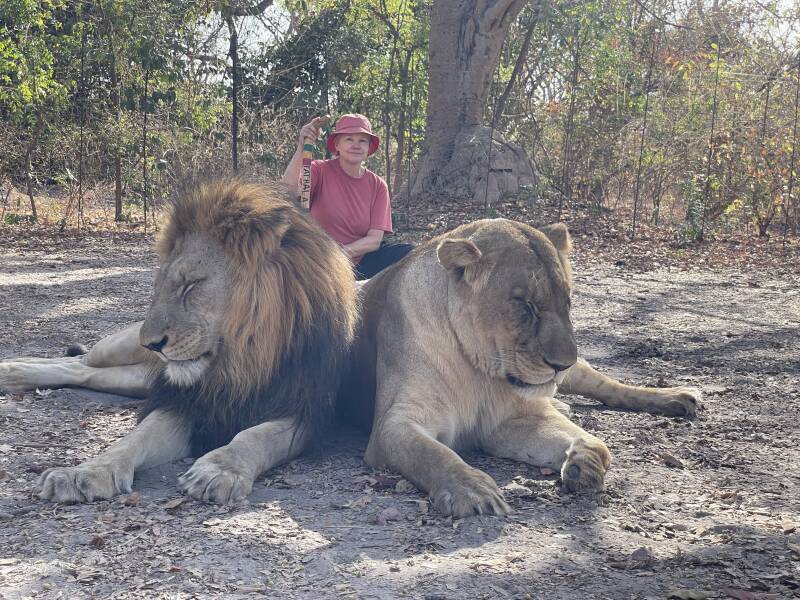
Poor lions!
After the reserve came one of my favorite parts of travel anywhere in the world: ferry time. I absolutely love ferries, whether they are sleek Scandinavian crossings or chaotic local boats packed with life and movement, and this one was entertaining from start to finish. Mika seemed to know absolutely everyone and insisted we arrive early so we could board first and secure seats in what may have been the ferry’s version of first class.
The ferry itself was wonderfully chaotic in the best possible way. Trucks loaded with animals crowded the lower decks, while vendors moved through the passengers selling everything imaginable. There were snacks, drinks, random household items, and endless conversations happening all around us. It was loud, colorful, busy, and completely alive. Visually and audibly, it felt like a small world unto itself.
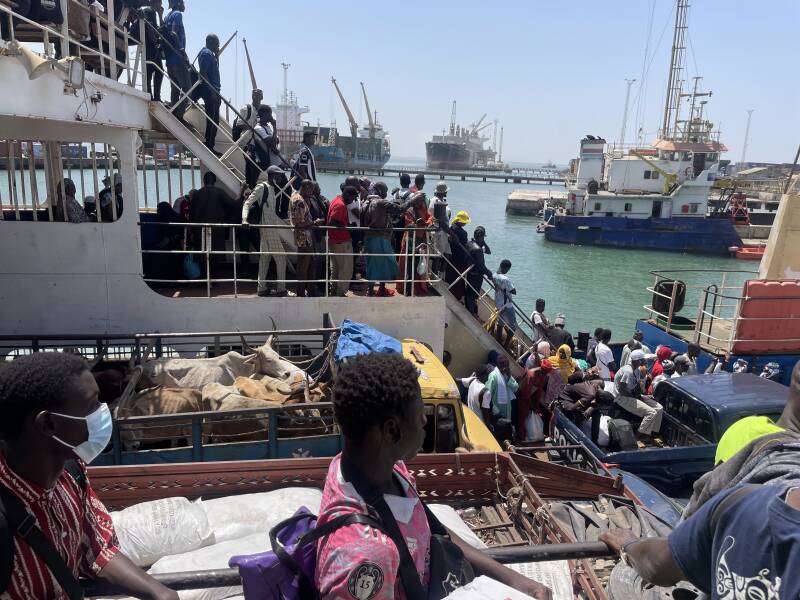
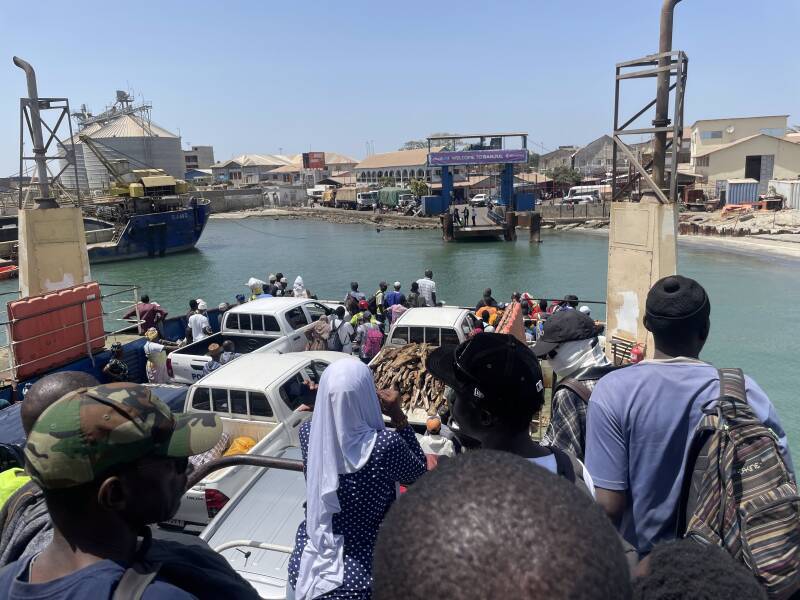
Welcome to Banjul!
An interesting alternative to the ferry that I witnessed is a boat that requires you to be piggy backed on the shoulders of Senegalese men who wade through the water to reach the beach! What a job!
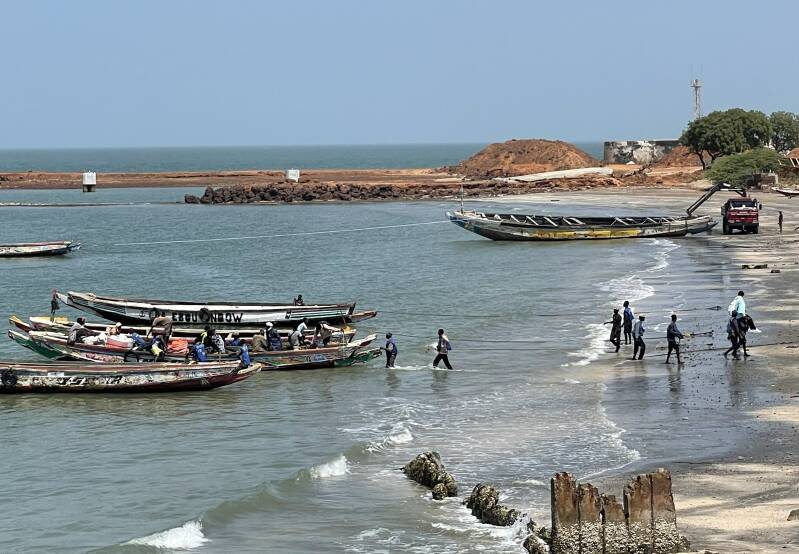
The alternative to the ferry! A shoulder ride!
From the ferry terminal, we crossed into The Gambia and arrived in the Senegambia area, where I unexpectedly found myself staying at a resort. Normally, resorts are not my style at all, but Sengambia Beach Hotel in Kololi quickly won me over thanks to the gym. One of the trainers patiently helped me with weight training, and the next morning I joined a yoga class before indulging in what can only be described as a sensational buffet breakfast.
The resort itself was a fascinating little bubble. There were monkeys wandering through the grounds, vulture feeding areas nearby, and several enormous swimming pools where tourists happily lounged all day with cocktails in hand. I was actually far too busy to use the pools myself.
The funniest moment came the next day when I bumped into the Intrepid group at the market in Banjul and asked them what their accommodation had been like. “Cold water” and “alright I guess” were the glowing reviews I received. Suddenly, I felt very grateful for my accidental resort experience.
That said, while I enjoyed it far more than expected, I still cannot imagine spending two or three weeks at a resort on a package holiday like many of the European tourists there with their TUI deals. For me, it was enjoyable precisely because it was temporary and unexpected, a brief pause between adventures rather than the destination itself. Still, each to their own.
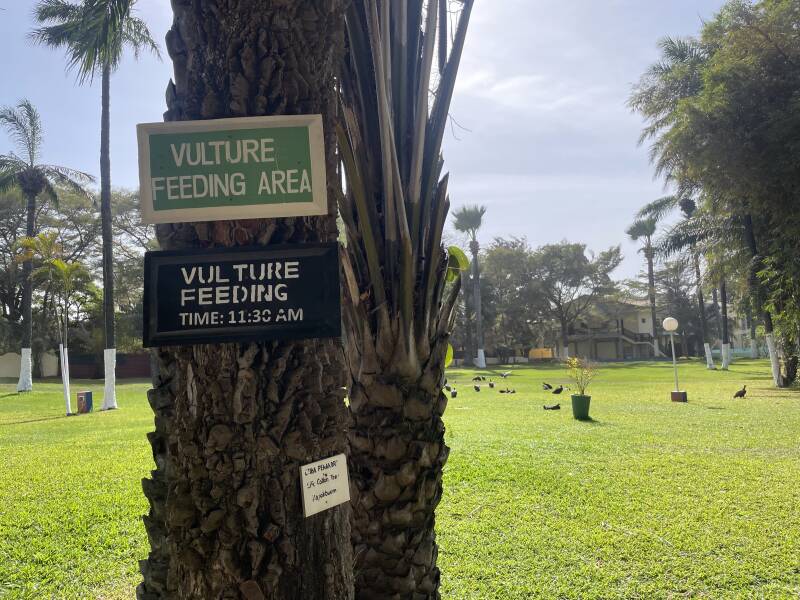
The vulture feeding area at Sengambia Beach Hotel.
The next day I explored more of Banjul, and it immediately felt different from Senegal. Here, the British colonial legacy is far more visible, from the English place names to the architecture and administrative buildings scattered throughout the city. One of my first stops was the famous Albert Market, originally named after Queen Victoria’s husband during the colonial era. Like many West African markets, it was chaotic, colorful, and full of energy, with narrow alleyways overflowing with fabrics, spices, fruit, household goods, and people calling out to passing customers.
We also visited the National Museum, running into the Intrepid group yet again before heading to Arch 22, the enormous monument towering above the city skyline. Somehow, despite standing right there beneath it, I managed not to take a single proper photo of the front of the arch itself, something I only realized later with mild horror. Inside the arch is a small museum, and while we explored it, my extremely enthusiastic guide suddenly decided to test my knowledge of the history of slavery with an impromptu quiz. I failed spectacularly. Even more amusingly, my own guide appeared to disagree with several of the “correct” answers being presented, which turned the whole experience into a slightly chaotic historical debate. He seemed genuinely impressed with my effort to walk with a kata or a head pad on my head, not that I carried any weight, unlike the women of West Africa. The arch itself was built in 1996 to commemorate the 1994 coup that brought Yahya Jammeh to power, making it both a monument and a reminder of The Gambia’s more recent political history.
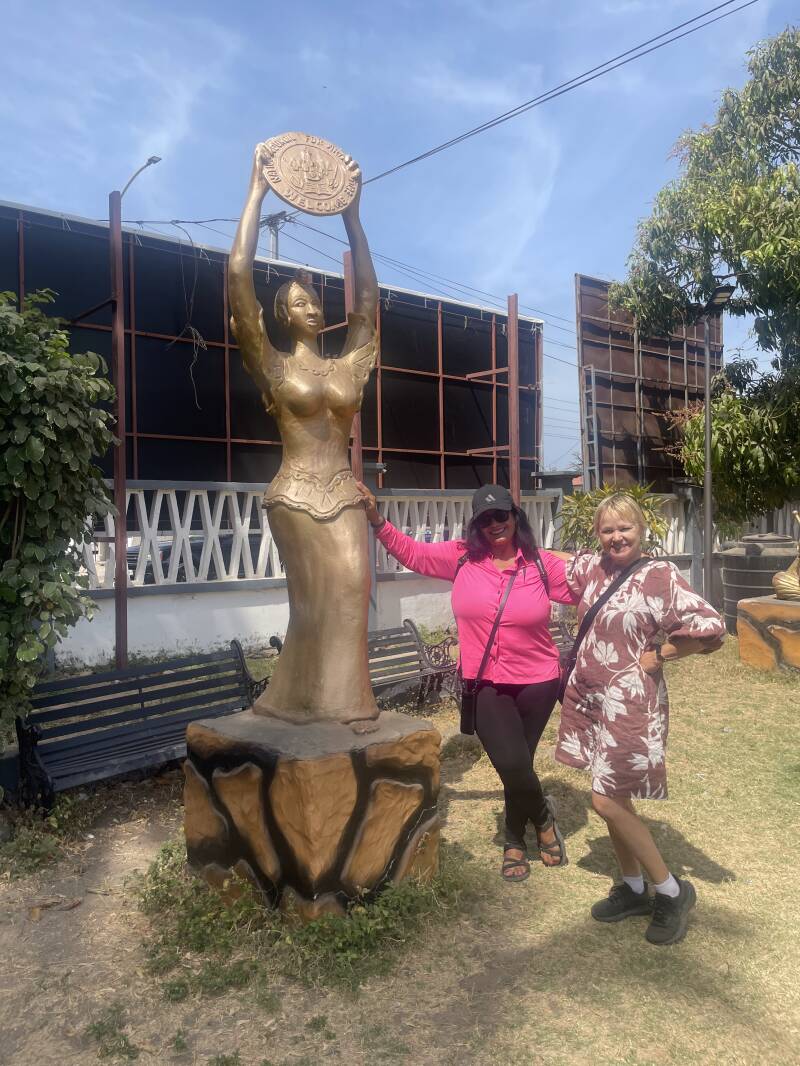
Carmen from the Intrepid tour and I at the National Museum, in Banjul.
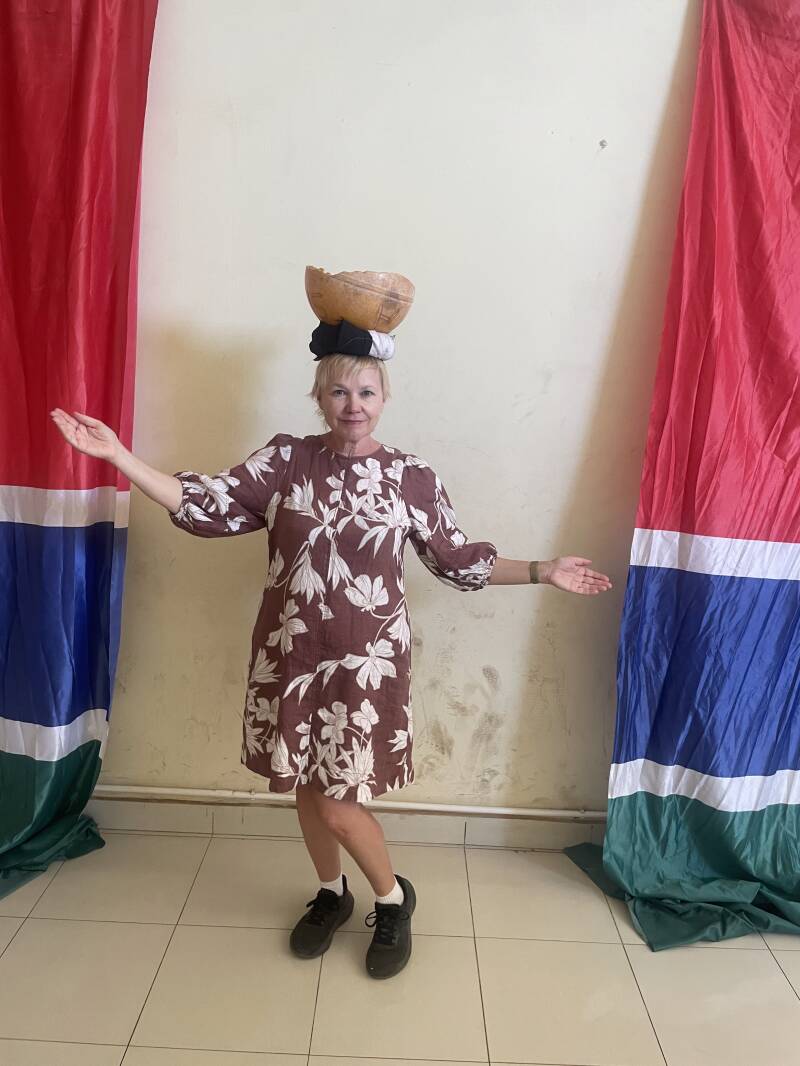
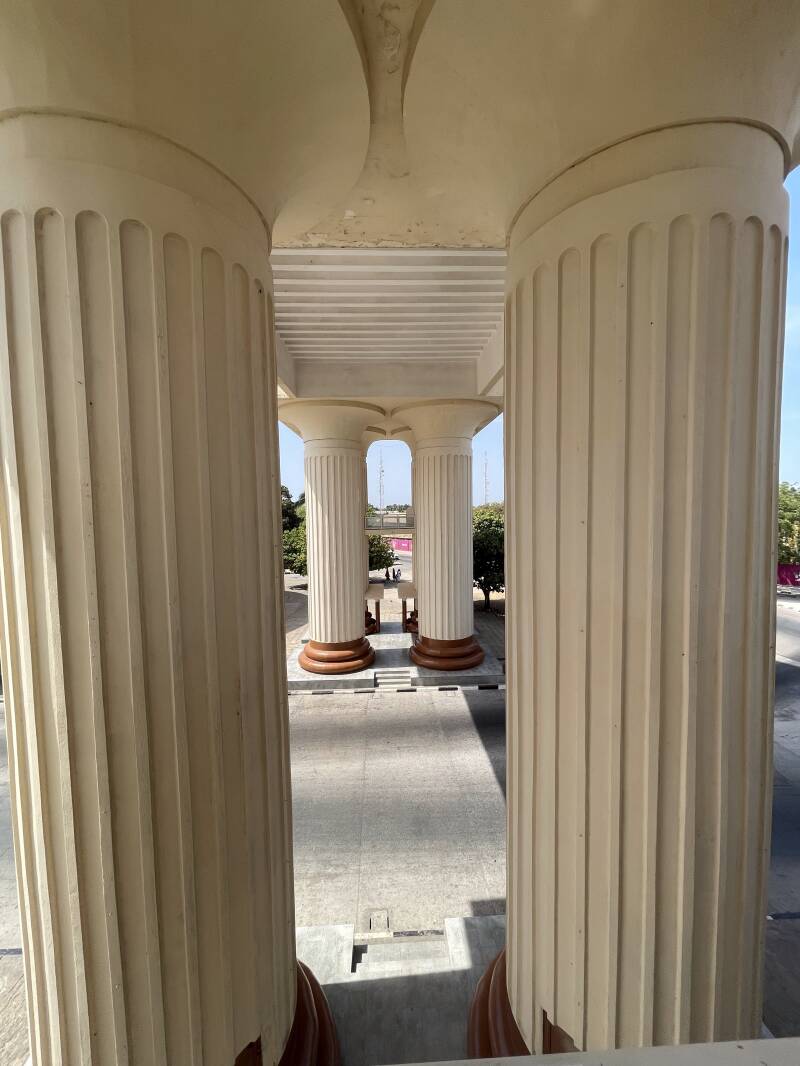
See, it's easy!
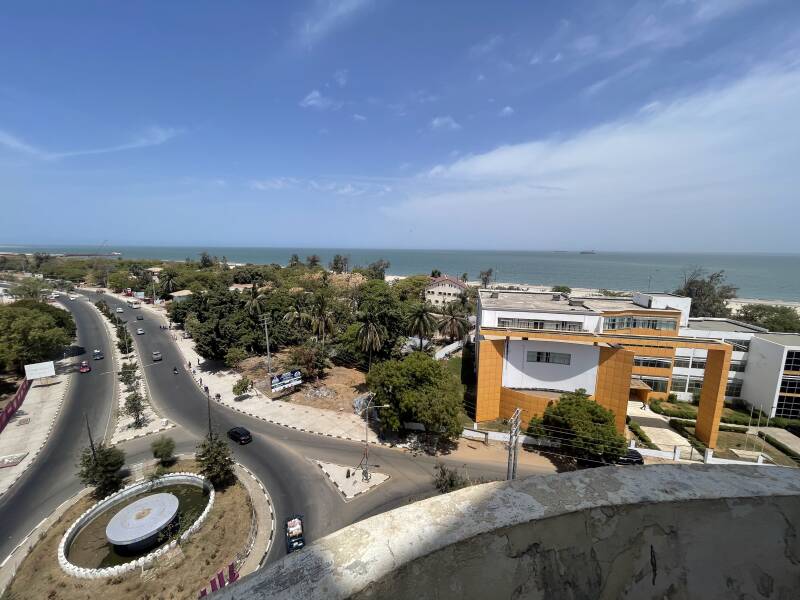
View from Arch 22 Museum.
From there we visited the Kachikally Crocodile Pool, where visitors can actually touch the crocodiles. Apparently, they are regularly fed fish and are considered unusually docile, although I still approached the situation with a healthy amount of caution.
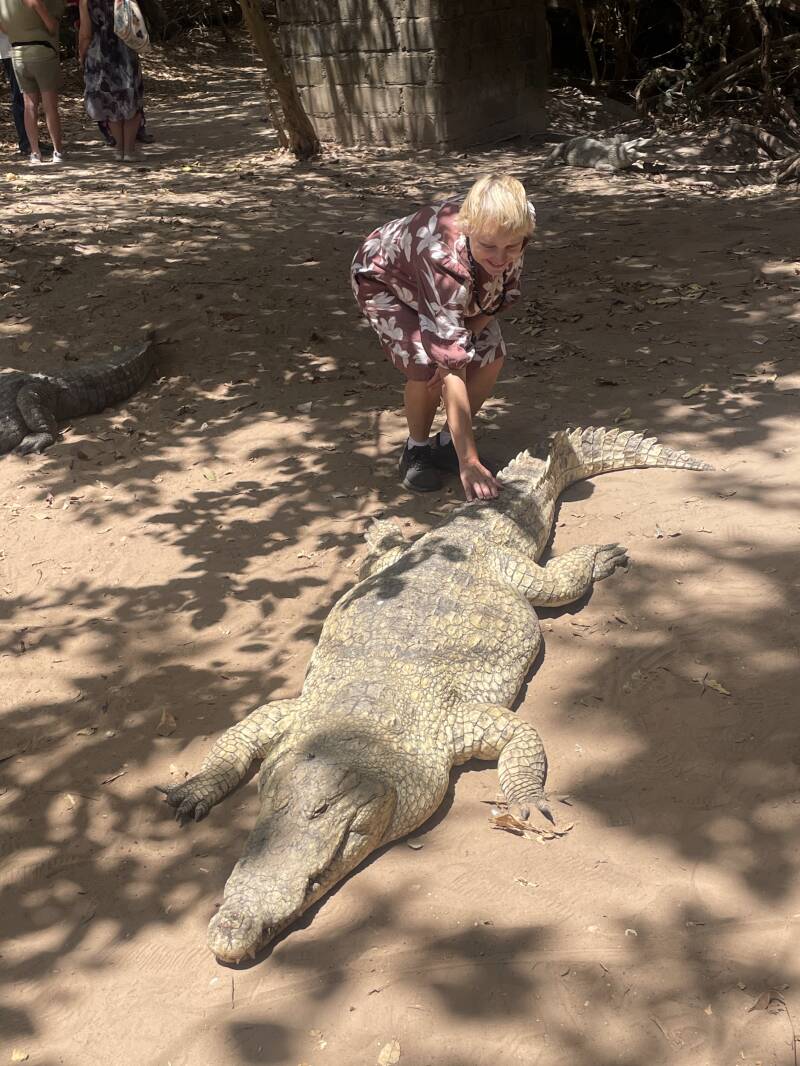
Up close with a crocodile at Kachikally Crocodile Pool.
One of the most memorable experiences of the day was visiting Tanji Fish Market. We happened to arrive on a Friday during Ramadan, close to midday prayers. Mika and the driver were keen to attend prayers at the local mosque, which was so full that men spilled out into the surrounding streets, lining up shoulder to shoulder to pray. I was dropped near the beach while they joined the congregation, and for a while everything felt strangely quiet and still. Many of the fishermen and market workers had paused what they were doing, and there was a calmness over the usually busy area.
As I wandered along the shoreline, I saw the famous colorful wooden pirogues pulled up along the sand, each painted in bright blues, reds, yellows, and greens. The beach itself felt almost suspended in time during the prayers. Then, as soon as everything finished, the stillness vanished instantly. Cars began honking, people flooded back into the streets, and it suddenly resembled a giant traffic jam as everyone tried to leave at once. It was chaotic, loud, and oddly fascinating to witness. I also learned how important Friday prayers are, with many men making every effort to reach a mosque in time.
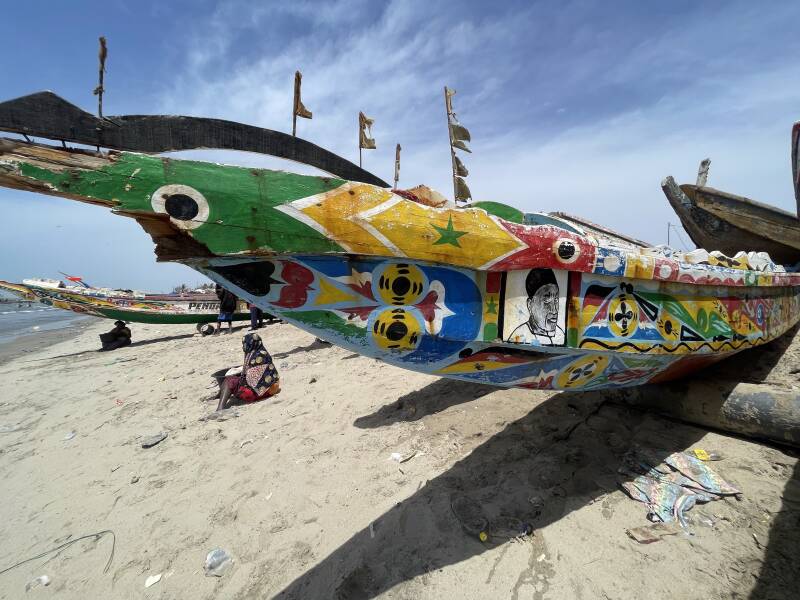
A beautifully painted pirogue (fishing boat).
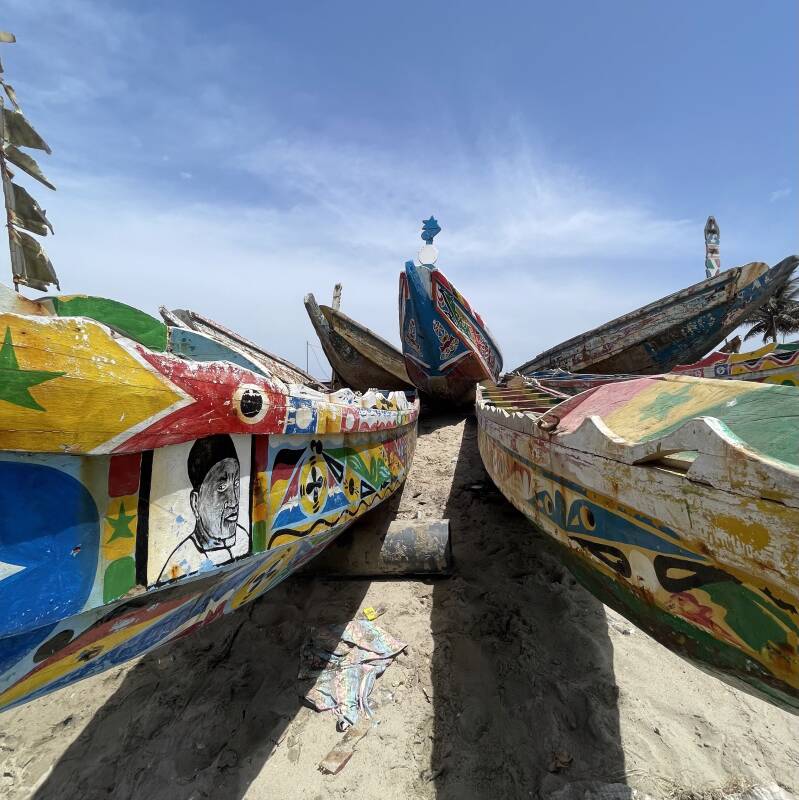
A quiet time at Tanji Fish Market.
Later we visited Bijilo Forest Park, one of the few remaining coastal forests in The Gambia and home to an impressive variety of wildlife. The park is particularly famous for its monkeys, and before long I found myself surrounded by troops of green monkeys darting through the trees and along the pathways. There are also Temminck’s red colobus monkeys, Campbell’s mona monkeys, and patas monkeys living within the forest, along with nocturnal Senegal bushbabies, although those are much harder to spot during the day.
After my discomfort at the lion encounter earlier in the trip, this experience felt considerably more natural and ethical. The monkeys were surprisingly gentle, carefully taking peanuts from my hand before eating them. One particularly curious monkey decided to inspect my hair, possibly attempting to groom me, while I sat there trying not to laugh. Despite being surrounded by monkeys climbing over railings and darting through the trees, I actually felt remarkably safe.
That said, I also learned that feeding the monkeys has become somewhat controversial. Officially, the park discourages visitors from feeding them because the monkeys have become overly accustomed to humans, but in reality park staff still regularly sell peanuts to tourists, so the practice continues. It felt like one of those complicated travel situations where tourism, conservation, and visitor expectations do not always align perfectly.
Beyond the monkeys, the forest itself was full of life. Brightly colored lizards darted across the paths, insects buzzed through the humid air, and enormous golden silk orb weaver spiders hung dramatically between branches. The park is also home to civets, mongooses, porcupines, Gambian sun squirrels, monitor lizards, butterflies, termites, dragonflies, and countless smaller creatures hidden within the dense vegetation. Walking through the forest felt like entering an entirely different side of The Gambia, quieter and greener than the busy streets and beaches I had experienced elsewhere.
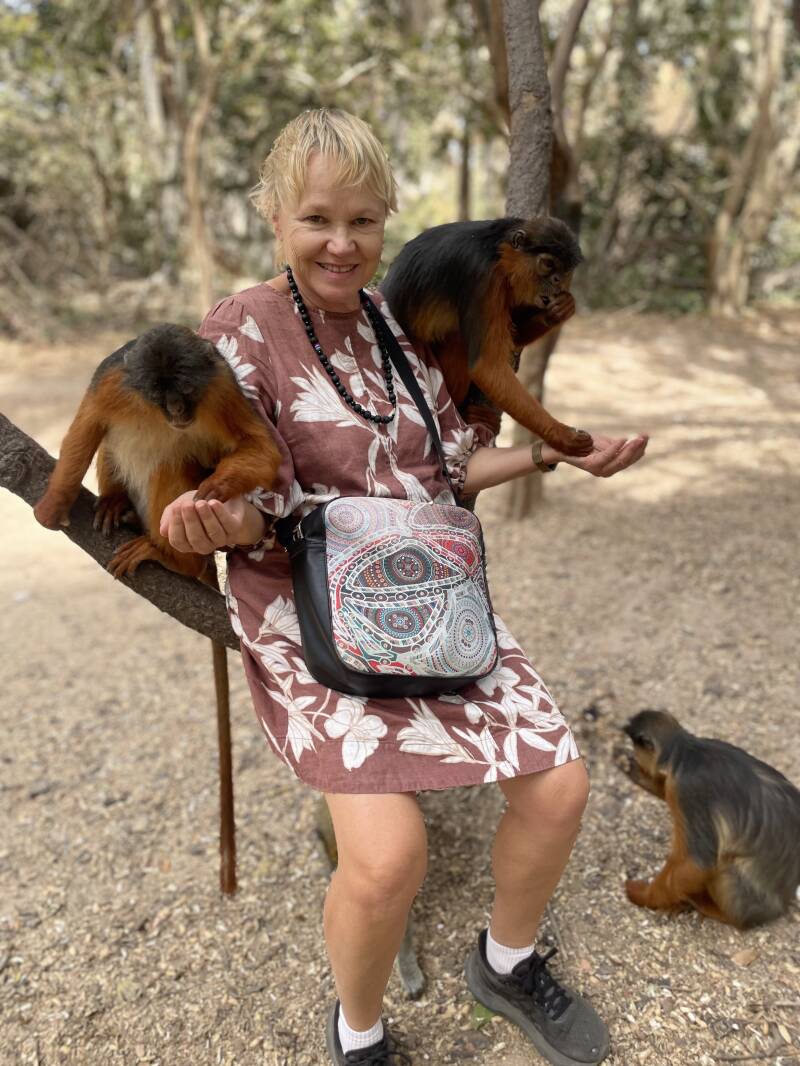
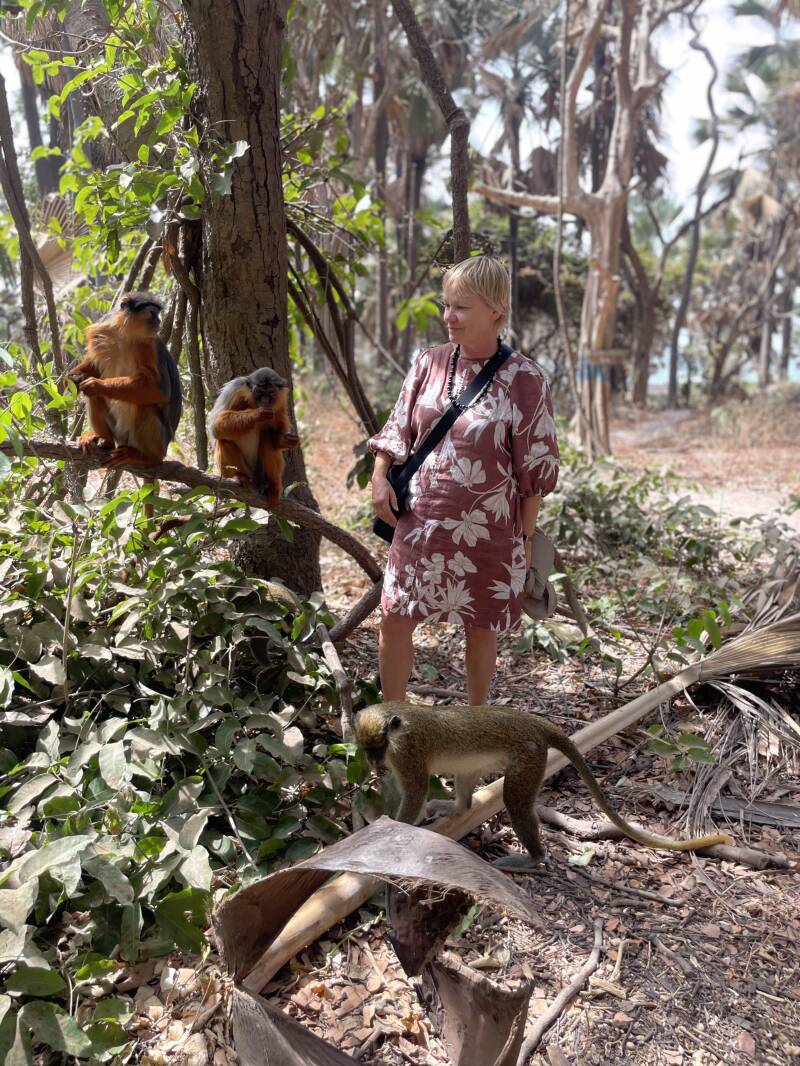
Feeding monkeys at Bijilo Forest Park.
The following day was my final one in The Gambia before my evening flight to Cape Verde the following day. We left Senegambia and Banjul behind and headed toward Kunta Kinteh Island, via the Senegal/ Gambia border again. The island is a place deeply tied to the history of the transatlantic slave trade and made internationally famous through Alex Haley’s book and television series Roots.
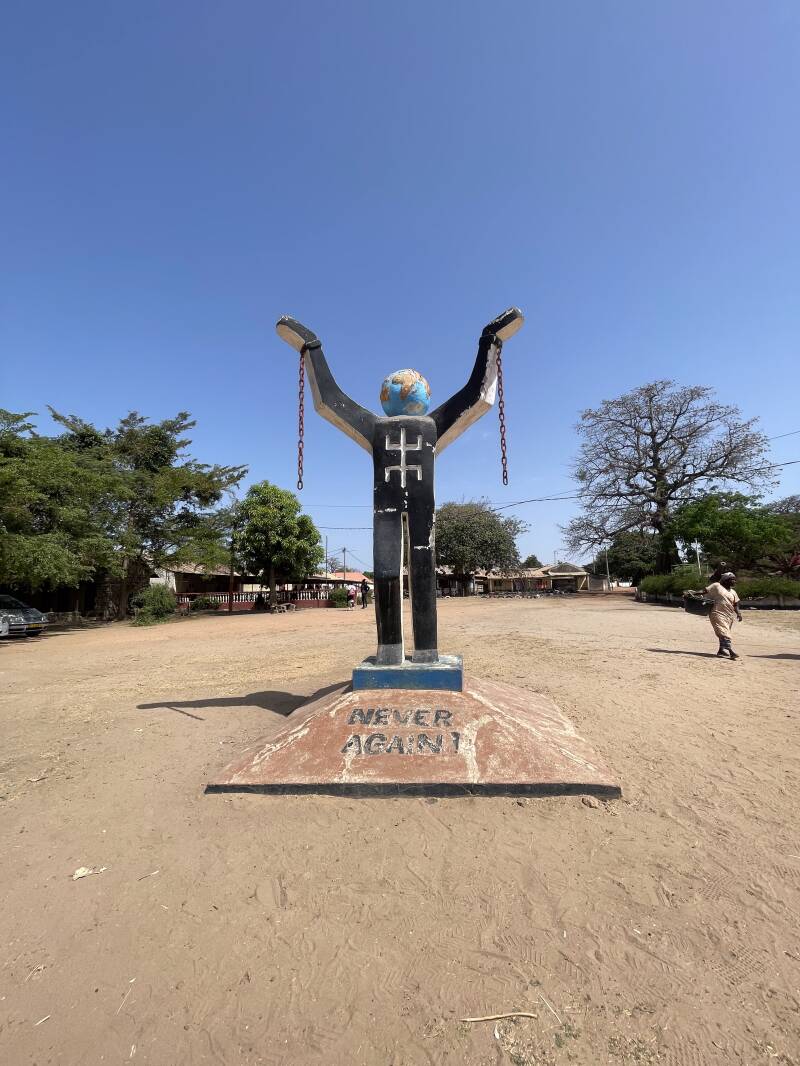
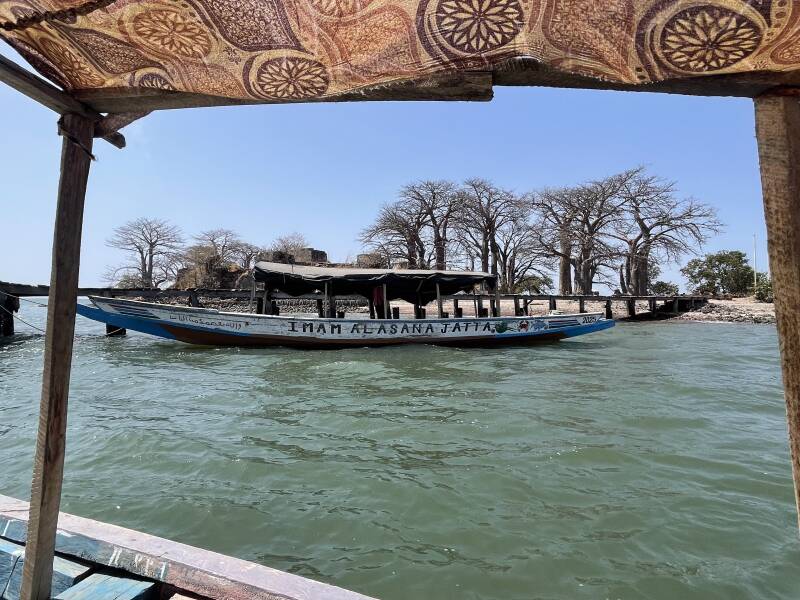
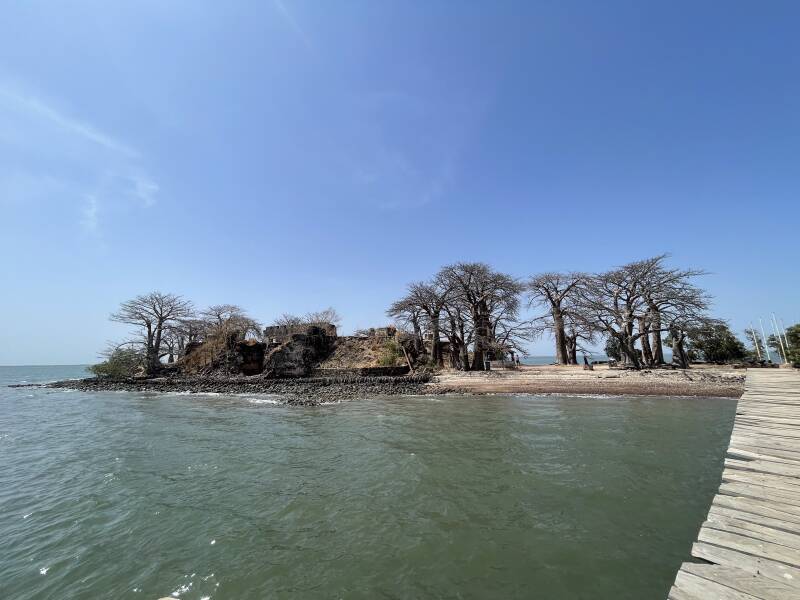
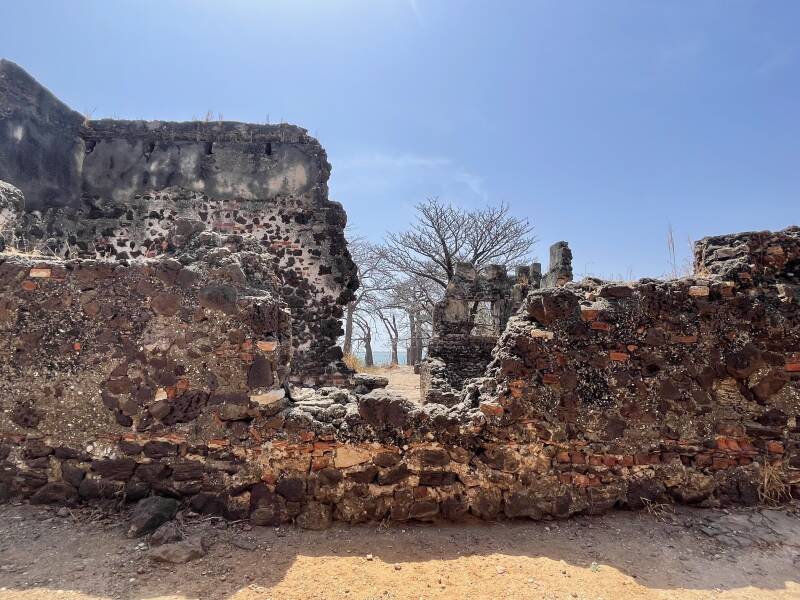
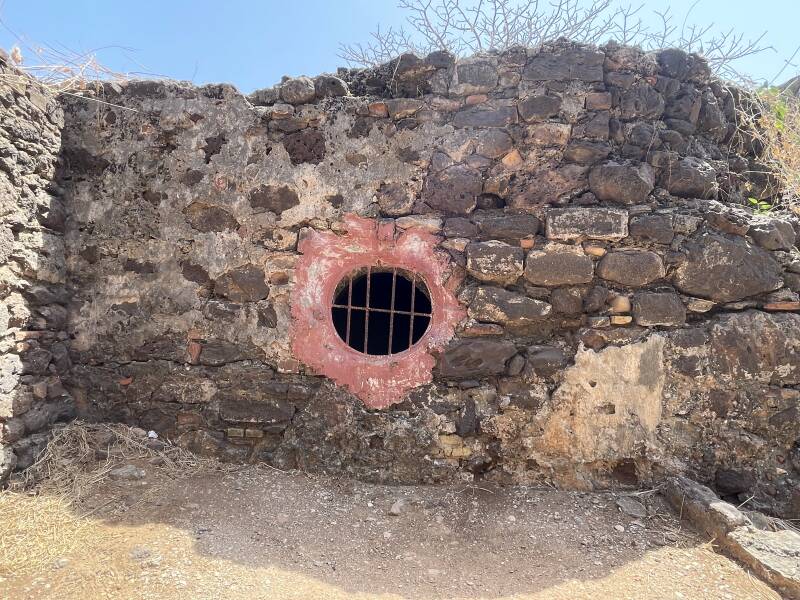
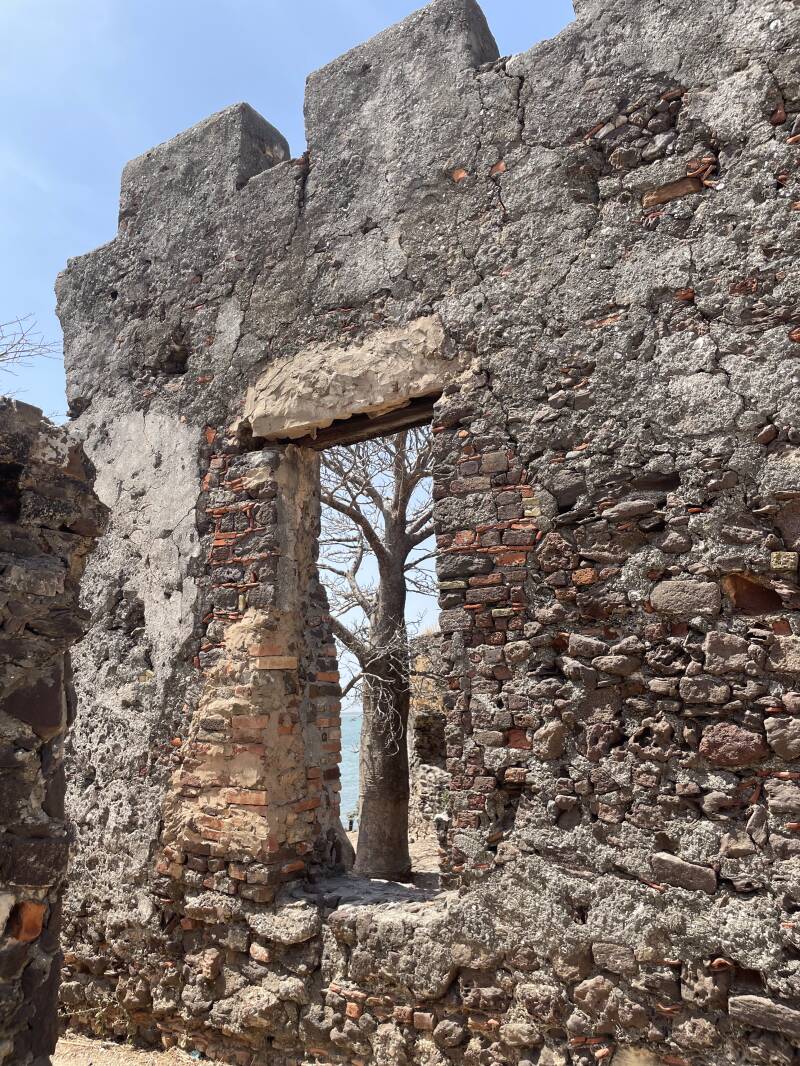
Views of Kunta Kinteh Island.
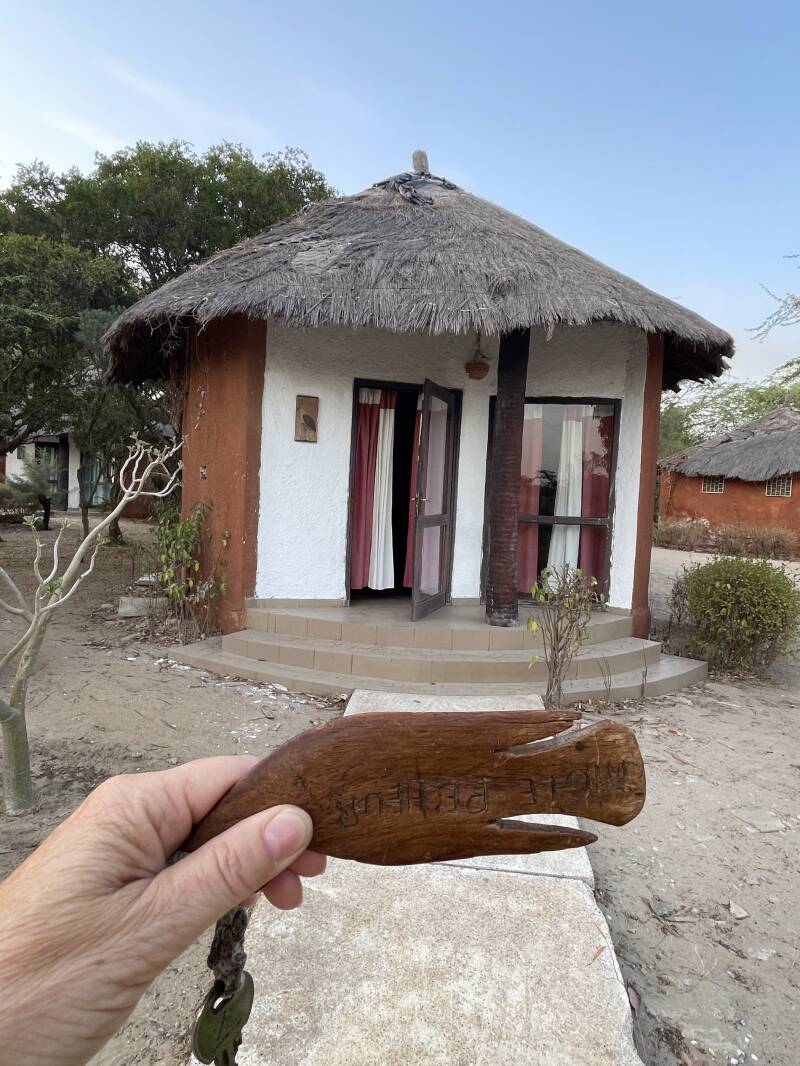
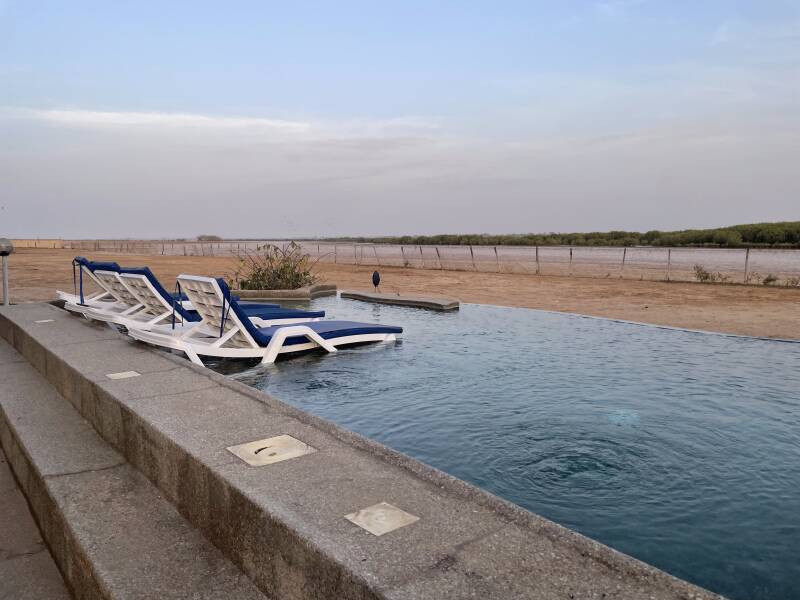
Views of Cordons Bleus, my guest house for my last night in Senegal.
The next day was my final day on the tour, and we drove to Joal-Fadiouth, one of the most unusual and memorable places I visited in Senegal. Often described as two towns in one, Joal and Fadiouth are connected yet completely distinct. Joal sits on a narrow peninsula at the end of the Petite Côte, a lively fishing town filled with colorful pirogues, bustling markets, and the rhythms of daily sea life. Just across the water lies Fadiouth, a small island connected to Joal by a long wooden bridge stretching around 800 meters.
I walked across the bridge with one of the local guides, taking in the views across the delta as fishing boats drifted through the shallow water below. What makes Fadiouth extraordinary is that the island is almost entirely made of shells. For centuries, local women have harvested shellfish by hand from the surrounding waters, using them both as food and for trade. Rather than discarding the empty shells, generations of residents gradually accumulated them, eventually creating the island itself. Over time, millions upon millions of shells were used to build roads, pathways, homes, and walls, giving the entire island a pale, textured appearance unlike anywhere else I had ever seen.
There was something deeply impressive about the balance between the community and its environment. Nothing seemed wasted. The sea provides food, livelihoods, and even the building materials for the village itself. It felt like an example of sustainability long before the word became fashionable.
My favorite part of the visit was undoubtedly the cemetery. Reached by another shell covered pathway, it sits quietly among baobab trees and overlooks the delta. The cemetery is shared by both Christians and Muslims, reflecting the remarkable religious coexistence that Senegal is known for. Walking through it felt incredibly peaceful. The white shells covering the ground glowed softly in the sunlight, and the atmosphere was calm rather than sombre. It was one of those places that quietly stays with you long after you leave.
On the way back, instead of crossing the bridge again, we took a small boat through the delta. Drifting slowly through the water gave me one final chance to absorb the landscape, the fishing villages, the mangroves, and the endless pirogues painted in bright colors along the shore. It felt like a fitting final scene for my time in Senegal before continuing onward on the next stage of my journey. But! There was one more stop....
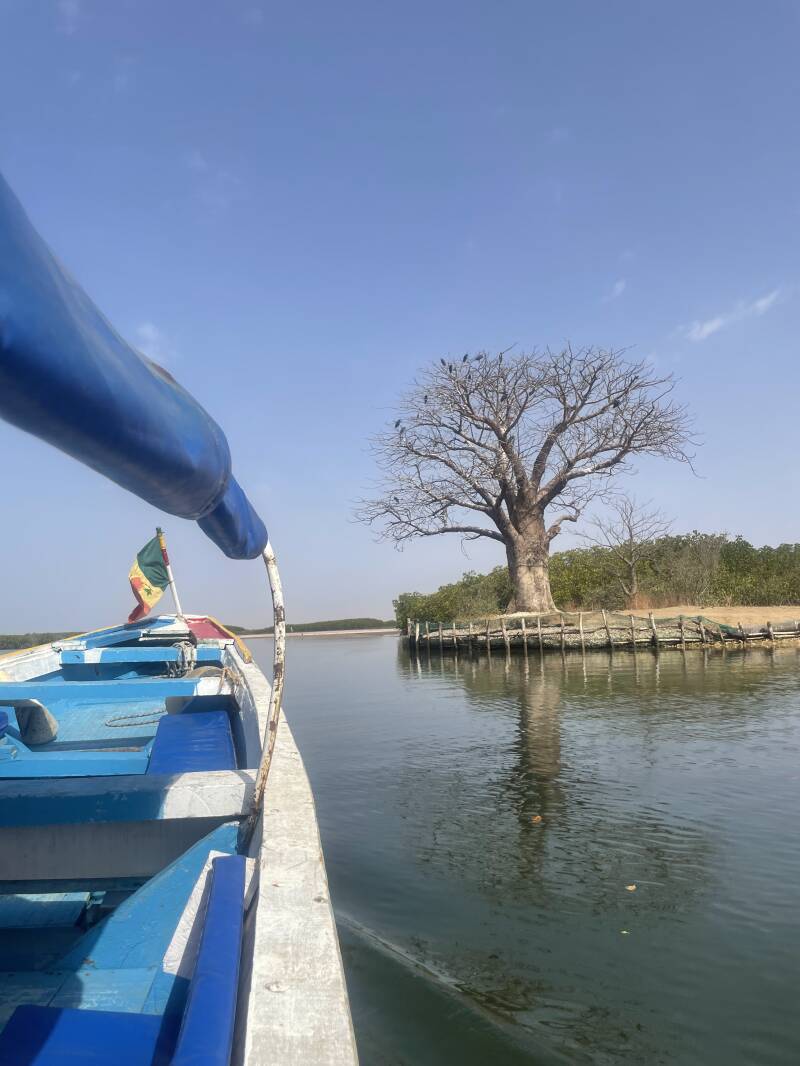
A stunning baobab on the way to Joal Island.
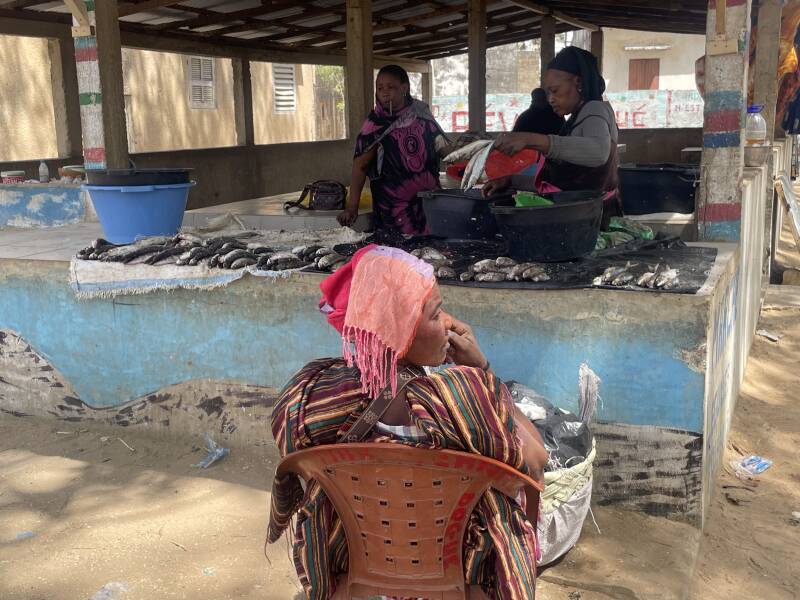
Women selling fresh fish at Joal Island.
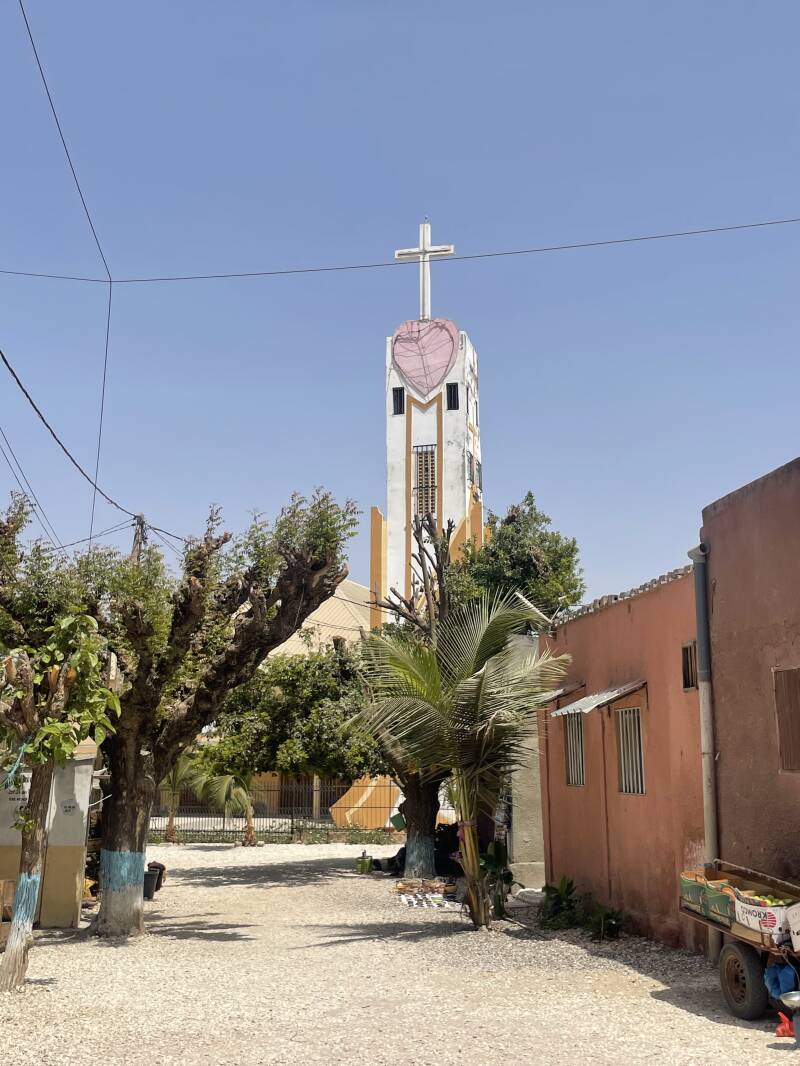
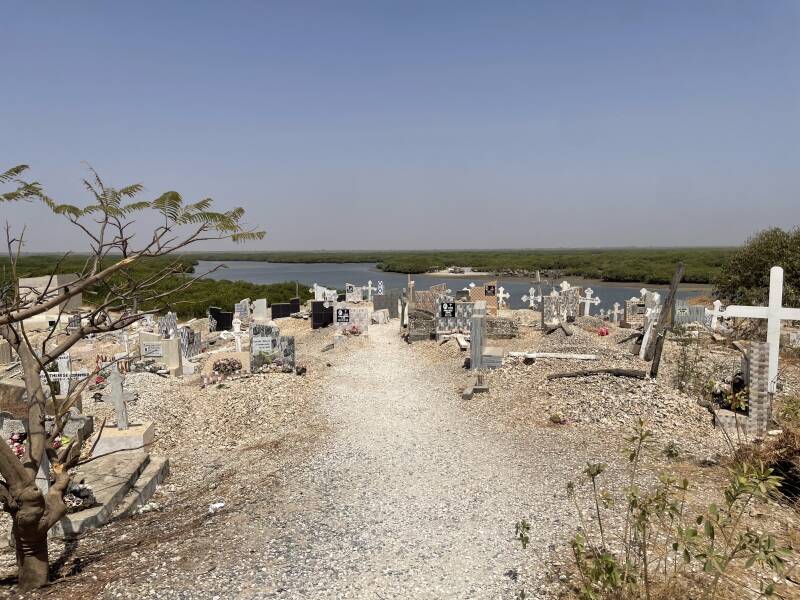
Fadiouth Cemetery.
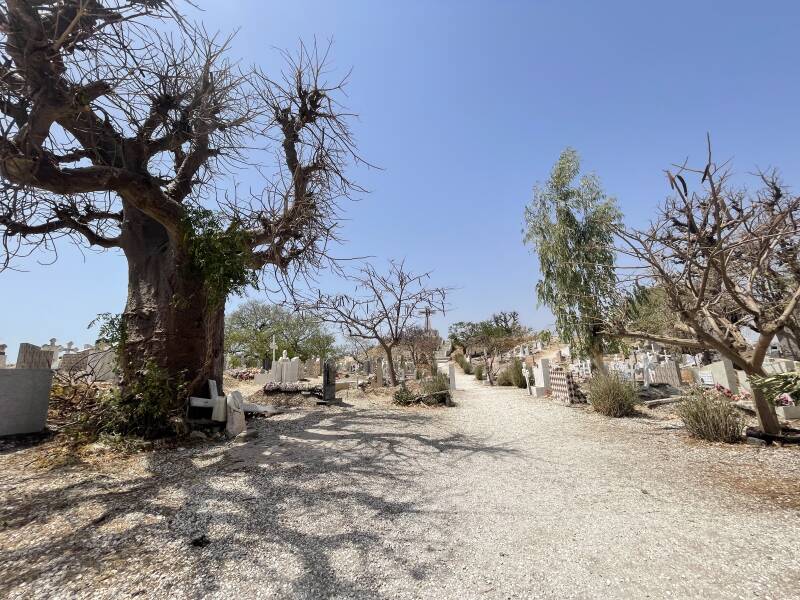
Fadiouth Cemetery.
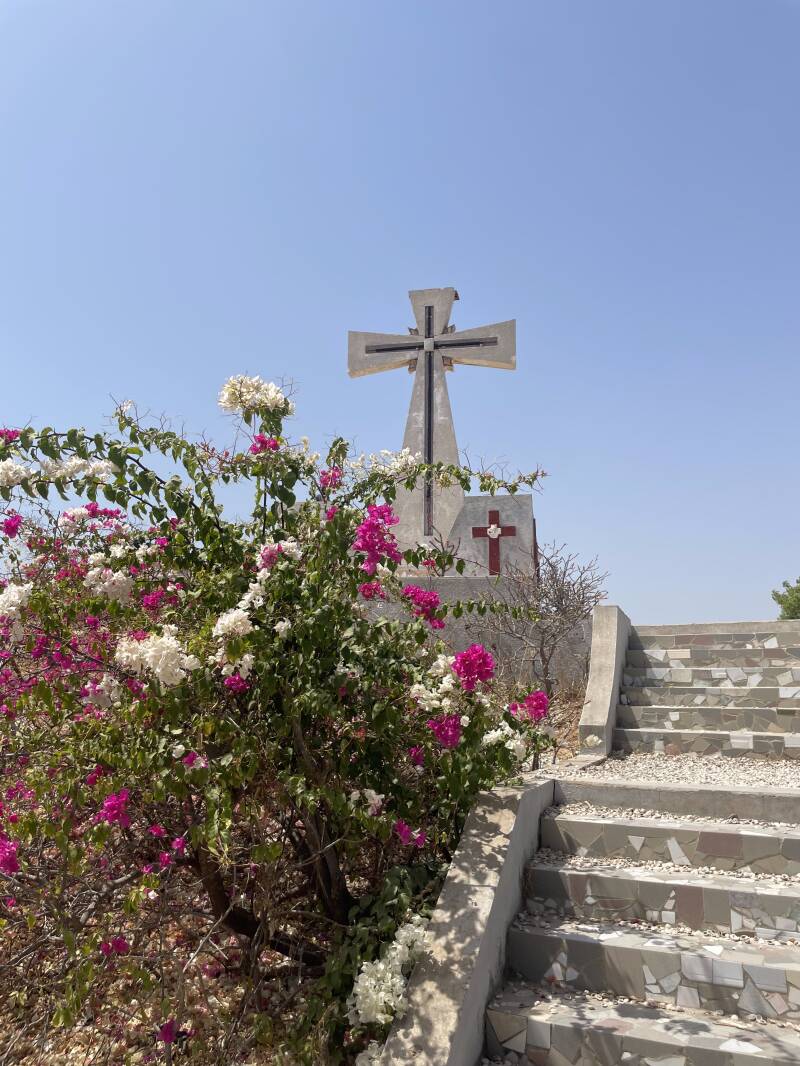
Fadiouth Cemetery.
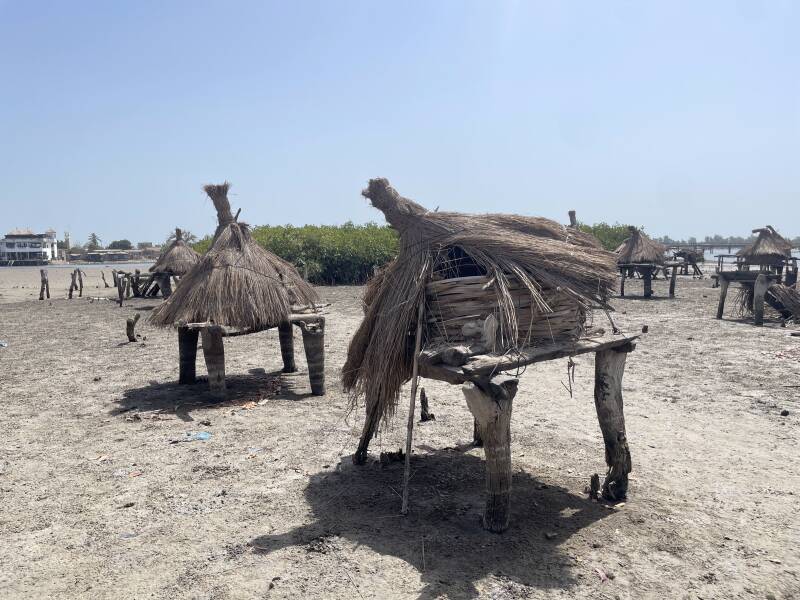
Traditional granaries, no longer in use.
In Senegal there are baobabs, everywhere. People often associate these extraordinary trees with Madagascar, yet they dominate the landscapes of Senegal too. My most memorable encounter came at the ancient Samba Dia Baobab, believed to be around 800 years old and often called the “Baobab of Kings” because kings were once enthroned there. It was my final stop before the airport.
“Get in the tree!” the guide instructed.
“I won’t fit in that hole,” I protested, trying to suppress my claustrophobia.
Before I could argue further, I was unceremoniously grabbed under the arms and lowered through the opening, not exactly my most graceful moment. Inside, however, the hollow trunk felt strangely magical. Baobabs are considered sacred in Senegal, and in the rapidly growing city of Saly, near the airport south of Dakar, many of these ancient giants remain protected. New buildings simply have to rise around them, because the trees themselves cannot be removed.

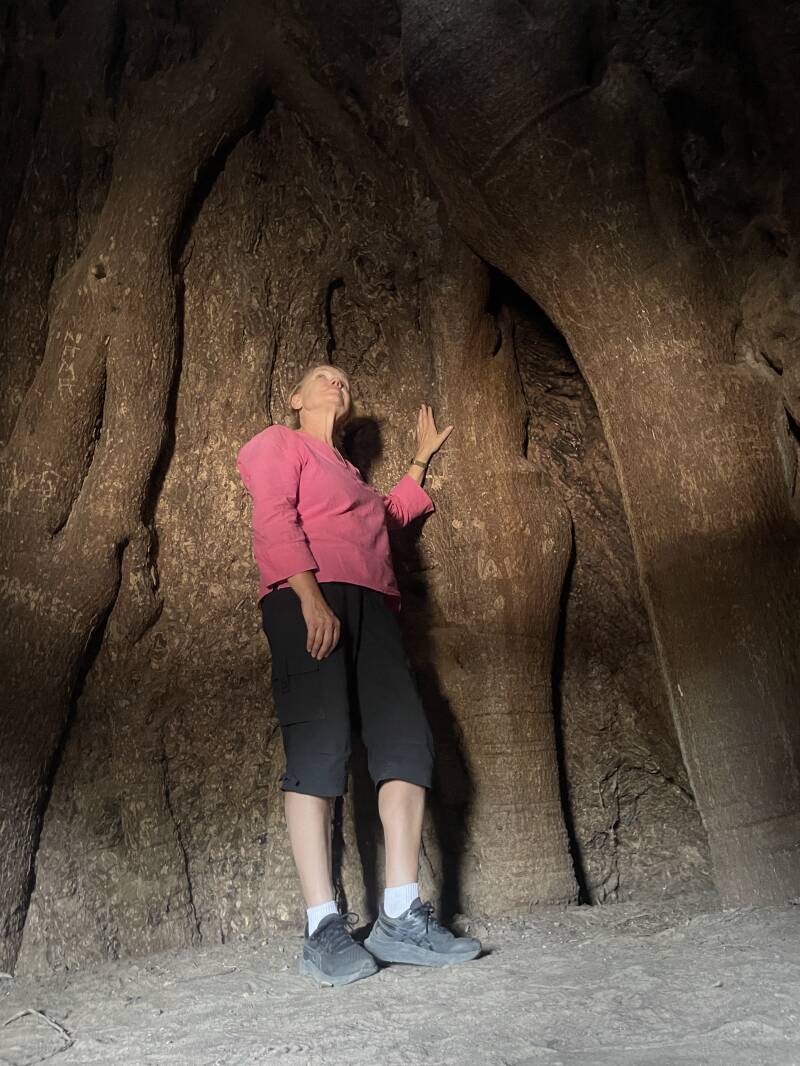
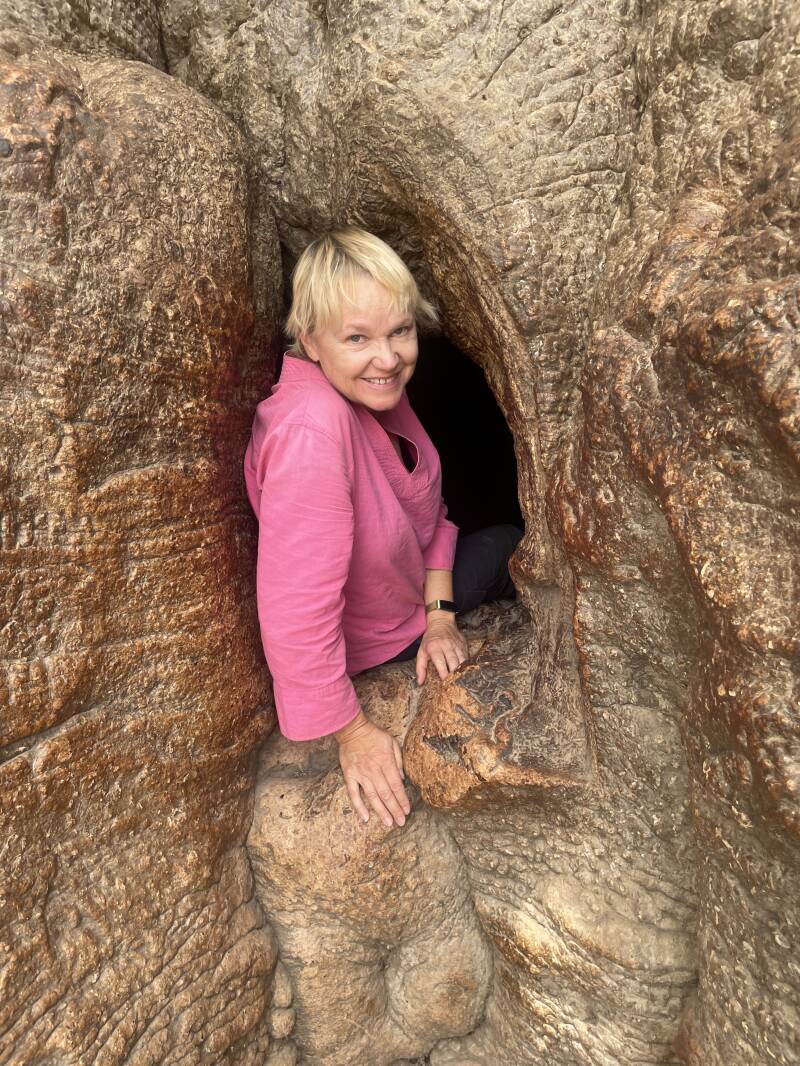
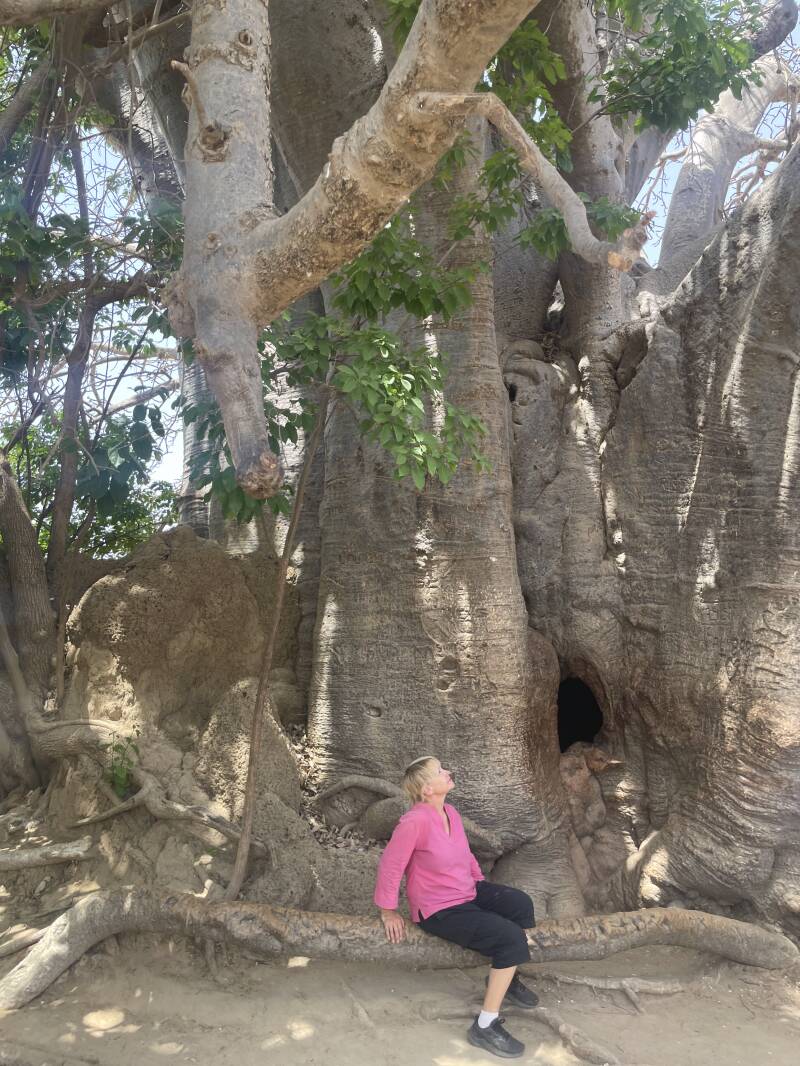
Experiencing Samba Dia Baobab an 800 year old baobab tree inside and out.
Create Your Own Website With Webador