

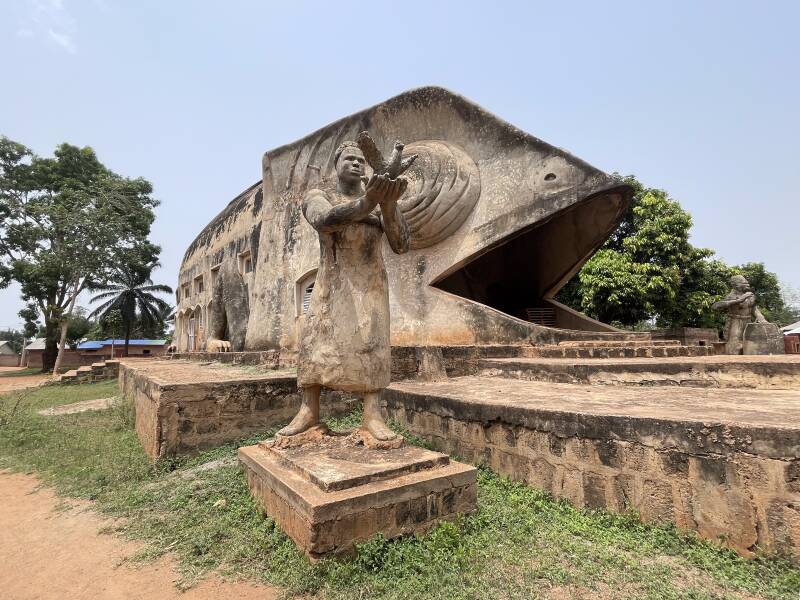
The Chameleon Temple in Abomey, Benin.
Travel dates: 20th – 23rd February 2026
I travelled to Benin as part of an overland journey through Nigeria, Benin, Togo and Ghana with Confidence Aguiyi (and his guides Alex and Vincent) a tour guide and tour director/fixer based in Nigeria.
Benin may be a relatively small West African country, but culturally it punches far above its weight. It is known internationally as the birthplace of Vodun, or Vodou, a spiritual system that spread across the Atlantic during the slave trade and evolved into religions practised in places such as Haiti and Brazil. Yet reducing Benin solely to Vodun misses the broader richness of the country. Benin is also famous for the powerful Kingdom of Dahomey, the feared Agojie female warriors often referred to as the Dahomey Amazons, royal palaces, stilt villages, weaving traditions and some of the most striking textiles and clothing styles I saw anywhere in West Africa.
Soon after crossing into Cotonou, we stopped at the impressive Esplanade des Amazones, home to the towering thirty metre Amazon Statue. The monument honours the Agojie, the famed all female military regiments of the Kingdom of Dahomey, one of the few organised female armies in world history. Armed with a machete and rifle, the statue references their reputed motto: “Win or Die.”
The Agojie defended the Dahomey kingdom from the seventeenth to nineteenth centuries and later resisted French colonial forces. For many years their history was minimised through colonial narratives, so the monument also serves as an act of historical reclamation by modern Benin.
The story of the Dahomey Amazons has recently reached international audiences through the 2022 film The Woman King, inspired by the kingdom and its female warriors. Interestingly, the lead role was given to American actor Viola Davis rather than an African born performer, a casting choice that has drawn some criticism despite widespread respect for Davis's acting ability. At the same time, the broader cast includes actors from across the African continent, including Thuso Mbedu, Masali Baduza and Angélique Kidjo, which at least suggests an effort toward more authentic African representation within the ensemble.
The surrounding square was full of life in the evening, with families strolling through the esplanade and groups gathering in the warm air. A small group of busking musicians dressed in vibrant patterned fabrics began enthusiastically serenading me as I walked past. I suspect they were hoping for a tip, but having literally just crossed the border, I had not yet exchanged any money and could only smile apologetically while enjoying the performance.
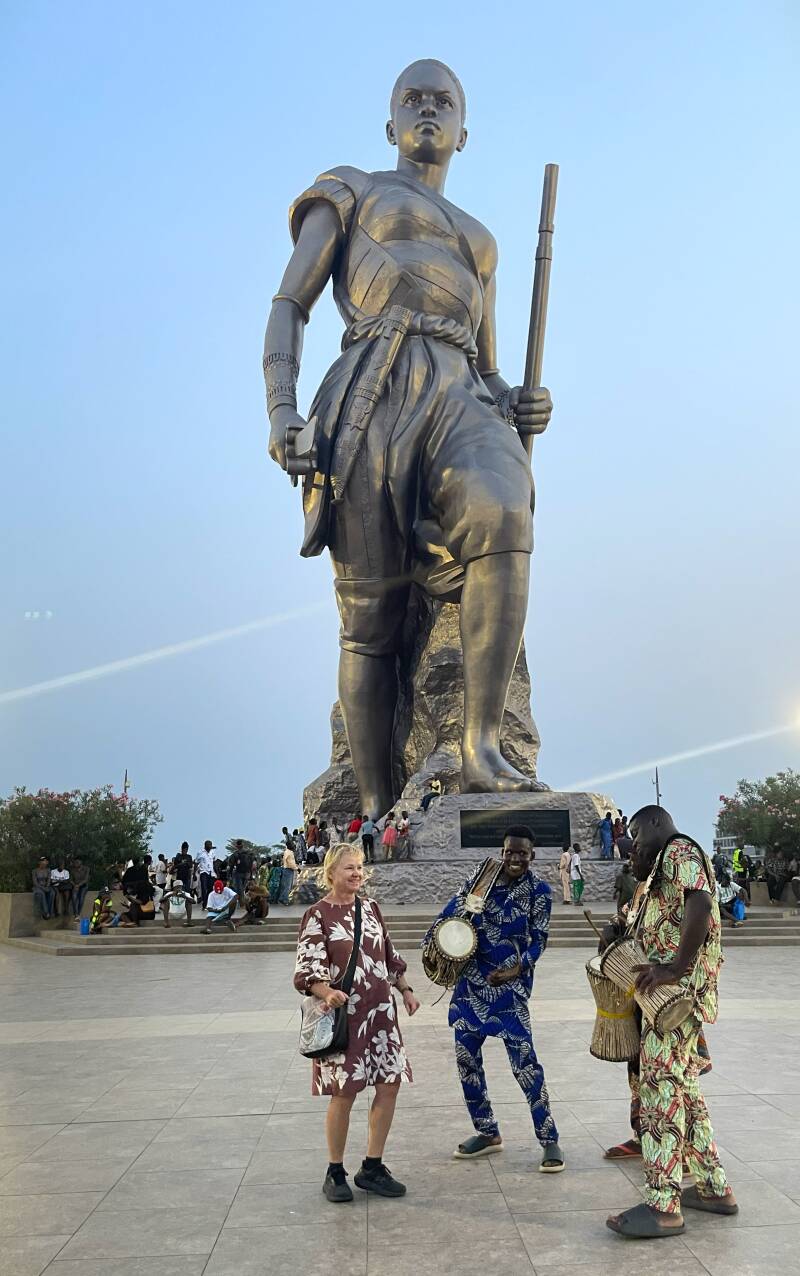
The Amazon Statue in Cotonou.
As we passed through Cotonou after the long overland journey from Nigeria, complete with countless checkpoints and border formalities, I noticed flashes of colour stretching along the wall near the port. At the time I only managed to snap a quick photo through the car window, but later I discovered we had driven past the remarkable Marina Boulev’art Gallery, now regarded as Africa’s longest graffiti mural.
Extending for nearly a kilometre along the wall of the Port Autonome de Cotonou, the open air gallery was created by more than forty Beninese and international graffiti artists as part of the Graffiti Effect Festival. The Effet Graff Festival in Cotonou, Benin, is recognized as the largest urban art festival in French-speaking Africa and was initiated by Laurenson Djihouessi and the ASSART Association in 2013.The aim was not simply beautification but the creation of a visual narrative celebrating Benin’s identity, culture and traditions of peaceful coexistence.
Even from the moving vehicle, the scale of the project was obvious. Murals, colours and figures rolled endlessly past the window. I remember wishing we had time to stop properly and walk along it, but after such a long travel day we were racing to continue onward. It reinforced my feeling that Cotonou deserves far more time than many travellers give it. Between the contemporary public art, the Amazon monument, the lively evening atmosphere and the layers of history, it felt like a city with far more depth than its reputation as merely a transit point.
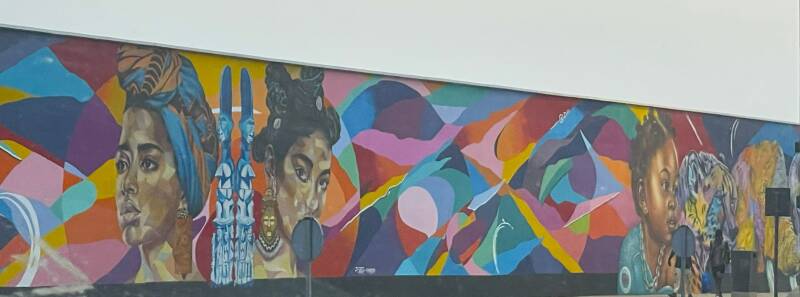
A section of the an outdoor mural gallery currently known as Africa's longest graffiti mural wall.
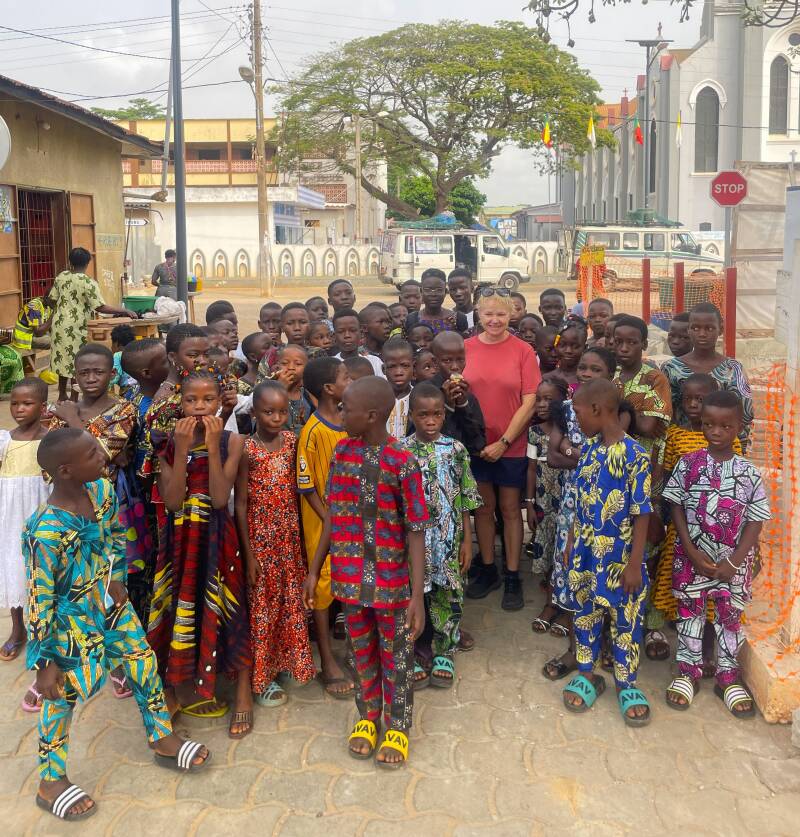
School children in Ouidah; how's that for school uniforms?
One of the first things I noticed after crossing the border into Benin was colour. It seemed that everybody wore vibrant patterned fabrics. Men, women, school children, market sellers, motorbike riders. The wax print textiles of West Africa really are world class. Streets felt alive with colour and movement.
Being pale, blonde and unmistakably foreign in many of these places meant attracting attention from children almost immediately. At one point a group of school children stared at me so intensely that it seemed only logical to break the tension by swapping selfies with them.
Ouidah: Vodun and the Atlantic Slave Trade
Ouidah is one of the spiritual centres of Vodun and also one of the most historically significant slave ports in West Africa. It is a place where spiritual traditions, colonial history and memory coexist side by side.
The next morning we visited the Sacred Forest of Kpassè, a five hectare Vodun sanctuary filled with sculptural representations of deities and spirits. Unlike the sensationalised depictions of “voodoo” common in Western films, Vodun here felt structured, spiritual and deeply woven into everyday life.
At the entrance stood a mural featuring two panthers and a peacock. According to local folklore, when King Kpassè, a sixteenth century ruler of the Kingdom of Whydah, sensed death approaching, he disappeared into the forest and transformed into an iroko tree after signs from the animals revealed his fate to his children.
The forest itself felt calm rather than ominous. Sunlight filtered through the trees while guides quietly explained the meanings behind the statues and shrines. One of the most important figures was Legba, guardian of crossroads and intermediary between the human and spiritual worlds. His statues, confronting to outsiders with exaggerated symbolic forms, are intended as protectors rather than objects of fear. Other deities represented throughout the forest related to fertility, healing, thunder, the sea and ancestral protection.
One particularly striking figure had two heads. I later learnt that this deity was believed to act as the king’s spy, able to see both forwards and backwards simultaneously. Other statues featured horns, elaborate costumes and symbolic physical forms, each carrying meanings connected to Vodun belief and spiritual protection.
One temple marked the threshold into an area where only initiates could enter, women to one side and men to the other. Colourful murals covered the walls and at the entrance coiled the circular serpent figure Dan Ayidohouedo, consuming its own tail.
What struck me most was the relationship between spirituality and nature. In southern Benin, sacred forests are not simply religious sites but living ecological sanctuaries protected through belief systems that have endured for centuries. Across the country, thousands of sacred groves preserve rare vegetation and wildlife that have disappeared elsewhere through deforestation and development. In Vodun belief, the forest is alive with spiritual presence, something to be protected rather than conquered.
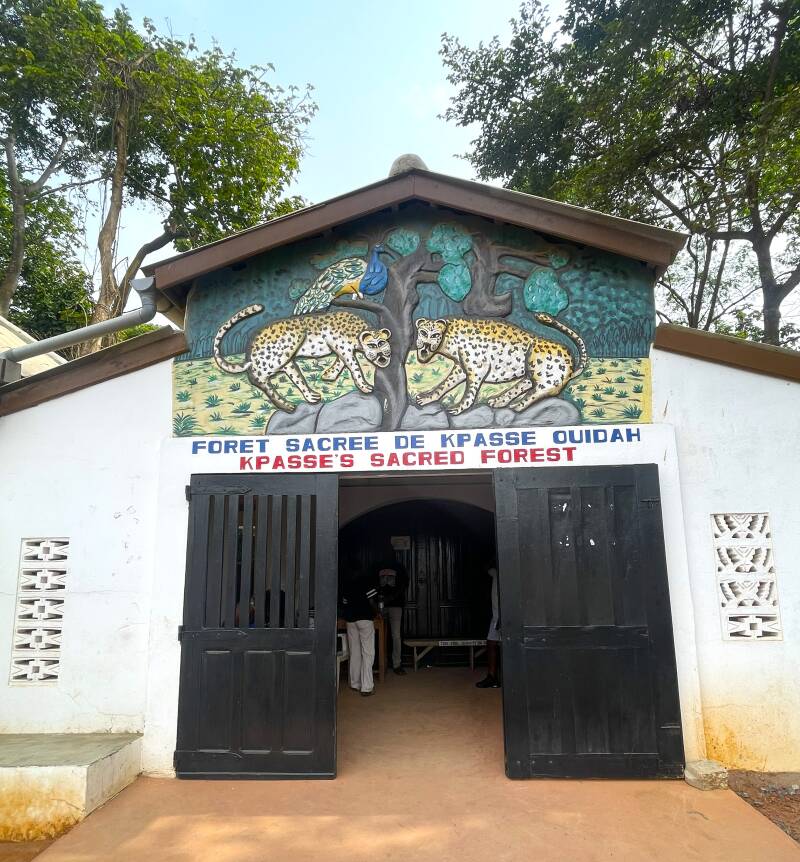
Enrance mural of two panthers under a tree with a peacock in the branches.
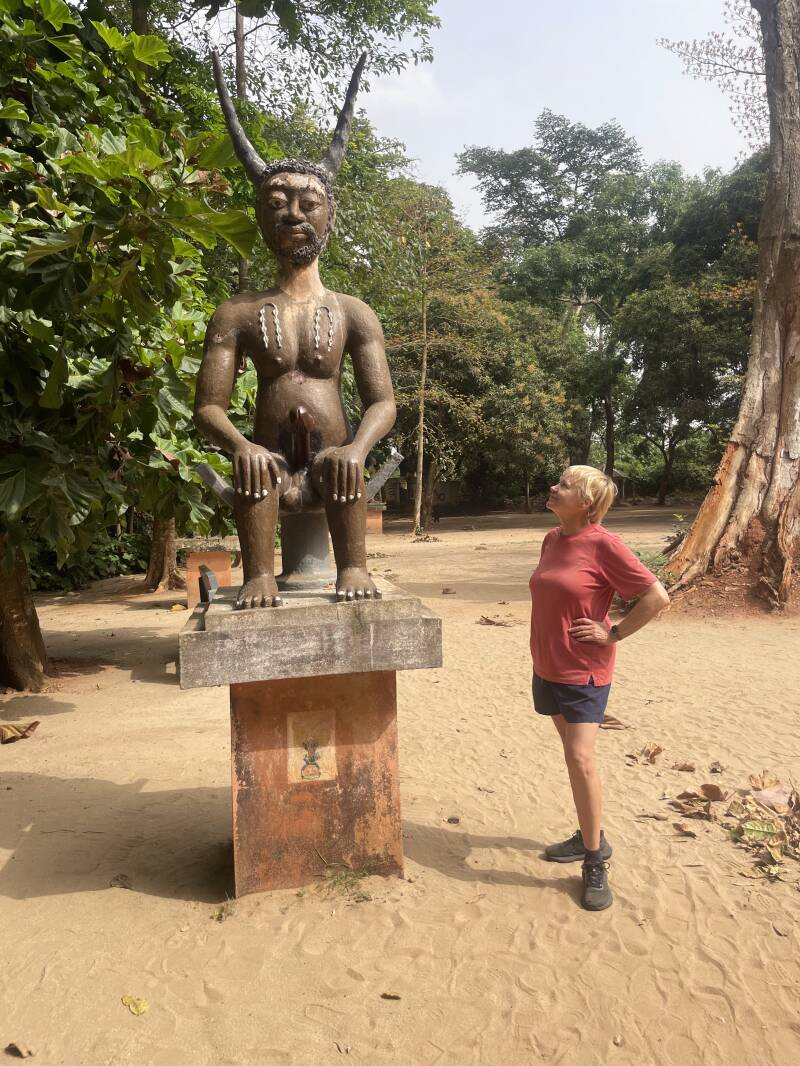
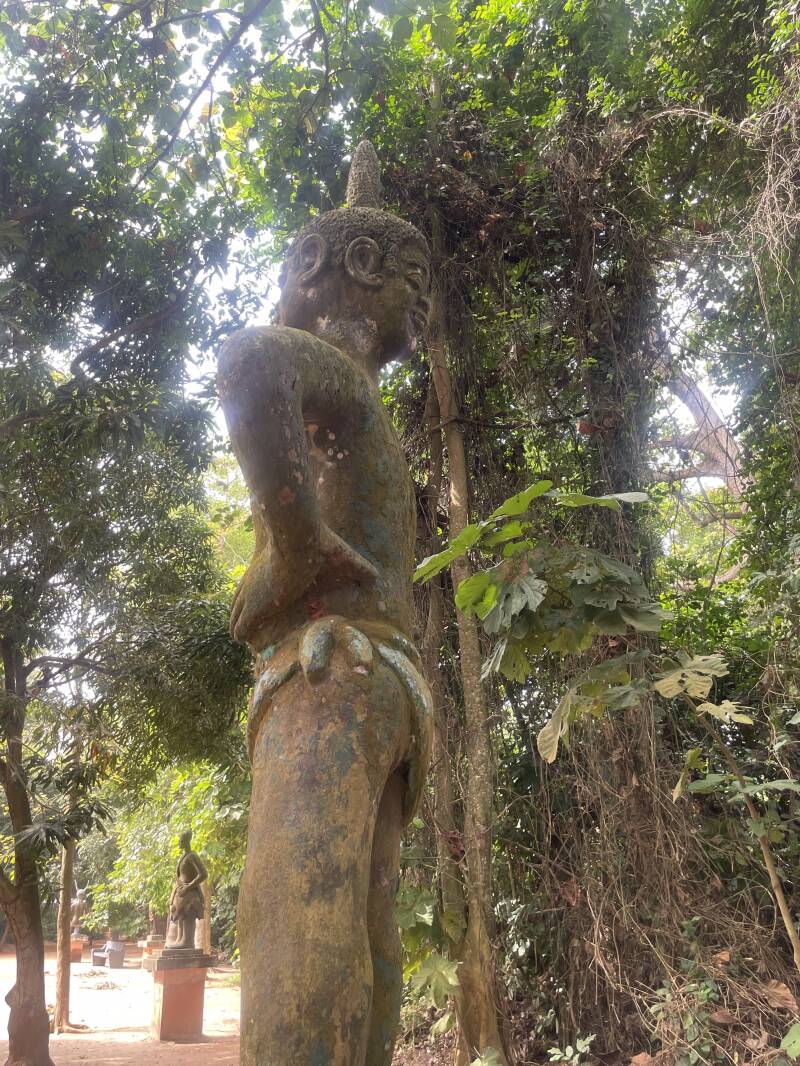
Legba, guardian of crossroads and intermediary between the human and spiritual worlds.
A two headed deity, to act as a spy for the King.
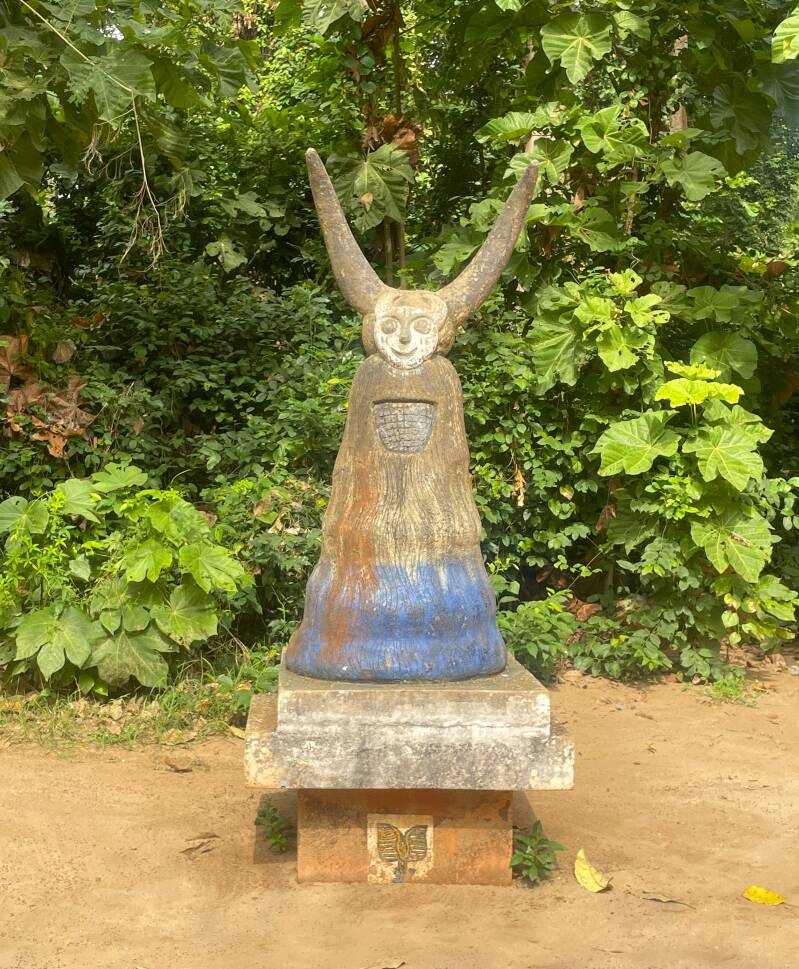
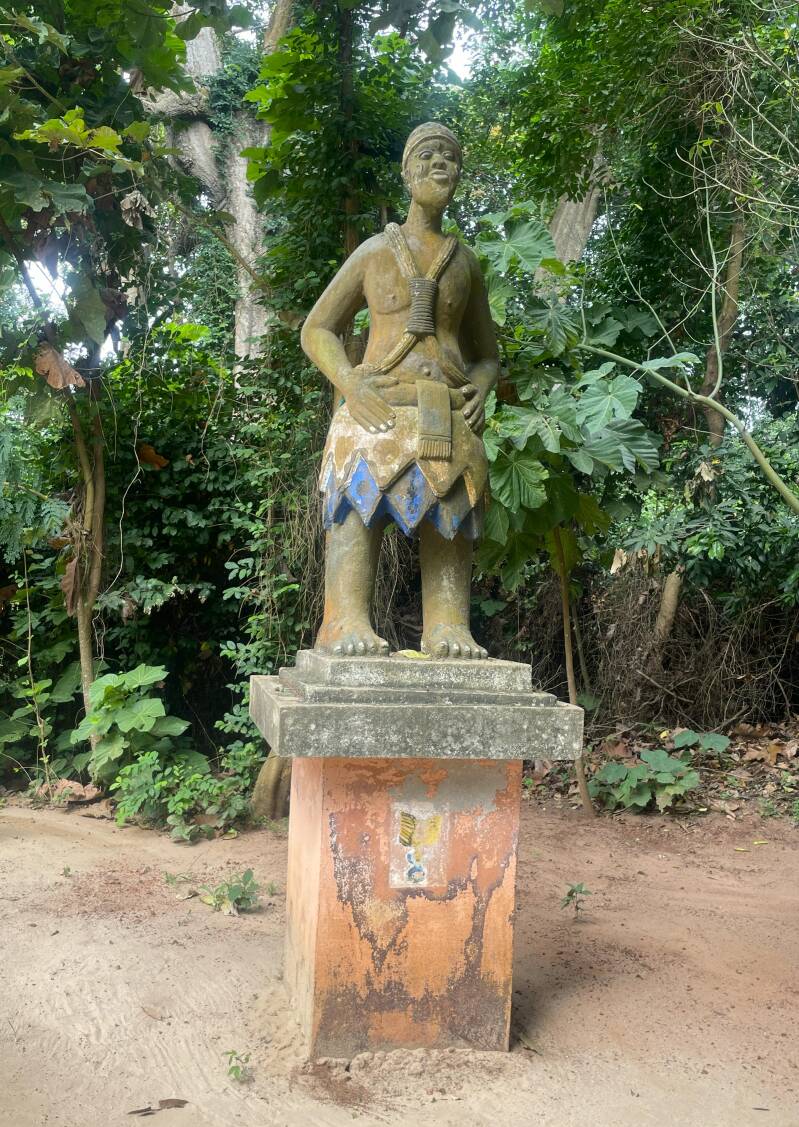
Other deity statues.
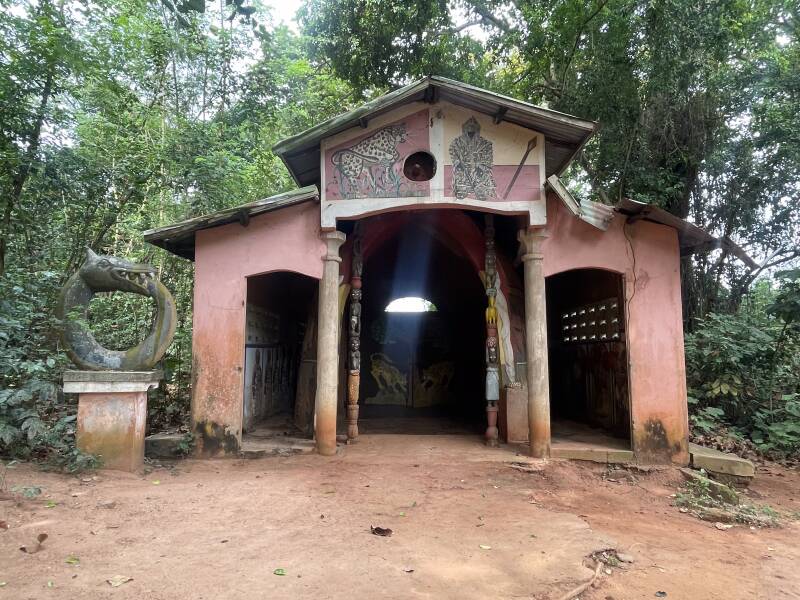
A temple that only the initiated could enter, women and men on different sides.
Just across from the basilica sits one of Ouidah’s most unusual and symbolically important sites: the Temple of Pythons. The temple remains an active place of Vodun worship and reflects the central role that serpents play within spiritual belief systems across parts of Benin, Togo and Ghana.
In Vodun cosmology, the rainbow serpent Dan serves as an intermediary between the human and spiritual realms, and snakes are regarded not with fear but with reverence. According to local legend, during a war in the eighteenth century, the king of Ouidah hid in the forest while enemies searched for him. Pythons emerged and protected his hiding place, preventing his capture. In gratitude, monuments and shrines were later established in honour of the snakes.
The temple itself is relatively modest: a concrete structure topped with a clay roof. Inside, dozens of royal pythons slithered across the floor or lay coiled together in tangled heaps. Despite my lifelong caution around snakes, I found myself unexpectedly calm. Royal pythons are known for their docile nature and one was gently placed around my neck for photographs. It certainly makes for an unusual travel image.
The grounds appeared to be undergoing renovation during my visit and there were carved wooden sculptures nearby, adding to the atmosphere of ritual and symbolism. I learnt that the snakes are periodically released to hunt chickens and mice before returning to the temple. Locals apparently treat them with such familiarity that if a python wanders into a home, it is simply regarded as a temporary guest and later returned.
What fascinated me most was how naturally all of this coexists within daily life. Opposite stood the Catholic basilica, while here sacred pythons moved through a temple tied to centuries old Vodun belief. Rather than conflict, there seemed to be an easy coexistence between the spiritual traditions of Ouidah.
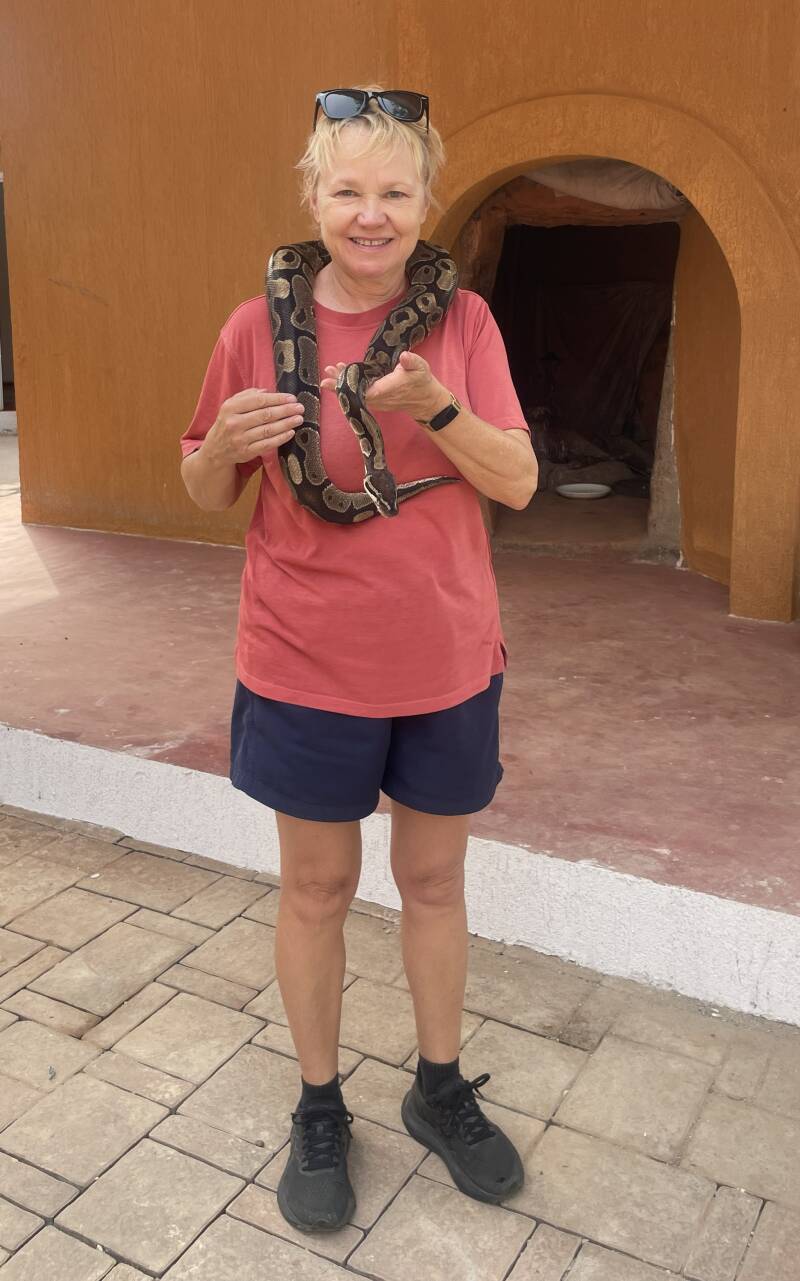
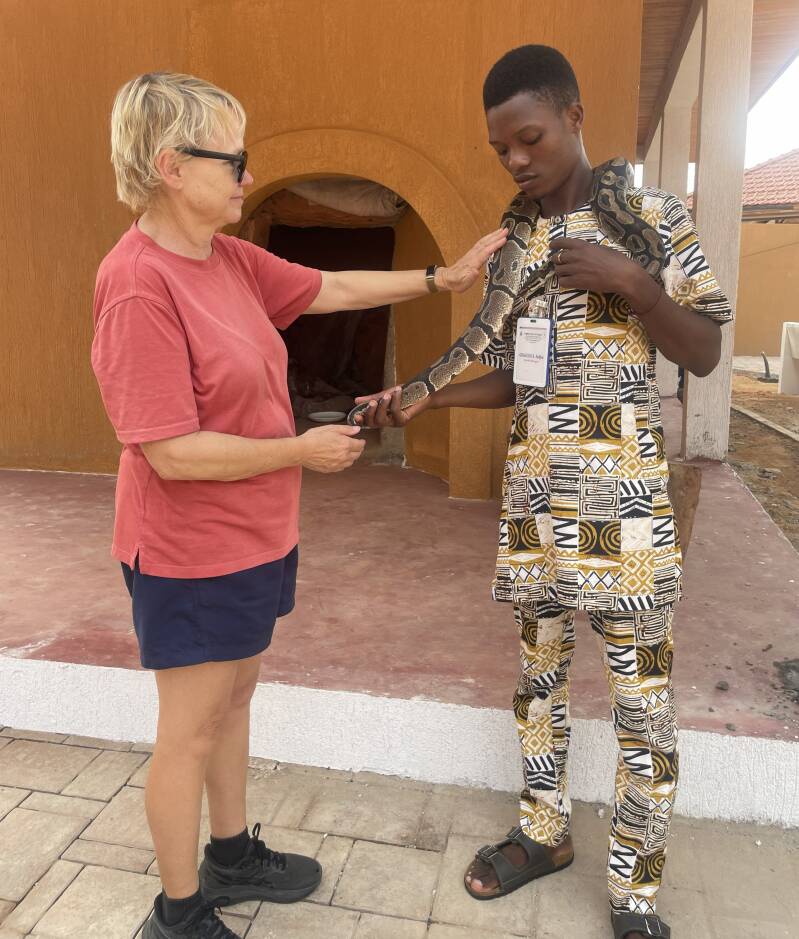
Up close and personal with a sacred python at the Temple of Pythons, Ouidah.
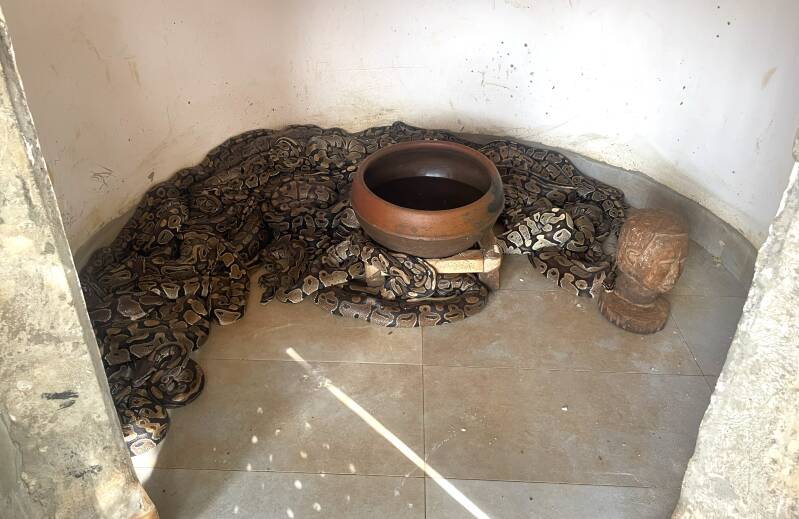
When one python isn't enough: a pit of snakes!
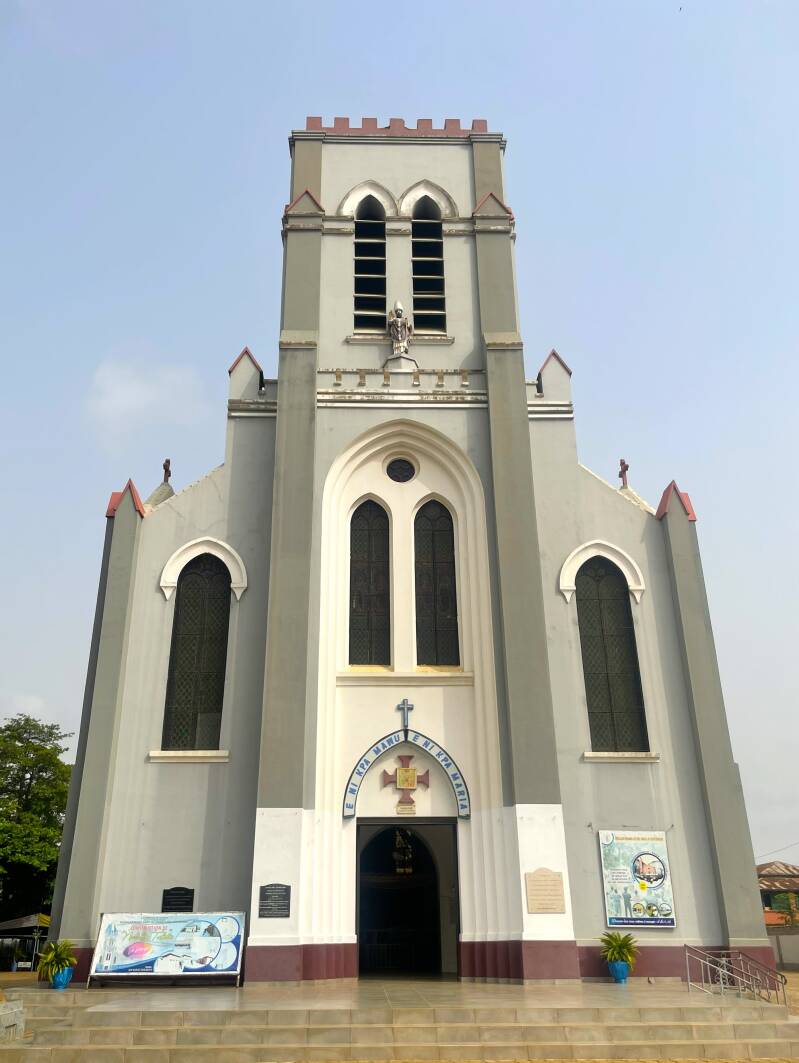
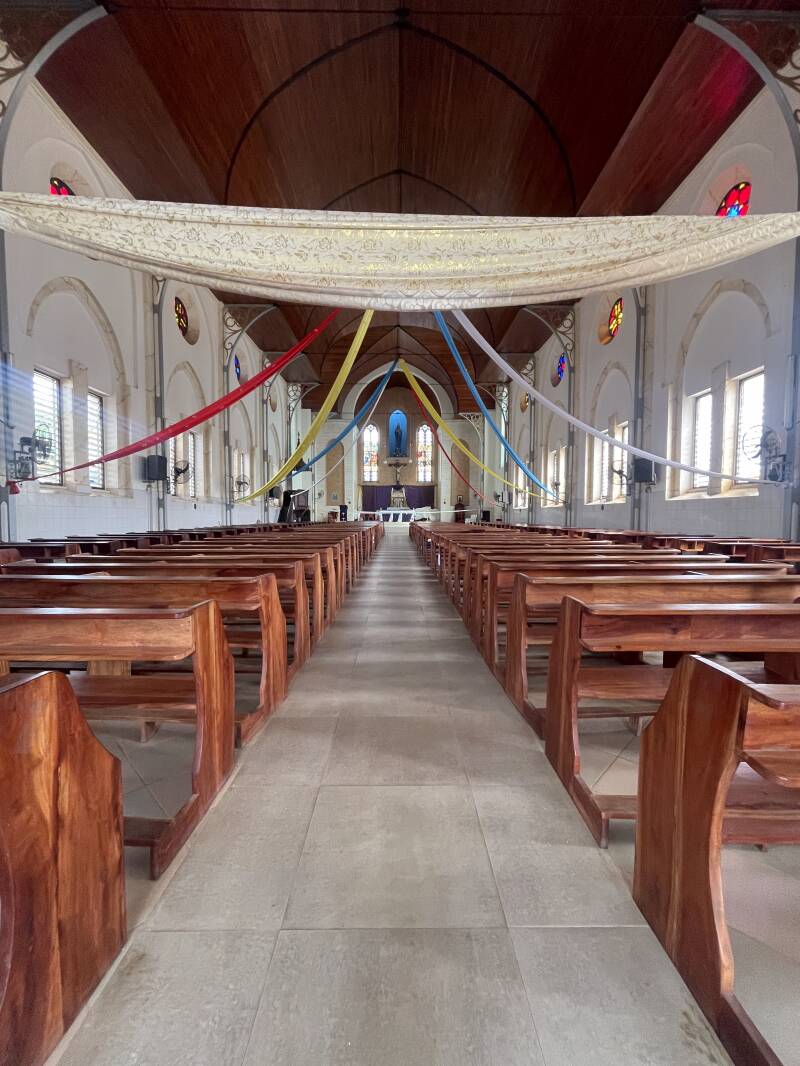
Basilica of the Immaculate Conception, Ouidah.
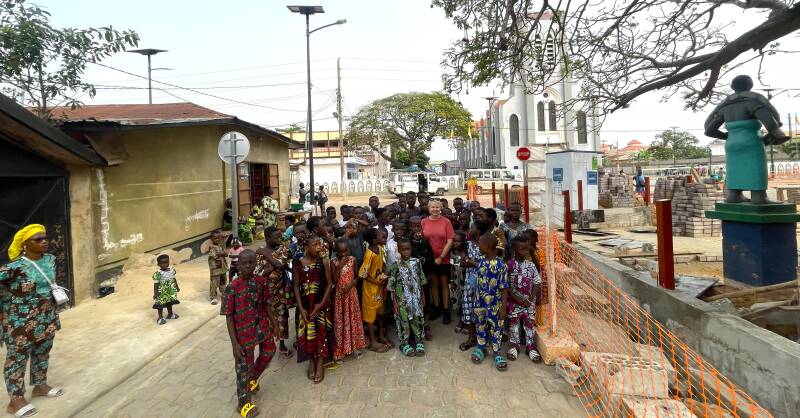
School children near the Basilica.
Later we visited the old Portuguese Fort of São João Baptista de Ajudá. We were fortunate to be allowed inside, as some areas are restricted and photography is prohibited in certain sections. The fort contains deeply confronting reminders of Ouidah’s role in the transatlantic slave trade, including former holding quarters where enslaved Africans were imprisoned before being forced onto ships.
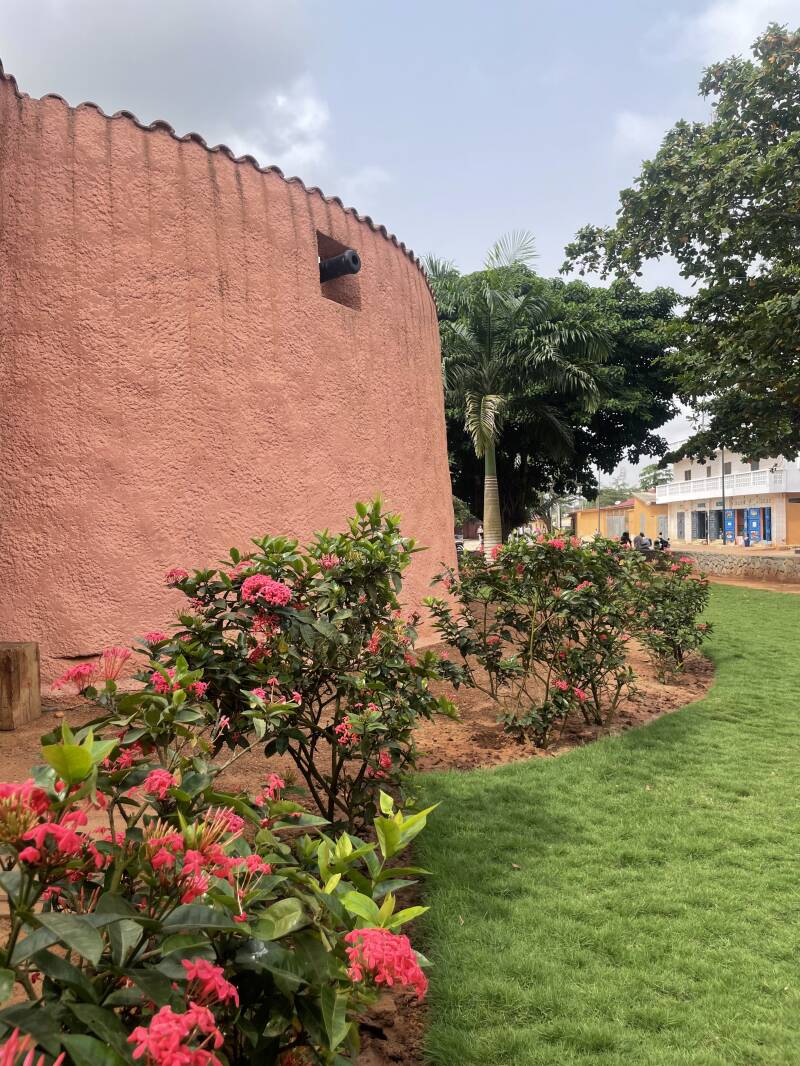
Manicured gardens outside the Portuguese fort.
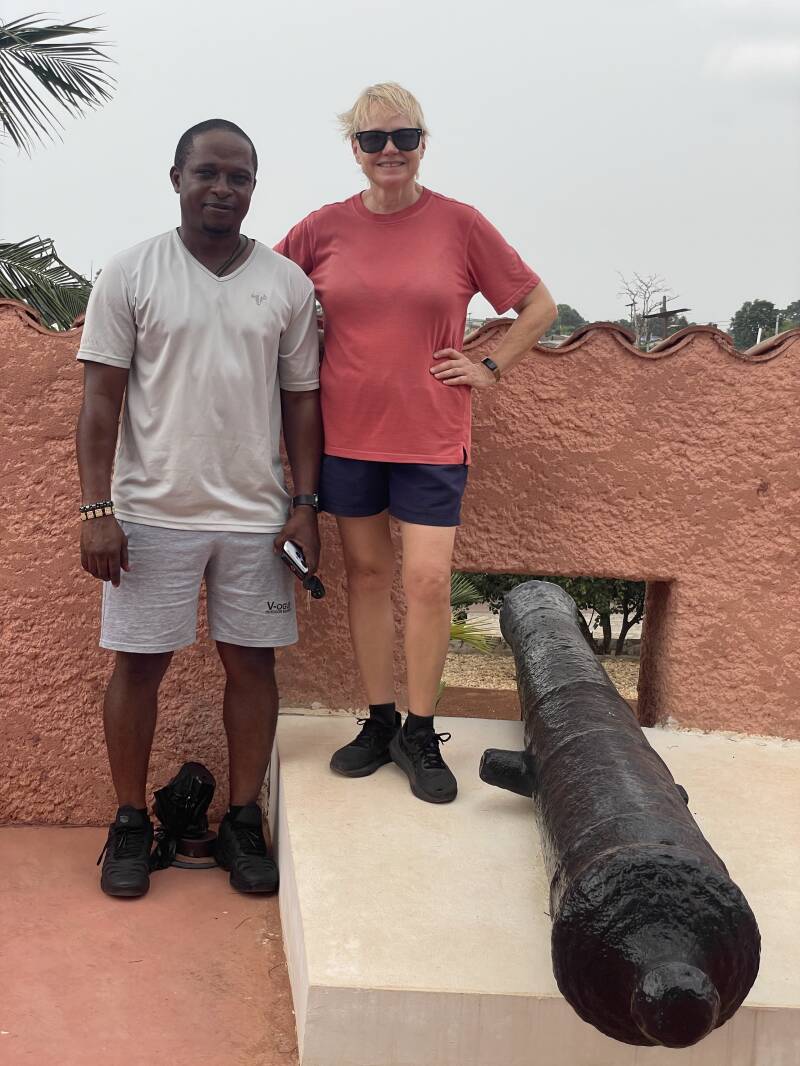
Me looking very tall against my guide, Alex at the Portuguese Fort.
By the end of the day we reached Door of No Return on the Atlantic coast, the final point along Ouidah’s Slave Route. The route stretches roughly 4.5 kilometres and traces the path enslaved captives were forced to walk before being shipped across the ocean.
Before reaching the arch itself, we stopped at the former slave market in Ouidah. Today it is an open space in the centre of town, but its history is significant. Nearby stands a large house that once belonged to the family who operated the market. On the ground were large metal spheres bolted into place, symbolising the heavy balls and shackles once used to restrain enslaved people.
Captives were brought here from across the region, including from Abomey, where rulers of the Kingdom of Dahomey traded prisoners and captives in exchange for goods and weapons. At the market, enslaved people were branded according to their buyers and destinations.
At the end of the route stands the Door of No Return, a concrete arch on the shoreline marking where captives were forced onto ships. It is a memorial to that history and its consequences.
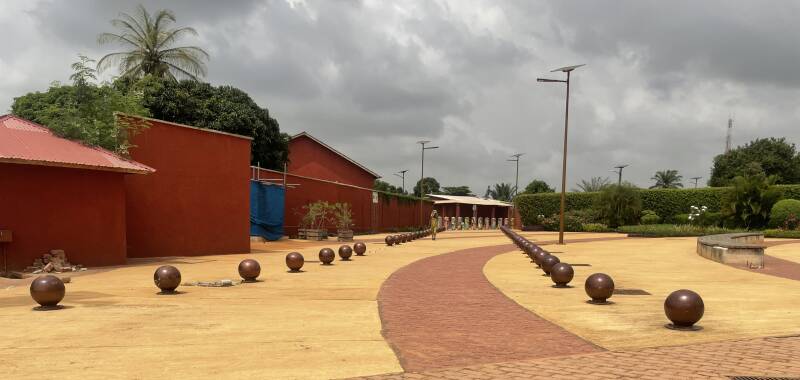
Large metal spheres bolted into place, symbolising the heavy balls and shackles once used to restrain enslaved people near the Door of No Return.
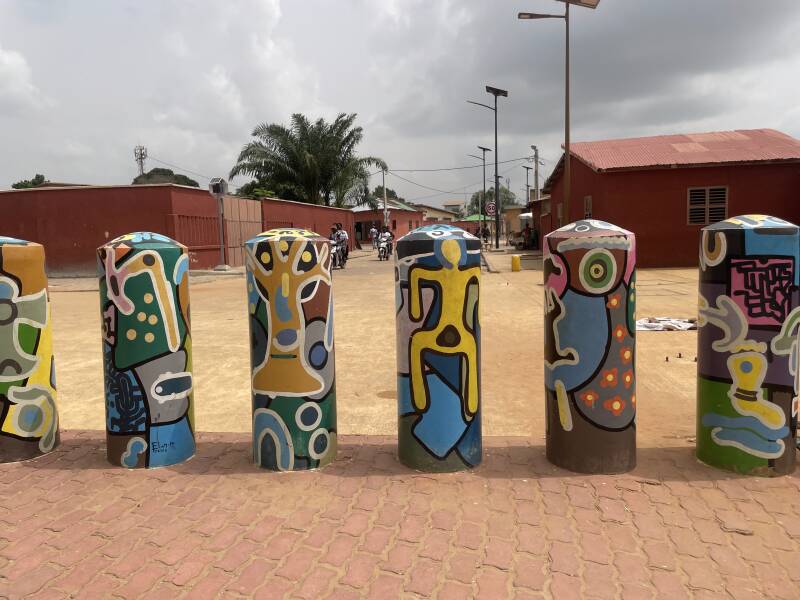
Colourful bollards, symbolic art representing captives' journeys.
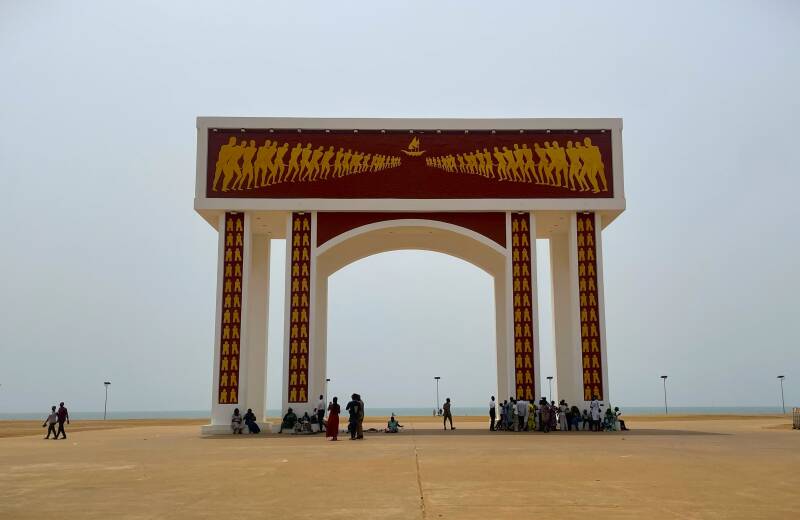
The Door of No Return.
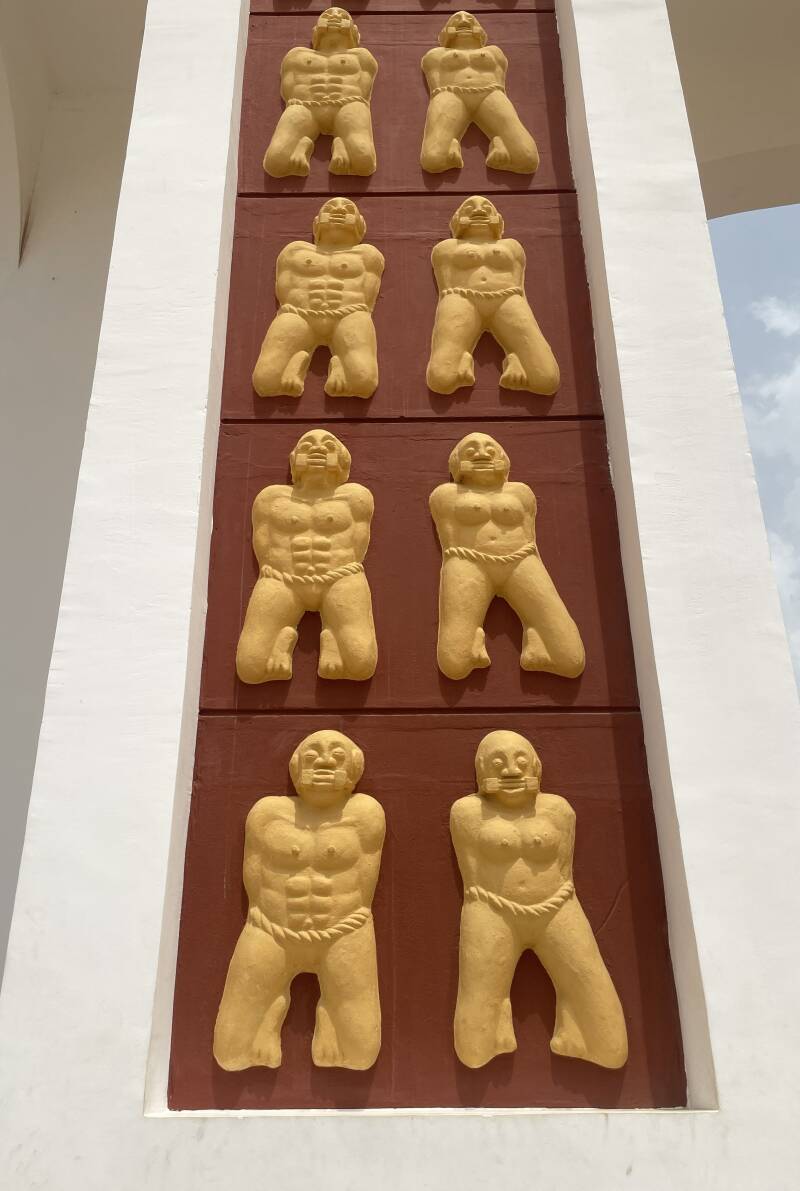
Detail of some of the confronting friezes at The Door of No Return.
While in Ouidah, I also asked my guide if we could visit the Musée de la Fondation Zinsou, which was showing a temporary exhibition titled “Yehwe Vodoun”. I'mso glad I did! It featured the work of Beninese artist Narcisse Dotou, whose pieces were being presented there for the first time as part of the foundation’s collection.
Dotou’s work sits in direct conversation with earlier masters such as Kifouli Dossou and Cyprien Tokoudagba, both known for shaping visual interpretations of Vodun in Benin. His tapestries explore Vodun figures not only as local spiritual symbols, but as ideas that have travelled and transformed through the African diaspora, reappearing in places such as Haiti, Cuba and Brazil. The work suggests these traditions are not fixed, but constantly evolving across geography and history.
What gave the exhibition additional depth was Dotou’s training background. He learned his craft in the workshops of the royal tapestry weavers of Abomey, under François Yemadje, part of a lineage of court artisans dating back to the Kingdom of Dahomey in the late eighteenth century. This tradition of appliqué textile work once decorated royal palaces and ceremonial objects, and here it was being reinterpreted in a contemporary artistic context.
Overall, it added a different dimension to the visit: Vodun was not only present in sacred forests and temples, but also being actively reimagined through contemporary African art.
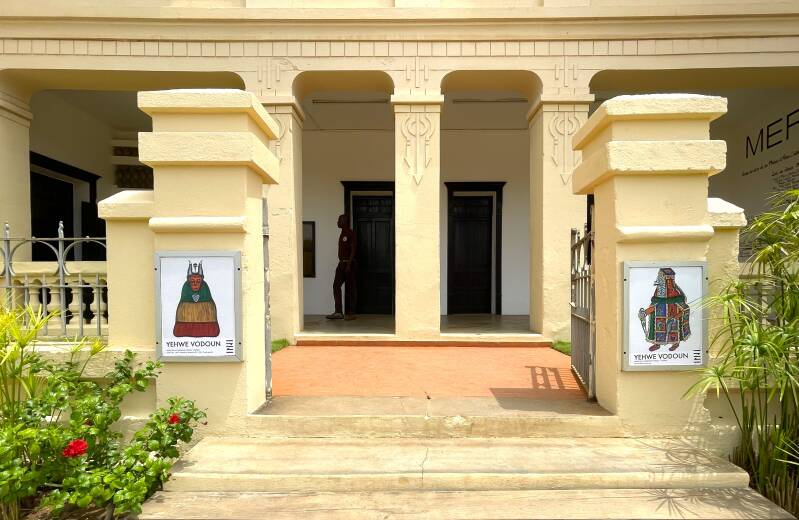
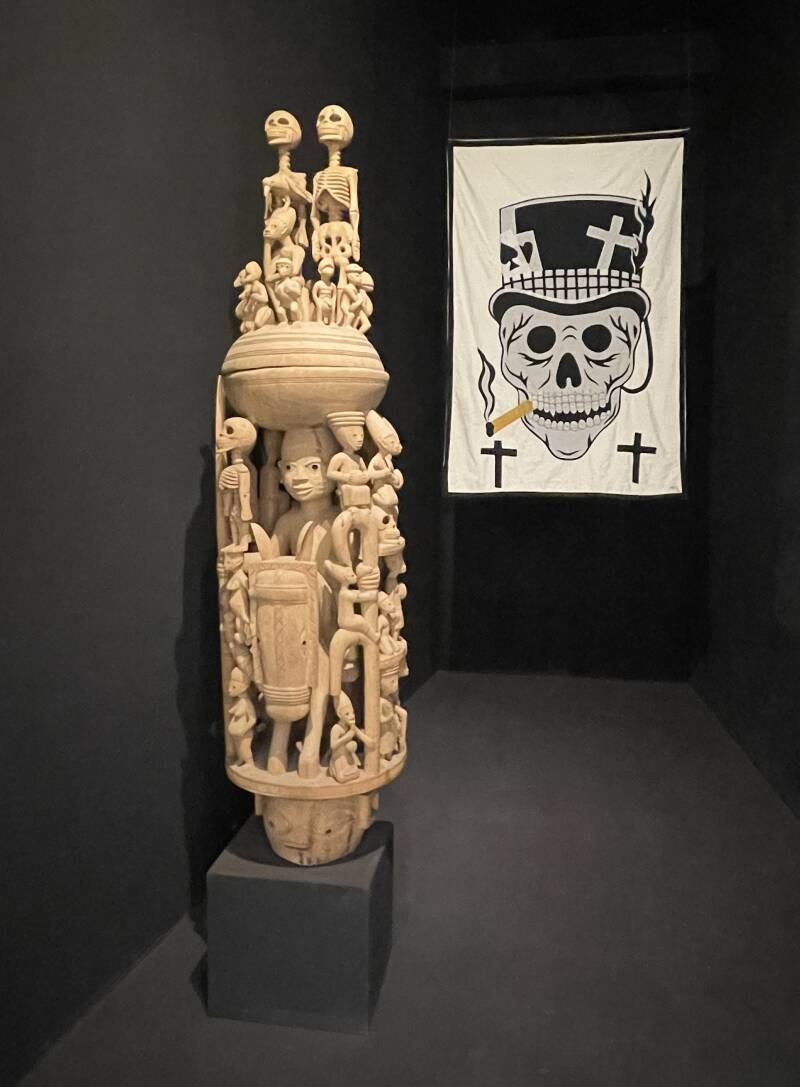
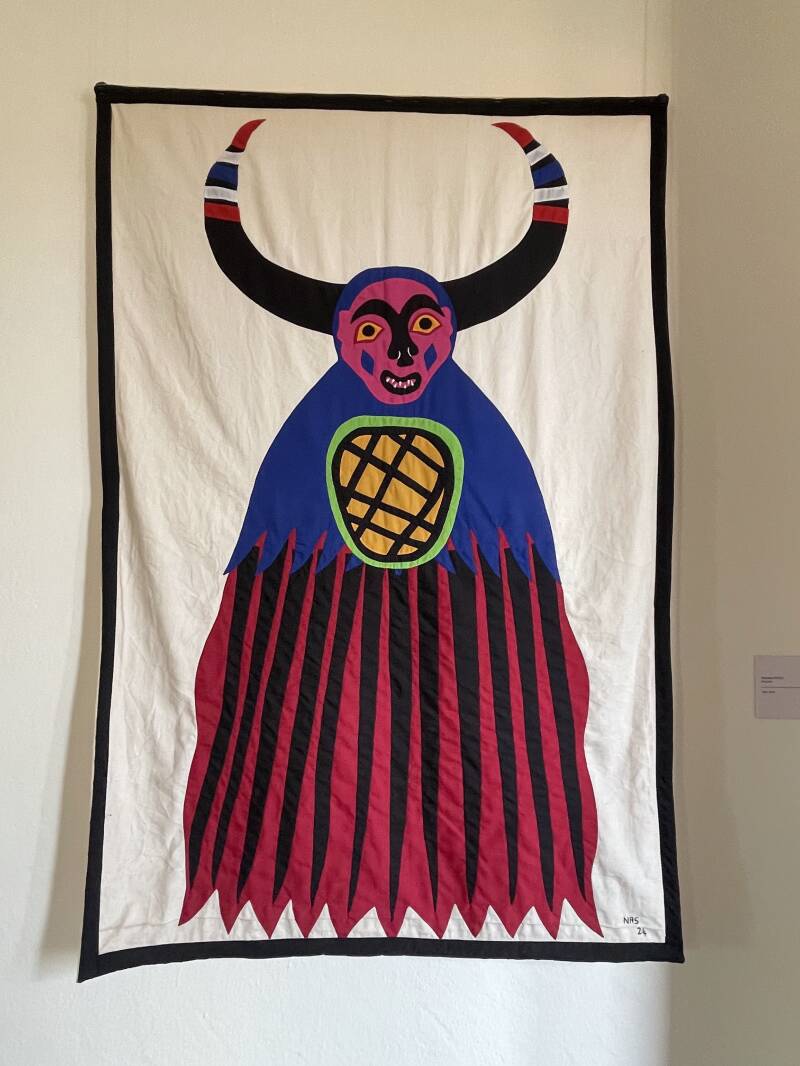
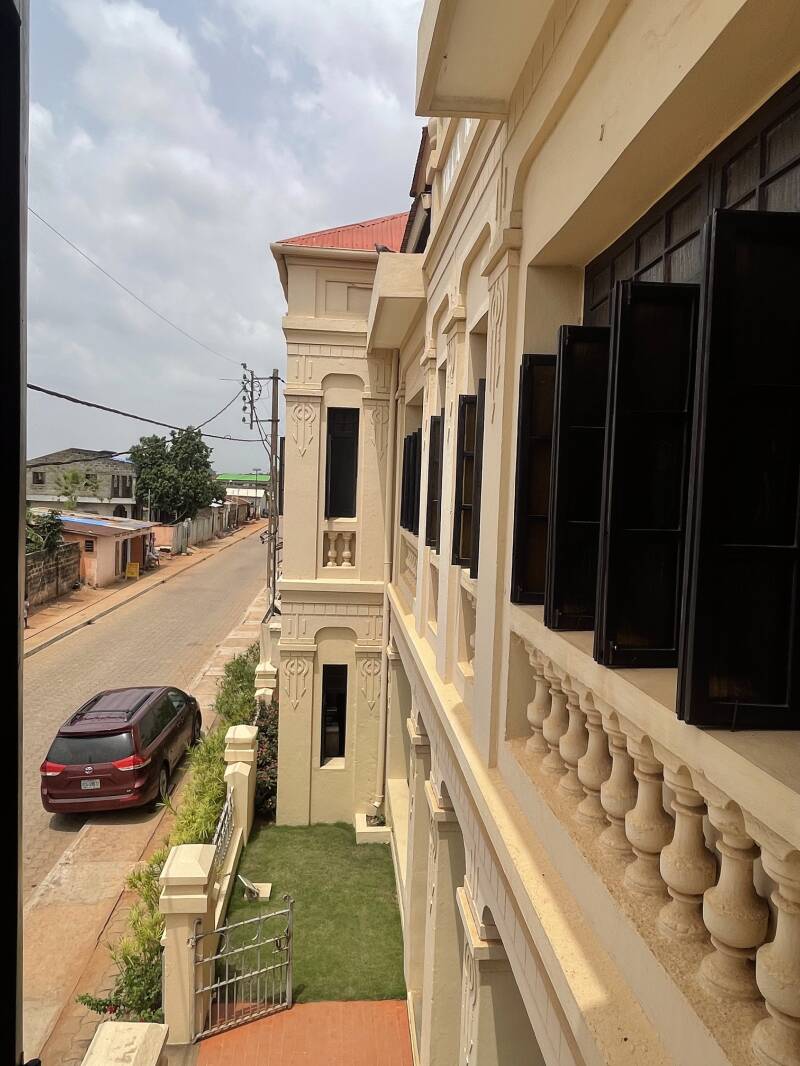
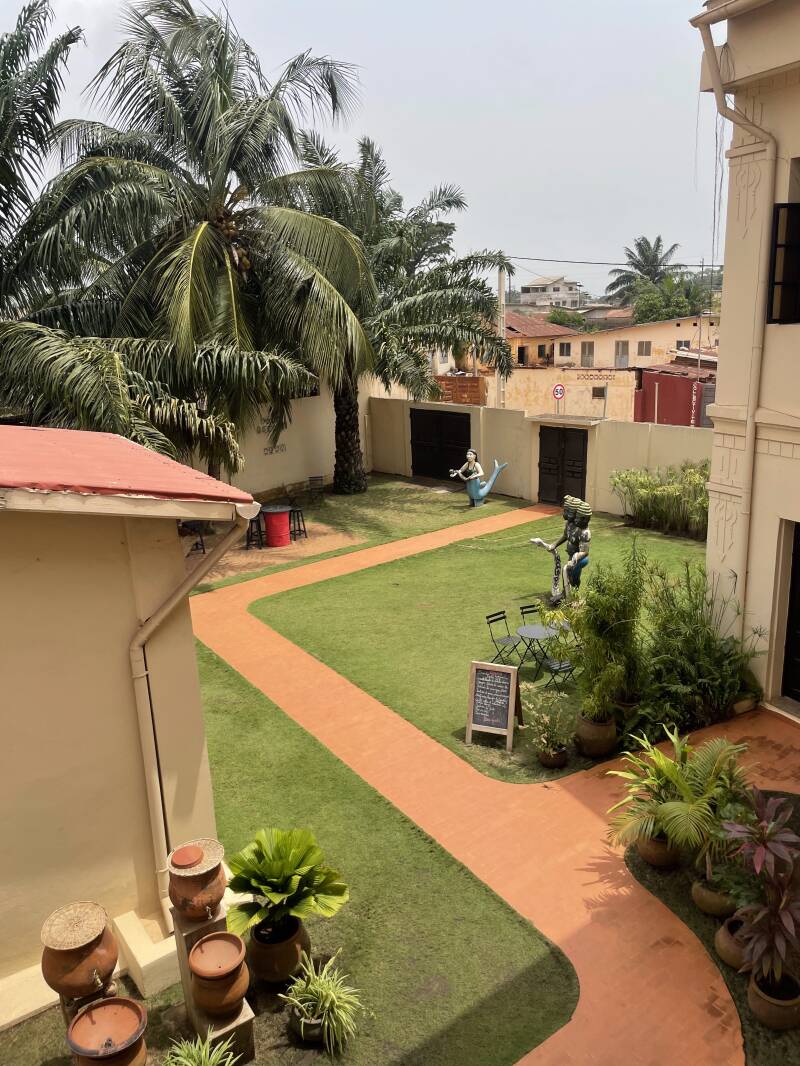
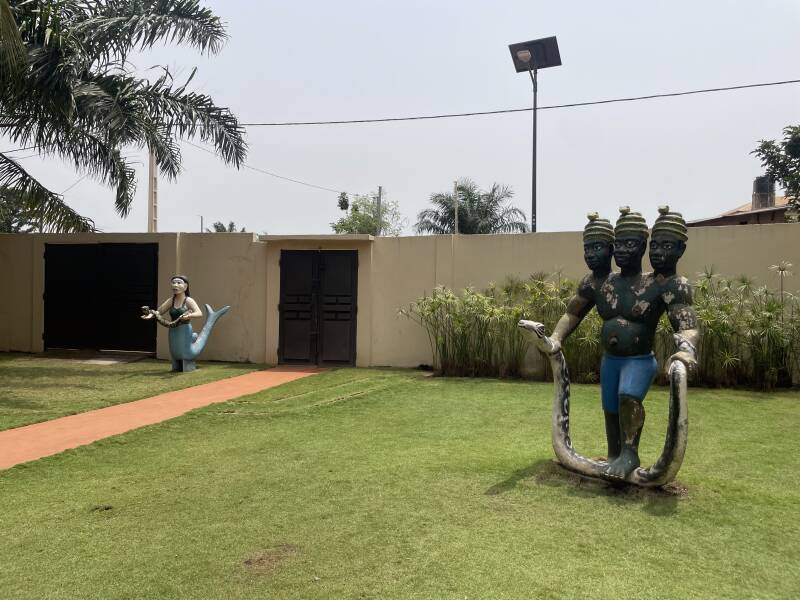
Various views of Musée de la Fondation Zinsou in Ouidah.
Ganvié: “We Survived”
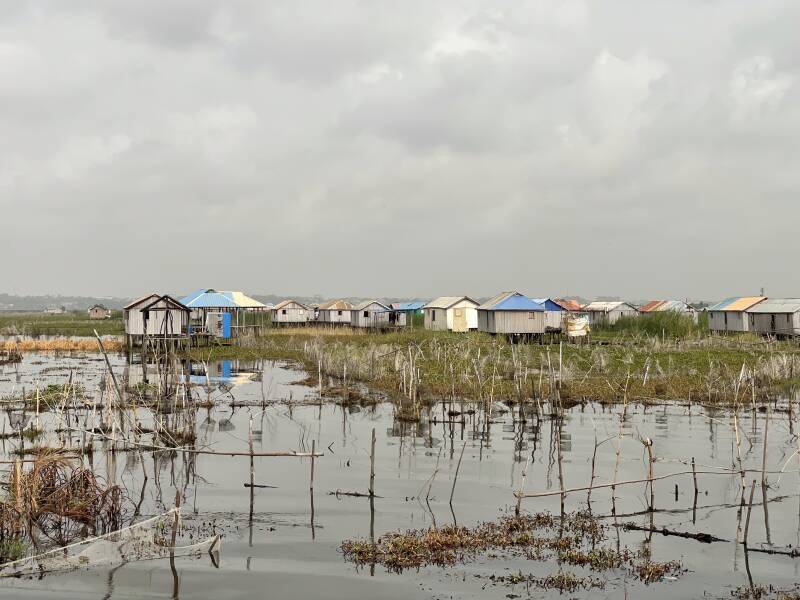
One of the most memorable excursions in Benin was visiting Ganvié, the remarkable stilt village often called the 'Venice of Africa'.
Founded in the seventeenth century by the Tofinu people escaping slave raiders, Ganvié’s name translates roughly to “we survived”. Entire communities established themselves on Lake Nokoué because the slave hunters, particularly from the Kingdom of Dahomey, traditionally avoided fighting on water.
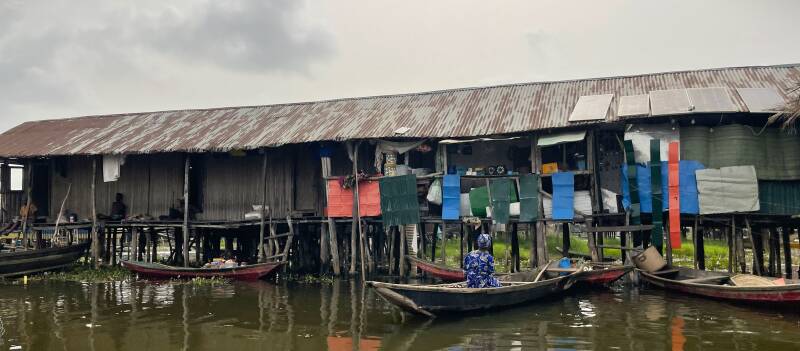
Today the settlement contains thousands of bamboo and timber structures including homes, schools, churches and shops, all balanced above the lake. Fishing remains central to daily life.
Travelling through Ganvié by boat was both fascinating and unexpectedly peaceful. Children paddled canoes with astonishing confidence. Women sold goods directly from boats. Fishermen moved through the water surrounded by wooden poles and fishing nets. Everyday life unfolded entirely on the lake.
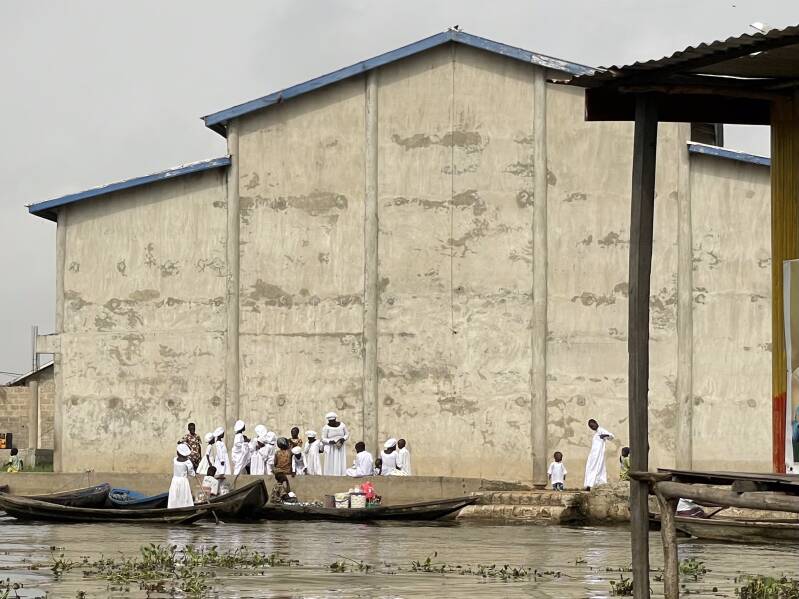
Wearing white, heading to church by boat.
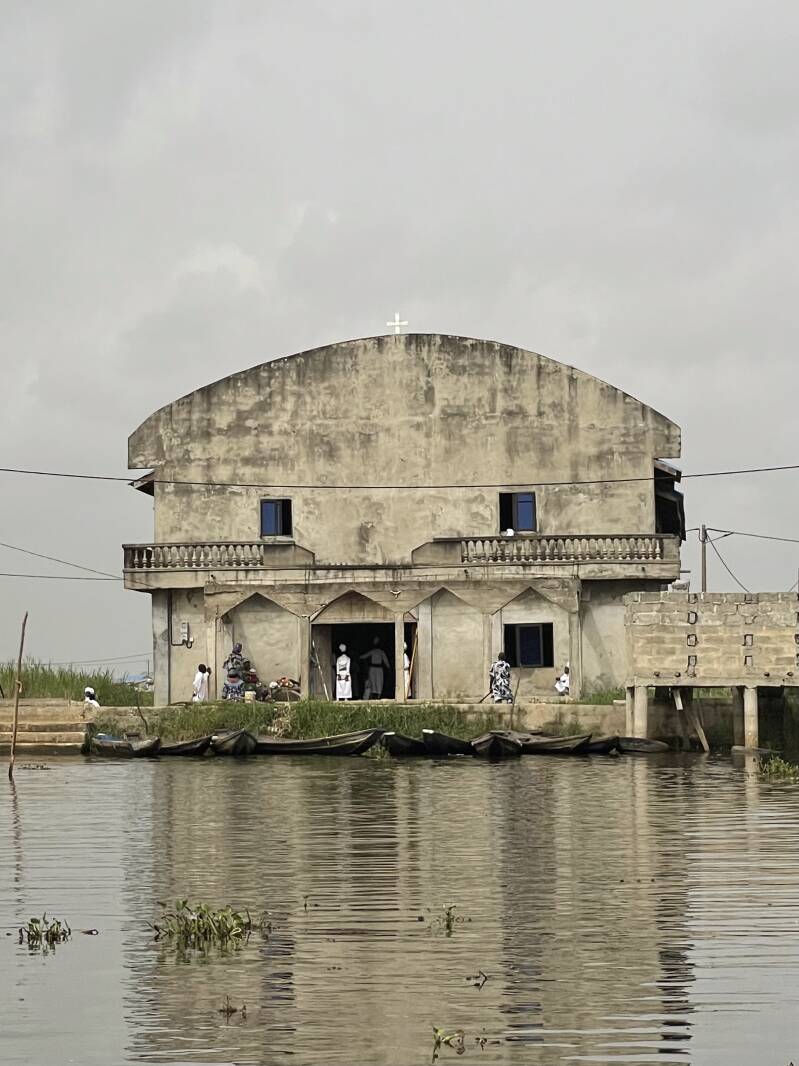
One of several churches at Ganvié.
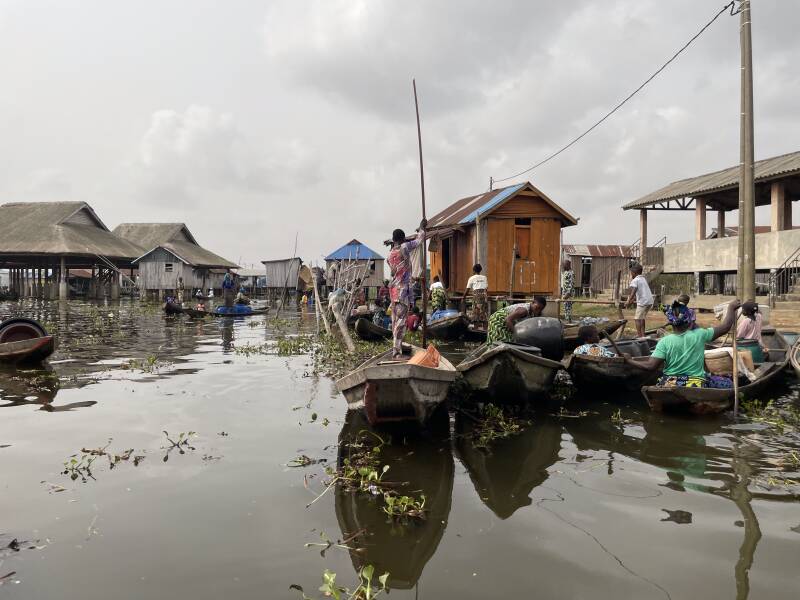
Daily business at Ganvié.
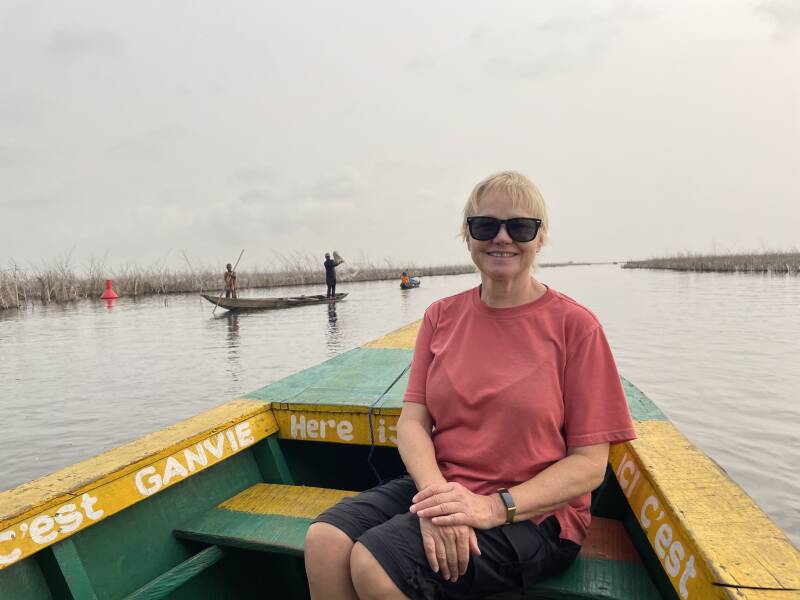
Enjoying my private boat ride in Ganvié.
Abomey: Kings and Red Earth
The next day we headed north to Abomey and the extraordinary Royal Palaces of Abomey, a UNESCO World Heritage Site and one of the most important historical locations in West Africa.
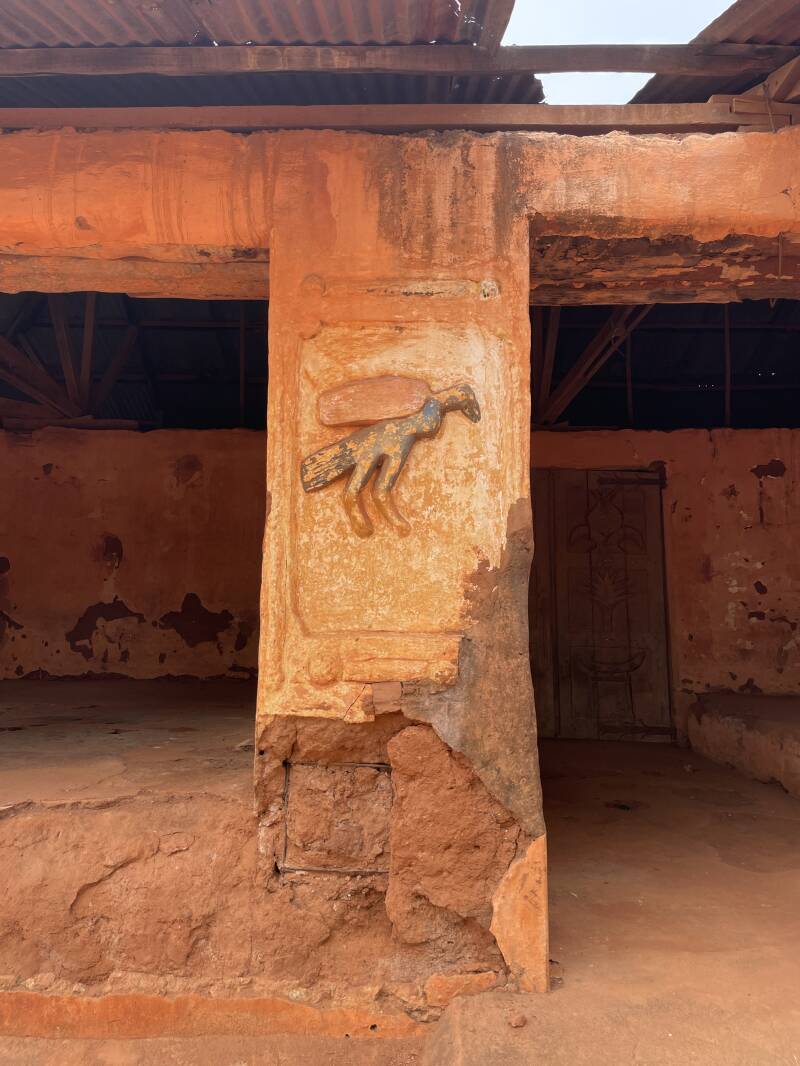
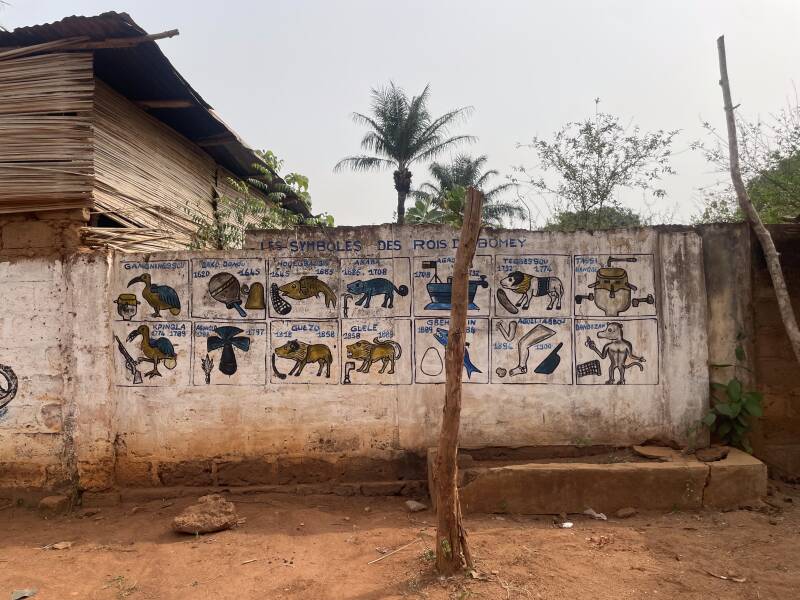
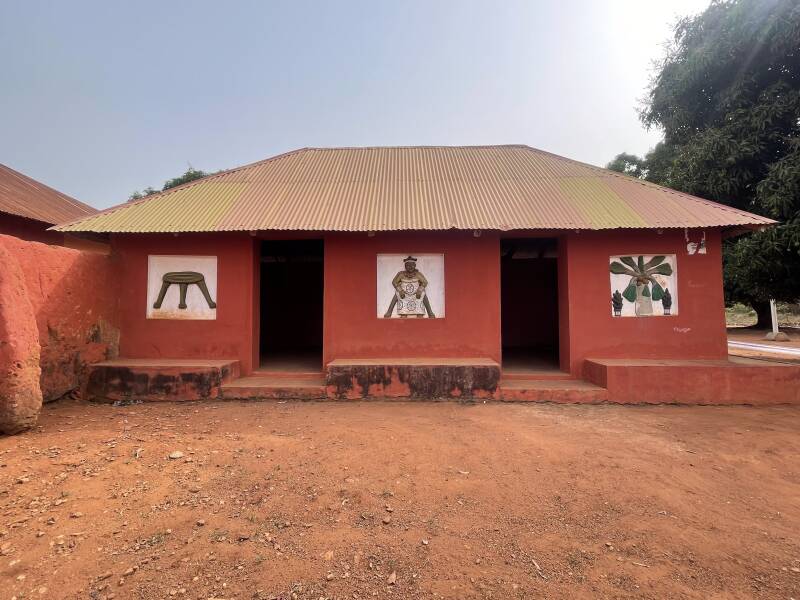
From 1625 until 1900, twelve kings ruled the Kingdom of Dahomey from here. With the exception of King Akaba, each ruler constructed his palace within the same vast earthen complex, maintaining continuity in layout and building style. The result is an extraordinary concentration of royal architecture built primarily from reddish earth, timber and bas relief decoration.
The whole area seemed saturated in rusty red tones. Red roads. Red dust. Red palace walls.
First stop was the Chameleon Temple outside Abomey, an unfinished Vodun temple that felt equal parts spiritual site, folk art project and surreal architectural experiment. From a distance, the enormous stone chameleon rises unexpectedly from the village landscape, more than ten metres high with bulging eyes, thick legs and an enormous open mouth. It is impossible not to stare.
Children from the nearby village were absolutely delighted by our arrival and followed us around excitedly, laughing and waving as we approached the structure. Inside the giant chameleon is the temple itself. Unfortunately, ceremonies only occur on certain days, so we could not witness one in progress, but we were able to climb through and around the structure.
A narrow staircase wound upwards beside the creature’s huge stone body and onto its back, leading to dim corridors and dusty rooms used for Vodun ceremonies. Light streamed through curved openings cut into the walls near the head of the chameleon, illuminating otherwise bare interiors. The unfinished nature of the building somehow added to the atmosphere. It did not feel polished or commercialised; rather, it felt actively evolving, shaped slowly by the village and whatever funds become available over time.
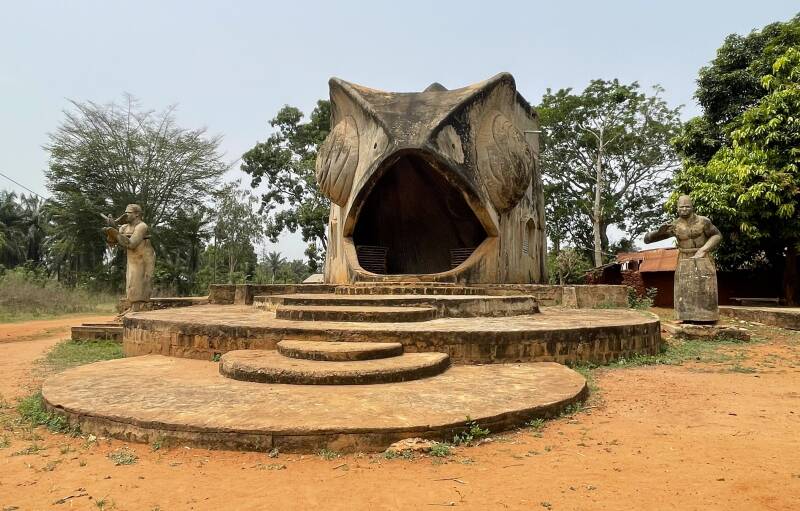
The Chameleon Temple, near Abomey.
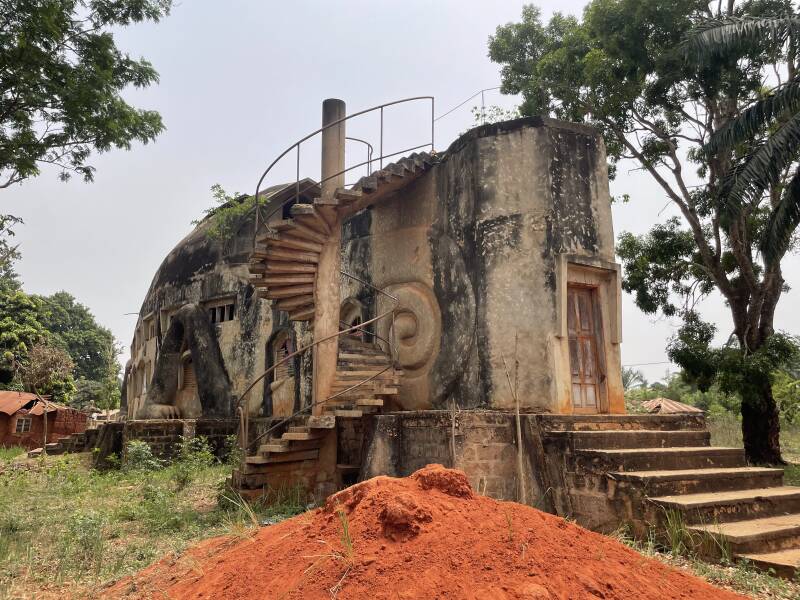
The spiral staircase leading up to the top of the Chameleon Temple, near Abomey.
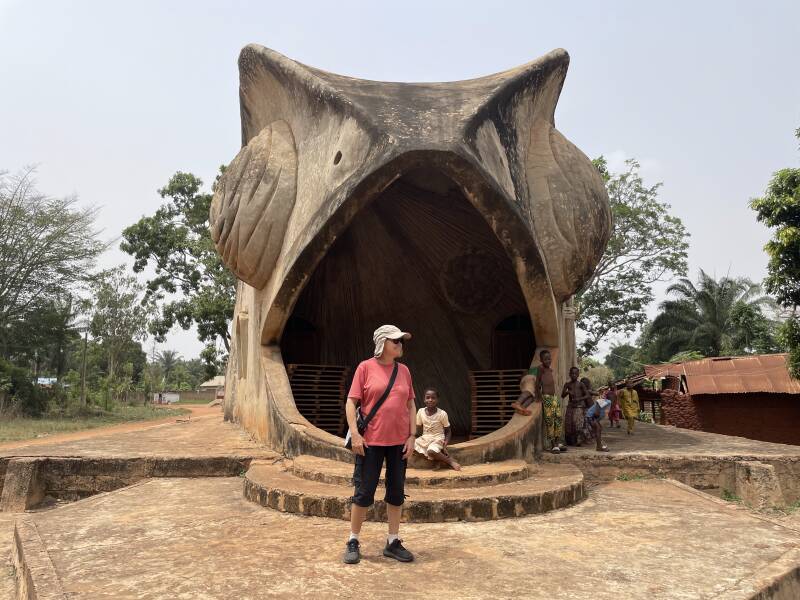
At the mouth of the Chameleon Temple, being watched by the local children.
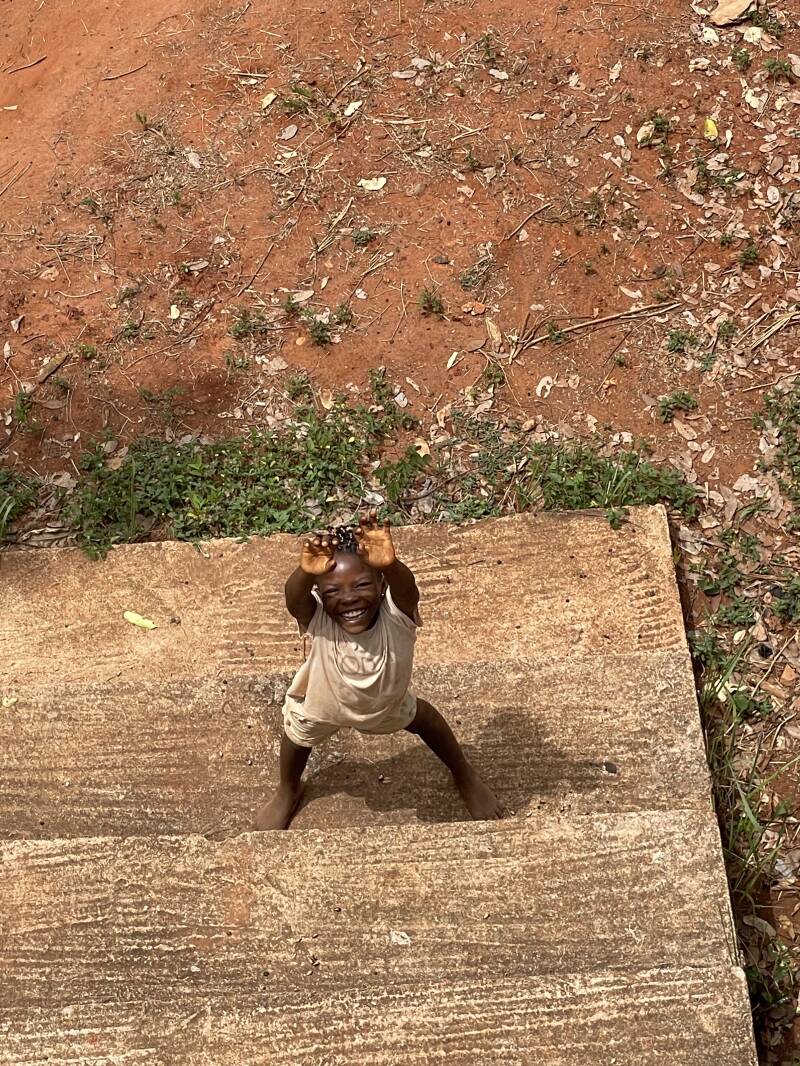
An enthusiastic local girl posing for a photo viewed from the rooftop.
Unlike European palaces designed around marble and grandeur, these structures feel grounded within the landscape itself. Yet the symbolism embedded within them communicated enormous political and spiritual authority.
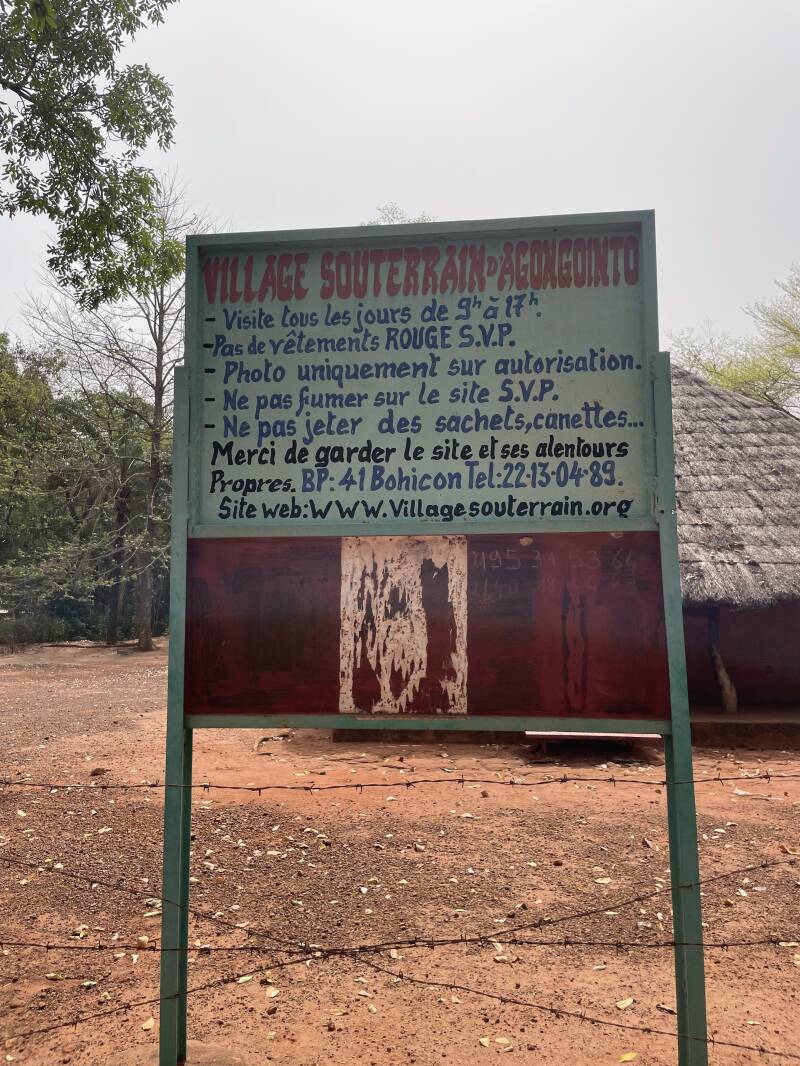
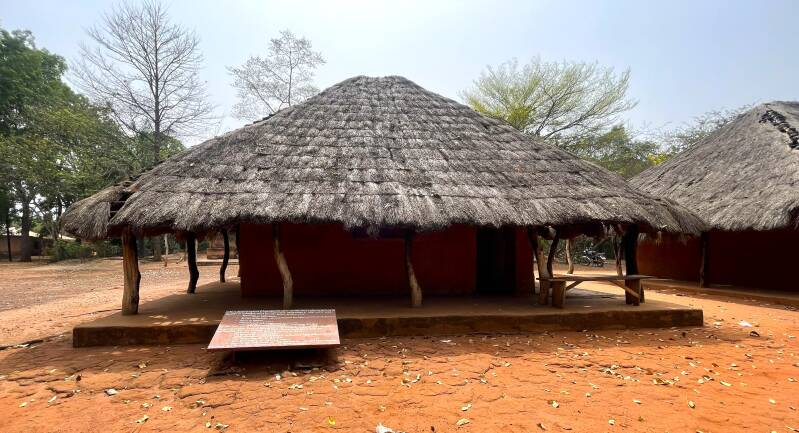
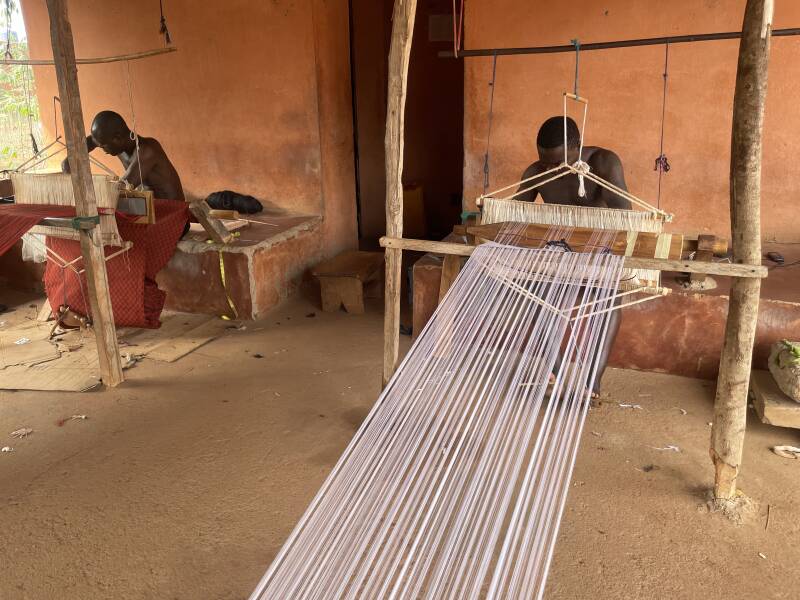
Elsewhere near Abomey we stopped at archaeological remains in Agongointo and also encountered my first close observation of traditional weaving practices in Benin. The weaving here is traditionally performed by men, often using long stretched threads extending astonishing distances between posts. Watching the physical coordination required gave me a new appreciation for the textile traditions I had already been admiring throughout the country.
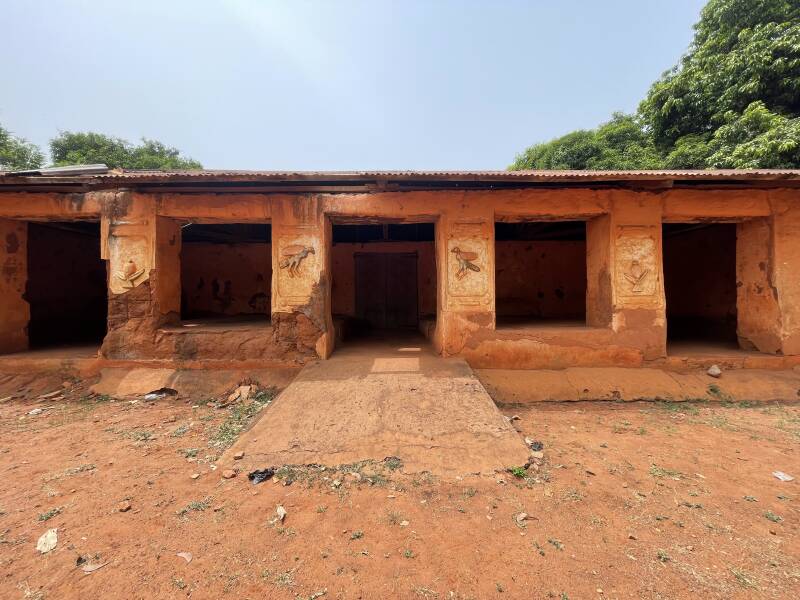
Stunning relief details from one of the royal palaces.
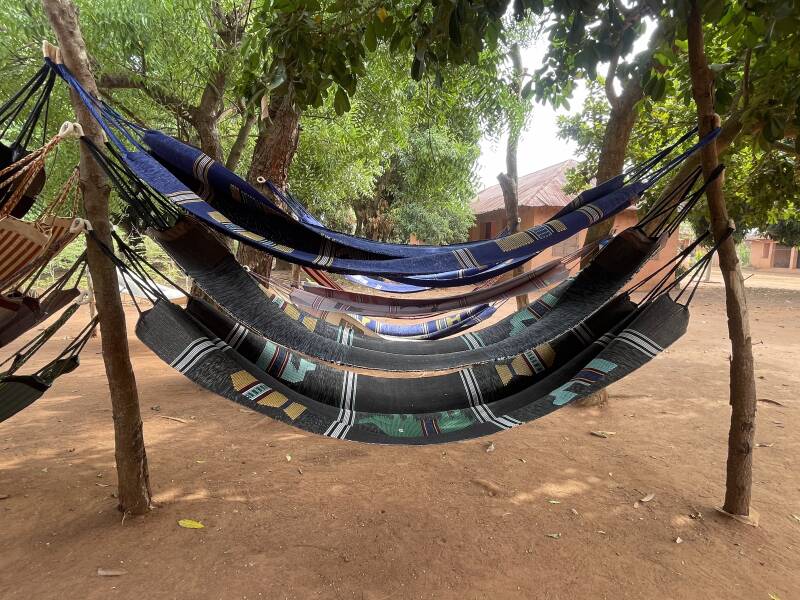
A Country of Layers
Benin surprised me constantly. One moment involved royal palaces and centuries old kingdoms, the next involved pythons around my neck or children demanding selfies. It is a country where spirituality, history and contemporary life remain deeply intertwined rather than neatly separated for tourists.
What stayed with me most was the sense that culture in Benin is not preserved behind glass. It is still actively lived. Vodun ceremonies continue. Weaving traditions continue. Masks, music and dance still carry spiritual meaning rather than existing merely as performances.
And despite the weight of difficult history surrounding slavery and colonialism, there was also enormous vitality everywhere I went. Bright fabrics. Loud markets. Fast moving feet in ceremonies. Boats gliding across the lake. Children laughing at the strange blonde tourist.
Then, just as I was beginning to settle into Benin’s rhythms, it was time to continue onwards into Togo.
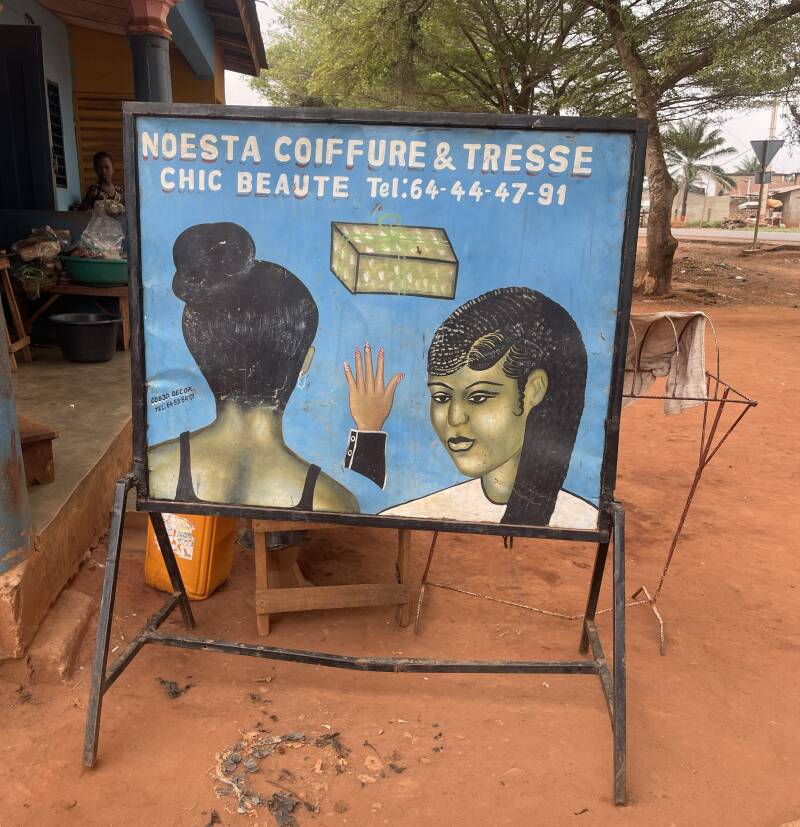
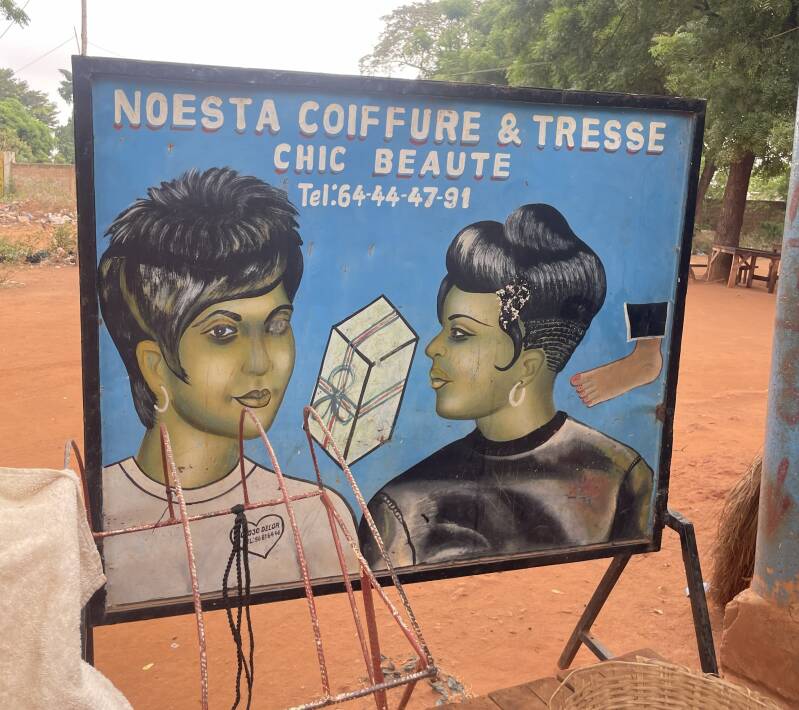
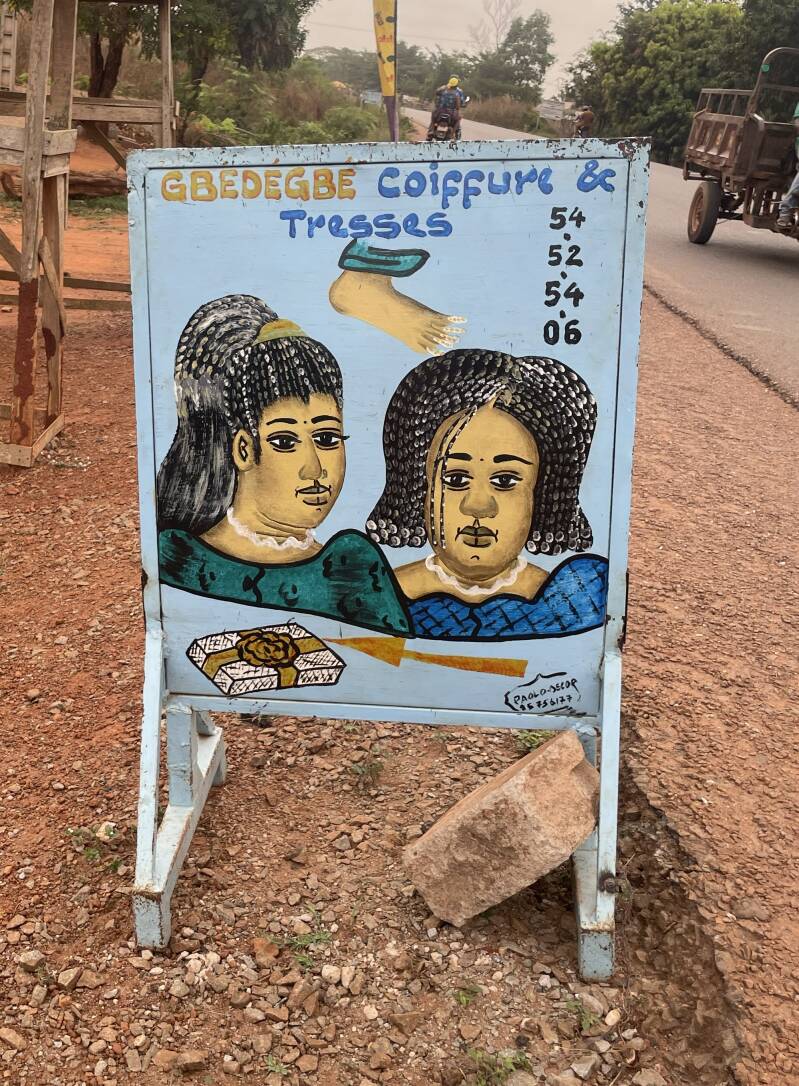
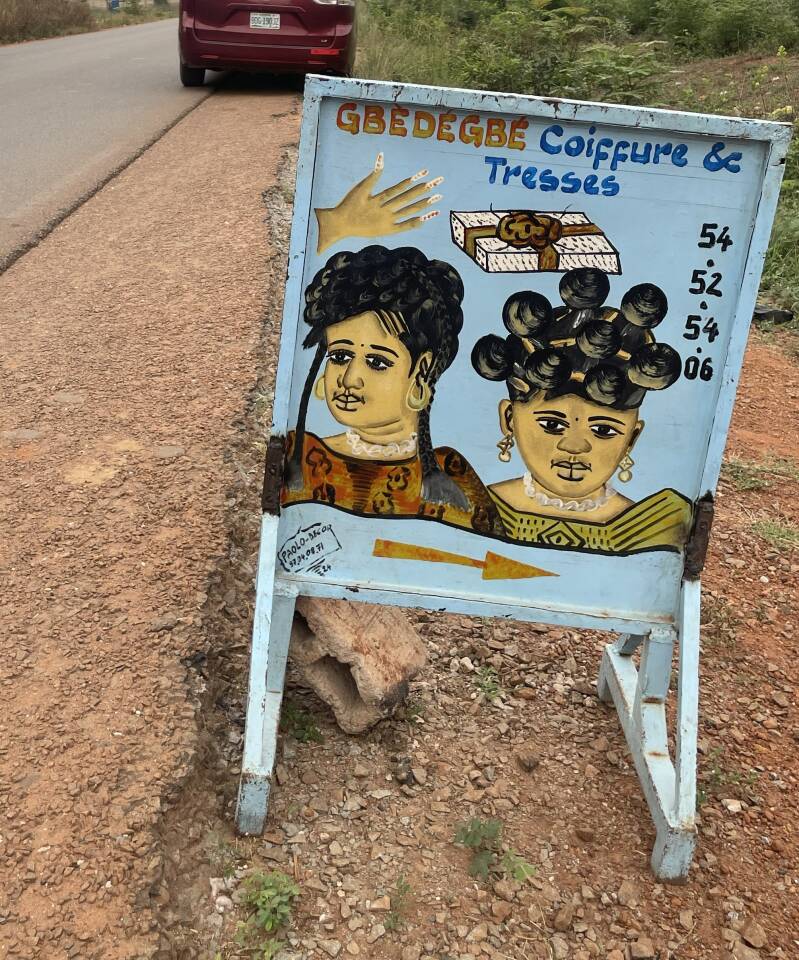
Another thing to love about Benin: their outrageous hairdresser painted signs!
Create Your Own Website With Webador