

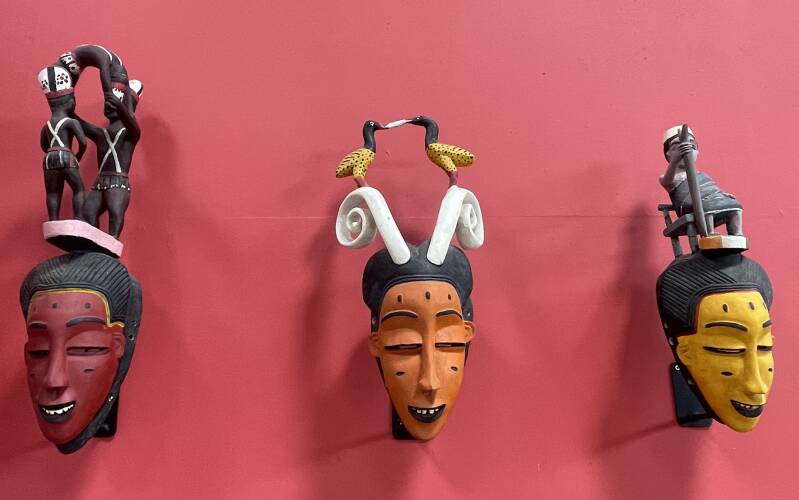
Masks in the exhibition Whispers of Archives: In the Footsteps of Hans Himmelheber at MuCAT (Musée des Cultures Contemporaines Adama TOUNGAR) in Abidjan, Côte d’Ivoire.
A week in Côte d’Ivoire (Ivory Coast in English) gave me just enough time to realise how much I had underestimated the country. I based myself in Abidjan from 28 February to 7 March, deliberately avoiding an overpacked itinerary of expensive multi day tours. After a run of organised travel through Nigeria, Benin, Togo and Ghana, and with Senegal and The Gambia still ahead, I needed a pause. Côte d’Ivoire became that pause, though not in the relaxing sense. Abidjan is energetic, sprawling, contradictory and constantly moving.
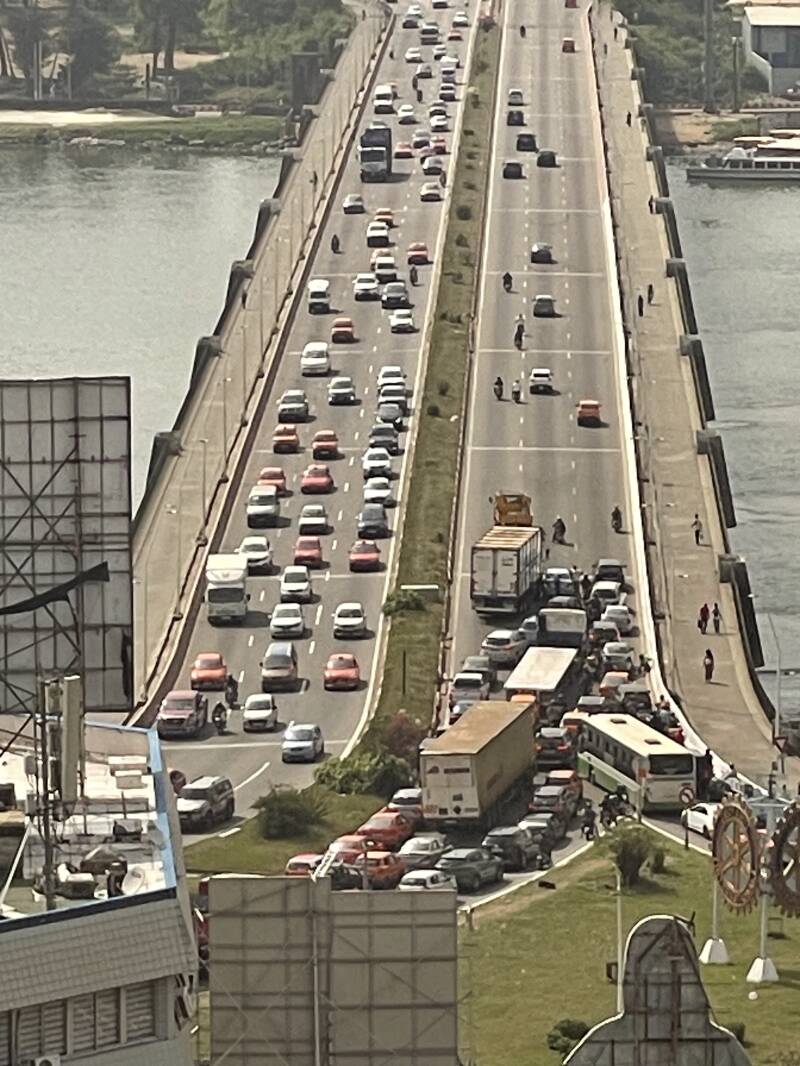
Traffic jam during peak hour, morning, Abidjan, viewed from my apartment window.
I stayed in an apartment overlooking the city skyline. The listing promised a washing machine, which mysteriously did not exist, but the man managing the apartment simply shrugged and told me he would do my laundry whenever I wanted. Fair enough. The night view more than compensated anyway. Towers glittered across the lagoon in a way that felt very different from the West Africa I had experienced so far. Abidjan felt ambitious, vertical and unapologetically modern.
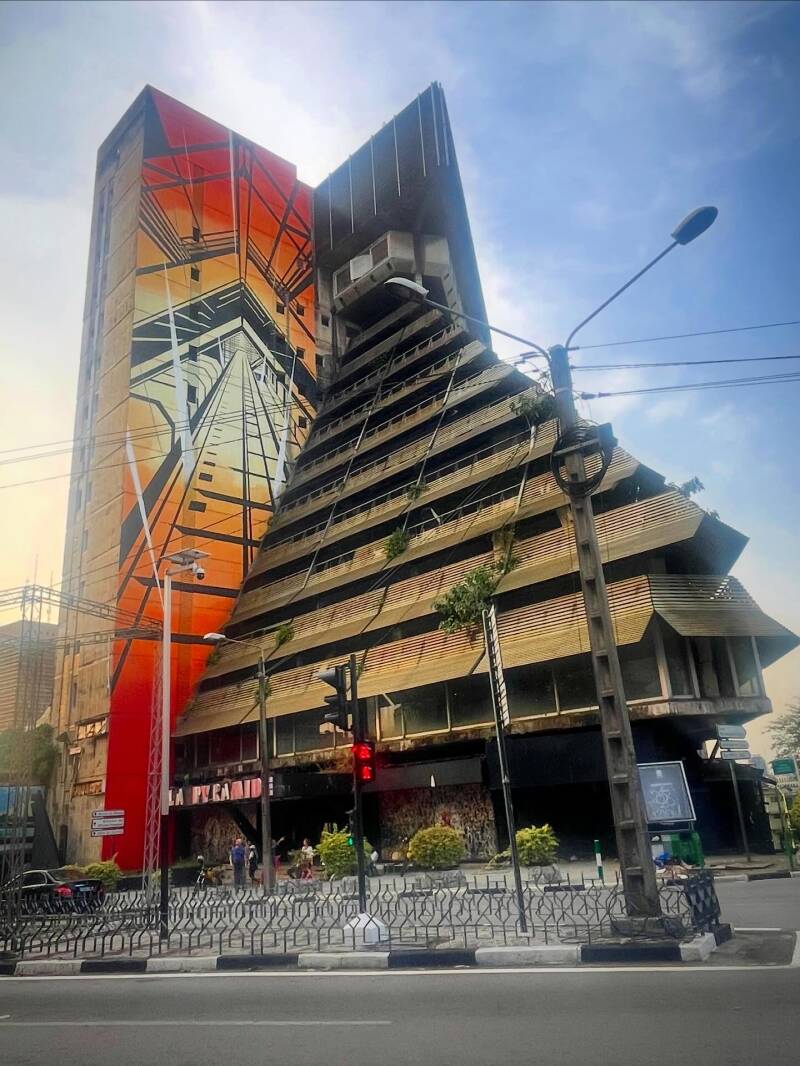
La Pyramid, built in 1973.
On my first day I wandered repeatedly past La Pyramide, which stood only a short distance from my apartment. The building fascinated me. Designed by Italian architect Rinaldo Olivieri and completed in 1973, this huge concrete pyramid was part office complex, part marketplace, conceived during Côte d’Ivoire’s optimistic post independence boom years. It remains one of the great examples of tropical Brutalist architecture in Africa.
Even in its faded state, I found it magnificent. Parts looked abandoned, weathered and exhausted by humidity and time, yet the structure still carried enormous presence. Every time I walked past it I found myself imagining what it could become if fully restored. The terraces, the geometric lines, the audacity of building something so experimental in West Africa in the late 1960s. It symbolised both ambition and decline simultaneously.
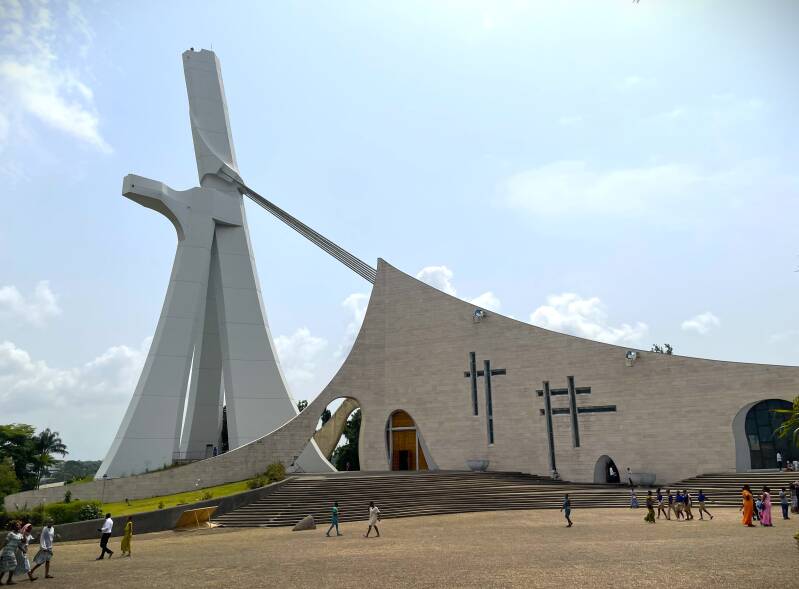
St. Paul's Cathedral.
The following day I walked to St. Paul’s Cathedral, another striking concrete monument rising above the lagoon. Designed by architect Aldo Spirito and completed in 1985, the cathedral resembles something between a spacecraft and a gigantic cross suspended in mid air by cables. The immense concrete tower appears to lean dramatically toward the lagoon, giving the whole structure a sense of movement.
I arrived just after mass and stepped inside while worshippers were still dispersing quietly. The stained glass windows were extraordinary. Rather than depicting purely European biblical imagery, they incorporated African landscapes, animals and people into the scenes, bathing the cathedral interior in shifting coloured light. Even as someone more interested in architecture than religion, I found the atmosphere unexpectedly moving.
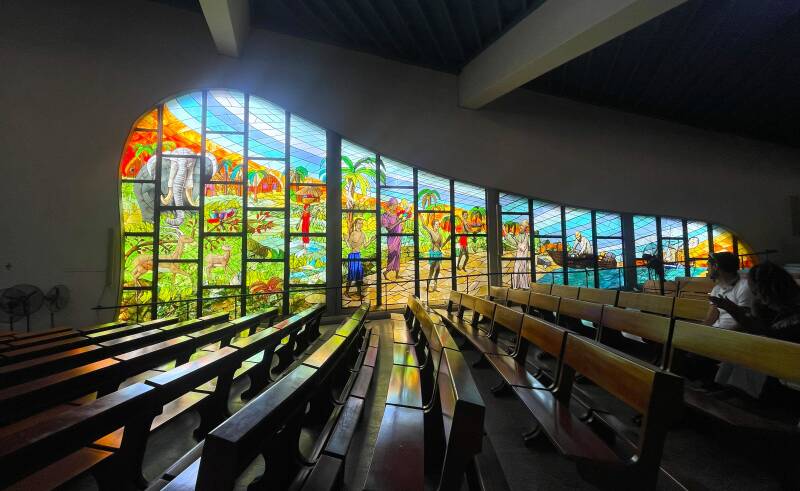
Stunning stain glass windows inside St Paul's Cathedral.
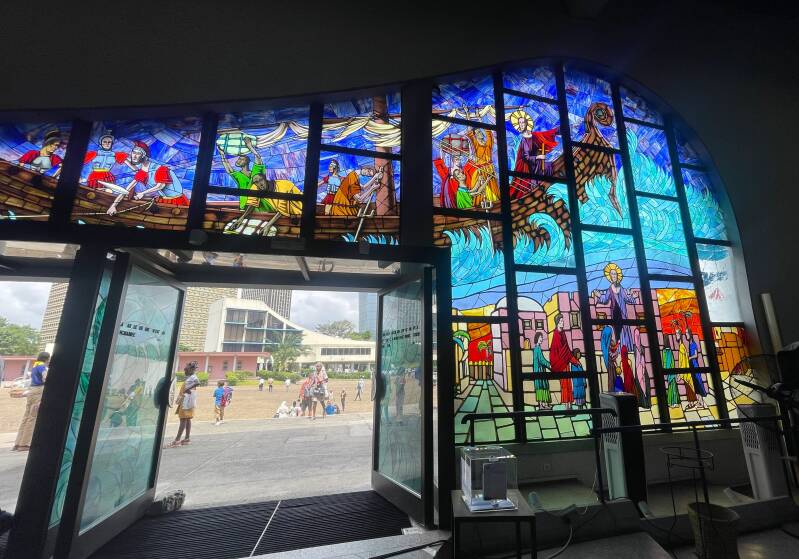
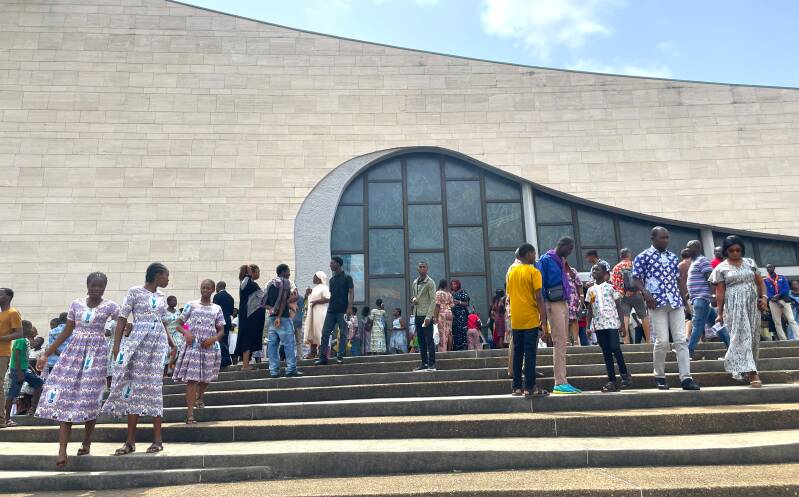
After Sunday morning mass.
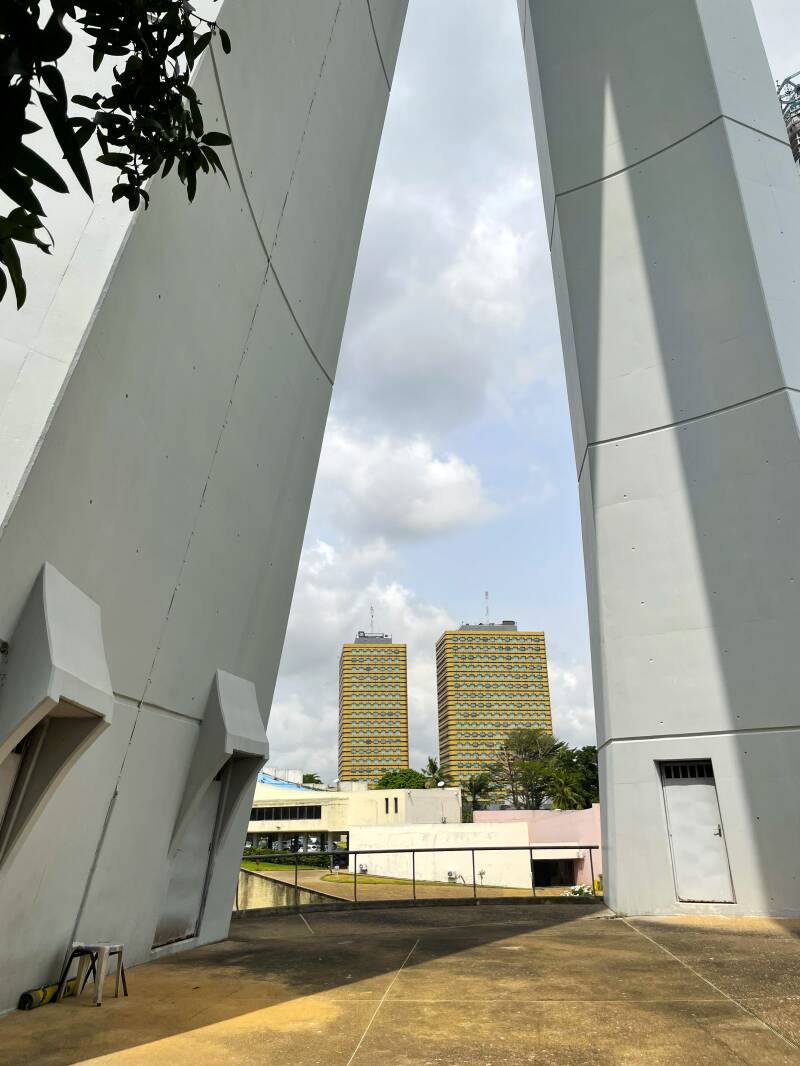
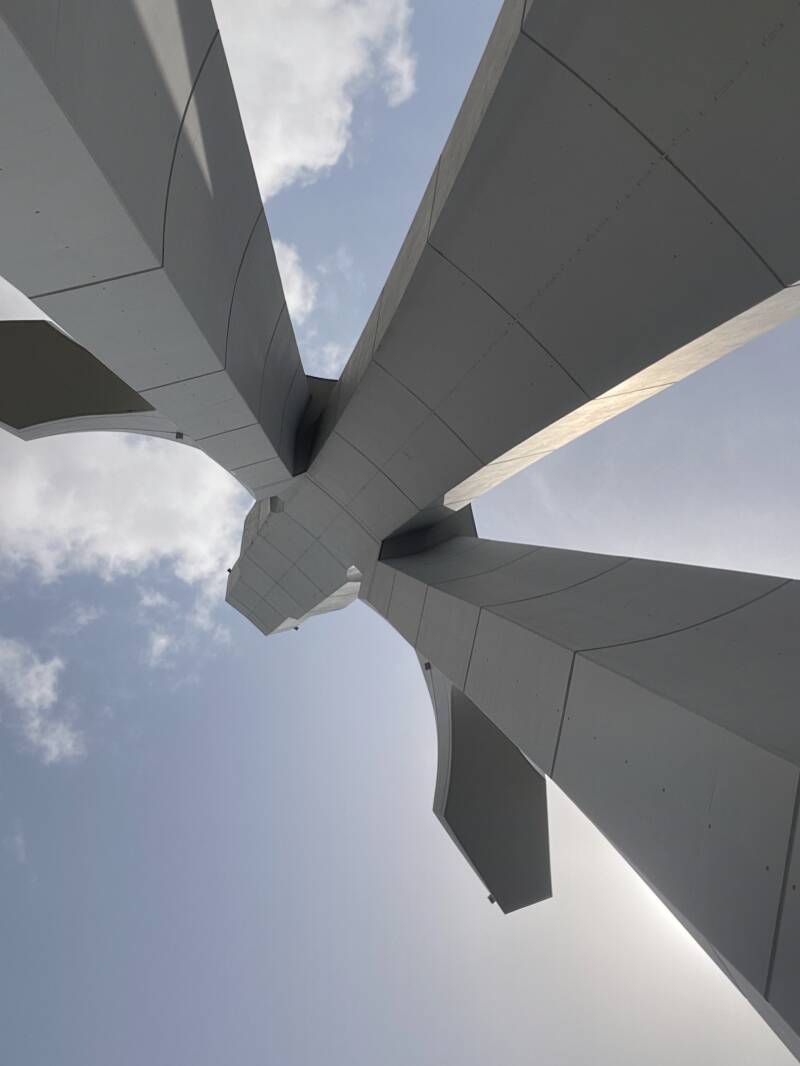
Various views of St. Paul's Cathedral.
Afterwards I continued walking across the city searching for various sites on Google Maps. At some point the polished business district gave way abruptly to informal settlements. Luxury hotels disappeared behind me and suddenly I was weaving through narrow laneways lined with corrugated metal and improvised housing. But that contrast is precisely why I often prefer walking. Travel, for me, is not only about curated landmarks and sanitised tourist districts. Cities reveal themselves properly in the spaces between attractions.
On 3 March I headed to Cocody to visit contemporary galleries including Galerie Cécile Fakhoury and LouiSimone Guirandou Gallery. The work was thoughtful, political and deeply contemporary. I only wished there had been even more of it. West African contemporary art still feels underrepresented internationally despite the extraordinary quality.
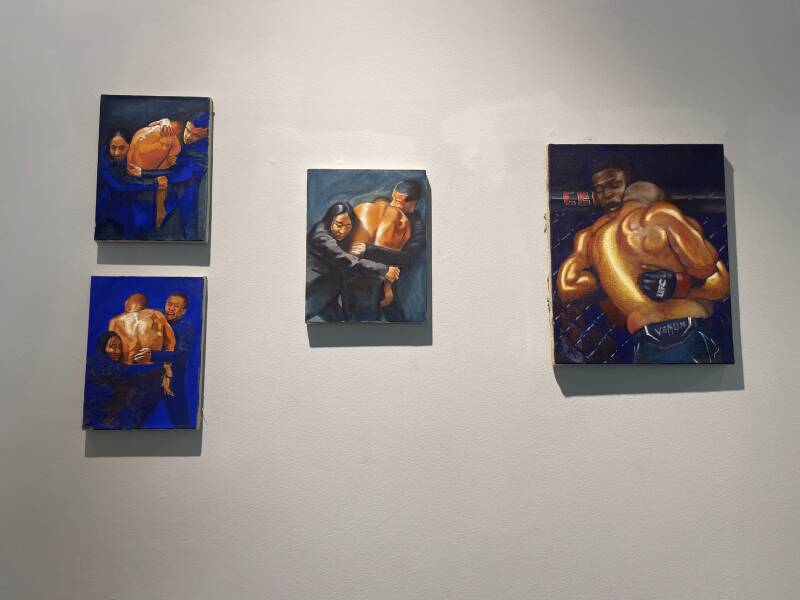
Thibaut Bouedjoro-Camus, Emancipation series, 2022 at Galerie Cécile Fakhoury
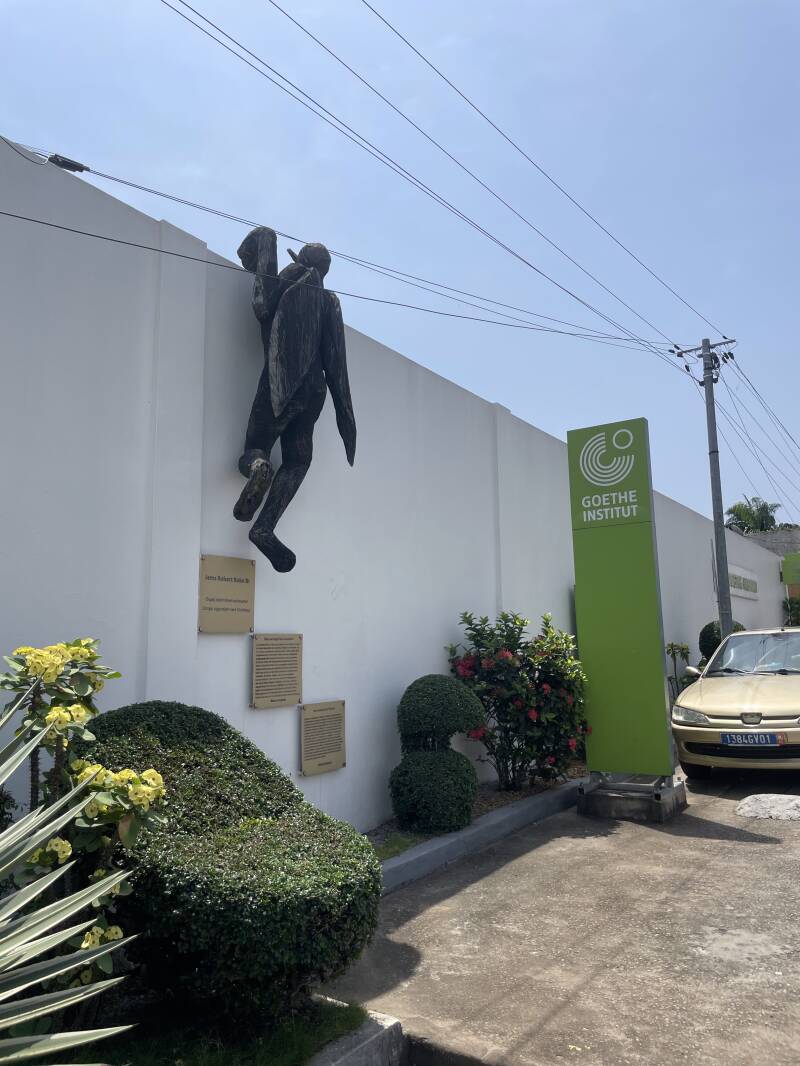
Art in unexpected places at the Goethe Institute, next to LouiSimone Guirandou Gallery.
The highlight of the week came on 4 March with a long day trip north toward Yamoussoukro and the Baoulé village of Gbomizambo.
Ivory Coast is perhaps the most iconic country in West Africa when it comes to masks, masking traditions and spiritual performance. If you have ever admired African masks in galleries, markets or collections around the world, there is a very good chance many were either crafted in Côte d’Ivoire or inspired by Ivorian traditions. Across the country, masks are not simply decorative objects. Combined with music, costumes, headdresses and ritual, they transform the wearer from an ordinary person into a figure inhabited by spiritual force.
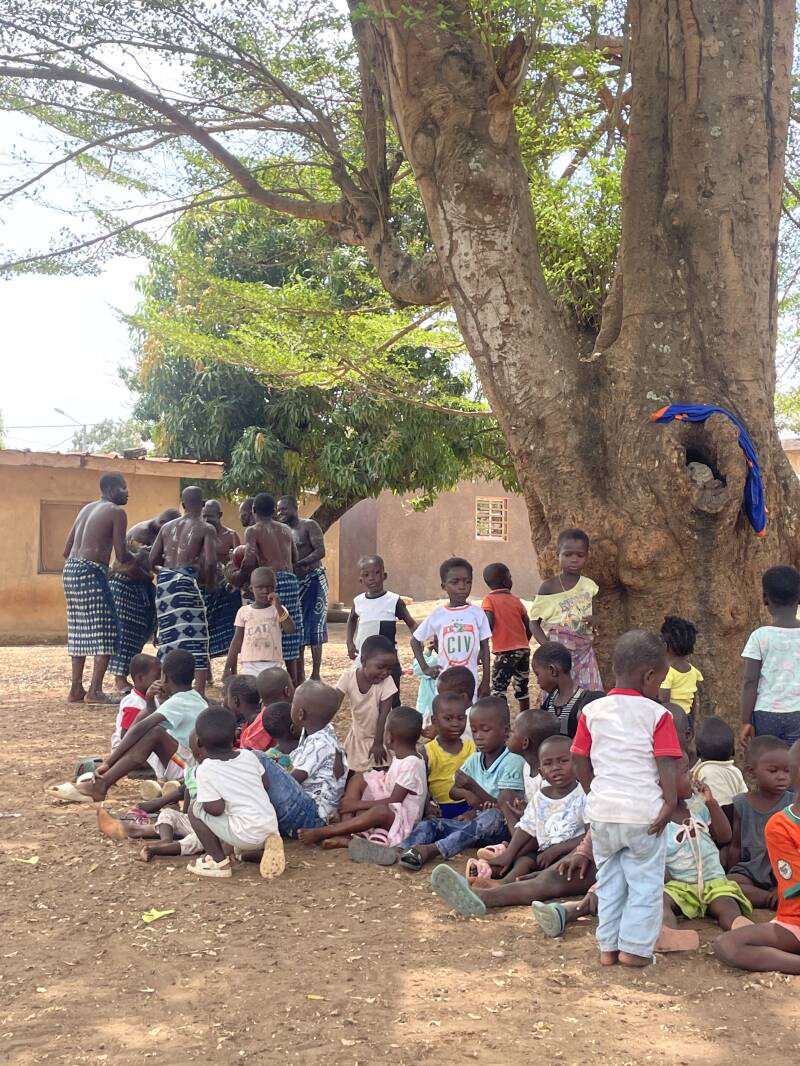
Anticipation: local children waiting for the Goli dance whilst musicians start playing in the background.
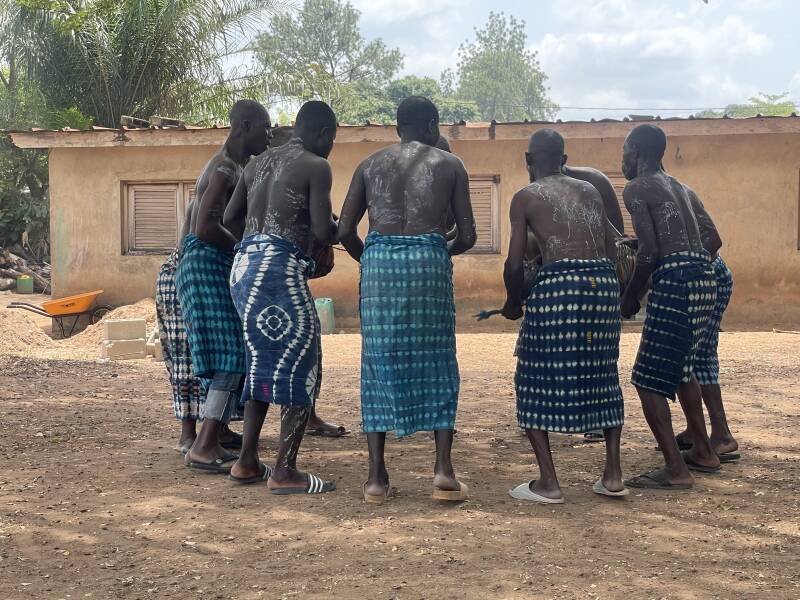
Musicians playing before the dance begins. Notice their clothing using local dyeing.
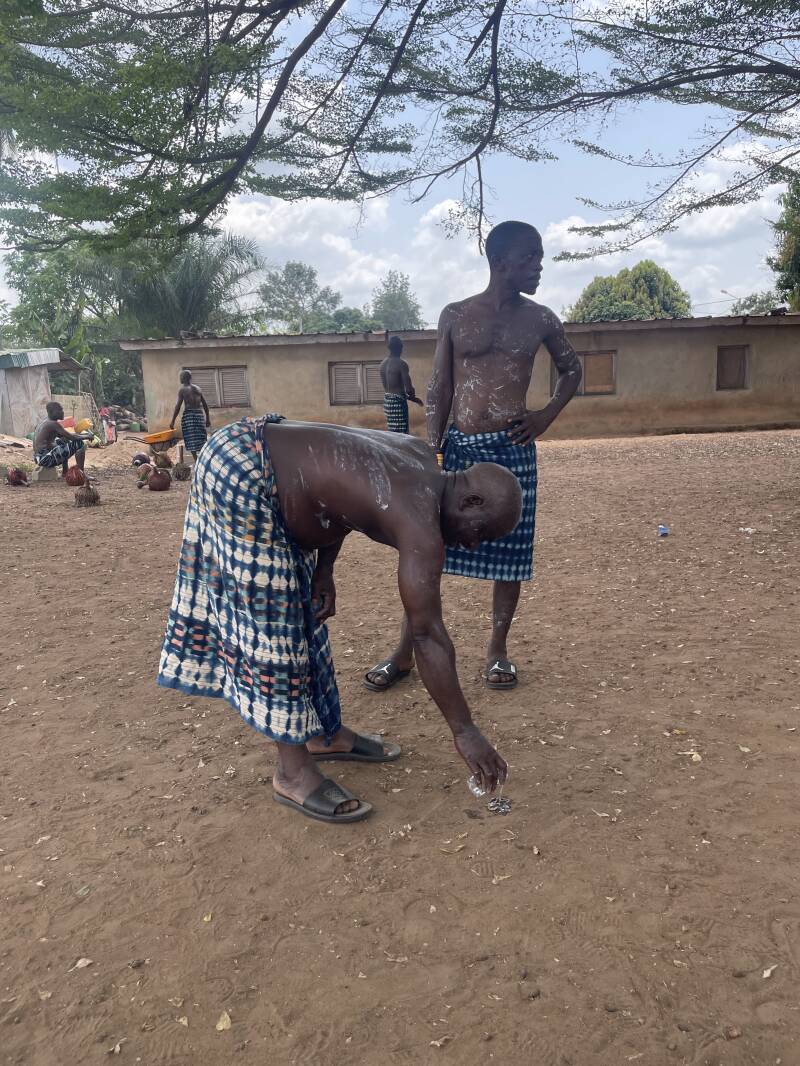
A sprinkle of gin as an offering.
I felt incredibly privileged to witness a traditional Goli dance performance among the Baoulé people. This was not a tourist spectacle performed several times a day. I was the only visitor there, accompanied only by my guide and driver, and it felt like being granted a small glimpse into something culturally significant rather than commercially packaged. Before the performance began, a small amount of gin was carefully poured onto the ground as an offering.
The music started long before any dancer appeared. A group of male musicians stood in a circle, gradually building rhythm and anticipation. Most played what looked like dried gourds filled with seeds or pebbles, shaken in intricate patterns that created a hypnotic percussive sound. Another musician periodically blew short notes through a horn instrument that appeared carved from wood or perhaps fashioned from animal horn. These sounds, though brief, punctuated the rhythm and became an important part of the ceremony’s atmosphere.
We waited quite a while for the dancer to emerge. Nobody in the village seemed impatient. The children, meanwhile, were thrilled, dancing around excitedly and watching the musicians closely.
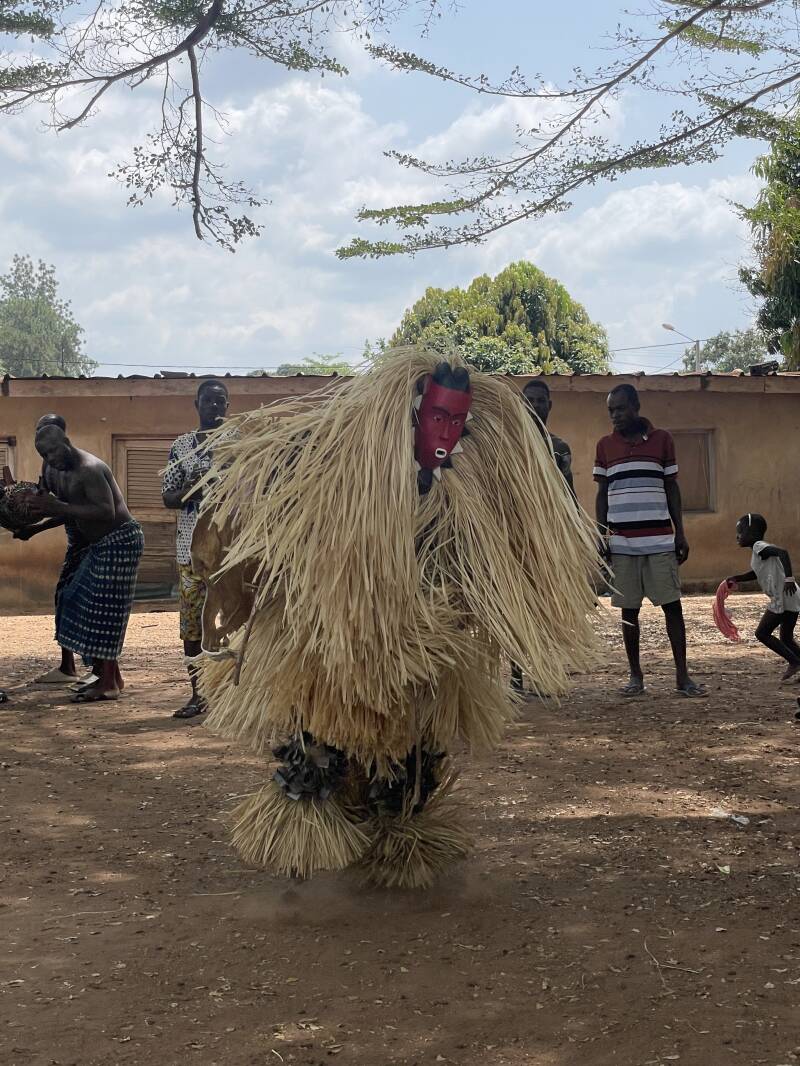
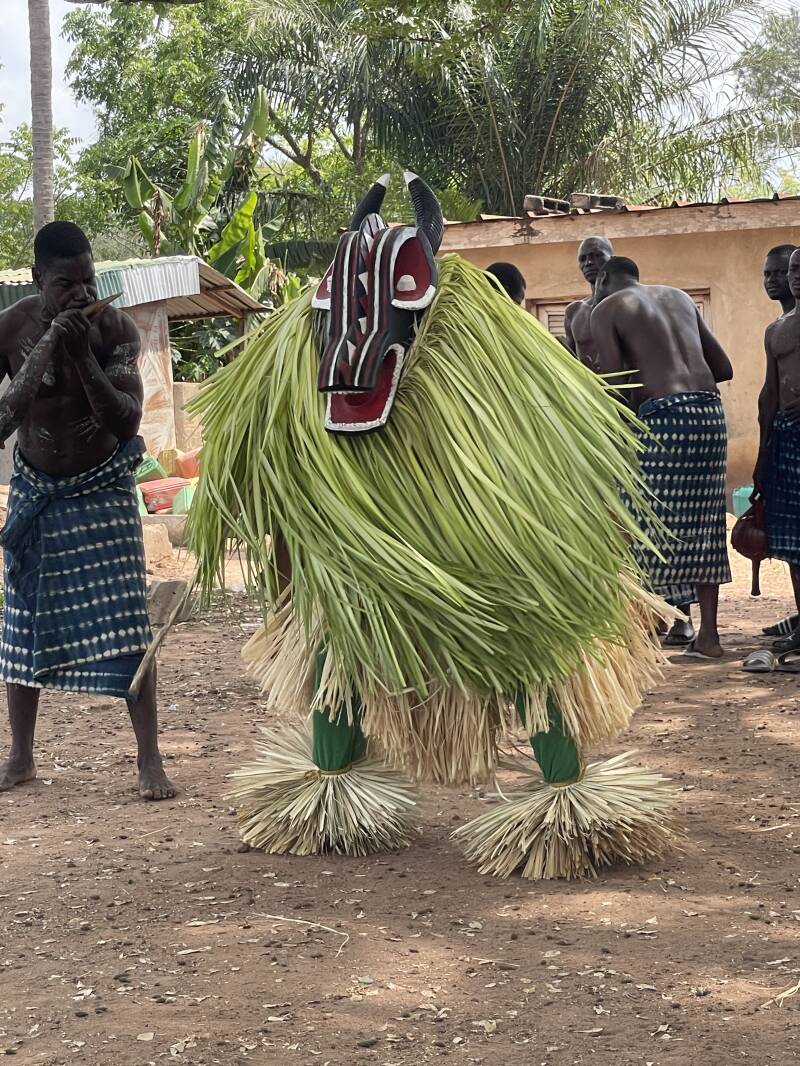
Two different goli outfits, masks and dances.
Eventually the first masked dancer appeared, wearing a striking human styled mask similar to those I later saw represented in museums. The music immediately intensified. His footwork was astonishingly fast, not quite as frenetic as Zaouli dancing but still extraordinarily precise, the feet moving so rapidly they almost blurred against the earth. Draped across his back was an animal skin and, at the conclusion of the dance, he struck his back sharply once with a stick. Instantly the music stopped. The gesture clearly marked the end of that particular performance.
A few minutes later, after the musicians resumed, another dancer emerged wearing a much larger and more zoomorphic mask. Again the rhythm built steadily as the dancer spun and stamped through the performance. And once again, at the exact end of the dance, the sharp strike across the back signalled completion and the music ceased immediately.
What struck me most was how communal the experience felt. This was not a silent audience politely observing “culture.” Children moved excitedly around the performance space and everyone seemed deeply familiar with the rhythms, the pauses and the significance of what was unfolding.
Traditionally, many West African masked dancers are considered spiritually charged figures and are often accompanied by guardians who both guide the dancer and prevent accidental contact with spectators, particularly those who are uninitiated. Masks may appear for funerals, initiations, harvests, celebrations, ancestral consultations or ceremonies marking the cycles of life itself. When not in use, many are carefully protected and shrouded from view.
When it was time to leave, many of the children rushed over to shake my hand and call out “au revoir.” Those small interactions often stay with me longer than monuments do.
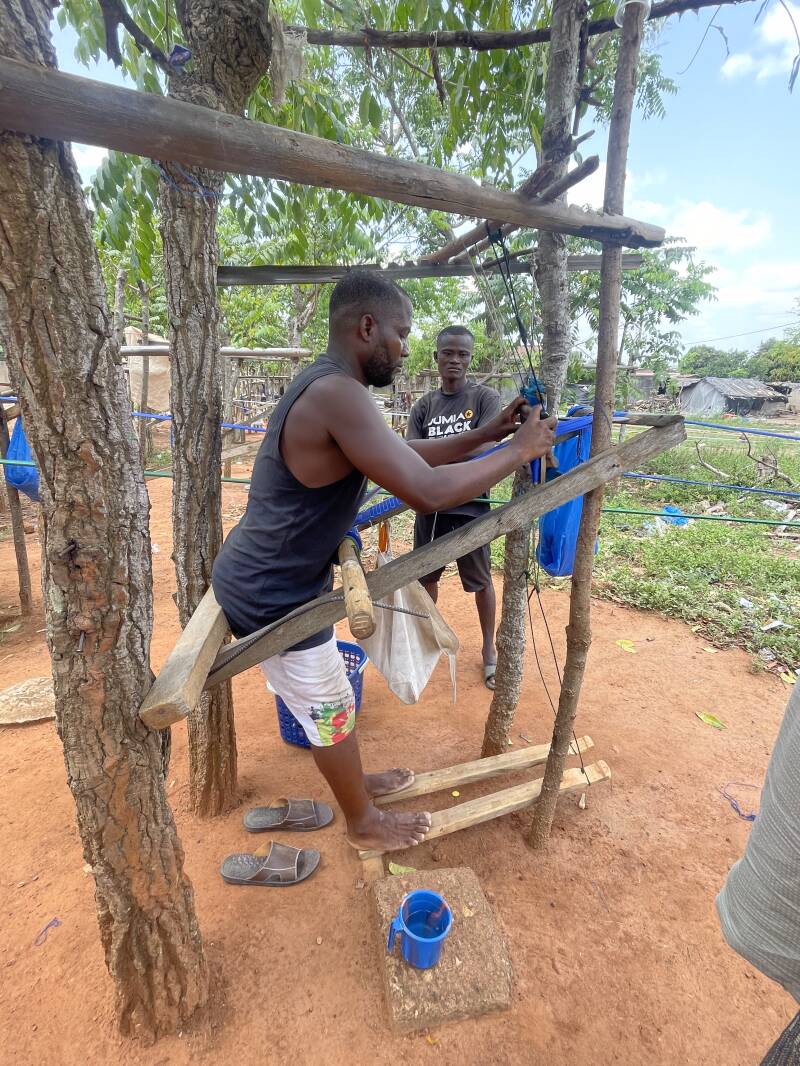
Baoulé village weavers.
Seeing masks again days later at MuCAT – Museum of Contemporary Cultures suddenly carried far greater emotional weight. After witnessing them in motion, accompanied by music, ritual and dance, the museum displays no longer felt like static ethnographic objects behind glass. They represented living traditions still deeply woven into Ivorian cultural life.
The village was also known for its weaving traditions, practiced primarily by men using physically demanding foot operated looms. Watching them work made it immediately obvious why mastery takes years. The rhythmic coordination required between hands and feet was remarkable.
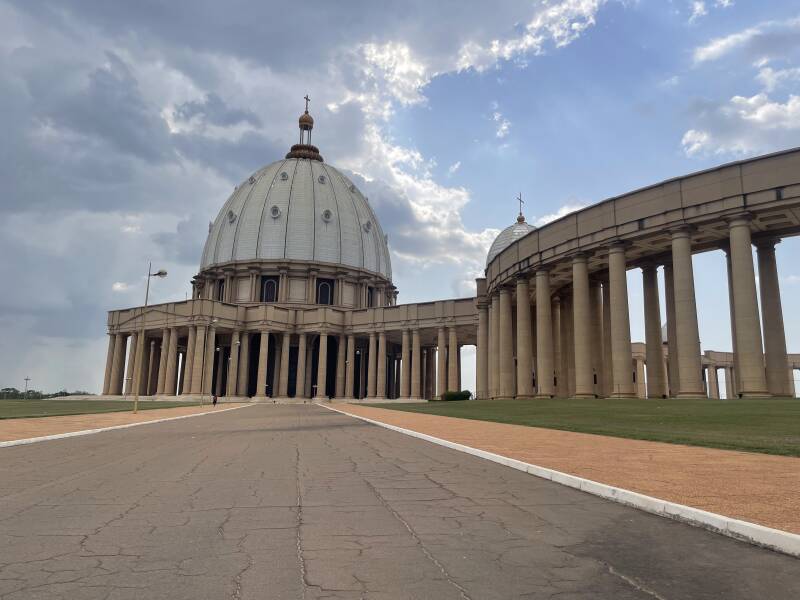
Walking the long pathway towards Basilica of Our Lady of Peace in Yamoussoukro, the political capital of Côte d’Ivoire
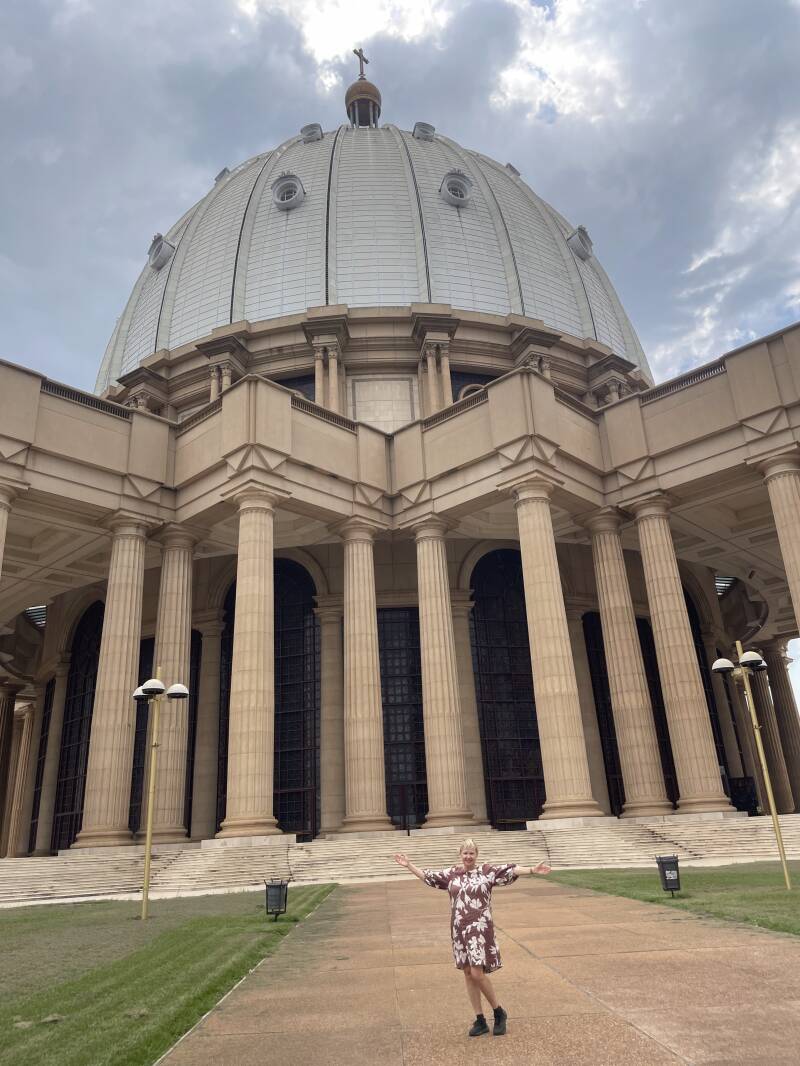
Just for the scale!
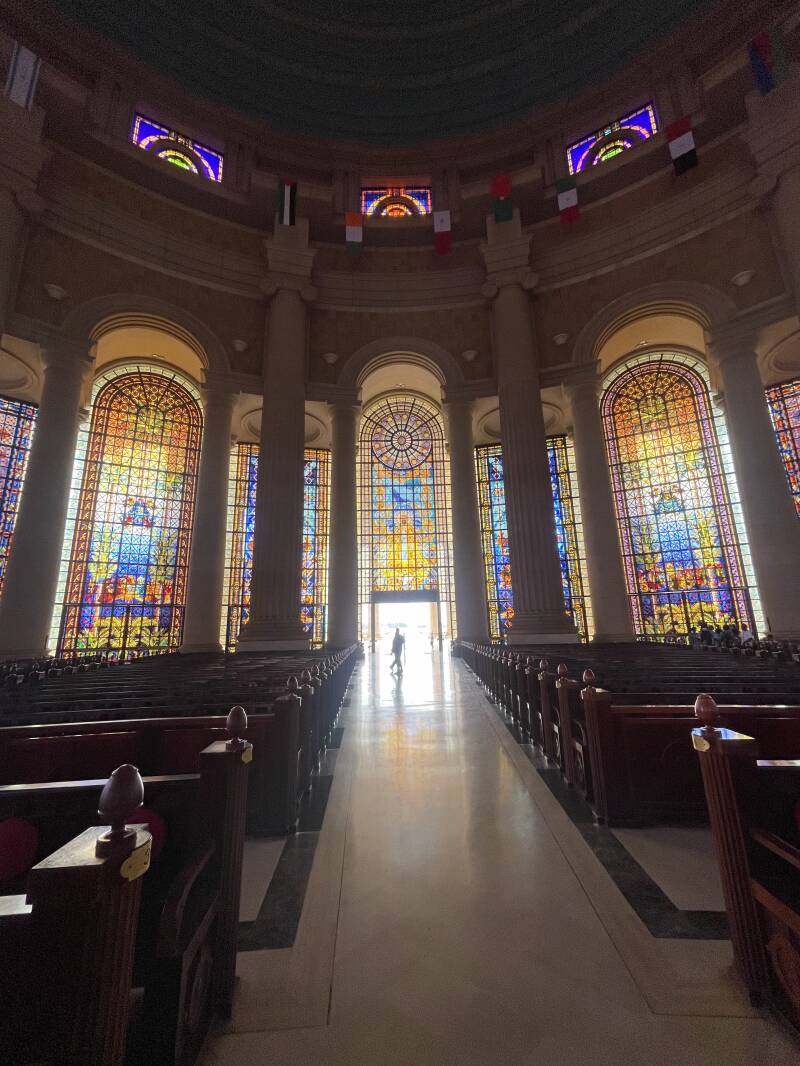
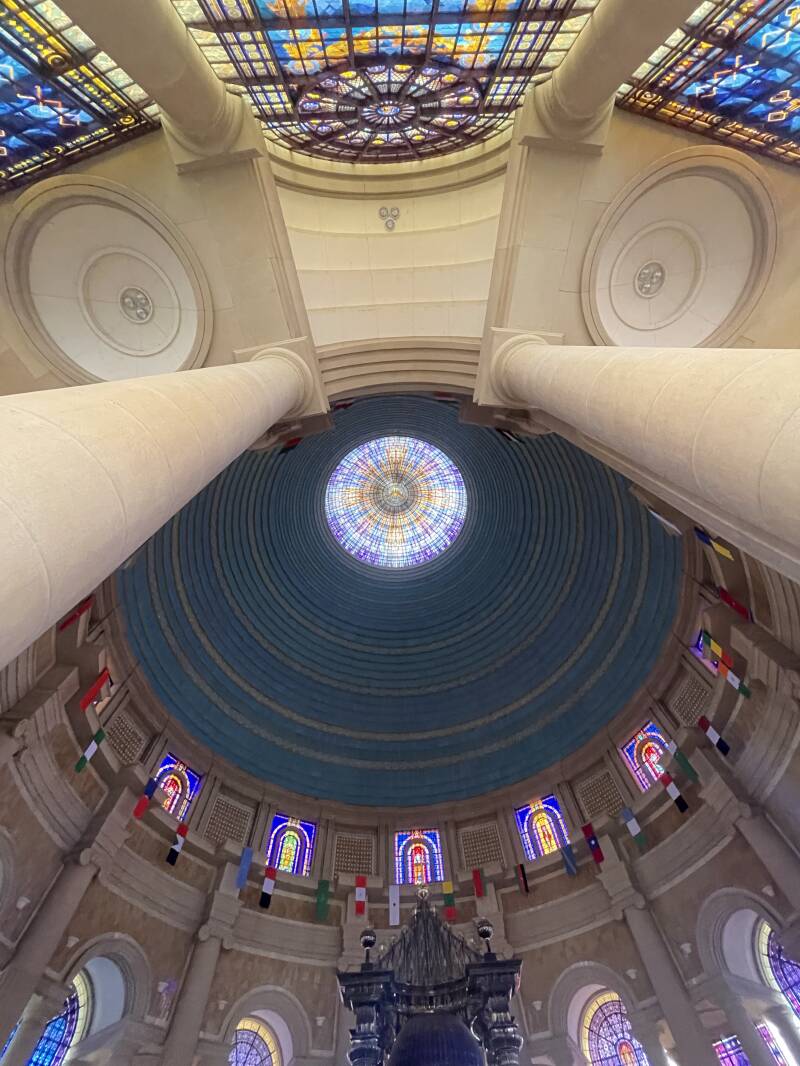
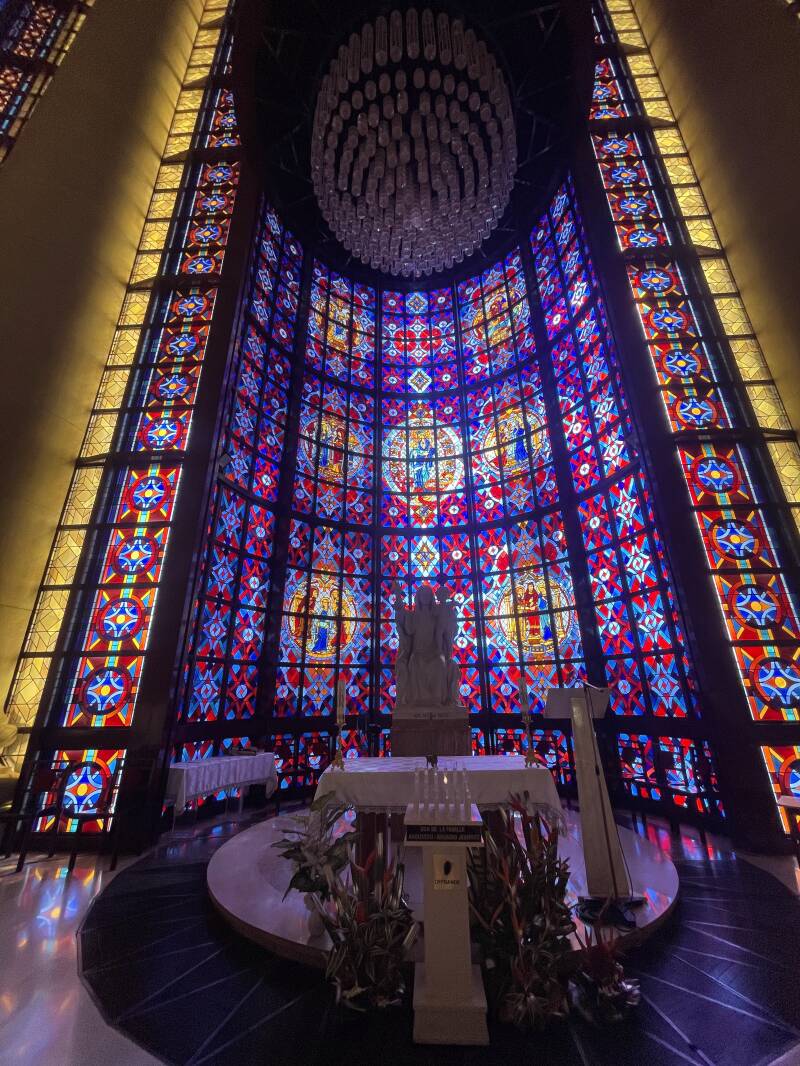
Interior shots of Basilica of Our Lady of Peace in Yamoussoukro.
After the Goli dance performance in Gbomizambo, we continued north to Basilica of Our Lady of Peace in Yamoussoukro, the political capital of Côte d’Ivoire, even though Abidjan remains the country’s far larger economic and cultural powerhouse. Rising unexpectedly from the broad boulevards and tropical heat of the inland capital, the basilica is one of the largest churches in the world and an extraordinary symbol of post independence ambition.
Commissioned by President Félix Houphouët-Boigny and completed in 1989, the basilica was clearly inspired by St Peter’s Basilica in Rome, though it actually surpasses it in height, reaching around 158 metres to the tip of the dome and cross. Built largely from imported Italian marble and vast expanses of stained glass, it can officially accommodate around 18,000 worshippers between the seated interior and surrounding esplanade. The interior is immense, polished and luminous, with soaring columns, giant chandeliers and enormous stained glass panels depicting biblical scenes interwoven with African imagery and vegetation.
We went inside and, objectively speaking, it was hugely impressive. Yet, perhaps unfairly, it almost felt like an anticlimax after the intimacy and atmosphere of the Goli dance earlier that day. The basilica represented grandeur, power and spectacle, while the village performance had felt immediate, lived and deeply connected to community and tradition.
Still, the contrast itself seemed revealing of Côte d’Ivoire. In the span of a single day I had moved between centuries old masking traditions in a Baoulé village and colossal postcolonial ambition in the nation’s purpose built capital.
Afterwards came the long drive back to Abidjan. Fortunately it was in an air conditioned car, a detail I appreciated more and more as the kilometres rolled by.
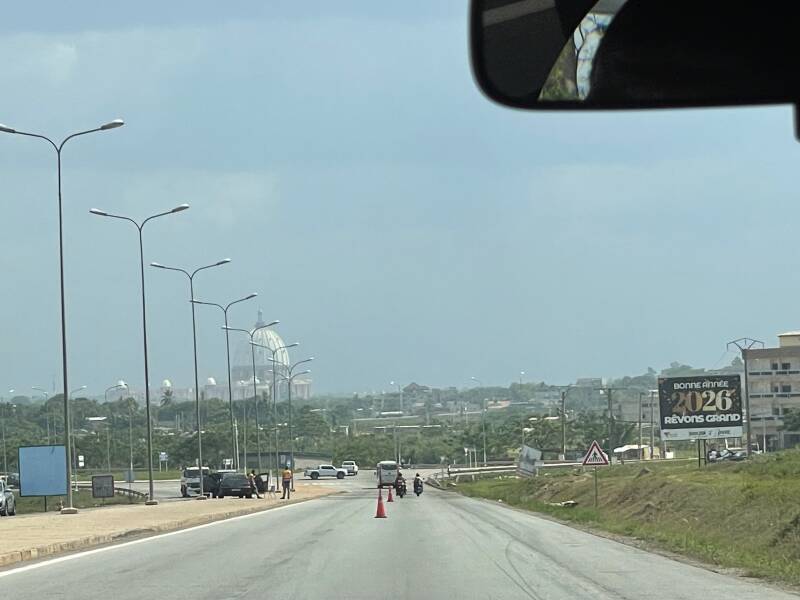
Again, just for the scale!
Later in the week, Jo took me to Grand-Bassam Historic Town, the former French colonial capital and now a UNESCO World Heritage Site. Entering the old colonial quarter, the Quartier Français, felt like stepping into a faded parallel world. Jo had thoughtfully arranged a local guide, which proved invaluable because so much of Grand Bassam’s significance lies hidden behind crumbling facades and weathered verandas.
After the colonial administration shifted the capital to Bingerville in 1896, coincidentally where Jo herself now lives, Grand Bassam gradually declined. Many of the once grand buildings fell into neglect and, for decades, some were occupied only by squatters before preservation efforts slowly revived parts of the old town from the 1970s onward.
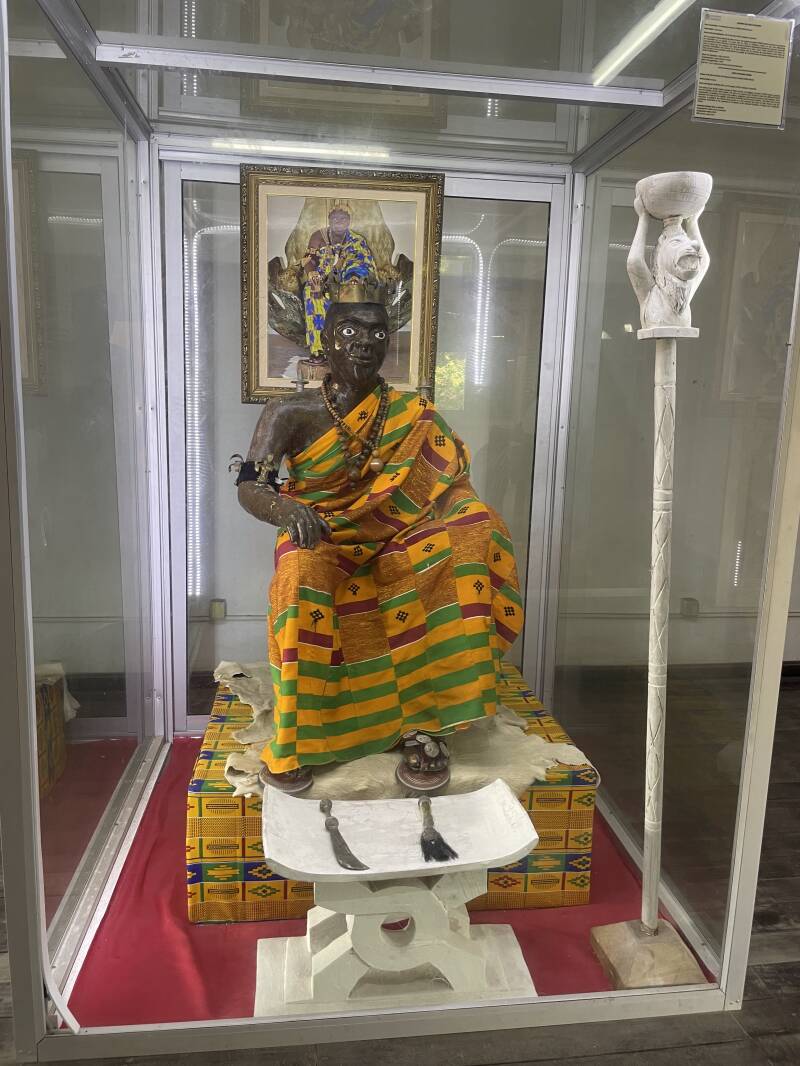
Difficult to photograph through the glass, but a mannequin depicting a chief or king in traditional clothing at Musée National du Costume, Grand Bassam.
One poignant reminder of this history stands at the end of Boulevard Treich-Laplène: Monument aux colons morts de la fièvre jaune, a memorial dedicated to French colonial residents who died during the yellow fever outbreaks. The bronze sculpture depicts a woman holding flowers over a shrouded body, symbolising what was described as 'grateful France' mourning its dead. Like much of Grand Bassam, it felt simultaneously beautiful, melancholic and deeply tied to the brutal realities of colonial expansion in tropical West Africa.
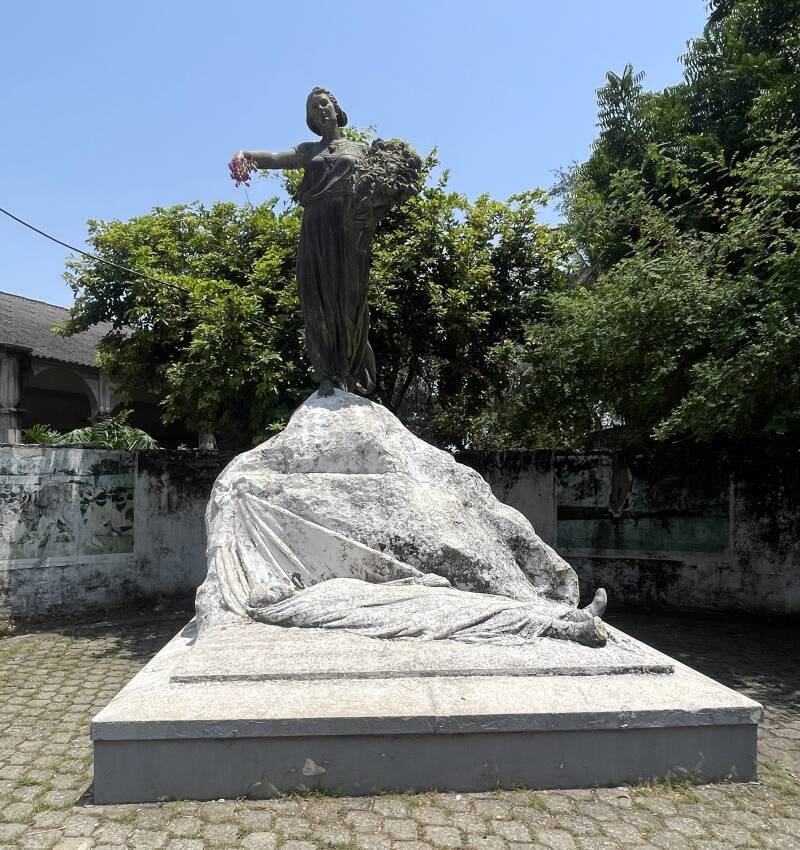
Monument aux colons morts de la fièvre jaune or, literally 'Monument to the colonists/settlers who died of yellow fever'.
One of the most striking places we visited was Maison Ganamet. Like many of the surviving colonial era structures, it now exists in a state somewhere between ruin and reluctant endurance. Sections of wall had disappeared entirely. Trees pushed through empty windows and roots clung dramatically to walls that must once have been brilliant white. Walking through it felt strangely atmospheric rather than simply sad. Nature and architecture seemed locked in a slow negotiation over who would ultimately reclaim the building.
Maison Ganamet itself is architecturally unusual, combining classical European influences with Middle Eastern decorative touches. It was commissioned by a wealthy Lebanese businessman, reflecting the long commercial links between Lebanon and West Africa. Our guide explained details while I wandered around taking far too many photographs of collapsing staircases and vines curling around abandoned balconies. Some neighbouring colonial buildings have since found second lives as bars or restaurants, which somehow suits Grand Bassam’s layered personality.
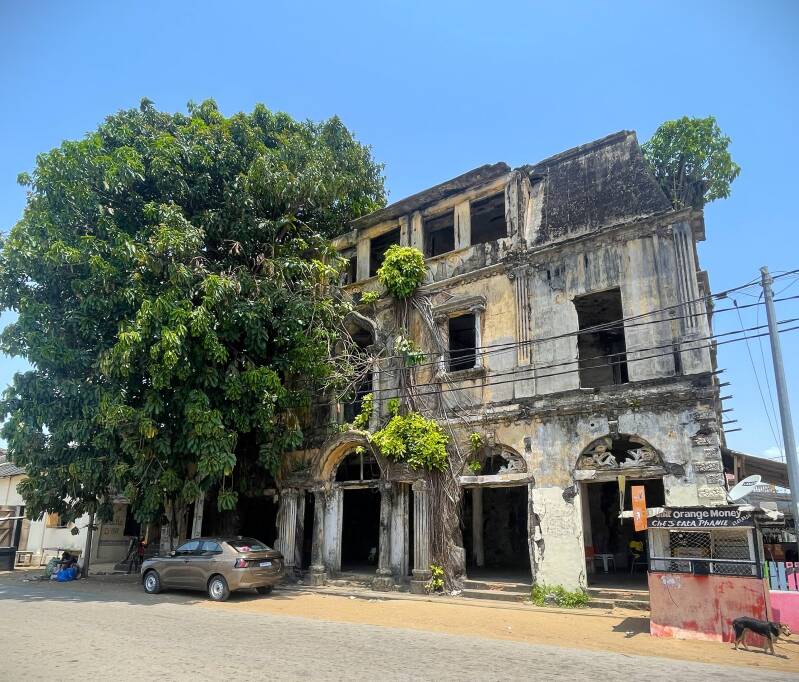
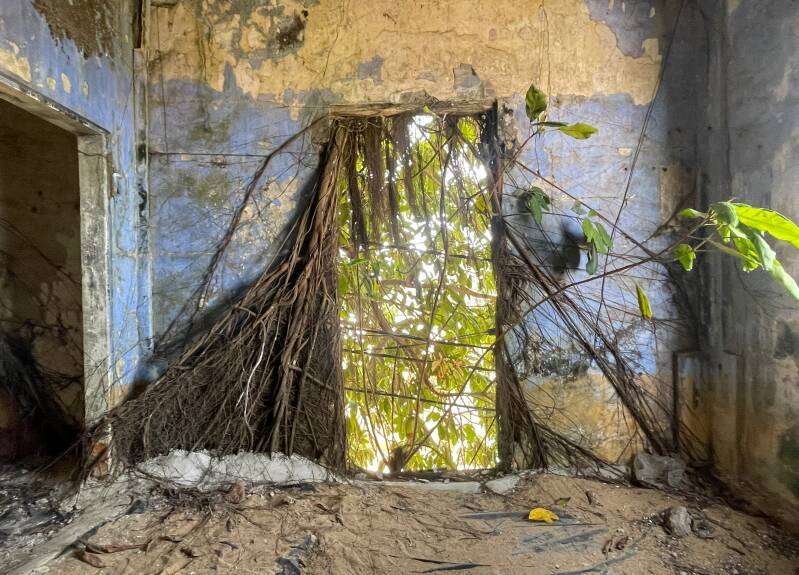
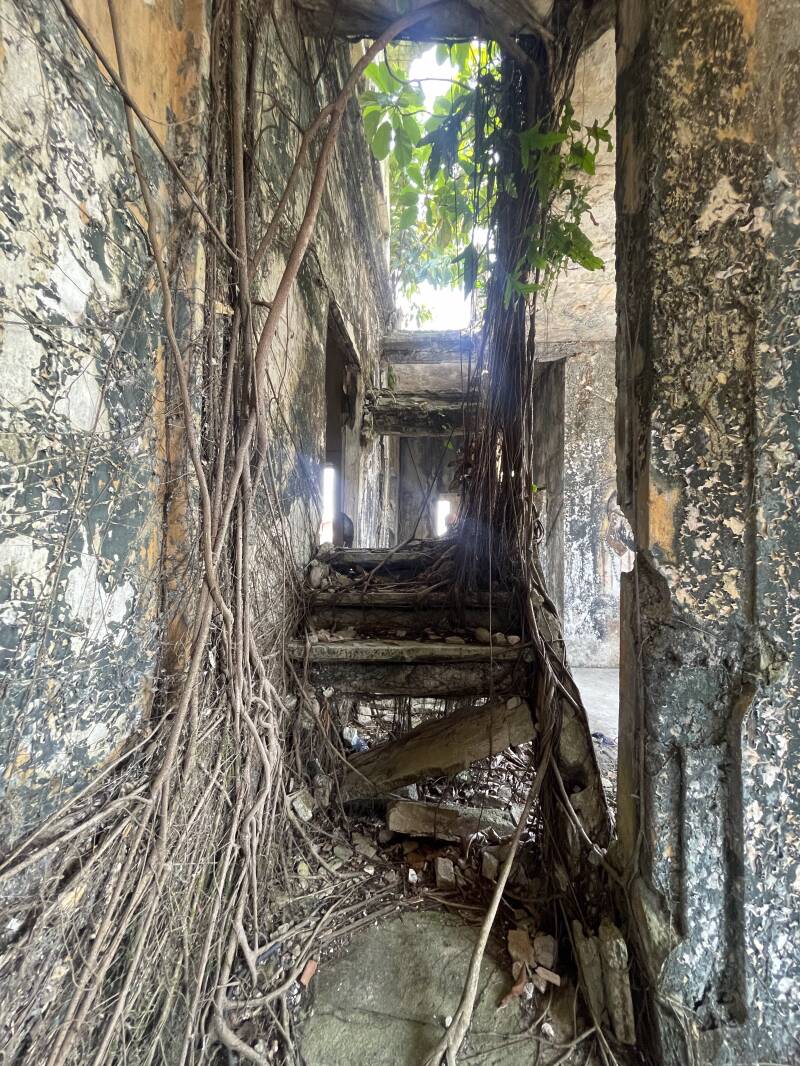
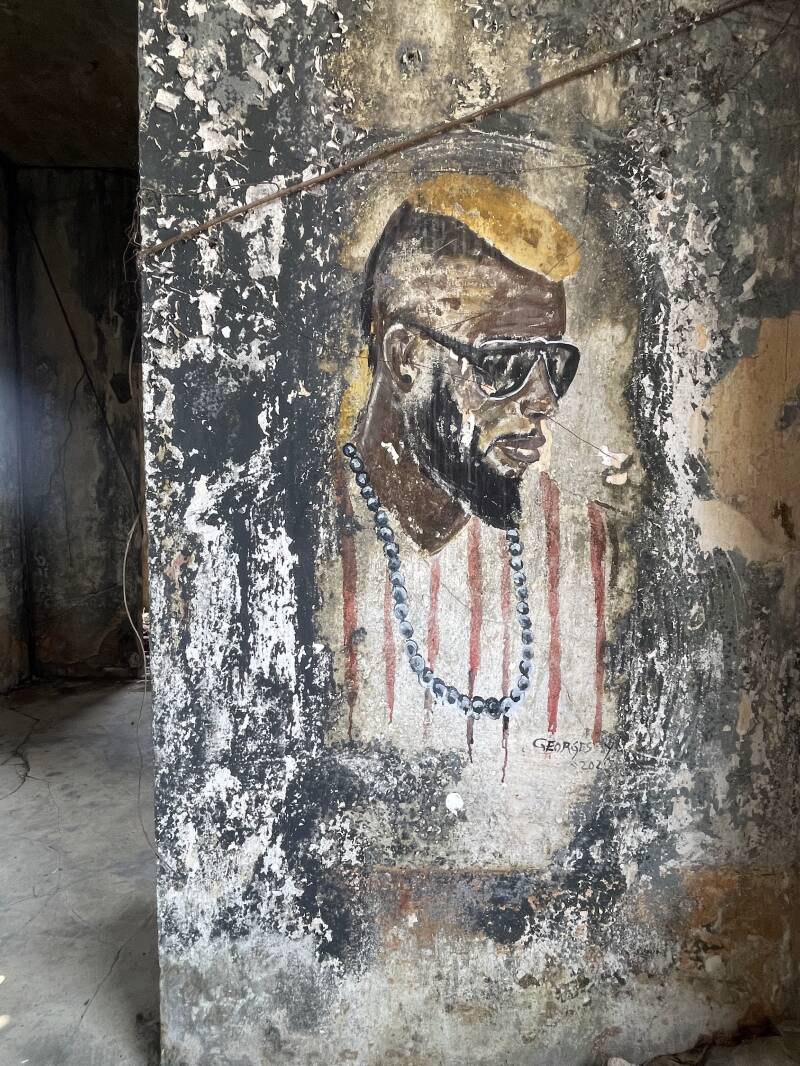
Various views of Maison Ganamet in Grand Bassam.
The must see visit at Grand Bassam is the Musée National du Costume, housed inside a former colonial palace built in 1892 and later transformed into a museum by Félix Houphouët Boigny, Côte d’Ivoire’s first president. Having already travelled through several West African countries, and after witnessing the Goli dance the previous day, the museum suddenly carried far more meaning for me. Royal garments, ceremonial attire and contemporary clothing all connected back to traditions I had now actually seen in practice.
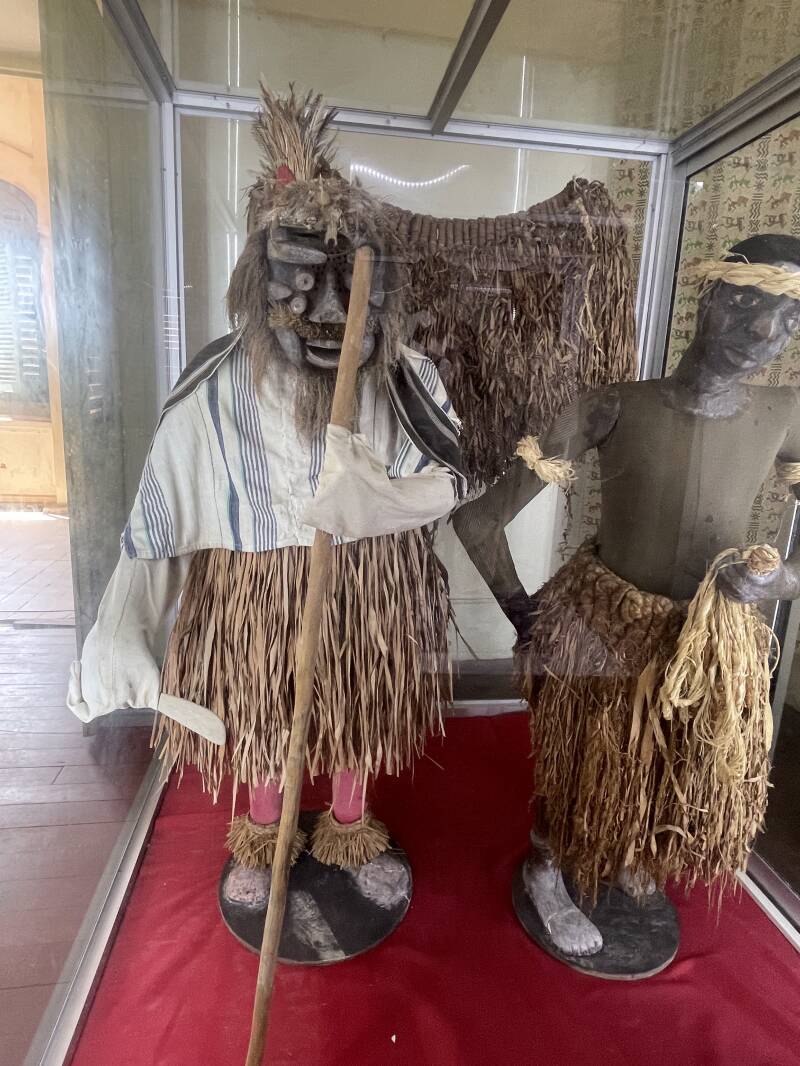
More costumes inside the Musée National du Costume.
Not far away sat La Maison de l’Art Contemporain, sleek, modern and air conditioned. The contrast between the ageing costume museum and this polished contemporary gallery felt symbolic of Côte d’Ivoire itself, balancing heritage and modern reinvention simultaneously.
We also visited Centre Céramique. From the outside it appeared almost abandoned, the entrance weathered and decayed, but inside the workshops were very much alive. Potters sat at wheels shaping clay with the kind of quiet concentration that instantly slows your own pace. After seeing so many museums dedicated to preserving history, it was satisfying to witness artistic traditions continuing as active, working practices rather than simply objects behind glass.
Merci beaucoup to Jo, whom I met through the Host a Sister Facebook group and who kindly drove me there with her personal driver. It turned out Jo was also an actor in Abidjan, which somehow felt appropriately glamorous.
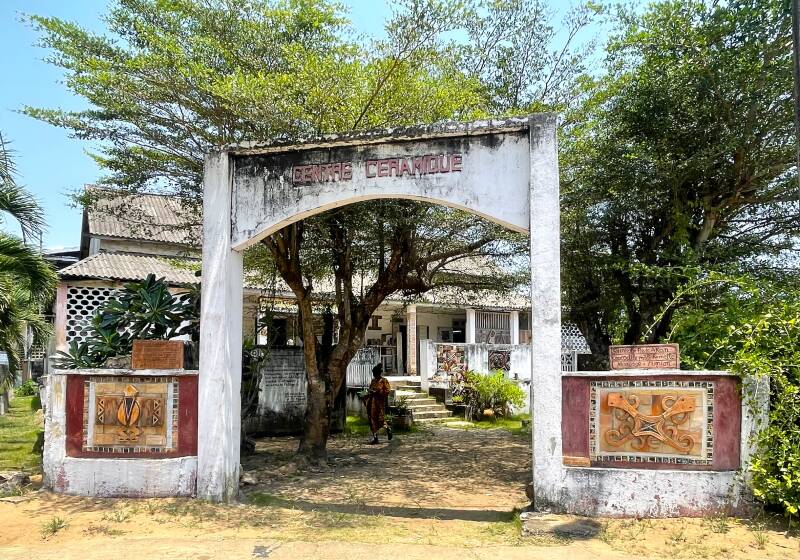
The patina! Entrance to Centre Ceramique, Grand Bassam.
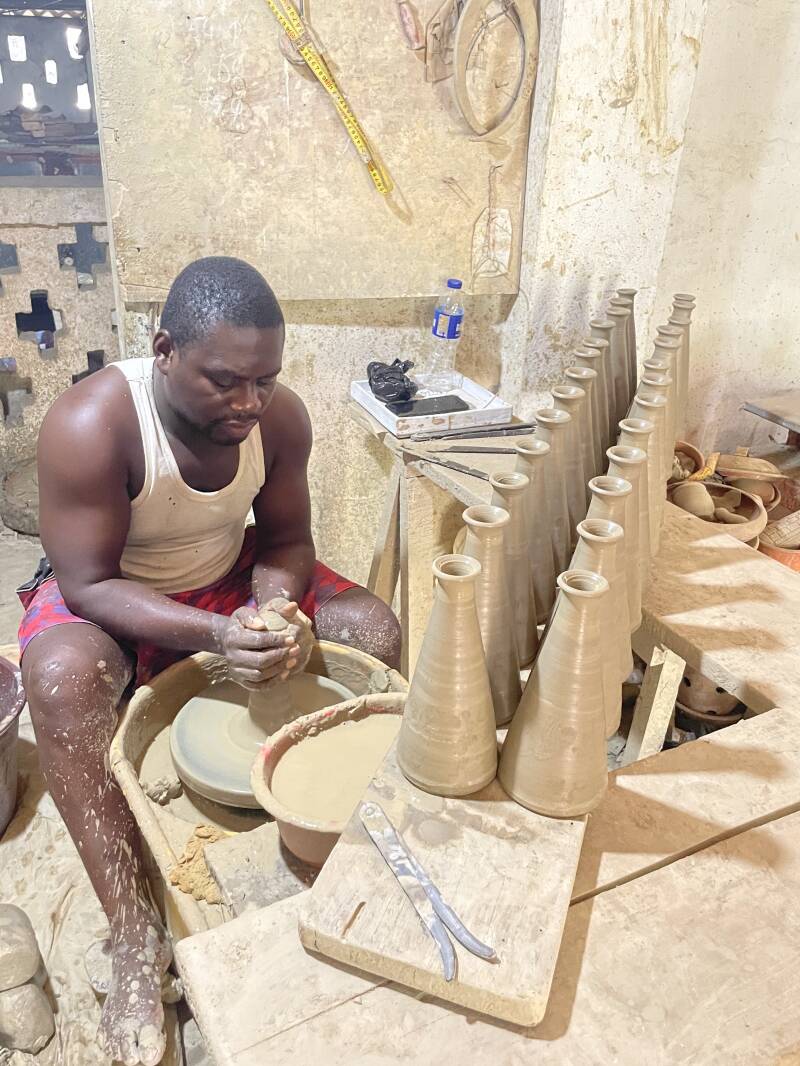
A very skillful thrower at Ceramic Ceramique, Grand Bassam.
On 6 March I met up with Jo again, this time alongside her sister, niece and nephew, to visit MuCAT – Museum of Contemporary Cultures. The exhibition featured the collection of Swiss German ethnographer Hans Himmelheber alongside contemporary works. Masks featured prominently throughout and, after the previous days’ experiences, I found myself understanding them with far more context than I would have earlier in the trip.
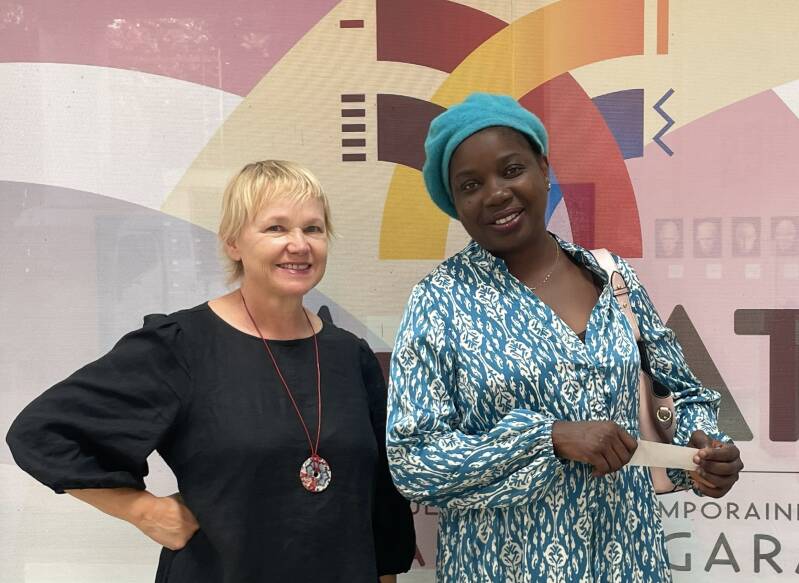
Jo and I at MuCAT – Museum of Contemporary Cultures, in Abidjan.
At one point we stopped by Jo’s sister’s house because preparations were underway for a funeral. Apparently the funeral would continue for five days. West Africa does not do life quietly, and it certainly does not do mourning quietly either.
Côte d’Ivoire surprised me constantly. It is the world’s largest cocoa producer and home to one of Africa’s biggest French speaking cities. It contains futuristic architecture, contemporary art galleries, traditional masking ceremonies, colonial towns and sprawling informal settlements all within the same journey.
The Goli dance may have been the emotional highlight, but what stayed with me most was the sheer range of experiences packed into one country. Côte d’Ivoire felt creative, layered and deeply alive, a place far more complex than the simplified narratives often attached to West Africa.
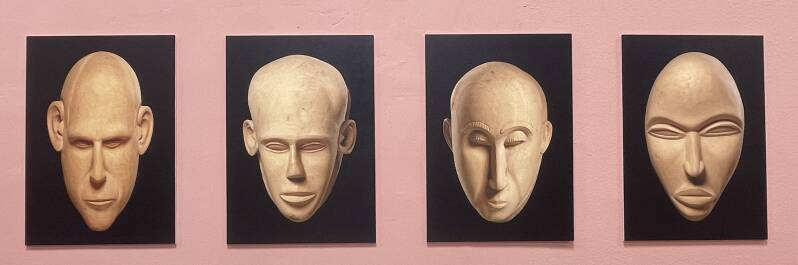
Contemporary photographs referencing masks in the exhibition Whispers of Archives: In the Footsteps of Hans Himmelheber at MuCAT (Musée des Cultures Contemporaines Adama TOUNGAR) in Abidjan, Côte d’Ivoire.)
Create Your Own Website With Webador