

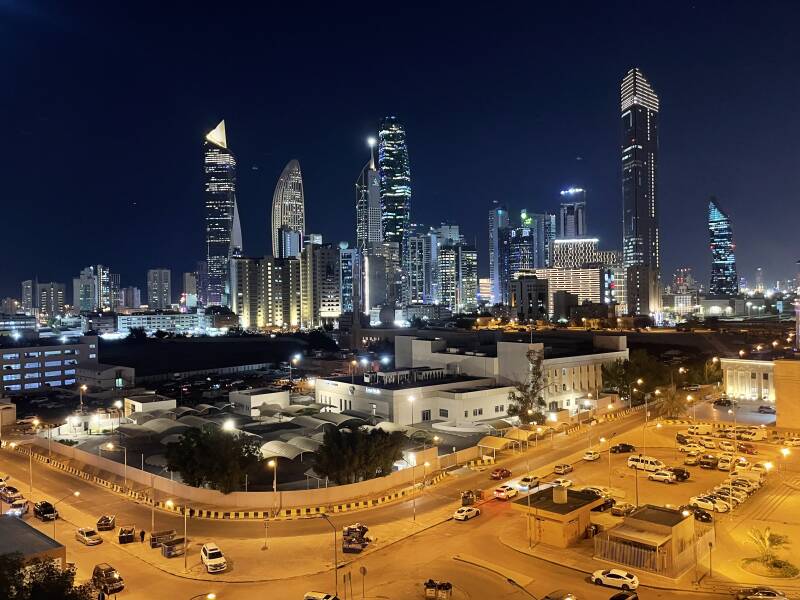
Nighttime view from the Oasis Hotel, Kuwait City.
I arrived in Kuwait on the afternoon of 7 January 2026 aboard an Oman Air flight from Muscat. After the sweetness and gentleness I had experienced in Oman, the arrival process in Kuwait felt noticeably more abrupt. The airport itself seemed slightly chaotic and the immigration officers did little to soften the transition.
As I approached the visa office, I briefly wondered whether I even needed to be there given that I already possessed my visa. Nevertheless, I was directed to take a number and sit down among a room full of weary looking travellers who all appeared to have been waiting a very long time. Eventually my number was called. There was no “Welcome to Kuwait,” merely barked instructions.
“Pussport.”
“Stemp.”
Another traveller and I obediently shuffled from one window to another as though participating in a mildly stressful bureaucratic relay race. Eventually our passports were stamped and we were released into baggage claim and then out onto the street.
Through the Facebook group Host A Sister, I had connected with a local woman named May, who had kindly arranged for her father to collect me from the airport. Somewhere along the line, however, I was quietly transferred to another driver entirely. As we set off, I reached automatically for the seatbelt, valuing both legality and survival. The driver noticed immediately.
“Ah!” he exclaimed, waving dismissively with one hand. “Don’t worry!”
“But I want to wear it,” I replied firmly, clicking it into place anyway.
I stayed at the Oasis Hotel which, despite its ambitious name, was nowhere near an actual oasis. What it did possess, however, was an excellent central location and, I suspect, the best room in the building. From my window I looked out over a dazzling nightscape of illuminated skyscrapers while the nearby mosque pulsed with flashing green neon lights during the evening call to prayer. Kuwait announced itself immediately as a city of spectacle. After a long day of travel, I simply stood at the window for a while taking in the view before eventually surrendering to sleep.
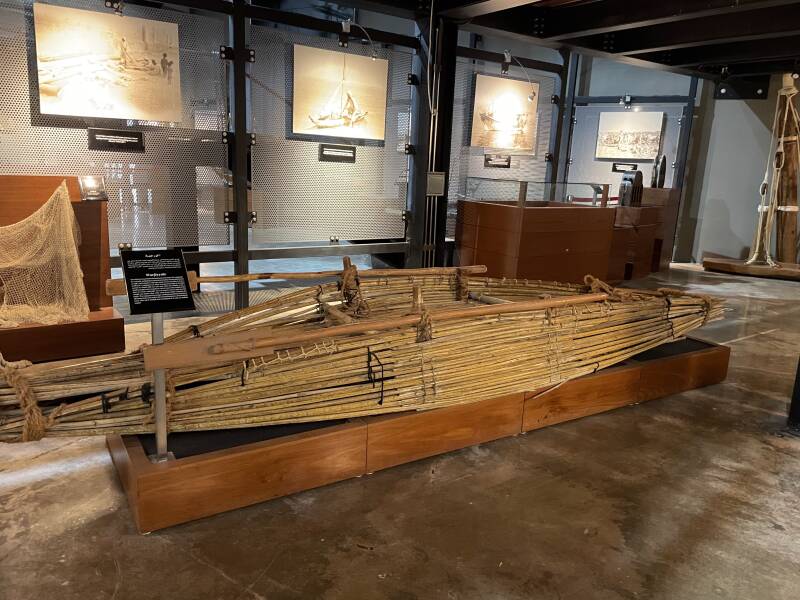
A traditional boat inside the Kuwaiti Maritime Museum.
Kuwait tends to receive a somewhat lukewarm reception from travellers. Many seem to dislike it outright. Fortunately for me, I have a deep affection for contemporary and postmodern architecture and Kuwait City possessed an abundance of both. Towering glass façades, sculptural high rises and ambitious civic projects seemed to rise from every direction, creating a cityscape that often felt futuristic and faintly surreal.
The following morning I set off enthusiastically for the art museum, only to discover upon arrival that it was closed for renovations or perhaps some entirely different reason known only to the management. Fortunately nearby stood the Kuwaiti Maritime Museum in Salmiya, which turned out to be a fascinating introduction to Kuwait’s pre oil identity.
Before oil transformed the nation, Kuwait’s fortunes rested largely upon the sea. The museum documented the country’s maritime heritage through traditional dhow boats, pearl diving history, fishing culture and photographs from an era when life revolved around trade and the Gulf waters. Outside, large vessels sat proudly on display while nearby fishermen continued traditions that long predated Kuwait’s glittering skyline.
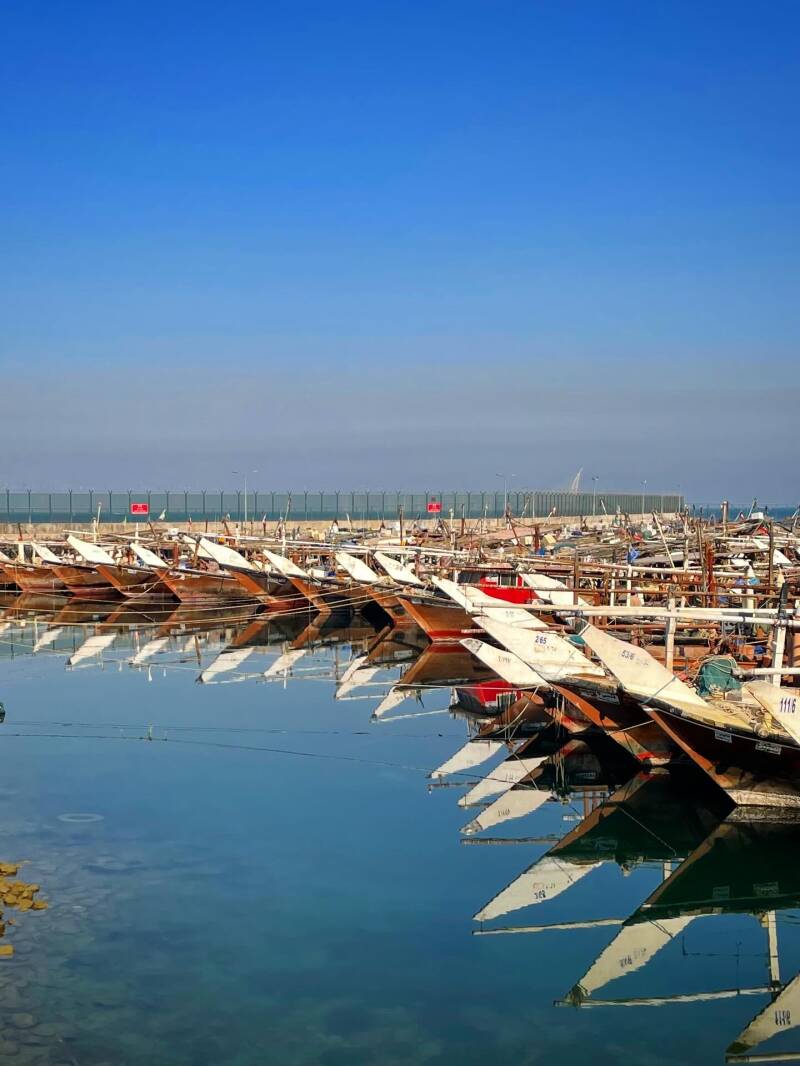
Dhows along the marina.
Not far away I wandered through the local fish market which was, without exaggeration, the cleanest fish market I have ever encountered. There was not a single suspicious puddle, rogue fish head or aggressive odour in sight. From there I continued walking along the waterfront past dhows, museums and striking examples of twentieth century architecture, particularly banks whose façades seemed determined to outdo one another in displays of modernist ambition.
I also visited the Al Sadu House textile museum, the National Museum and Souk Al Hareem, all while continuing to admire Kuwait’s curious blend of old traditions and unapologetically modern urban development.
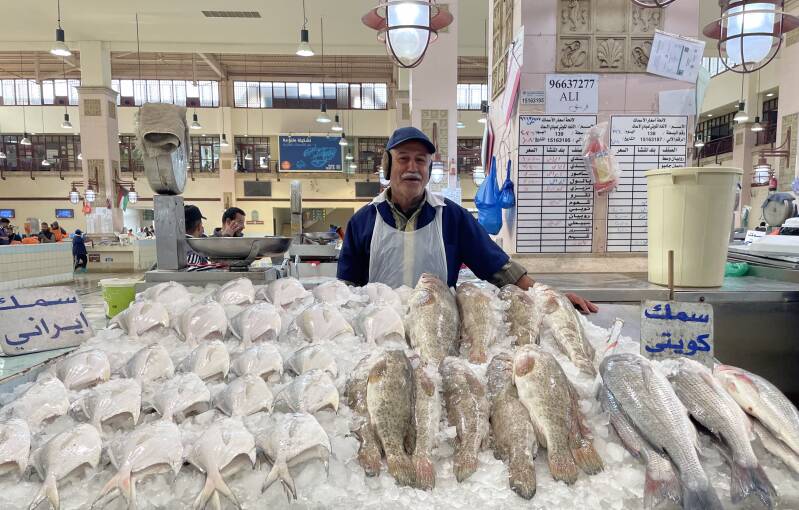
A friendly fish seller at the fish market.
Later that afternoon I finally meet May in person. She proved warm, intelligent and wonderfully easy company. Together we decided to visit the Grand Mosque. Google insisted the mosque closed during the afternoon but May was adamant this could not possibly be true.
We arrived to find it very much closed.
May looked genuinely affronted by this development. After several animated conversations in Arabic with nearby staff, during which I distinctly heard the word “Australian” mentioned several times, the situation somehow reversed itself entirely and we were suddenly being ushered inside for what effectively became a private tour of the mosque.
The Grand Mosque itself was magnificent. Vast chandeliers glimmered overhead while geometric Islamic patterns stretched across enormous prayer halls in perfect symmetry. The silence inside contrasted sharply with the bustle of the city outside.
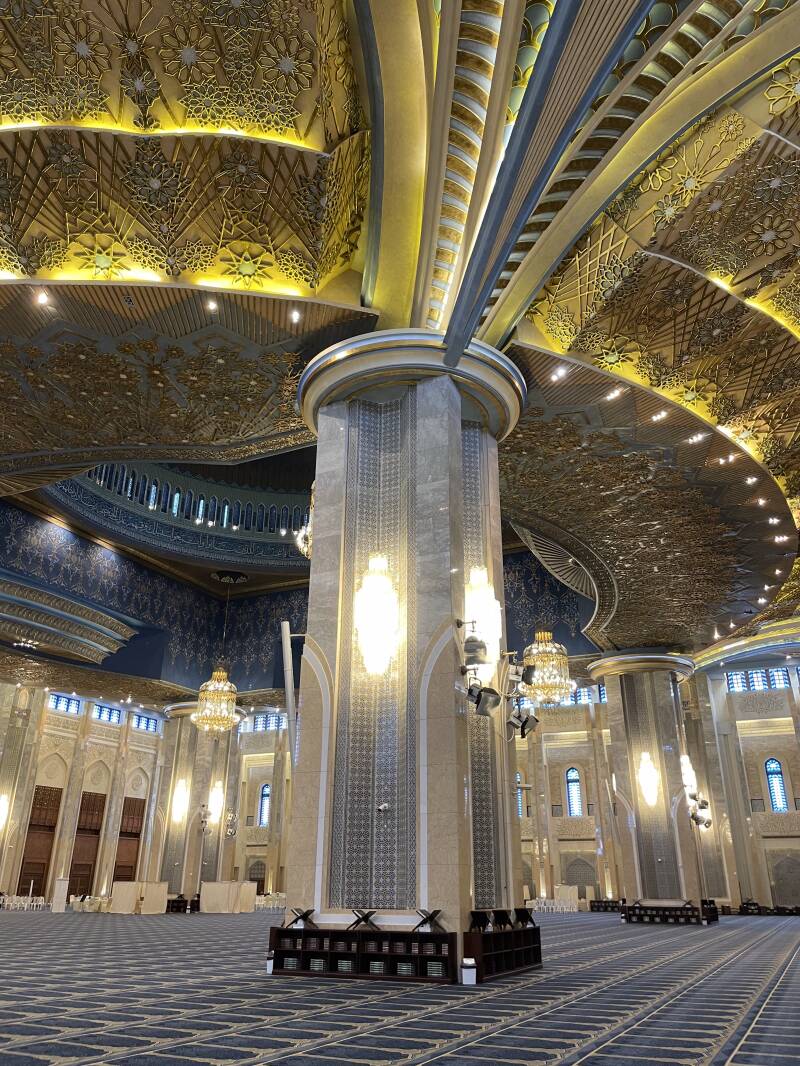
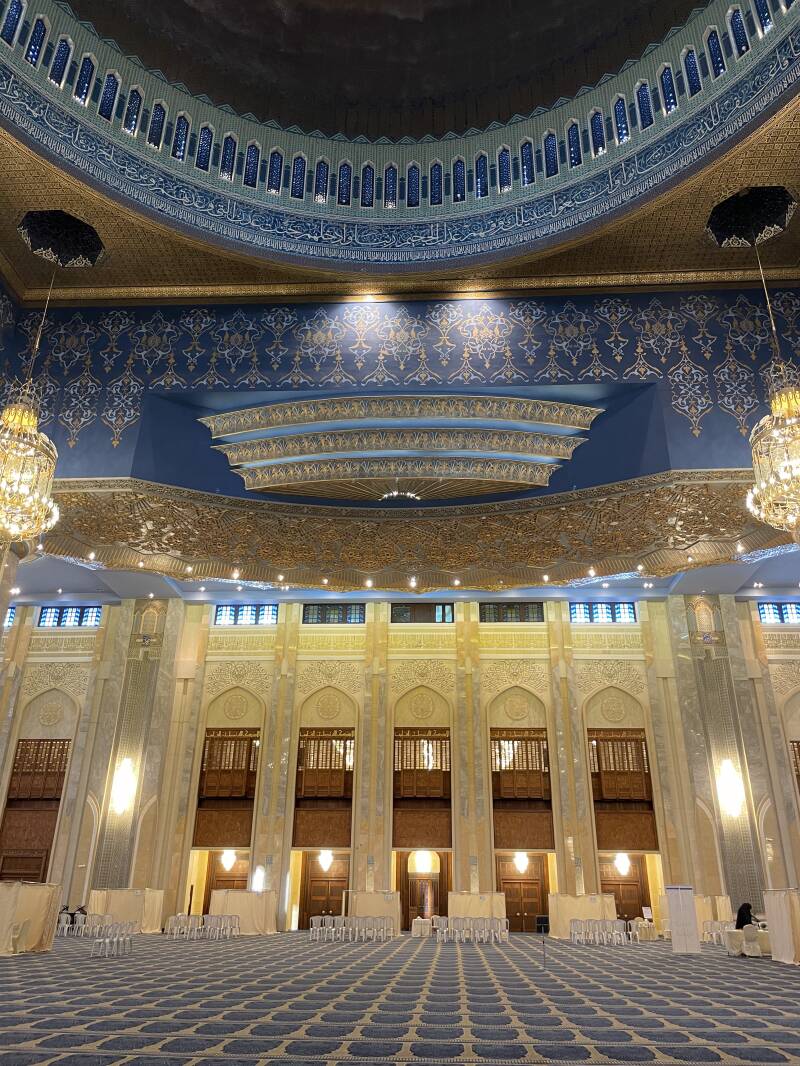
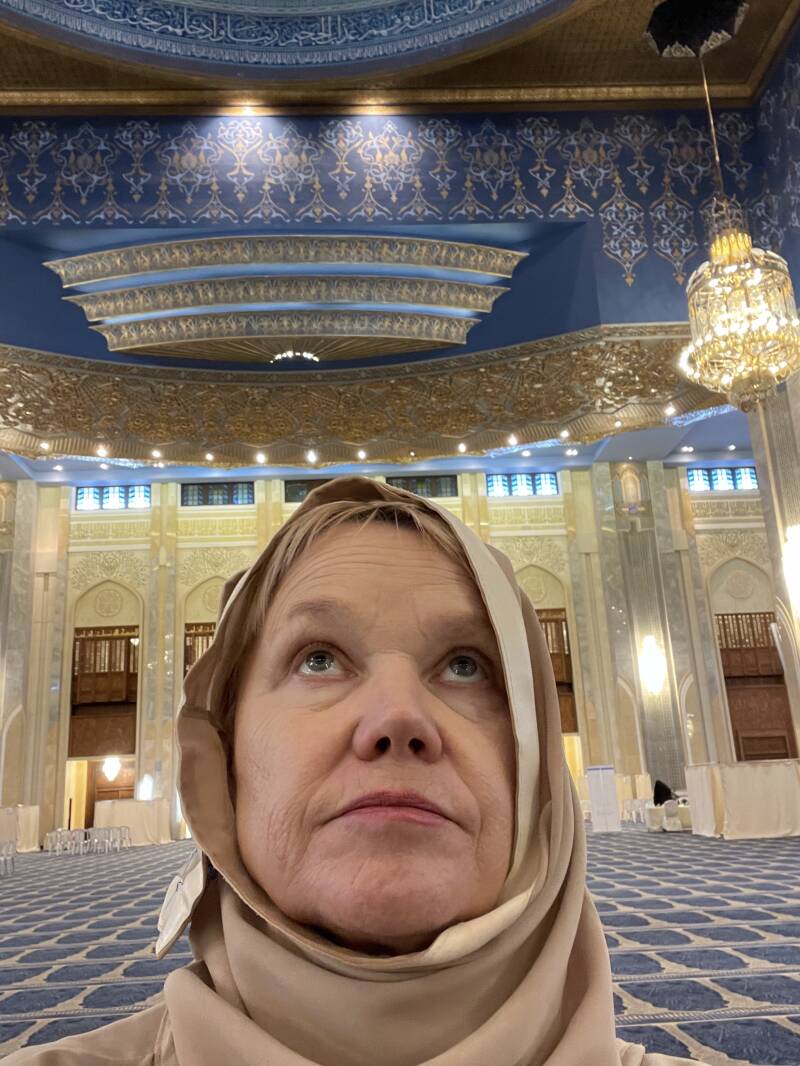
The stunning interior of the Grand Mosque in Kuwait City.
Afterwards we headed to Souq Al Mubarakiya, Kuwait City’s historic market district and one of the liveliest places in the city to eat. One thing you quickly notice in Gulf countries is scent. Not unpleasant smells of rubbish or drains, but perfume. Endless perfume. Fragrance shops spilled oud, incense and cedar smoke into the streets while impeccably dressed locals drifted past trailing clouds of expensive cologne. The sensory experience of the Gulf often feels curated down to the last molecule.
We ordered an assortment of dishes which arrived alongside a gigantic circular piece of bread that I believe was Iranian bread. It was enormous. Despite our best efforts we barely made a dent in it and I ended up carrying the remainder home with me like some sort of carbohydrate trophy.
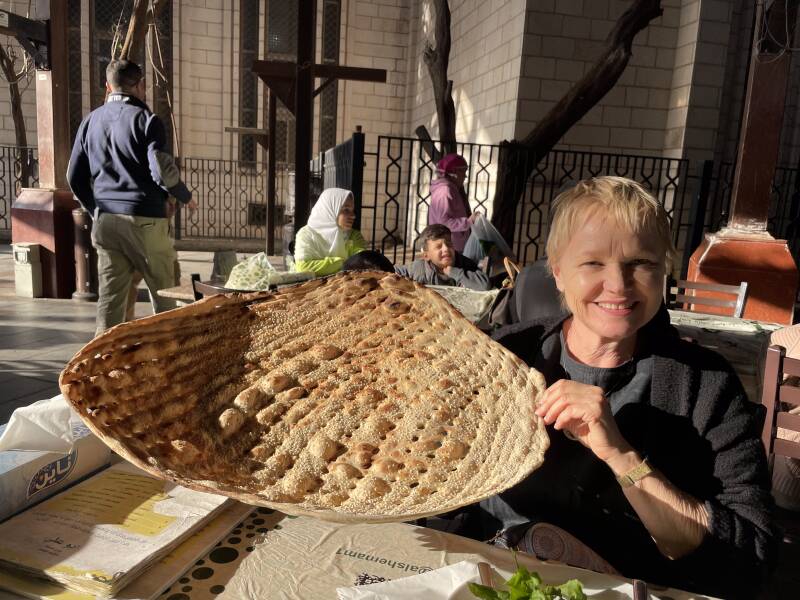
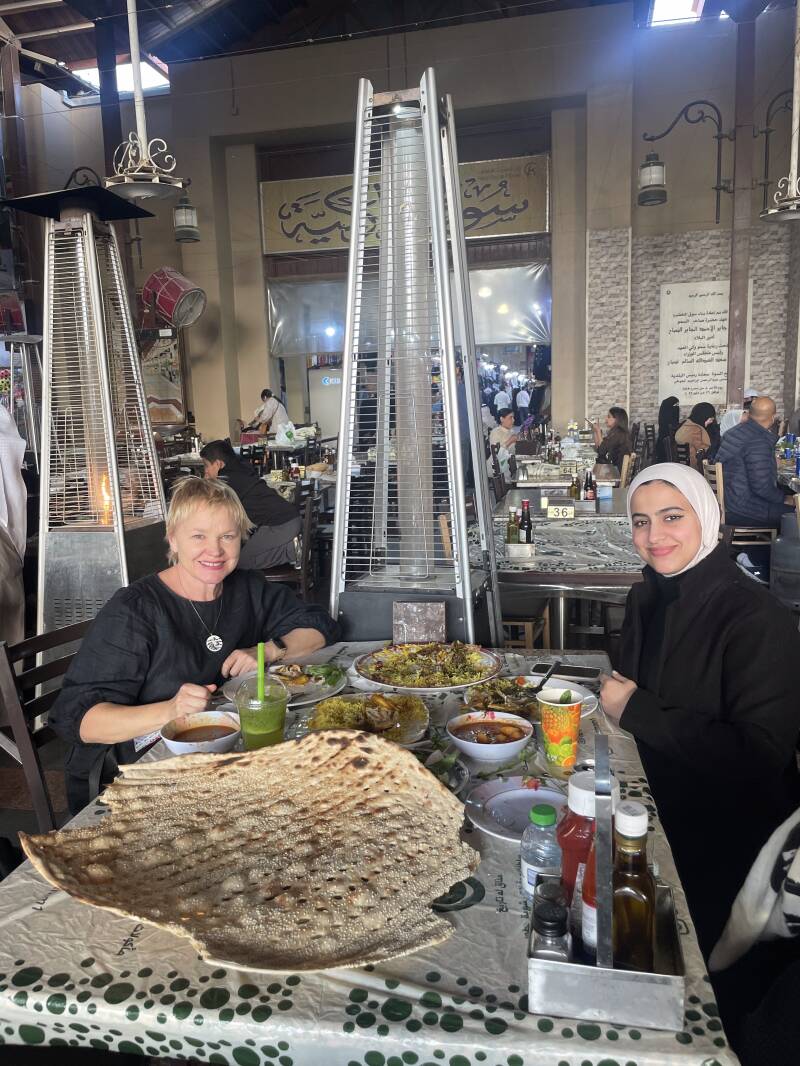
May and I enjoying our dinner; yes, they're heaters in the background as it was Winter in Kuwait.
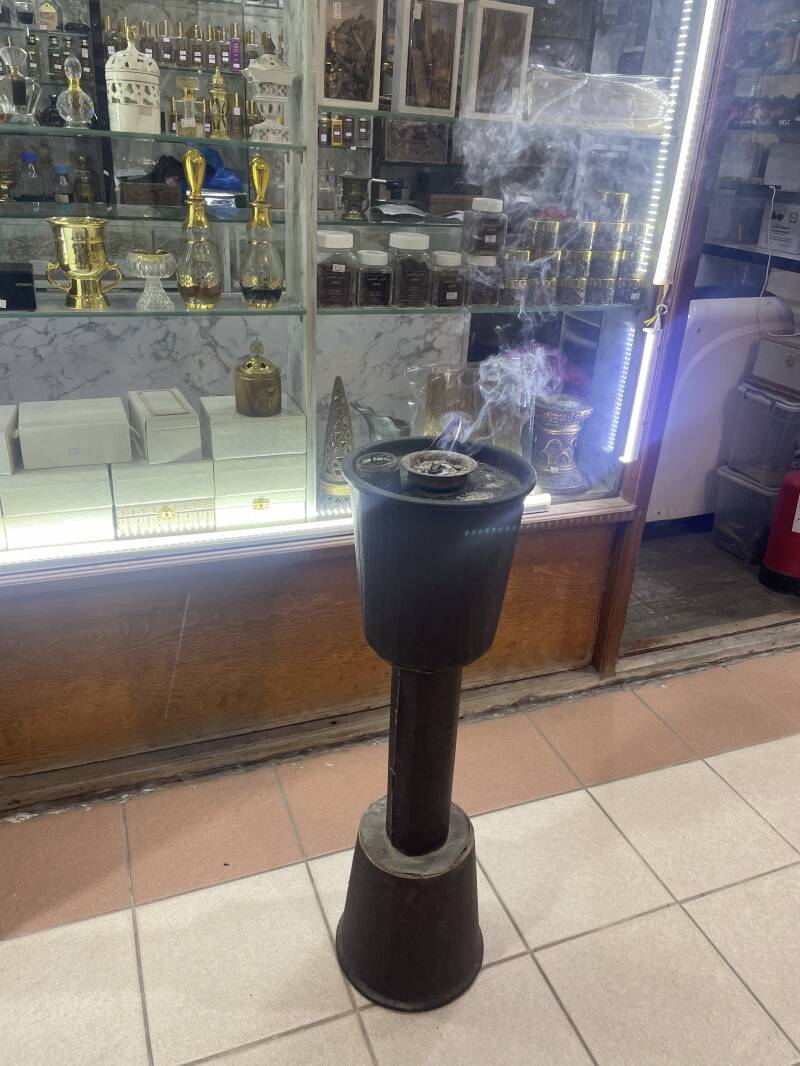
Cedarwood burning outside a perfume store.
Over the following days I gradually mastered Kuwait’s bus system. Distances in the city were often deceptively large and while walking remained possible, buses proved surprisingly straightforward once I learnt the simple formula of Google Maps plus carrying the correct change.
I visited the striking Constitution Monument in Al Shaheed Park, built to commemorate the Golden Jubilee of Kuwait’s constitution. The surrounding parklands were beautifully designed and provided one of the city’s most pleasant spaces simply to stroll and observe daily life.
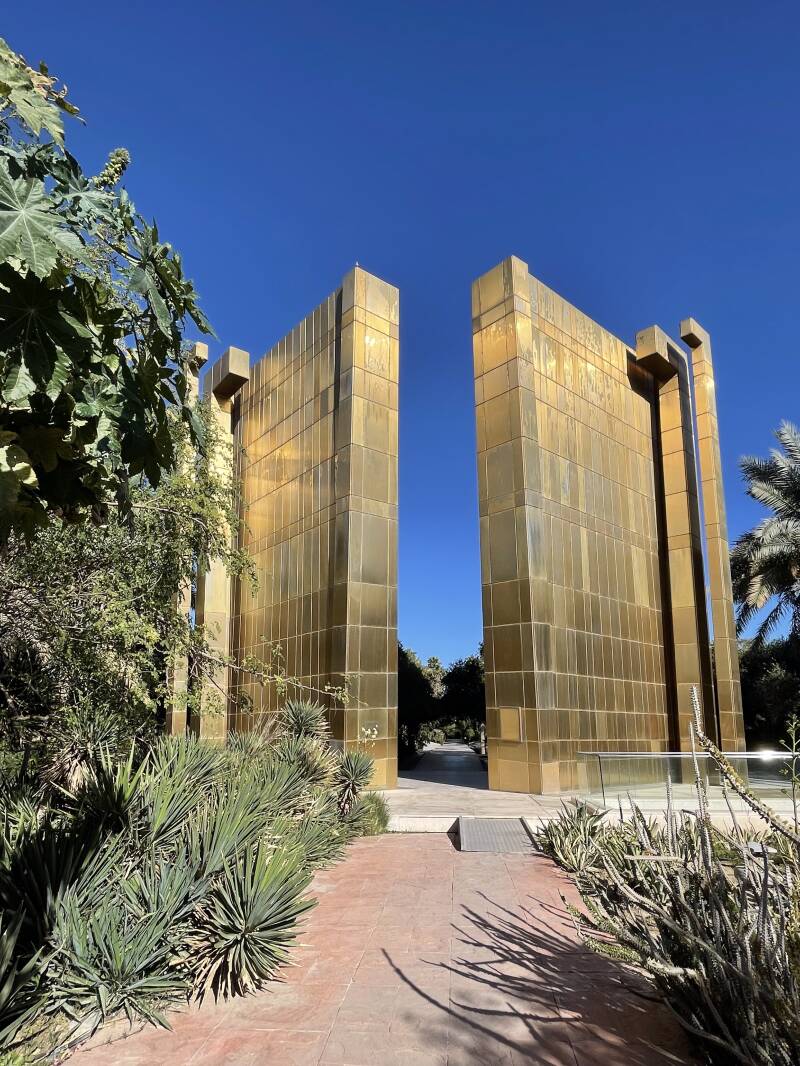
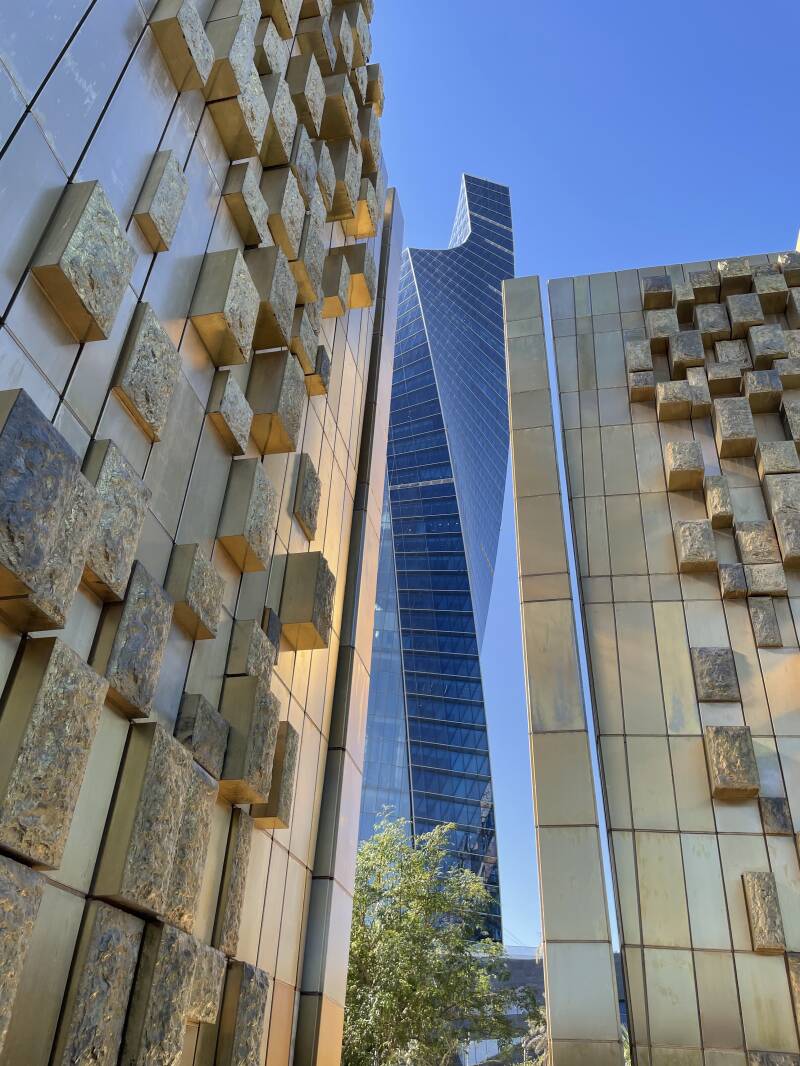
Different views of the Constitution Monument in Al Shaheed Park.
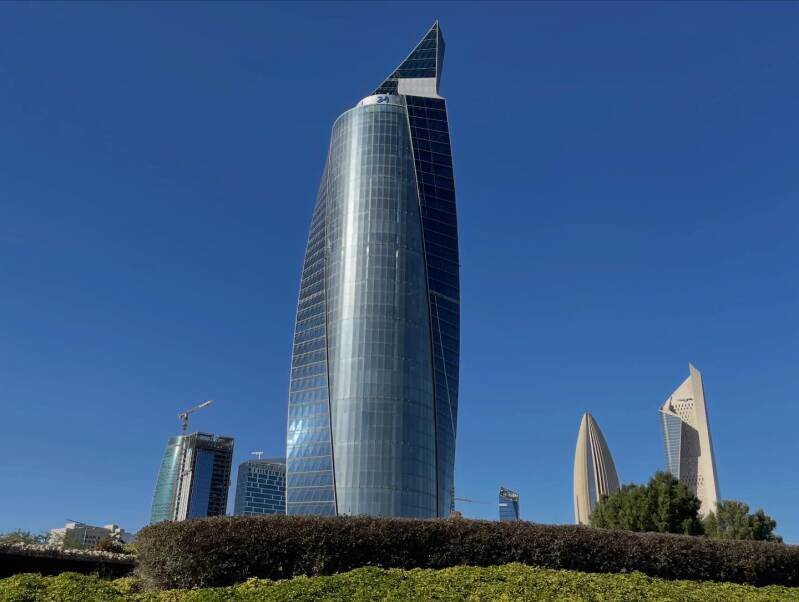
Other Kuwaiti skyscrapers viewed from the Al Shaheed Park.
One of Kuwait’s most extraordinary attractions was the Mirror House, home of Italian born artist Lidia Qattan and her husband Khalifa Qattan. Beginning in 1972, Lidia transformed the family residence into an immersive artwork covered almost entirely in mirror mosaics. Room after room unfolded into strange thematic worlds illuminated with glow in the dark paint, mirrored ceilings and surreal decorative details. The entire experience felt gloriously eccentric and slightly hallucinatory.
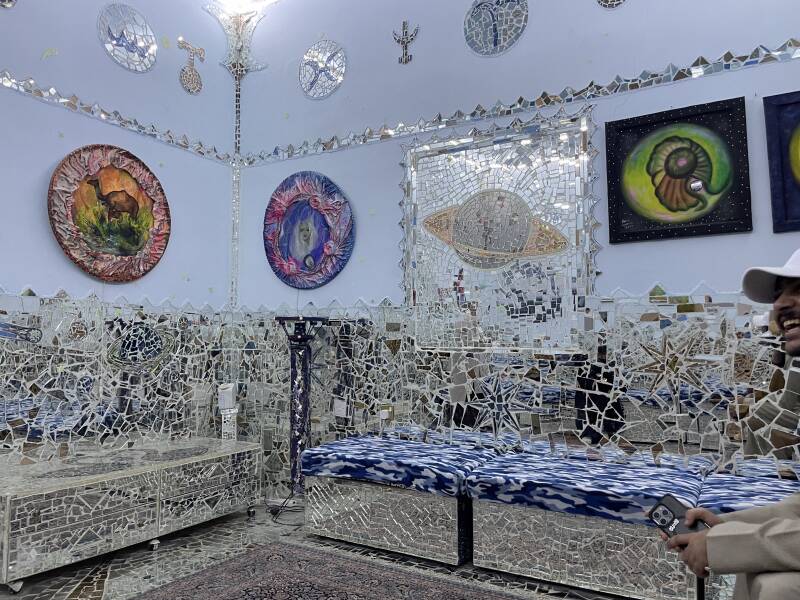
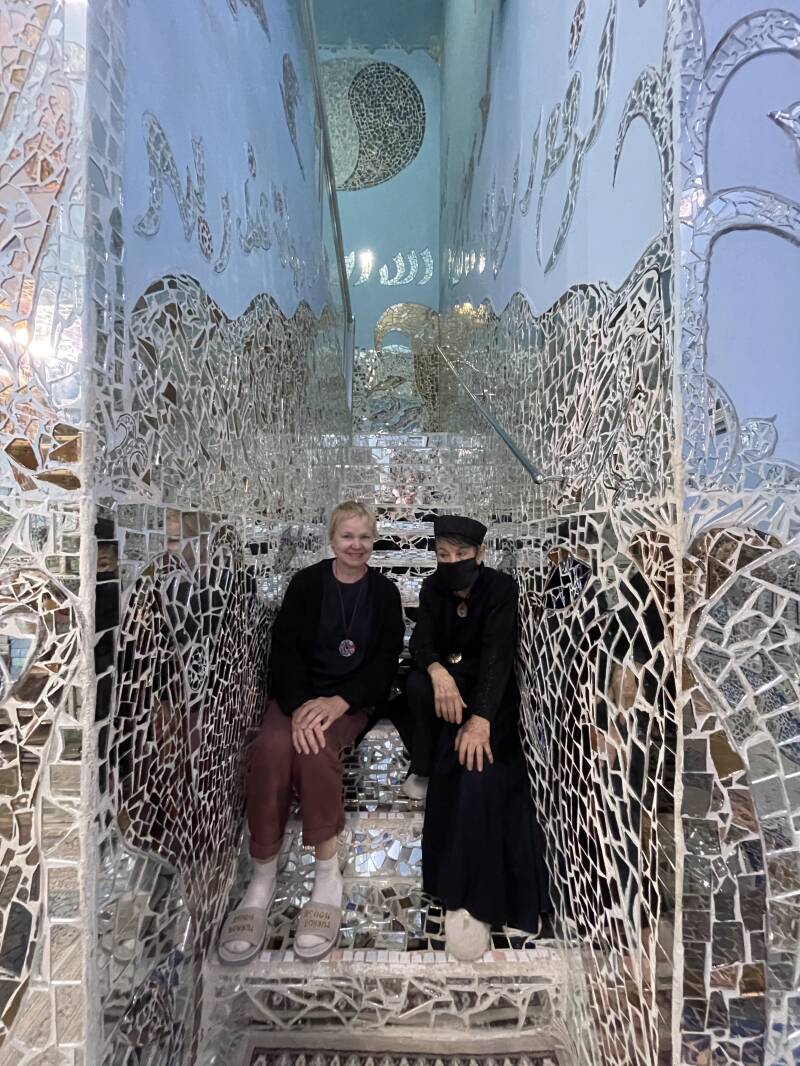
Inside the Mirror House with the artist, Lidia Qattan
The Sheikh Abdullah Al Salem Cultural Centre proved equally impressive on a vastly different scale. The sprawling contemporary complex contains multiple museums devoted to science, natural history and culture. Unfortunately my ongoing streak of poor timing continued as the Fine Arts section had been taken over by a health symposium during my visit. Nevertheless, the Arab Islamic Science exhibits and Natural History Museum more than compensated, combining interactive displays with genuinely fascinating historical artefacts.
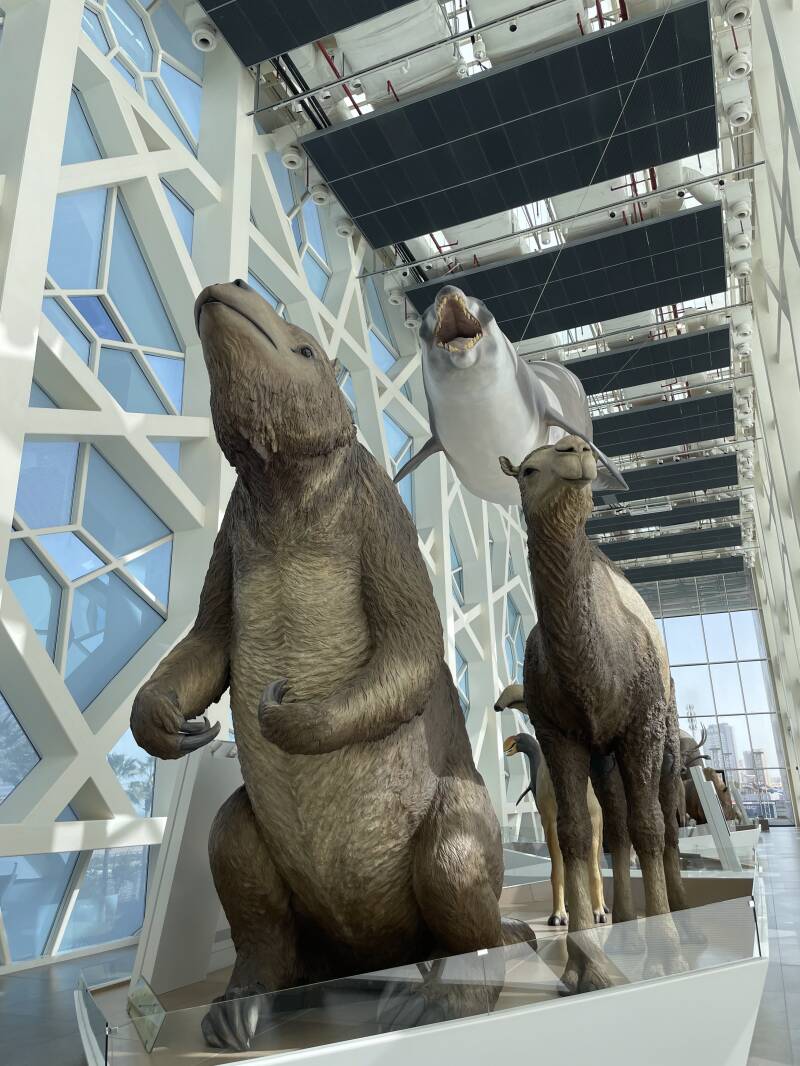
The giant mammal display at the Museum of Natural History at The Sheikh Abdullah Al Salem Cultural Centre.
Throughout my stay I became increasingly obsessed with Kuwait’s architecture, particularly the extraordinary Al Hamra Tower. Completed in 2011, it is the tallest building in Kuwait and the tallest sculpted concrete skyscraper in the world. Wrapped dramatically in glass and limestone, the tower seemed to shift appearance depending on the angle from which it was viewed. The 80-story tower includes high-end offices, a luxurious shopping center, restaurants, and a cinema.
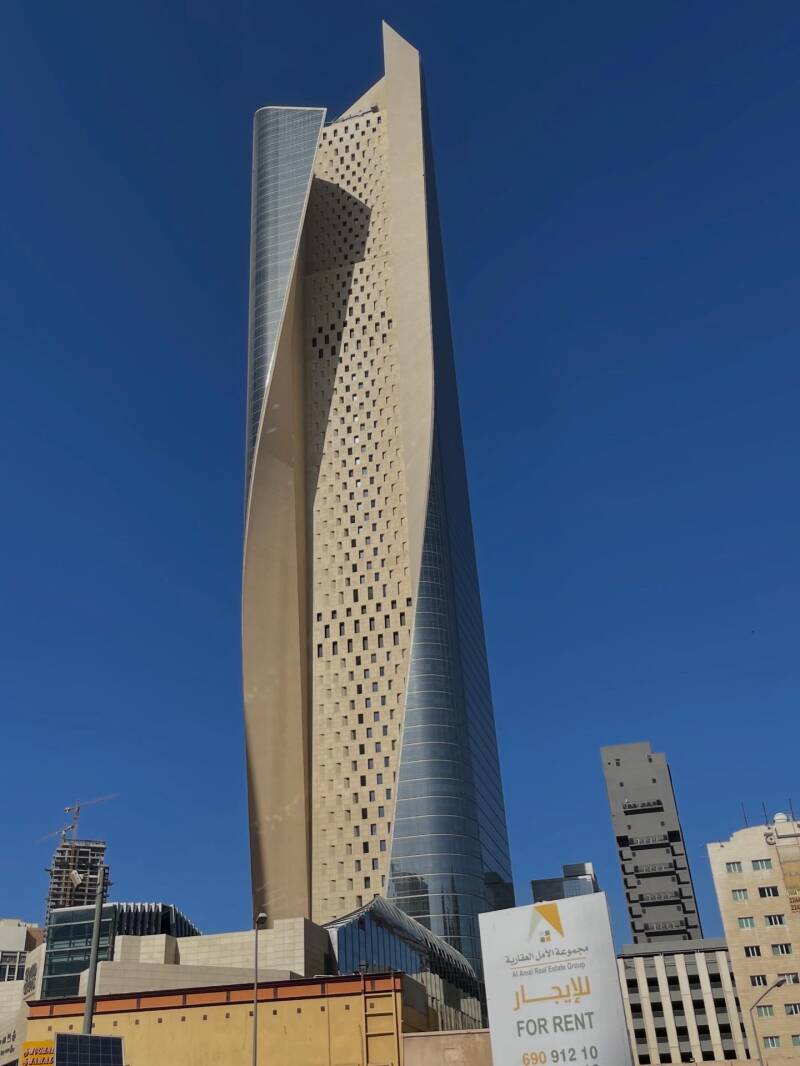
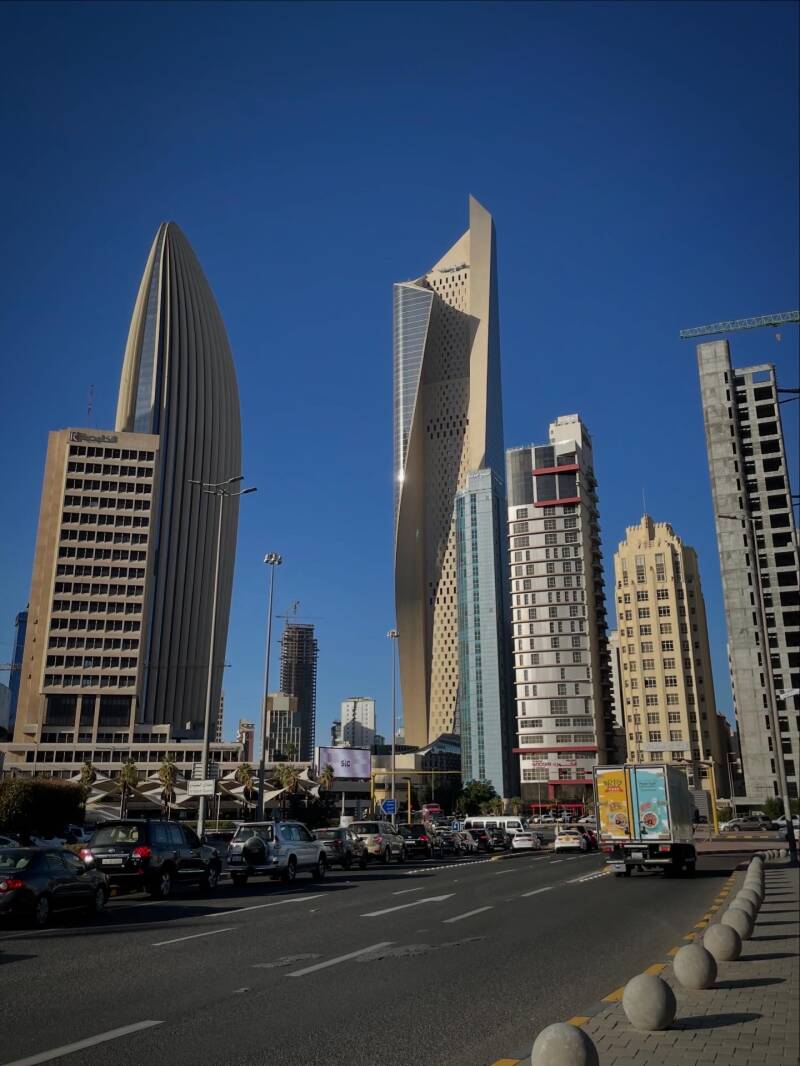
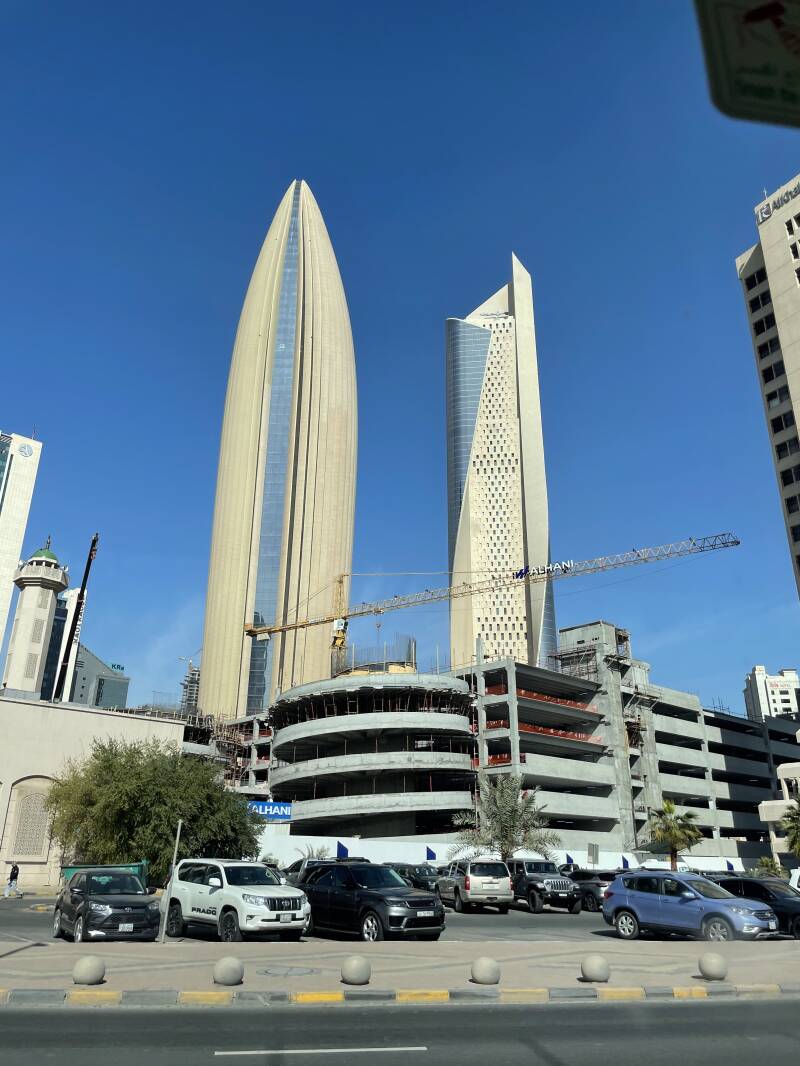
The Al Hamra Tower.
One of the highlights of the trip was my visit to Failaka Island, although for a while it seemed the excursion might collapse entirely. Ferry schedules were irregular and difficult to confirm so I had booked and prepaid for a tour, only to receive a message on the very morning of departure informing me that the entire thing had been cancelled.
Thankfully I received a refund, though not much reassurance.
Determined not to miss the island, I began frantically messaging ferry companies while simultaneously jumping aboard a public bus towards the wharf. By sheer luck, just before arriving I finally received confirmation that a ferry would indeed depart that day.
Success.
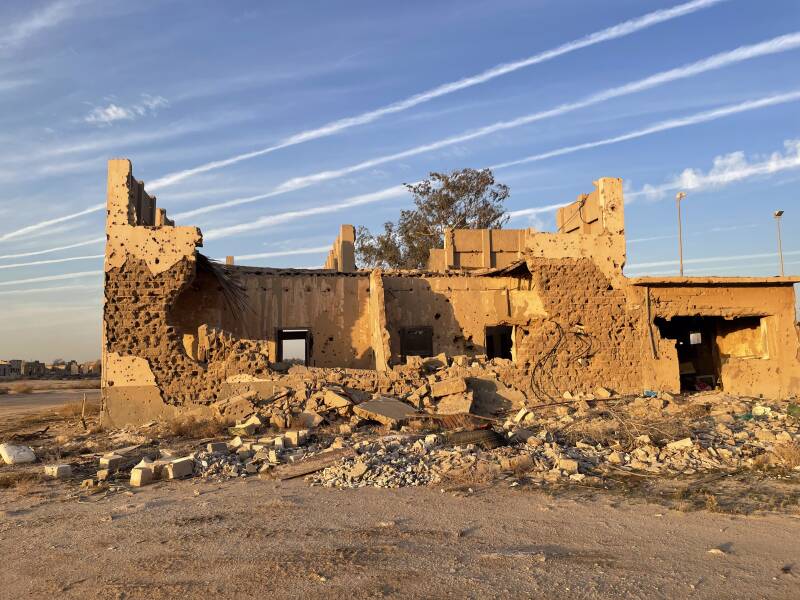
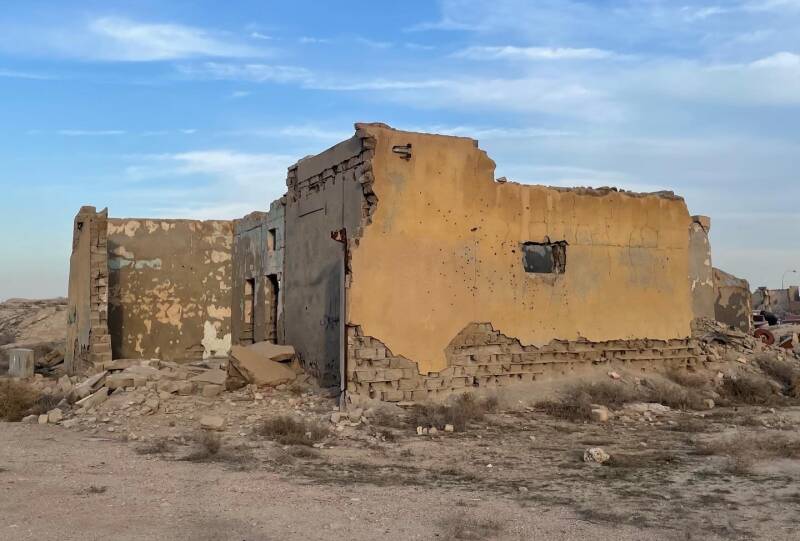
A building on Failaka Island, shelled during the Iraqi invasion.
I reached the terminal absurdly early and boarded alongside only a small handful of other passengers. Assuming everyone would naturally sit outdoors for the crossing, I did the same. A German traveller soon struck up conversation while a nearby family, whom I assumed were Kuwaiti, generously offered us tea and bottled water. Later we were joined by a Chinese born American traveller and together the crossing briefly took on the atmosphere of an accidental international summit.
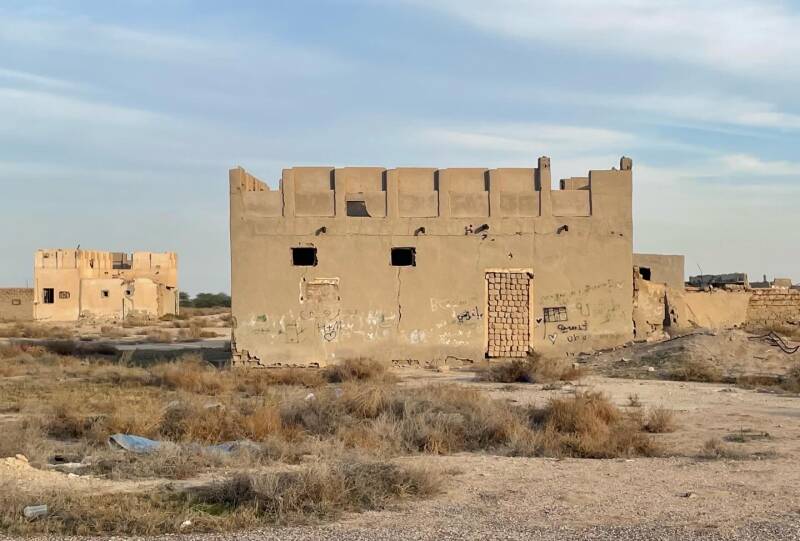
Failaka itself was deeply fascinating. Once inhabited by thousands before the Gulf War, the island still bears visible scars from Iraq’s 1990 invasion of Kuwait. Bombed out buildings and shell damaged structures stand beside newer tourist developments and resort areas, creating a strange juxtaposition of ruin and leisure.
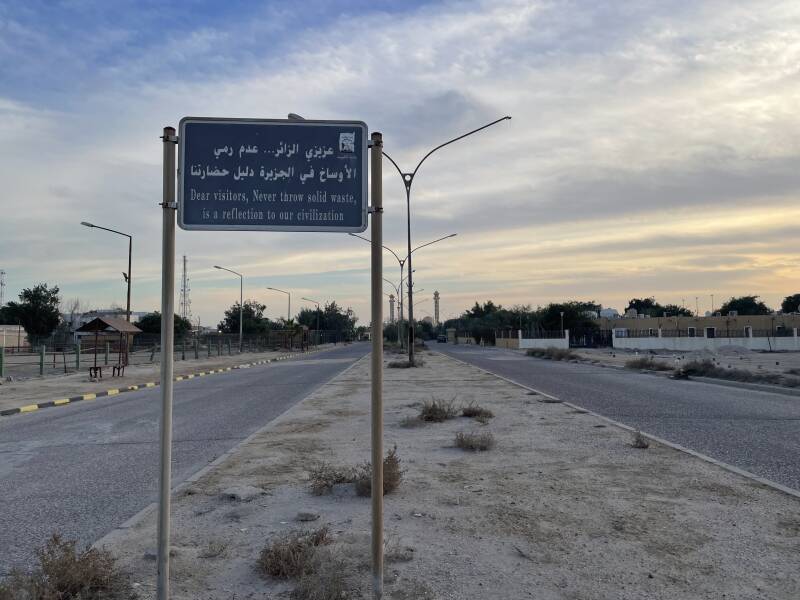
There were several of these signs along the road!
At one point I discovered that access to certain shuttle buses required participation in resort packages, so instead I simply continued walking independently across the island, exploring abandoned streets and remnants of destroyed buildings beneath the winter sun.
There was something oddly postmodern about the island’s transformation from battlefield to holiday destination. Ruins to resorts. Yet despite the development, vast stretches of open land remained untouched, preserving something of the island’s eerie historical atmosphere.
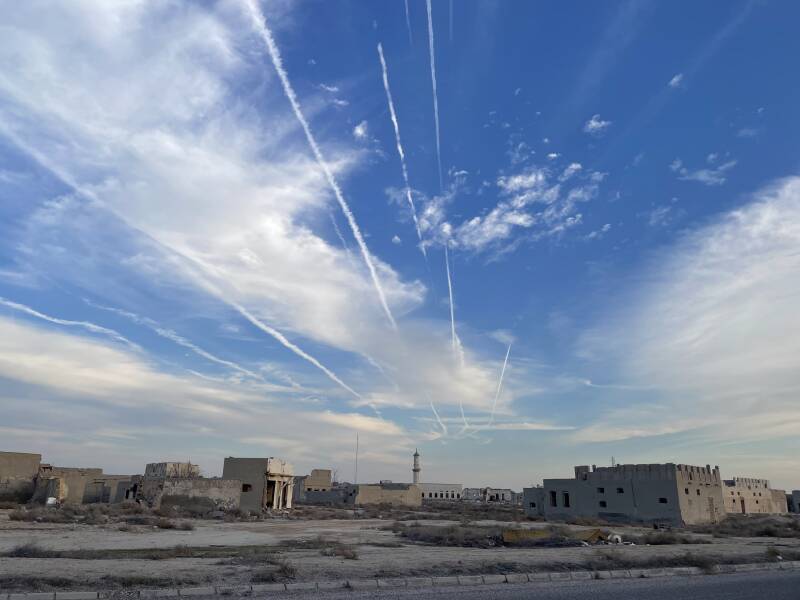
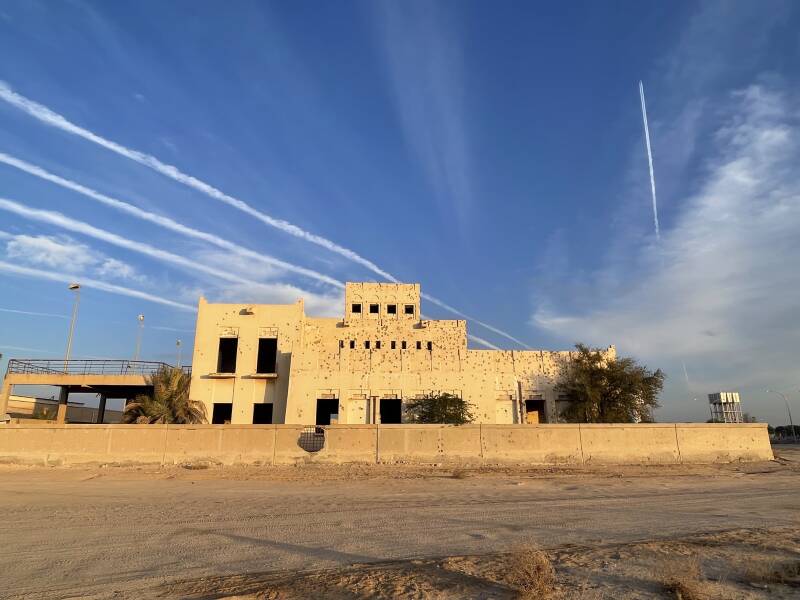
This building was once the main bank on the island.
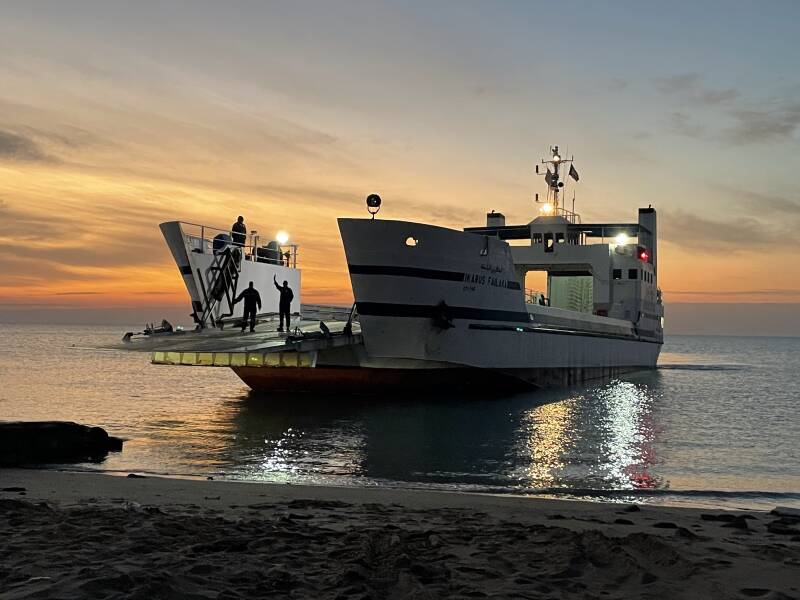
The ferry, returning to do the return trip to Kuwait City.
My final excursion in Kuwait was once again with the wonderful May, who drove me first to the iconic Kuwait Towers before introducing me to The Avenues Mall, an enormous retail complex which she casually informed me she visits “all the time.” The scale of it was almost comical. Entire streetscapes seemed to exist within the mall itself.
Before descending fully into Kuwait’s world of luxury retail and polished marble, however, we spent time admiring the Kuwait Towers illuminated against the night sky. Officially known as Abraj Al Kuwait, the trio of slender towers has become the defining image of modern Kuwait since their opening in 1979. Designed by Danish architect Malene Bjørn, they combine Scandinavian modernism with distinctly Islamic influences, particularly in the blue mosaic patterns that evoke ornate minarets while somehow also resembling retro futuristic rockets from an old science fiction film.
At night the towers looked spectacular. Lit dramatically against the dark Gulf waters, they seemed almost theatrical in their elegance. The main tower rises 187 metres above the Arabian Gulf and contains restaurants, cafés and an observation sphere that slowly rotates, offering panoramic views across the city every thirty minutes. We chose not to go up inside, instead wandering slowly around the exterior promenade and admiring them from below, which honestly felt atmospheric enough for me.
There was something wonderfully optimistic about the towers. Built during Kuwait’s rapid modernisation in the 1970s, damaged during the Gulf War and later painstakingly restored, they stand as both architectural icons and symbols of resilience. Even their practical function as water towers feels secondary to the sense that they were designed to announce Kuwait confidently to the world. It is little surprise that the site now sits on UNESCO’s Tentative World Heritage list for its architectural and engineering significance.
As we wandered beneath the gleaming lights and endless luxury storefronts, I reflected on how much Kuwait had surprised me. It was not a country of obvious tourist landmarks or easy charm, but rather one of contrasts: maritime history beside futuristic towers, strict bureaucracy alongside unexpected generosity, bombed out ruins beside luxury developments, and quiet religious reverence coexisting with spectacular consumerism.
Kuwait may not seduce every traveller, but for those willing to look beyond first impressions, it reveals itself as a place far more layered, eccentric and compelling than its reputation suggests.
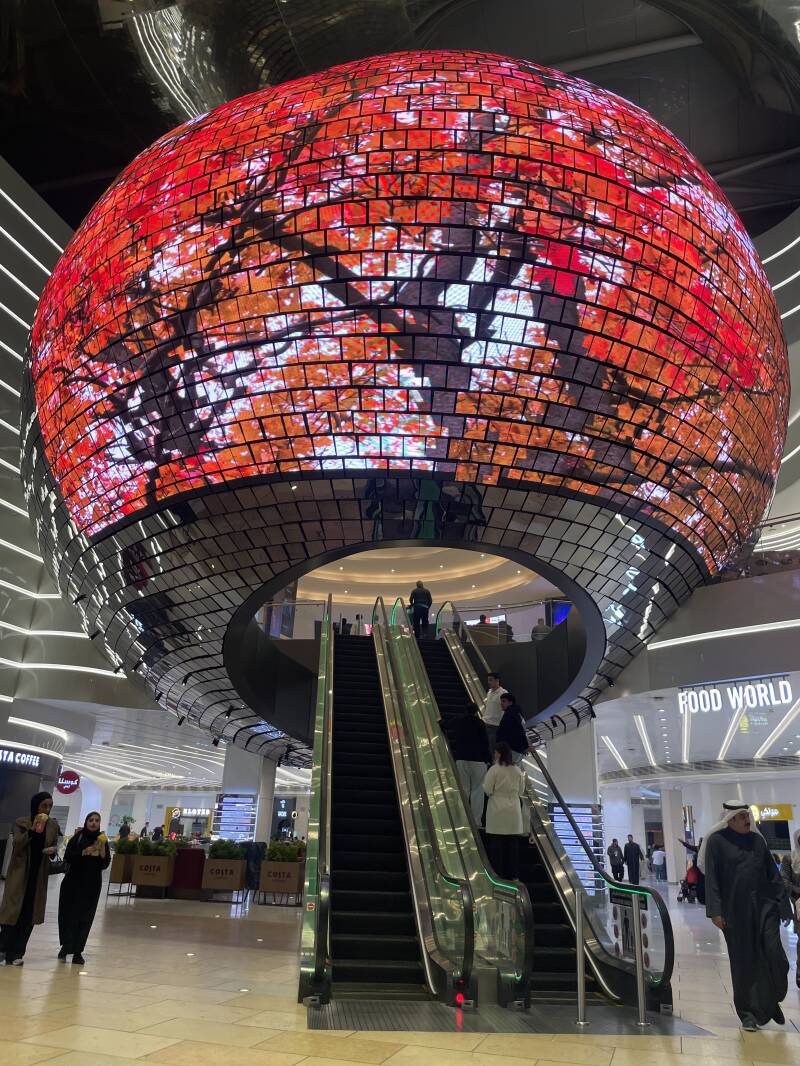
An elevated experience at Avenues Mall.
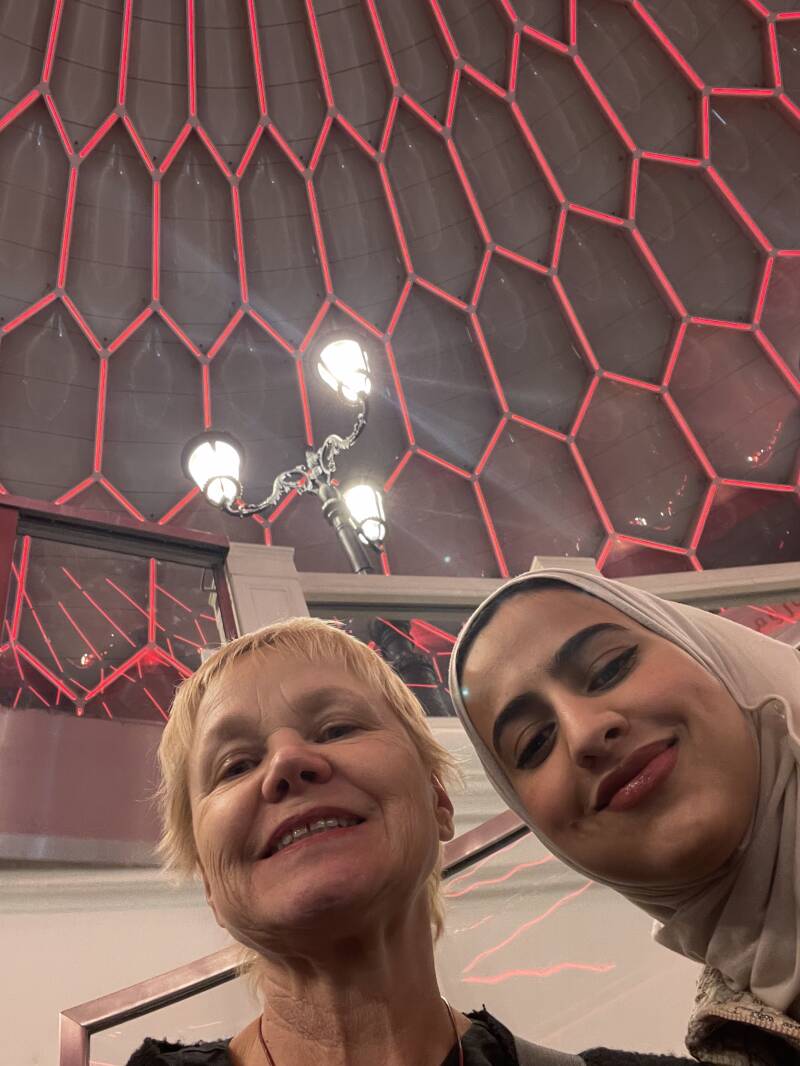
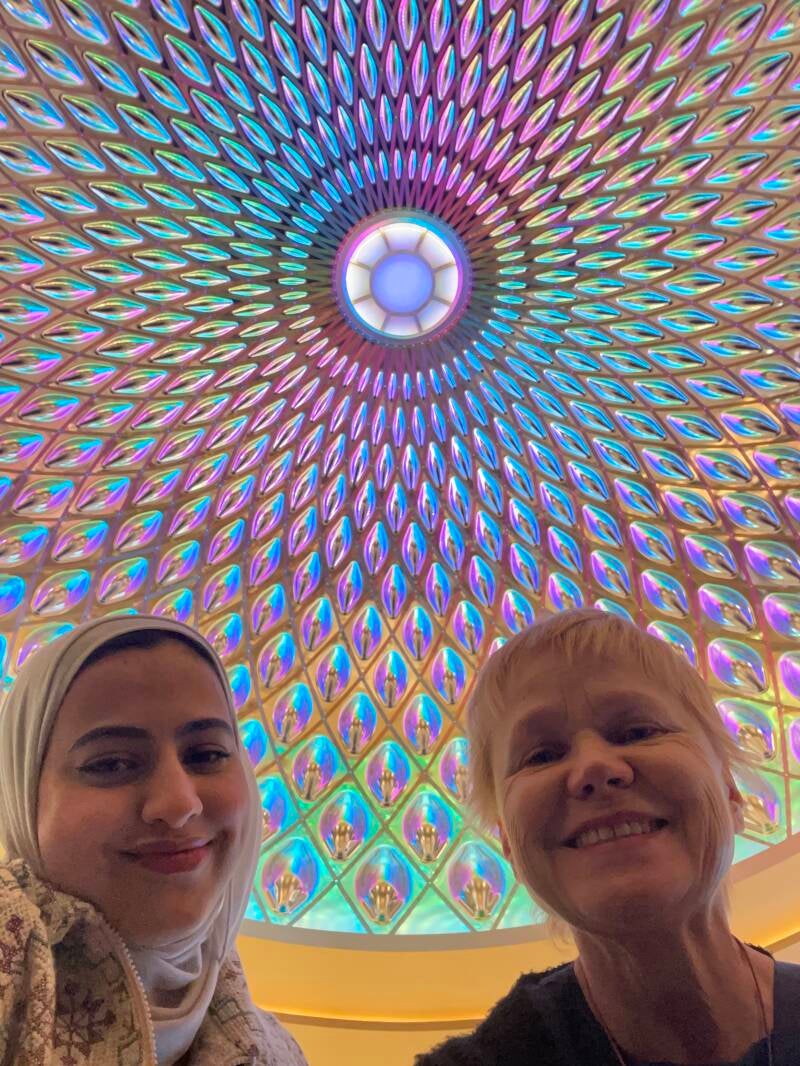
Selfies in the atrium area of the Avenues Mall.
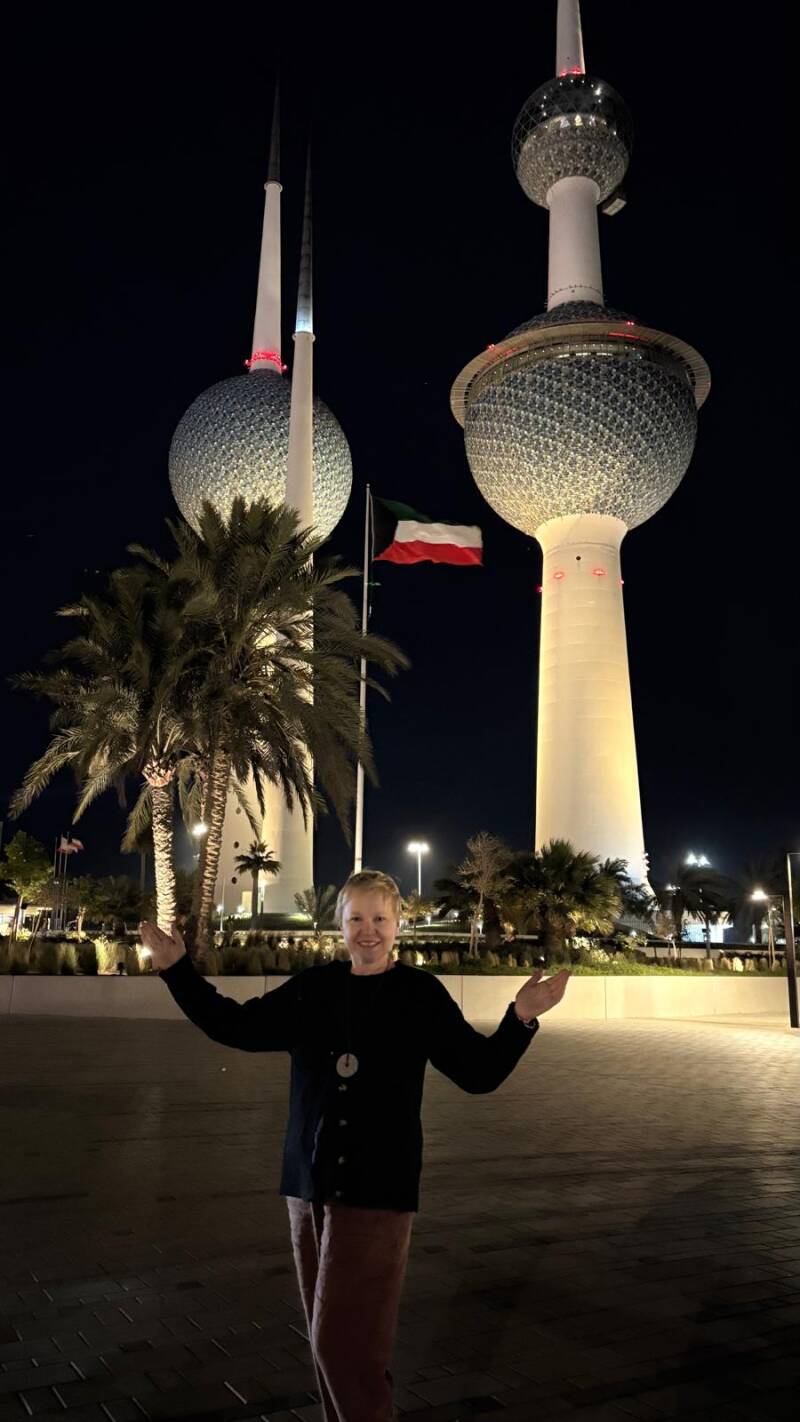
The Kuwait Towers.
Create Your Own Website With Webador