

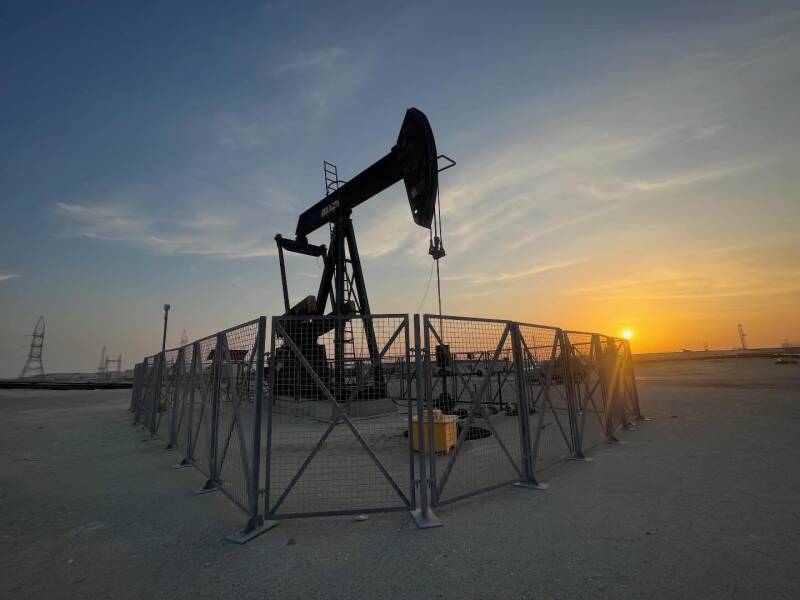
An oil pumpjack in the Bahrain oil fields.
Bahrain, much like Kuwait, tends to receive a somewhat mixed reception from travellers. Some dismiss it as little more than a Gulf stopover, too small to justify much time. Yet during my few days there, I found a country that balanced ancient history with glass skyscrapers surprisingly well, even if by the fourth day I was quite content to slow down, do laundry and prepare mentally for Saudi Arabia.
Three full days, I think, was the perfect amount of time.
I based myself in Manama and quickly realised that Bahrain rewards those willing to combine independent wandering with organised touring. I had initially wondered whether a full day tour might feel excessive on such a small island nation, but in hindsight it was one of the best decisions I made. Bahrain’s attractions are spread across the island and public transport is not particularly geared towards tourists, so having someone string the sites together coherently made the experience far more enjoyable.
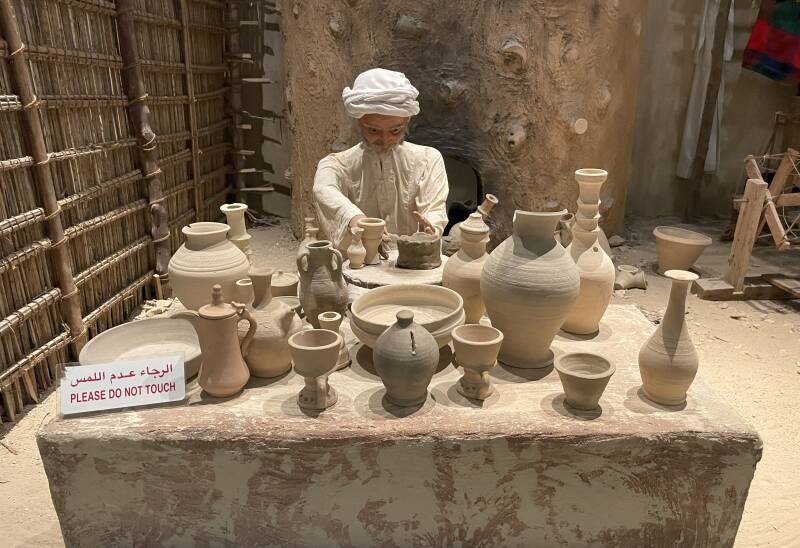
A pottery scene with mannequin at the Bahrain National Museum.
On my first full day I visited the Bahrain National Museum independently, as it happened to be closed on the day of my tour. Opened in 1988 as the first museum in the Gulf region, it provides an excellent introduction to Bahrain’s ancient past, particularly the Dilmun civilisation which flourished thousands of years ago when Bahrain sat strategically along important trade routes between Mesopotamia and the Indus Valley.
The museum itself was beautifully curated and unexpectedly atmospheric, guiding visitors through burial traditions, pearl diving history, trade networks and everyday life across centuries of settlement. Bahrain often feels ultra modern at first glance, so the reminder that this tiny island has been continuously inhabited for millennia gave the country an entirely different depth.
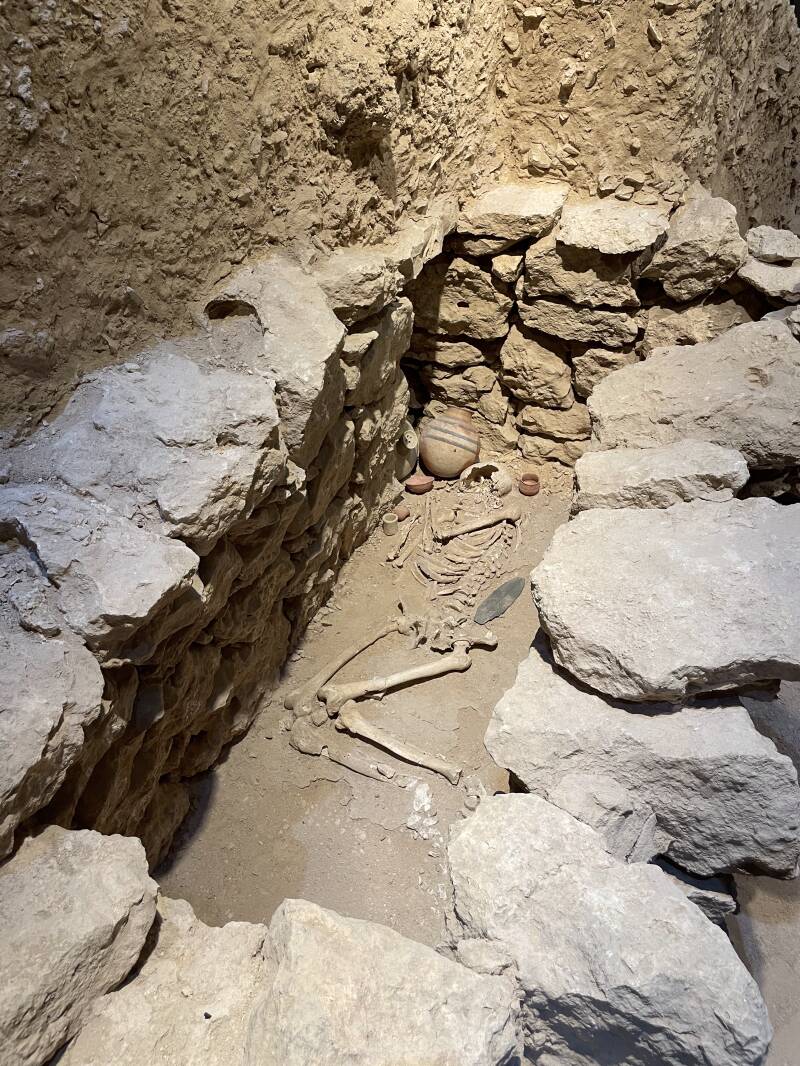
Bones from a Dilmun Burial Mound at the Bahrain National Museum.
The following morning I walked from my apartment to the enormous Al Fateh Grand Mosque where our tour would begin. Entry required women to wear an abaya, so I dutifully transformed myself into flowing black fabric once again. The mosque itself was magnificent, with vast chandeliers, polished marble and cavernous prayer halls that somehow managed to feel both grand and serene.
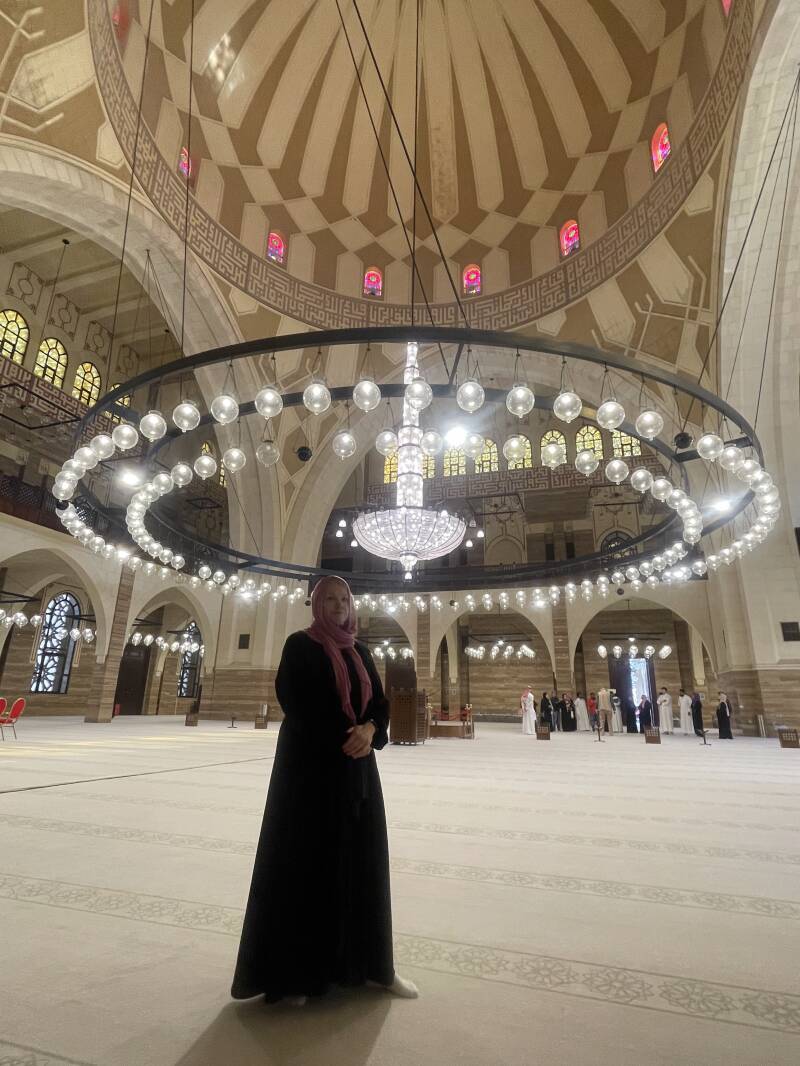
Inside the stunning Al Fateh Grand Mosque.
From there our group moved through a fascinatingly eclectic itinerary that captured Bahrain’s strange mix of archaeology, oil wealth, religion and modernity.
At Bahrain Bay we paused for photographs of the contemporary skyline, including the spectacular Bahrain World Trade Center whose twin towers famously incorporate giant wind turbines directly into the structure. We drove by what is commonly known as the Twisted Tower; the United Tower is one of Bahrain’s most recognizable architectural landmarks. Its gradual rotational design isn’t just visual, it’s engineered to reduce wind load while creating a striking presence along Bahrain Bay. Nearby stood the Bahrain Financial Harbour towers, shimmering symbols of Gulf era ambition.
I had actually explored the MODA Mall area independently the previous day and accidentally purchased one kilogram of chocolates. In my defence, the seller had asked something that sounded suspiciously like “a dinar?” rather than “a kilo?” and before I fully comprehended the situation I found myself holding an enormous bag of coconut sweets and chocolate covered almonds. They were dangerously good. I eventually carried them onwards to my hosts in Riyadh where they vanished with astonishing speed on the very first evening.
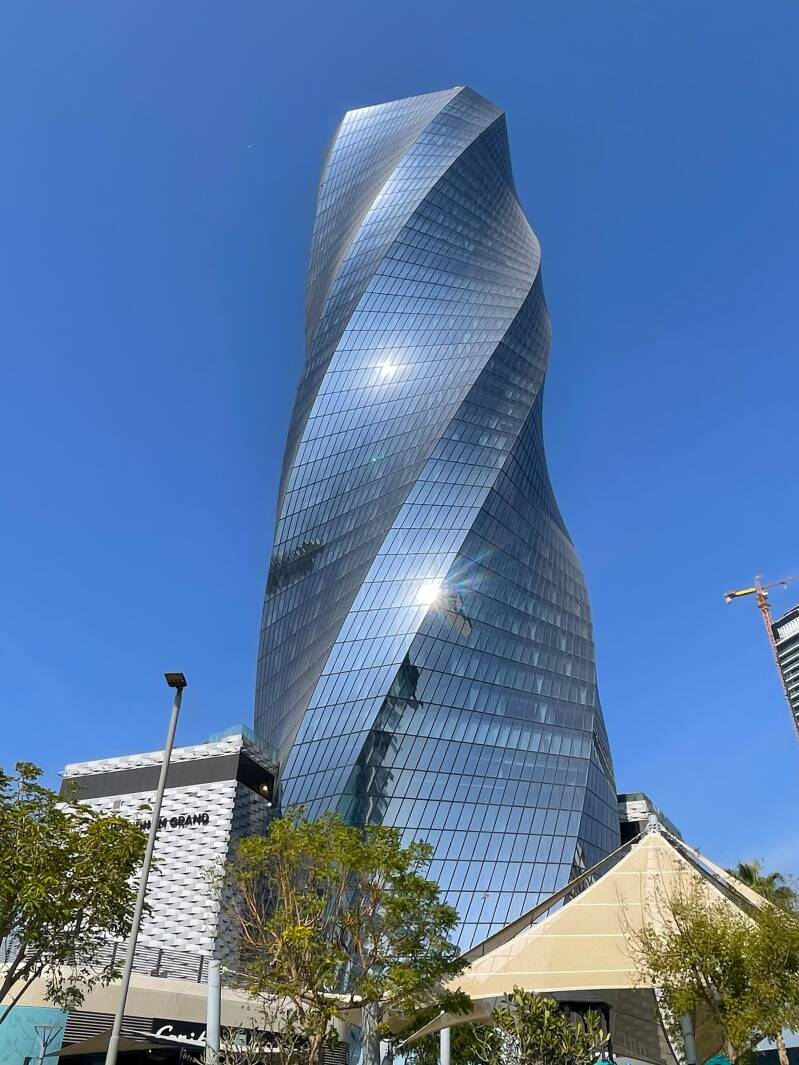
The United Tower.
One of the highlights of the tour was Qal’at al Bahrain, the ancient fort and former capital of the Dilmun civilisation. The archaeological site is immense, layered with over four thousand years of human occupation and crowned by a Portuguese fort dating from the sixteenth century. Standing atop the mound and looking across the surrounding landscape, it was easy to understand why the site achieved UNESCO World Heritage status. Beneath the surface lie centuries of successive settlements: residential quarters, commercial districts, religious structures and military fortifications all stacked upon one another through time.
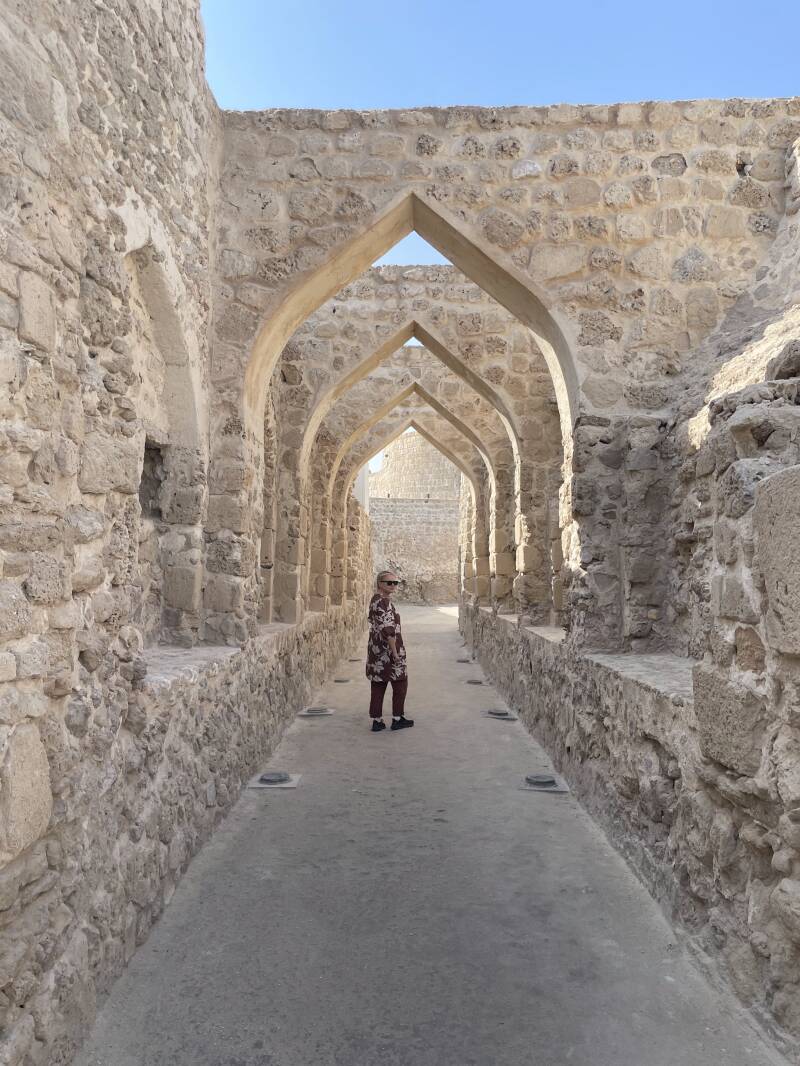
Exploring Qal’at al Bahrain, an ancient fort.
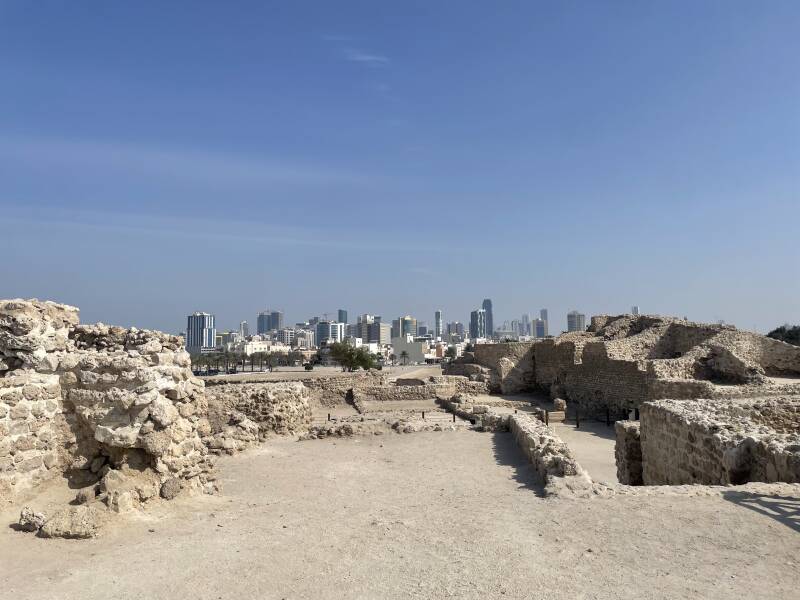
Past and present: Qal’at al Bahrain, an ancient fort against a backdrop of contemporary skyscrapers.
One of the more memorable stops on the tour was a traditional dhow building yard tucked away from Bahrain’s polished skyscrapers and financial districts. Surrounded by enormous stacks of timber, craftsmen were still constructing wooden boats largely by hand using techniques passed down through generations. The atmosphere smelled faintly of sawdust, sea air and engine oil while partially completed dhows rested on supports like giant wooden skeletons waiting to return to the Gulf.
The boat builders themselves were wonderfully friendly and seemed highly amused by visitors taking such interest in what, to them, was simply everyday work. One of the men enthusiastically waved us over and allowed us to climb up onto one of the unfinished vessels, giving us a closer look at the craftsmanship involved.
It struck me as one of the clearest contrasts in Bahrain. Only a short drive away stood futuristic skyscrapers and gleaming financial towers, yet here traditional maritime culture remained very much alive. Before oil transformed Bahrain, the sea shaped almost every aspect of life through fishing, pearling and trade, and these dhows remain tangible links to that earlier world.
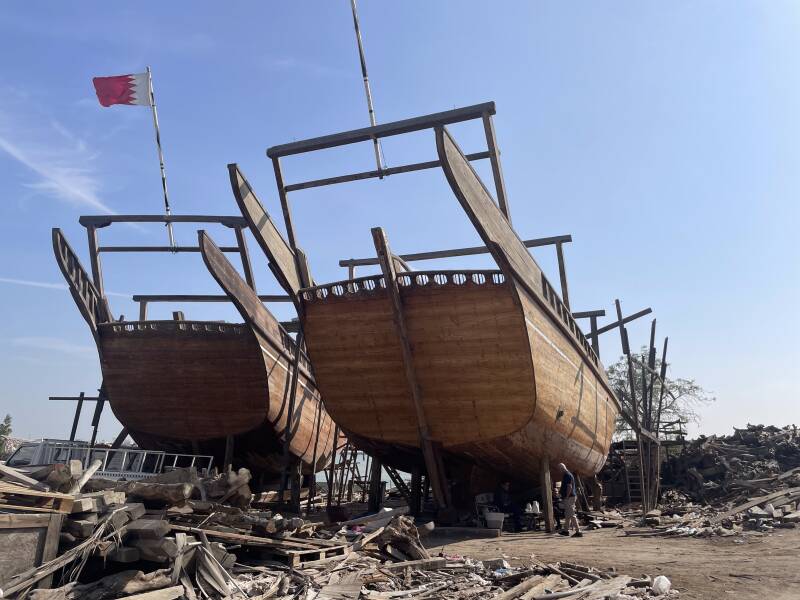
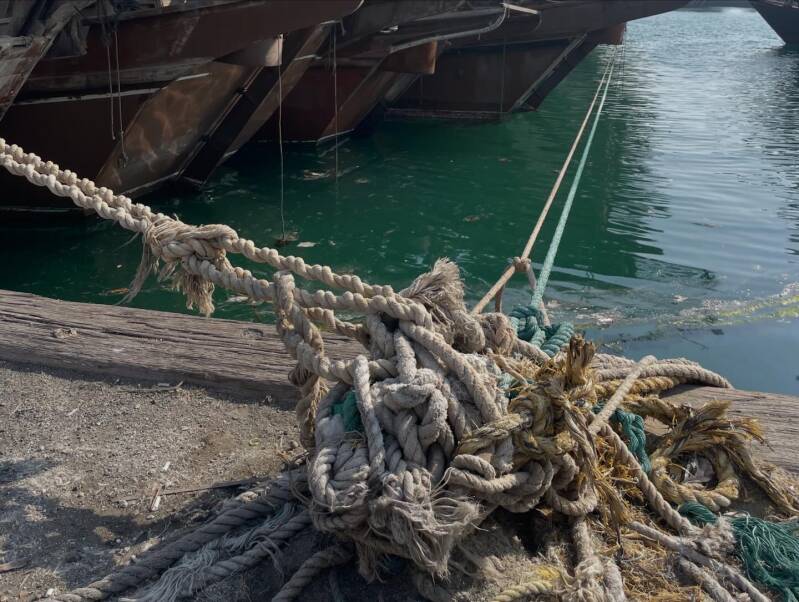
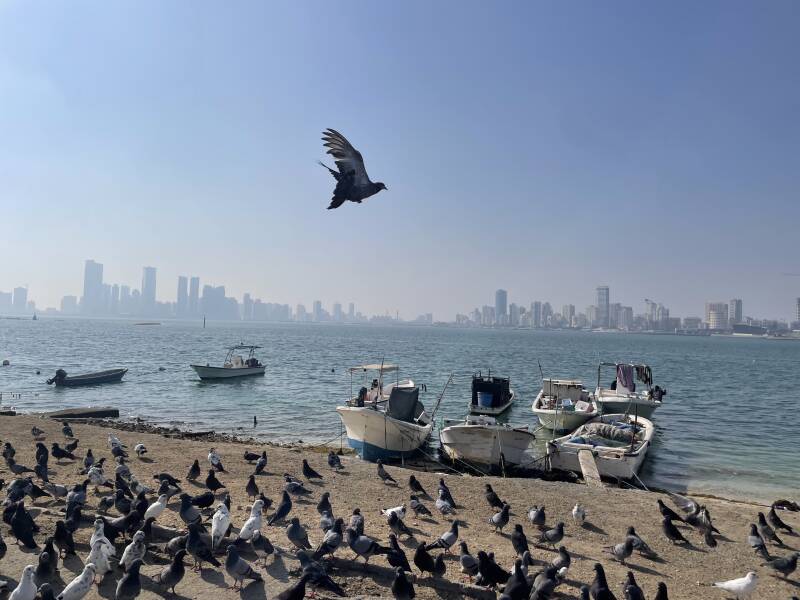
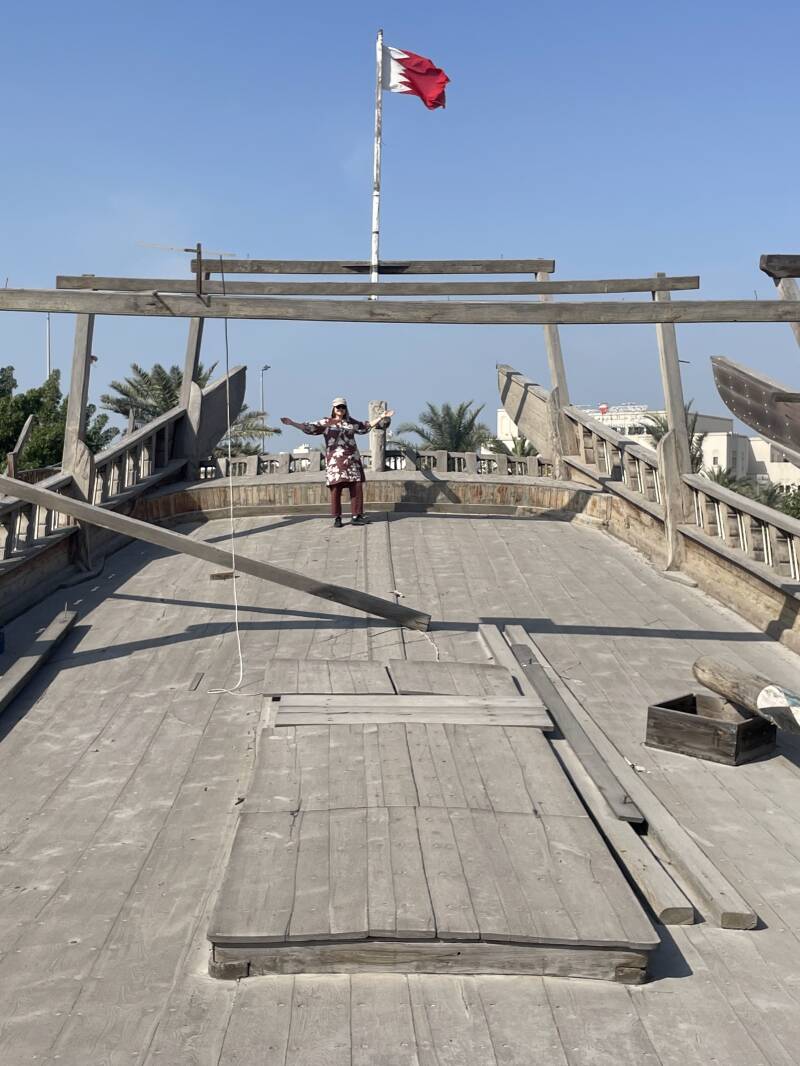
Views of the Dhows (fishing boats).
Fittingly, our traditional Bahraini lunch later that day included beautifully cooked local fish, a reminder that despite the dramatic urban modernisation surrounding Manama, the Gulf and its maritime traditions still sit quietly at the centre of Bahraini identity.
From there we continued into Bab Al Bahrain and the old Manama souq where the atmosphere shifted entirely from archaeology to sensory overload. Spice shops spilled fragrances into the narrow alleyways while gold jewellery glittered behind glass displays. Gulf hospitality seems to operate on the assumption that no table should ever appear remotely empty.
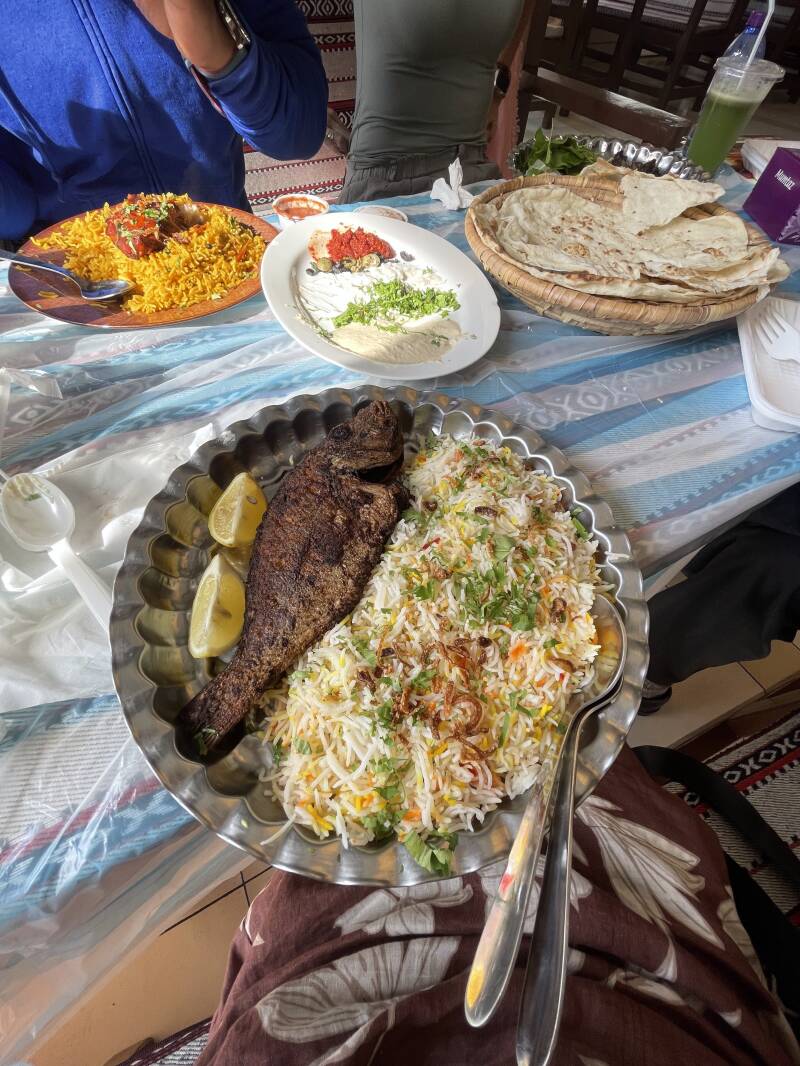
A whole fish for lunch, appropriate given the location.
Next, we headed out of the city to the Royal Camel Farm, one of Bahrain’s more unusual attractions and a reminder of the country’s deeper cultural traditions beyond skyscrapers and Formula One. Established by the late Sheikh Mohammed bin Salman Al Khalifa to preserve Bahrain’s camel heritage, the farm houses hundreds of camels across a large desert compound.
Before oil transformed the Gulf, camels were central to life across the Arabian Peninsula, used for transport, trade and survival. The farm preserves that legacy while allowing visitors to get surprisingly close to the animals. There were darker, larger camels traditionally used for work alongside lighter coloured racing camels, each with distinct features and temperaments.
The workers were relaxed and welcoming, and visitors could feed the camels greens or pose for photographs. Set against the desert landscape, the farm provided an interesting contrast to Bahrain’s contemporary skyline and offered a glimpse into traditions that still remain important in Gulf culture.
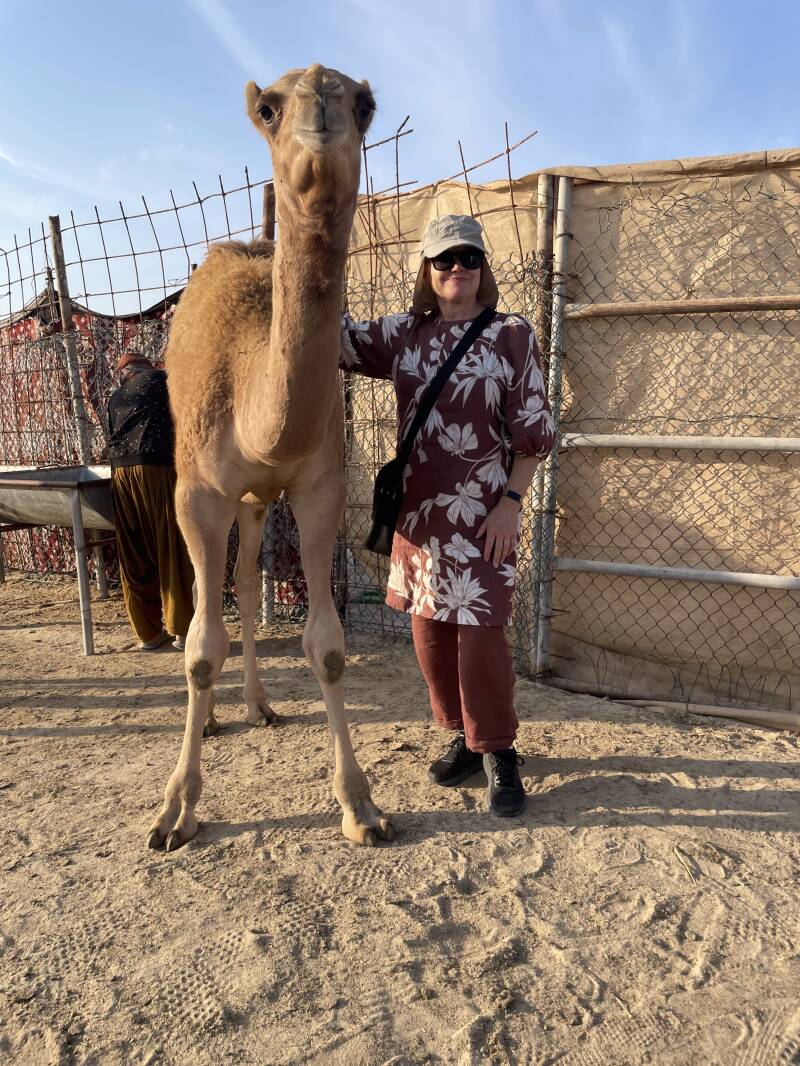
A calm camel at the Royal Camel Farm.
One stop on the itinerary left me slightly less enthusiastic: the Bahrain International Circuit, home of the Formula One Grand Prix. We stood on the grandstand overlooking the famous racetrack while others seemed deeply impressed. I attempted to summon equal enthusiasm for car racing but largely failed. Still, even I could appreciate the sheer scale and immaculate design of the complex rising from the desert landscape.
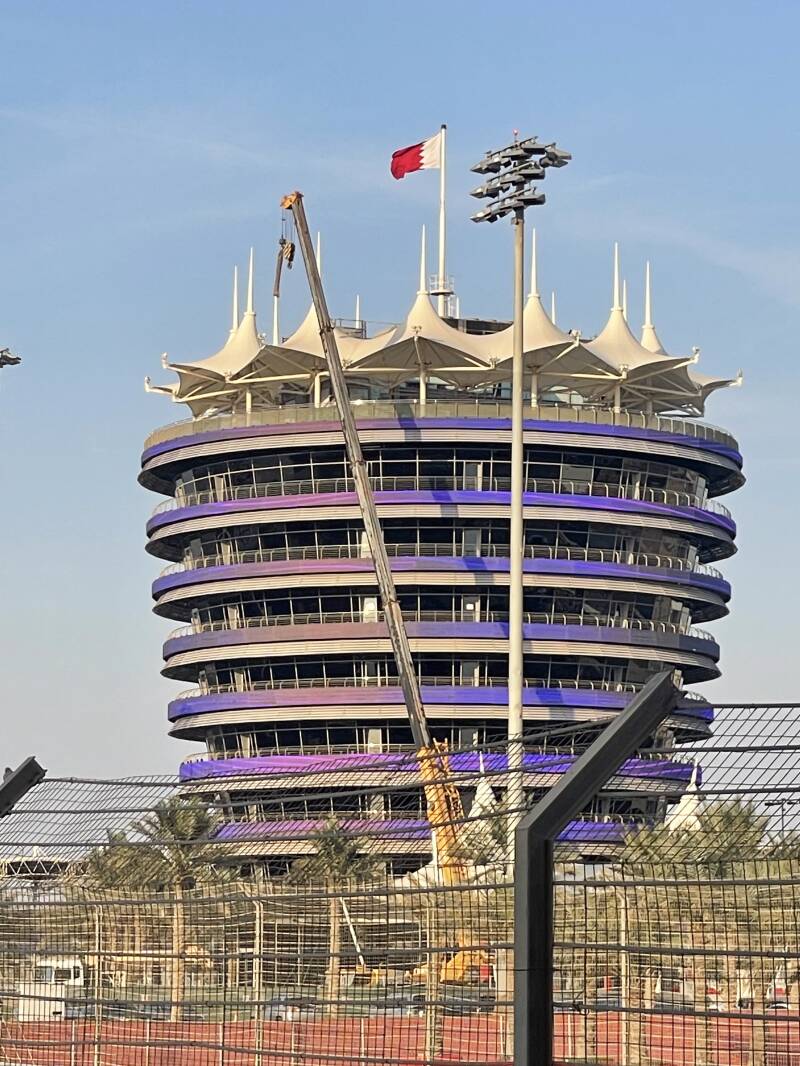
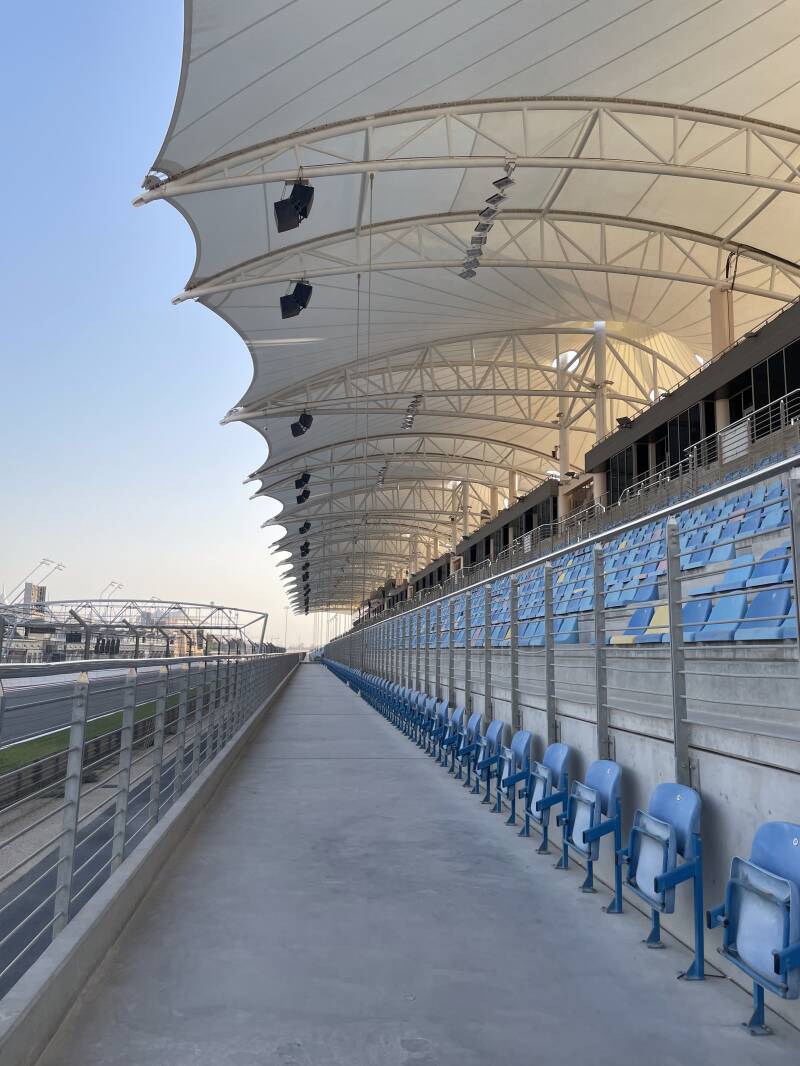
This viewing tower was changing colours throughout the day; a grand grandstand.
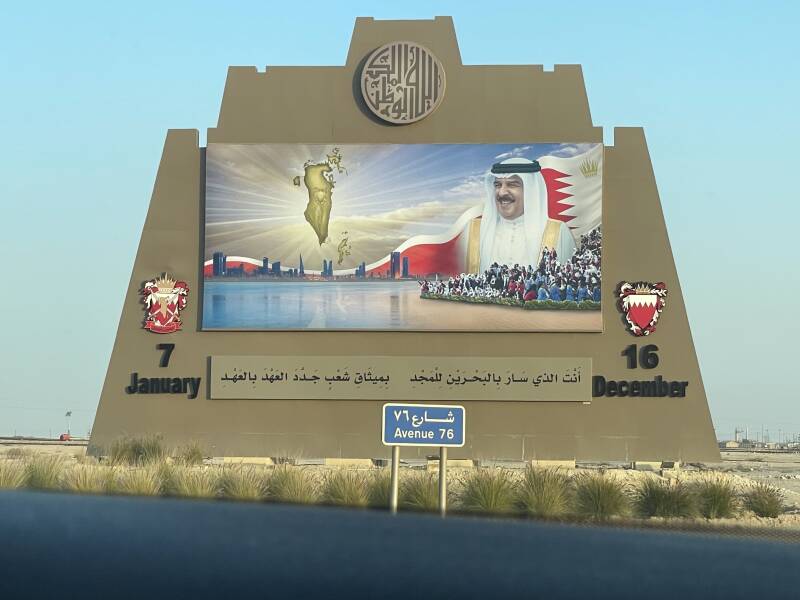
As 16th December is National Day, this seems to be promotional material with the King Hamad bin Isa Al Khalifa looking on proudly.
As the day progressed, however, the scenery became increasingly fascinating.
We drove westward through Bahrain’s oil fields towards the historic site of the first oil well discovered on the Arabian side of the Gulf. Bahrain became the first Gulf state to strike oil in 1932, an event that transformed not only the country itself but the wider region. Before oil, Bahrain’s economy had revolved largely around fishing and pearl diving. Afterwards, everything changed.
I loved this part of the tour. Oil derricks and pump jacks rose rhythmically across the landscape while the low winter light at dusk created an almost cinematic atmosphere.There was something strangely beautiful about the industrial scenery, particularly knowing how profoundly these discoveries reshaped the modern Gulf.
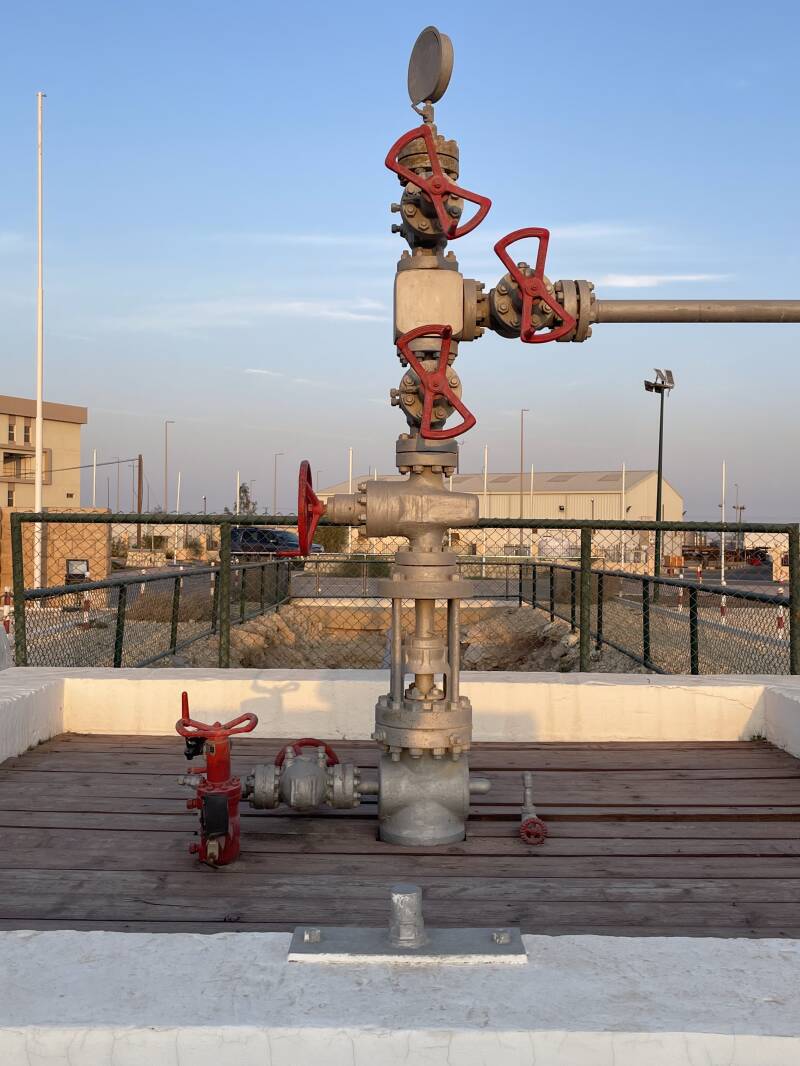
The first oil well in Bahrain, known as the Bahrain Oil Well No. 1.
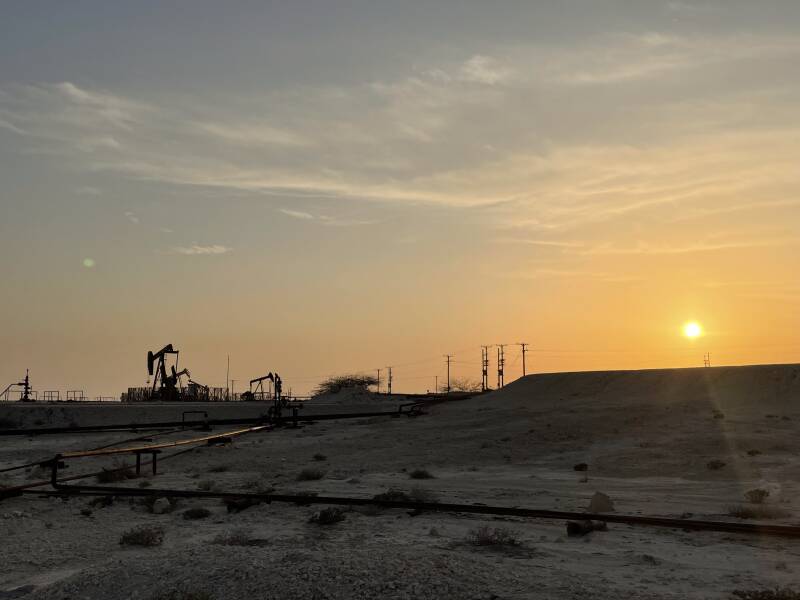
A sunset and oil wells nearby.
Nearby stood the famous Tree of Life, a roughly 440 year old tree improbably surviving alone in the desert far from any obvious water source. While the tree itself was interesting, what fascinated me more was the atmosphere surrounding it. Families gathered everywhere, picnicking, camping and socialising as children ran across the sand. Small stalls sold drinks while groups lingered happily into the evening. It clearly felt like more than simply a tourist attraction. The place carried social significance too.
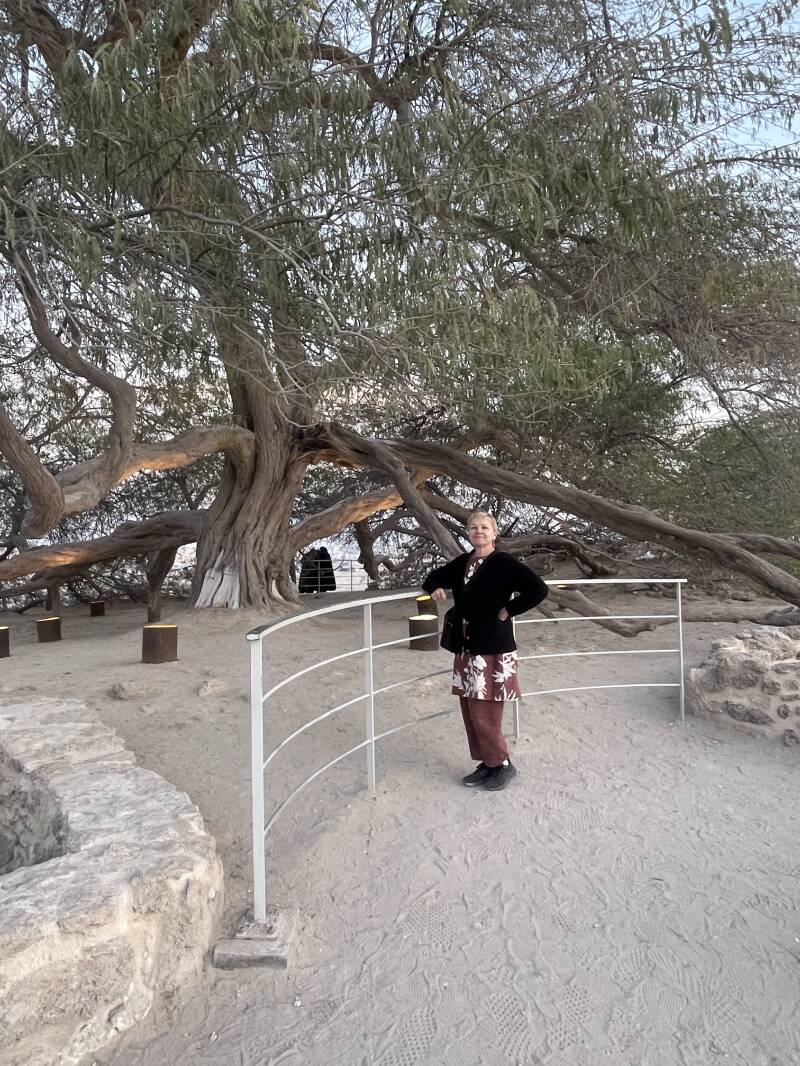
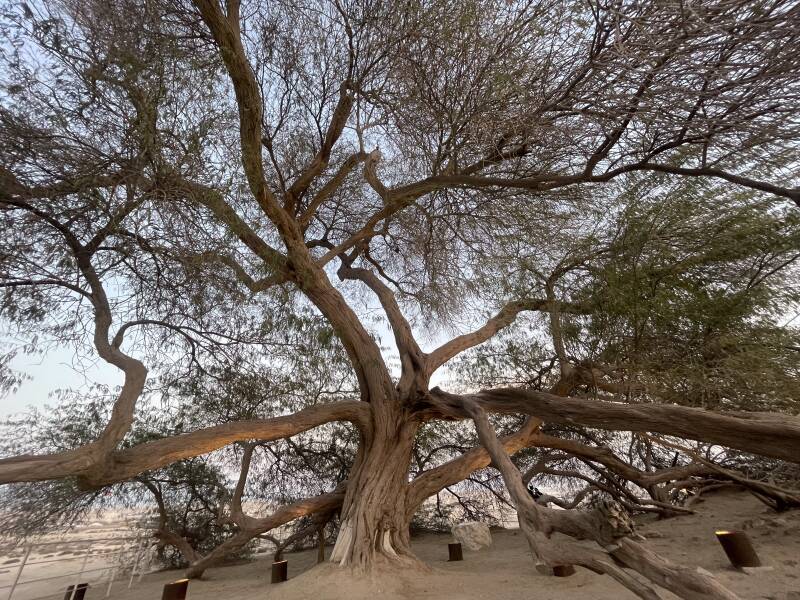
Admiring the Tree of Life.
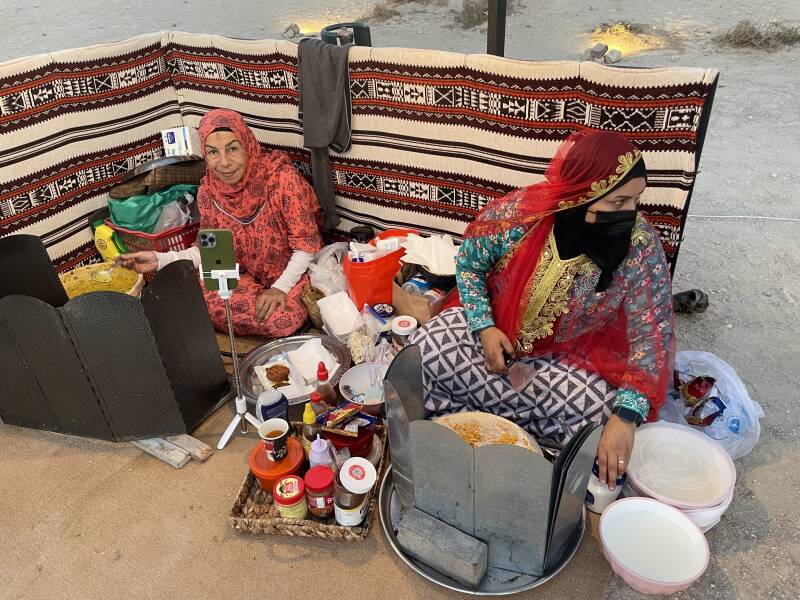
Food sellers in the desert at the Tree of Life.
We also stopped briefly at the Dilmun Burial Mounds near A’ali village. Historically important though they are, I must admit they are not the world’s most photogenic archaeological feature. Large grassy humps rarely compete successfully with dramatic forts or glittering skylines.
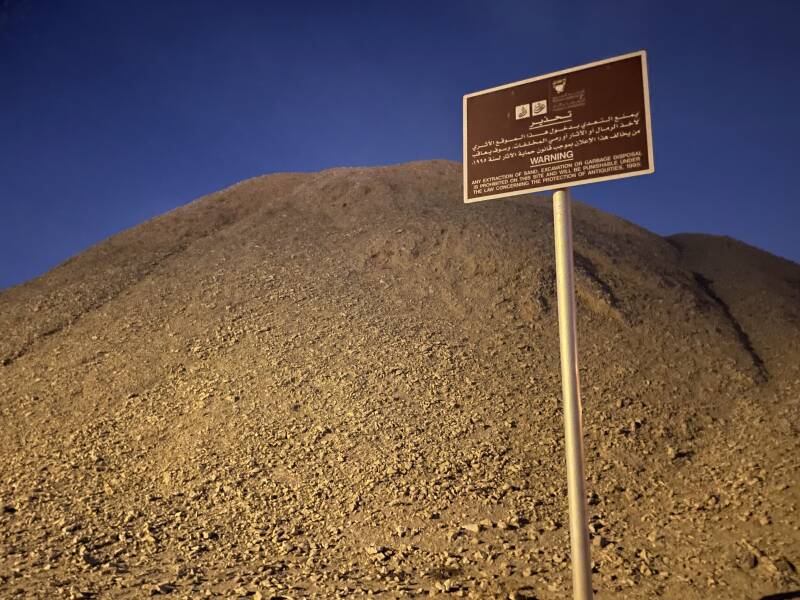
A dilmun burial mound.
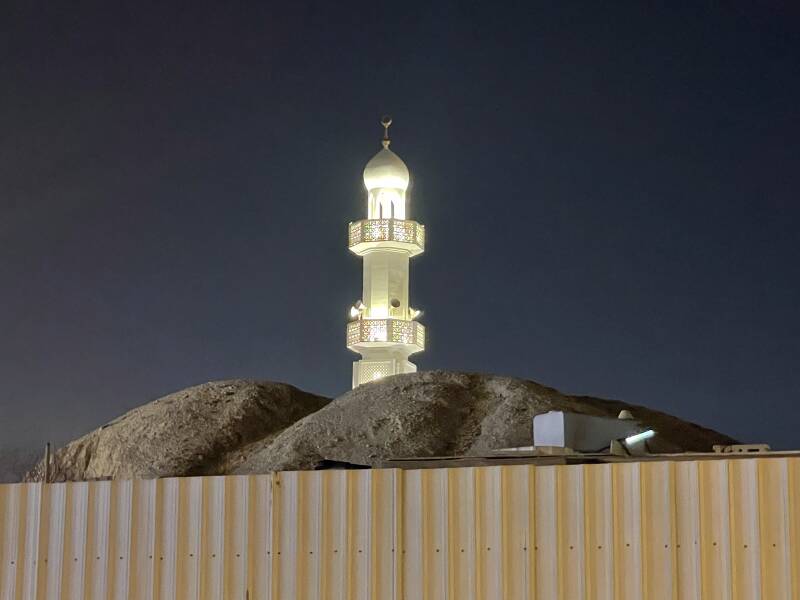
A mosque minaret behind the Dilmun mounds.
Later we visited pottery workshops continuing traditions that stretch back to the ancient Dilmun civilisation. Pottery has long occupied an important place in Bahrain’s cultural heritage, with artisans on the island producing both practical vessels and decorative ceramics for thousands of years.
Bahraini potters still employ techniques passed down through generations, shaping locally sourced clay by hand or on pottery wheels before drying and firing the pieces.
Although active demonstrations had mostly concluded by the time we arrived, I still found the visit interesting, particularly given my own background in ceramics. In a country so often associated with finance and modern development, it was striking to see artistic traditions from the Dilmun era continuing into the present day.
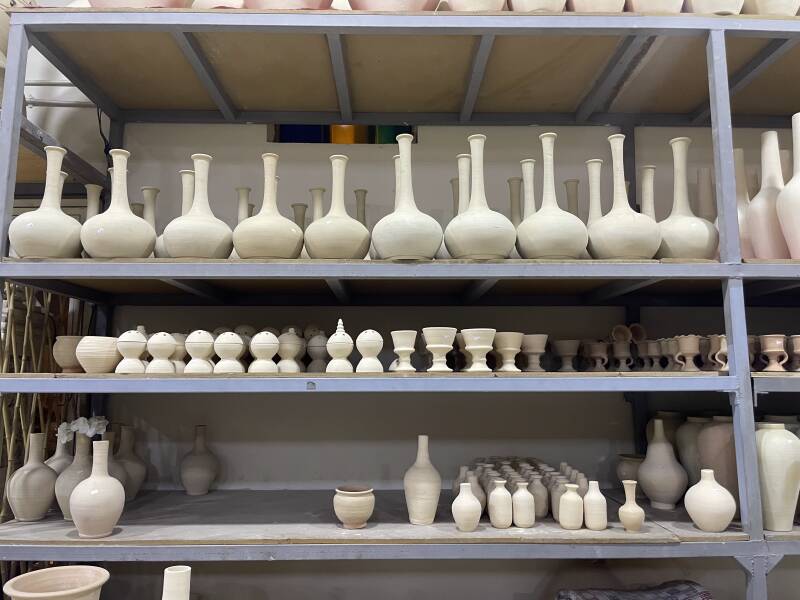
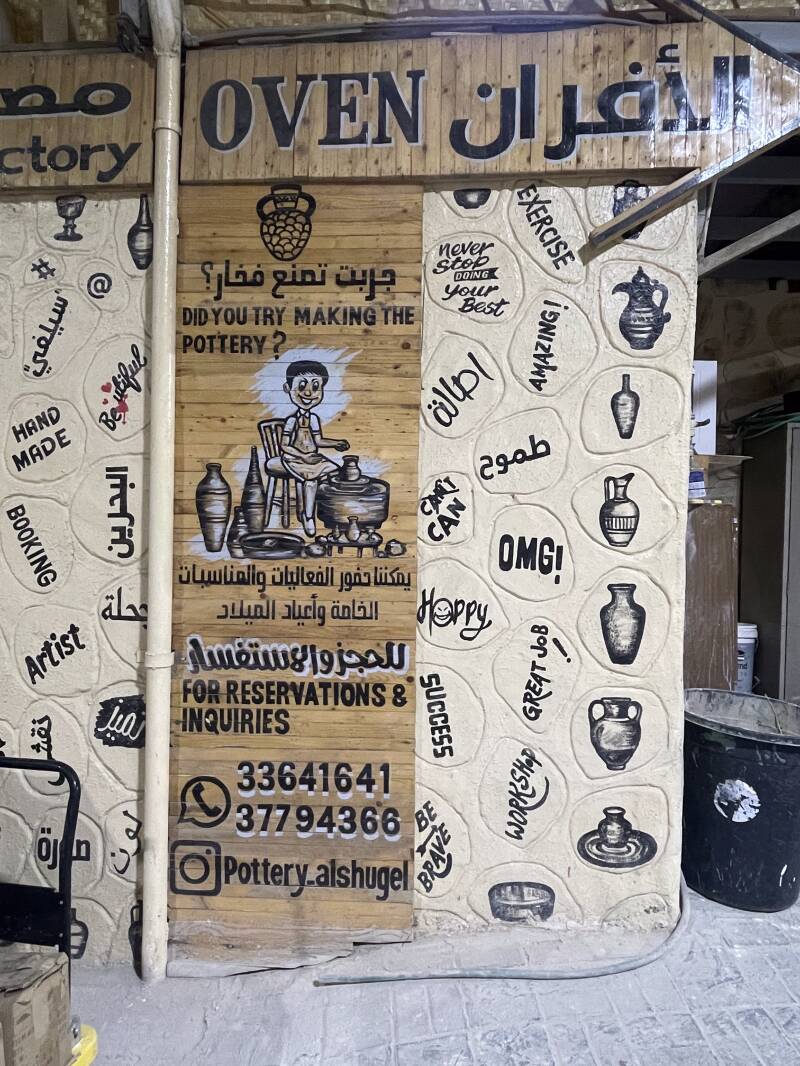
Ceramics workshops.
Back in Manama, I continued exploring the city independently, wandering between skyscrapers, waterfront promenades and malls. Bahrain’s contemporary architecture impressed me far more than I had anticipated. The skyline feels ambitious without quite reaching the overwhelming scale of Dubai, which in some ways makes it more approachable.
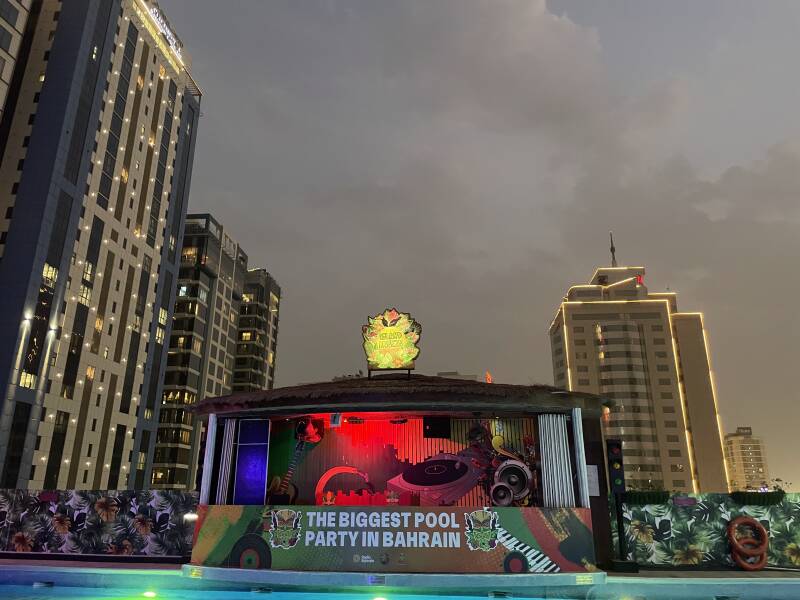
Bahrain also carries a certain reputation within the Gulf as a destination where Saudis escape for weekends involving alcohol and nightlife. Alcohol certainly exists, though perhaps less openly than some travellers imagine. On my first night I found myself in a hotel restaurant serving food and beer. Ashtrays filled with cigarette butts still sat uncleared from the previous evening, giving the place a slightly weary atmosphere. On my final evening I located an outdoor rooftop bar which, at around six in the evening, was completely deserted despite promising signs advertising pool parties. Nevertheless I happily sat upstairs alone nursing a glass of sangria while overlooking the city.
By the fourth day I found myself slowing down considerably, catching up on laundry and appreciating a quieter pace before continuing onwards. Bahrain may not possess the blockbuster attractions of some neighbouring Gulf states, but I found it surprisingly rewarding precisely because of its contrasts. Ancient Dilmun archaeology exists beside Formula One racetracks. Portuguese forts overlook financial towers. Desert oil wells coexist with luxury malls and traditional souqs.
For such a small island, Bahrain contained more layers than I had expected.
Create Your Own Website With Webador